Lisa Ouss – författare
Visar alla böcker från författaren Lisa Ouss. Handla med fri frakt och snabb leverans.
2 produkter
2 produkter
E-bok
Franska, 2009190 kr
Läs direkt efter köp
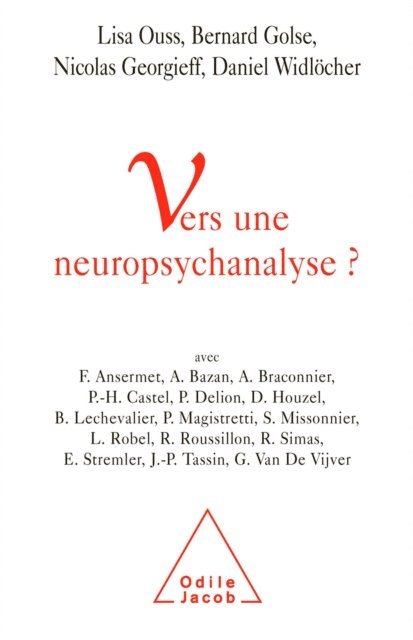
Essayer de rapprocher psychanalyse et neurosciences, tel est l’objectif que propose cet ouvrage, qui réunit des psychanalystes de premier plan et des chercheurs de renom. Quels sont les enjeux d’un tel rapprochement, que ce soit sur un plan épistémologique ou pragmatique ? Que peuvent s’apporter ces deux disciplines longtemps tenues éloignées l’une de l’autre ? Cette tentative d’articulation théorico-clinique doit-elle nécessairement déboucher sur l’émergence d’une discipline nouvelle ?Lisa Ouss-Ryngaert est pédopsychiatre et psychothérapeute. Elle exerce à l’hôpital Necker-Enfants malades à Paris ainsi qu’au Centre des ressources autisme Île-de-France. Bernard Golse est pédopsychiatre et psychanalyste. Chef du service de pédopsychiatrie à l’hôpital Necker-Enfants malades à Paris, il est également professeur de psychiatrie de l’enfant et de l’adolescent à l’université Paris-V. Nicolas Georgieff est professeur de psychiatrie de l’enfant et de l’adolescent à l’université Lyon-I. Chef de service à l’hôpital du Vinatier, il est aussi membre du Centre de neurosciences cognitives de Lyon. Ancien président de l’Association psychanalytique internationale, Daniel Widlöcher est professeur émérite de psychiatrie à l’université Paris-VI.
Inbunden, Engelska, 2026
2 377 kr
Kommande
This book provides a comprehensive and clinically grounded account of psychodynamic treatment in child and adolescent psychiatry. Bringing together leading international contributors, it offers a developmentally structured approach spanning the entire trajectory from perinatality and infancy to childhood and adolescence.Combining theoretical depth with clinical applicability, the chapters include detailed case material and practical guidance across a wide range of clinical situations, including mood and anxiety disorders, trauma, eating disorders, and borderline functioning. Particular attention is given to contemporary challenges such as the psychodynamic dimensions of psychopharmacology and transcultural clinical practice.A distinctive feature of this volume is its integration of psychodynamic thinking within multidisciplinary and institutional settings, addressing therapeutic mediations, teamwork, supervision, and preventive approaches. By articulating a coherent and developmentally informed framework, the book demonstrates the continuing relevance of psychodynamic perspectives in modern psychiatric practice.This volume will be an essential resource for clinicians, trainees, and researchers seeking to integrate psychodynamic approaches into the care of children, adolescents, and their families.