Loong-Tak Lim – författare
Food Applications of Nanotechnology
2 190 kr
Skickas inom 10-15 vardagar
Food Applications of Nanotechnology, Volume 88, consolidates the literature on recent developments in nanotechnology, addressing production, safety and nutritional aspects pertaining to foods and nutraceuticals. Chapters in this new release include Assembled protein nanoparticles in food and nutrition applications, Nano-scale carbohydrate Materials in food/nutrition/agricultural applications, Nanotechnology-based colloidal delivery systems in foods, Electrospinning and Electrospraying in food, Bioavailability of nanotechnology-based bioactives and nutraceuticals, and more.
Contains contributions from experts in the areas of food nano-science and technology Provides extensive citation of references to cover up-to-date and background literature Covers past, present and future aspects of food nano science and technology2 199 kr
Läs direkt efter köp
2 199 kr
Läs direkt efter köp
2 224 kr
Skickas inom 11-20 vardagar
2 534 kr
Läs direkt efter köp
A comprehensive introduction to the physiology, biochemistry, and molecular biology of produce growth, paired with cutting-edge technological advances in produce preservation
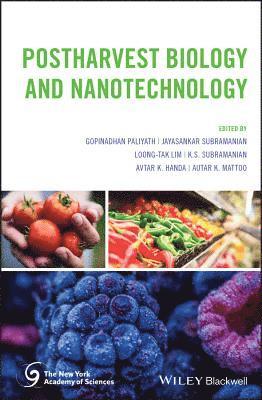
Revised and updated, the second edition of Postharvest Biology and Nanotechnology explores the most recent developments in postharvest biology and nanotechnology. Since the publication of the first edition, there has been an increased understanding of the developmental physiology, biochemistry, and molecular biology during early growth, maturation, ripening, and postharvest conditions. The contributors—noted experts in the field—review the improved technologies that maintain the shelf life and quality of fruits, vegetables, and flowers. This second edition contains new strategies that can be implemented to remedy food security issues, including but not limited to phospholipase D inhibition technology and ethylene inhibition via 1-MCP technology.
The text offers an introduction to technologies used in production practices and distribution of produce around the world, as well as the process of sencescence on a molecular and biochemical level. The book also explores the postharvest value chain for various produce, quality evaluation techniques, and the most current nanotechnology applications. This important resource:
• Expands on the first edition to explore in-depth postharvest biology with emphasis on developments in nanotechnology
• Contains contributions from leaders in the field
• Includes the most recent advances in postharvest biology and technology, including but not limited to phospholipase D and 1-MCP technology
• Puts the focus on basic science as well as technology and practical applications
• Applies a physiology, biochemistry, and biotechnology approach to the subject
Written for crop science researchers and professionals, horticultural researchers, agricultural engineers, food scientists working with fruits and vegetables, Postharvest Biology and Nanotechnology, Second Edition provides a comprehensive introduction to this subject, with a grounding in the basic science with the technology and practical applications.
2 534 kr
Läs direkt efter köp
A comprehensive introduction to the physiology, biochemistry, and molecular biology of produce growth, paired with cutting-edge technological advances in produce preservation
Revised and updated, the second edition of Postharvest Biology and Nanotechnology explores the most recent developments in postharvest biology and nanotechnology. Since the publication of the first edition, there has been an increased understanding of the developmental physiology, biochemistry, and molecular biology during early growth, maturation, ripening, and postharvest conditions. The contributors—noted experts in the field—review the improved technologies that maintain the shelf life and quality of fruits, vegetables, and flowers. This second edition contains new strategies that can be implemented to remedy food security issues, including but not limited to phospholipase D inhibition technology and ethylene inhibition via 1-MCP technology.
The text offers an introduction to technologies used in production practices and distribution of produce around the world, as well as the process of sencescence on a molecular and biochemical level. The book also explores the postharvest value chain for various produce, quality evaluation techniques, and the most current nanotechnology applications. This important resource:
• Expands on the first edition to explore in-depth postharvest biology with emphasis on developments in nanotechnology
• Contains contributions from leaders in the field
• Includes the most recent advances in postharvest biology and technology, including but not limited to phospholipase D and 1-MCP technology
• Puts the focus on basic science as well as technology and practical applications
• Applies a physiology, biochemistry, and biotechnology approach to the subject
Written for crop science researchers and professionals, horticultural researchers, agricultural engineers, food scientists working with fruits and vegetables, Postharvest Biology and Nanotechnology, Second Edition provides a comprehensive introduction to this subject, with a grounding in the basic science with the technology and practical applications.
2 553 kr
Skickas inom 5-8 vardagar
2 915 kr
Läs direkt efter köp
The second edition of a key reference, fully updated to reflect new research and applications
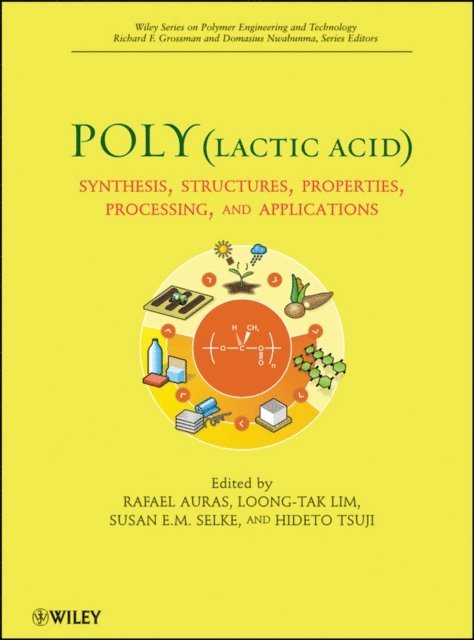
Poly(lactic acid)s – PLAs, biodegradable polymers derived from lactic acid, have become vital components of a sustainable society. Eco-friendly PLA polymers are used in numerous industrial applications ranging from packaging to medical implants and to wastewater treatment. The global PLA market is predicted to expand significantly over the next decade due to increasing demand for compostable and recyclable materials produced from renewable resources.
Poly(lactic acid) Synthesis, Structures, Properties, Processing, Applications, and End of Life provides comprehensive coverage of the basic chemistry, production, and industrial use of PLA. Contributions from an international panel of experts review specific processing methods, characterization techniques, and various applications in medicine, textiles, packaging, and environmental engineering. Now in its second edition, this fully up-to-date volume features new and revised chapters on 3D printing, the mechanical and chemical recycling of PLA, PLA stereocomplex crystals, PLA composites, the environmental footprint of PLA, and more.
Highlights the biodegradability, recycling, and sustainability benefits of PLA Describes processing and conversion technologies for PLA, such as injection molding, extrusion, blending, and thermoforming Covers various aspects of lactic acid/lactide monomers, including physicochemical properties and production Examines different condensation reactions and modification strategies for enhanced polymerization of PLA Discusses the thermal, rheological, and mechanical properties of PLA Addresses degradation and environmental issues of PLA, including photodegradation, radiolysis, hydrolytic degradation, biodegradation, and life cycle assessmentPoly(lactic acid) Synthesis, Structures, Properties, Processing, Applications, and End of Life, Second Edition remains essential reading for polymer engineers, materials scientists, polymer chemists, chemical engineers, industry professionals using PLA, and scientists and advanced student engineers interested in biodegradable plastics.
2 915 kr
Läs direkt efter köp
The second edition of a key reference, fully updated to reflect new research and applications
Poly(lactic acid)s – PLAs, biodegradable polymers derived from lactic acid, have become vital components of a sustainable society. Eco-friendly PLA polymers are used in numerous industrial applications ranging from packaging to medical implants and to wastewater treatment. The global PLA market is predicted to expand significantly over the next decade due to increasing demand for compostable and recyclable materials produced from renewable resources.
Poly(lactic acid) Synthesis, Structures, Properties, Processing, Applications, and End of Life provides comprehensive coverage of the basic chemistry, production, and industrial use of PLA. Contributions from an international panel of experts review specific processing methods, characterization techniques, and various applications in medicine, textiles, packaging, and environmental engineering. Now in its second edition, this fully up-to-date volume features new and revised chapters on 3D printing, the mechanical and chemical recycling of PLA, PLA stereocomplex crystals, PLA composites, the environmental footprint of PLA, and more.
Highlights the biodegradability, recycling, and sustainability benefits of PLA Describes processing and conversion technologies for PLA, such as injection molding, extrusion, blending, and thermoforming Covers various aspects of lactic acid/lactide monomers, including physicochemical properties and production Examines different condensation reactions and modification strategies for enhanced polymerization of PLA Discusses the thermal, rheological, and mechanical properties of PLA Addresses degradation and environmental issues of PLA, including photodegradation, radiolysis, hydrolytic degradation, biodegradation, and life cycle assessmentPoly(lactic acid) Synthesis, Structures, Properties, Processing, Applications, and End of Life, Second Edition remains essential reading for polymer engineers, materials scientists, polymer chemists, chemical engineers, industry professionals using PLA, and scientists and advanced student engineers interested in biodegradable plastics.
1 906 kr
Skickas inom 10-15 vardagar
2 283 kr
Läs direkt efter köp
1 906 kr
Skickas inom 10-15 vardagar