Marc H. Bornstein – författare
2 123 kr
Skickas inom 10-15 vardagar
826 kr
Skickas inom 10-15 vardagar
2 123 kr
Skickas inom 10-15 vardagar
1 782 kr
Skickas inom 10-15 vardagar
553 kr
Skickas inom 10-15 vardagar
2 123 kr
Skickas inom 10-15 vardagar
689 kr
Skickas inom 10-15 vardagar
354 kr
Skickas inom 10-15 vardagar
2 250 kr
Skickas inom 10-15 vardagar
2 328 kr
Skickas inom 10-15 vardagar
619 kr
Skickas inom 10-15 vardagar
799 kr
Skickas inom 10-15 vardagar
826 kr
Skickas inom 10-15 vardagar
812 kr
Skickas inom 10-15 vardagar
774 kr
Skickas inom 10-15 vardagar
670 kr
Läs direkt efter köp
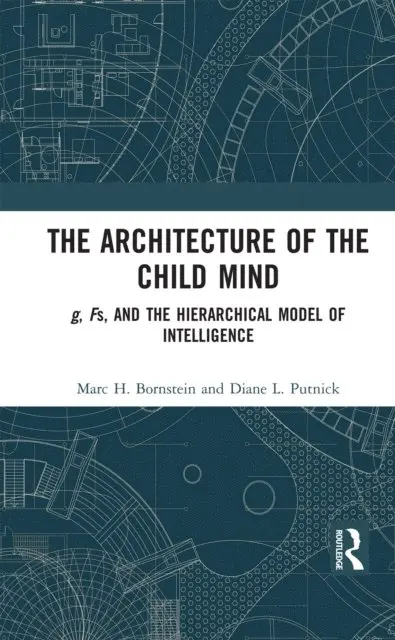
What exactly does it mean to be intelligent? Does intelligence manifest itself in one way or in different ways in children? Do children fit any preconceived notions of intelligence? Some theories assert a general (g) factor for intelligence that is universal and enters all mental abilities; other theories state that there are many separate domains or faculties (Fs) of intelligence; and still others argue that the g and Fs of intelligence coexist in a hierarchical relation. The Architecture of the Child Mind: g, Fs, and the Hierarchical Model of Intelligence argues for the third option in young children. Through state-of-the-art methodologies in an intensive research program conducted with 4-year-old children, Bornstein and Putnick show that the structure of intelligence in the preschool child is best construed as a hierarchically organized combination of a General Intelligence factor (g) and multiple domain-specific faculties (Fs).
The Architecture of the Child Mind offers a review of the history of intelligence theories and testing, and a comprehensive and original research effort on the nature and structure of intelligence in young children before they enter school. Its focus on intelligence will appeal to cognitive, developmental, and social psychologists as well as researchers and scholars in education, particularly those specializing in early childhood education.
670 kr
Läs direkt efter köp
What exactly does it mean to be intelligent? Does intelligence manifest itself in one way or in different ways in children? Do children fit any preconceived notions of intelligence? Some theories assert a general (g) factor for intelligence that is universal and enters all mental abilities; other theories state that there are many separate domains or faculties (Fs) of intelligence; and still others argue that the g and Fs of intelligence coexist in a hierarchical relation. The Architecture of the Child Mind: g, Fs, and the Hierarchical Model of Intelligence argues for the third option in young children. Through state-of-the-art methodologies in an intensive research program conducted with 4-year-old children, Bornstein and Putnick show that the structure of intelligence in the preschool child is best construed as a hierarchically organized combination of a General Intelligence factor (g) and multiple domain-specific faculties (Fs).
The Architecture of the Child Mind offers a review of the history of intelligence theories and testing, and a comprehensive and original research effort on the nature and structure of intelligence in young children before they enter school. Its focus on intelligence will appeal to cognitive, developmental, and social psychologists as well as researchers and scholars in education, particularly those specializing in early childhood education.
2 005 kr
Läs direkt efter köp
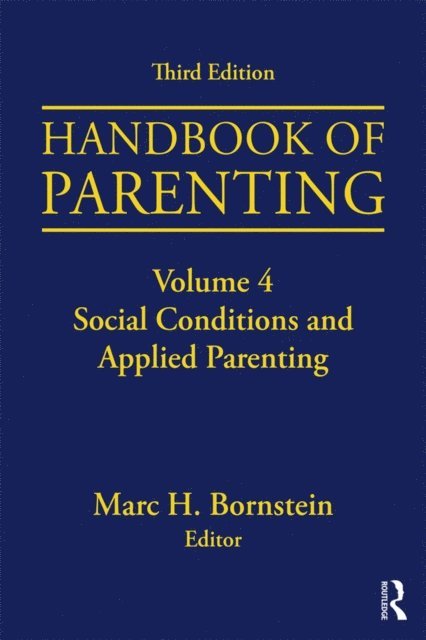
This highly anticipated third edition of the Handbook of Parenting brings together an array of field-leading experts who have worked in different ways toward understanding the many diverse aspects of parenting. Contributors to the Handbook look to the most recent research and thinking to shed light on topics every parent, professional, and policymaker wonders about. Parenting is a perennially "hot" topic. After all, everyone who has ever lived has been parented, and the vast majority of people become parents themselves. No wonder bookstores house shelves of "how-to" parenting books, and magazine racks in pharmacies and airports overflow with periodicals that feature parenting advice. However, almost none of these is evidence-based. The Handbook of Parenting is. Period. Each chapter has been written to be read and absorbed in a single sitting, and includes historical considerations of the topic, a discussion of central issues and theory, a review of classical and modern research, and forecasts of future directions of theory and research. Together, the five volumes in the Handbook cover Children and Parenting, the Biology and Ecology of Parenting, Being and Becoming a Parent, Social Conditions and Applied Parenting, and the Practice of Parenting.
Volume 4, Social Conditions and Applied Parenting, describes socially defined groups of parents and social conditions that promote variation in parenting. The chapters in Part I, on Social and Cultural Conditions of Parenting, start with a relational developmental systems perspective on parenting and move to considerations of ethnic and minority parenting among Latino and Latin Americans, African Americans, Asians and Asian Americans, Indigenous parents, and immigrant parents. The section concludes with considerations of disabilities, employment, and poverty on parenting. Parents are ordinarily the most consistent and caring people in children’s lives. However, parenting does not always go right or well. Information, education, and support programs can remedy potential ills. The chapters in Part II, on Applied Issues in Parenting, begin with how parenting is measured and follow with examinations of maternal deprivation, attachment, and acceptance/rejection in parenting. Serious challenges to parenting—some common, such as stress and depression, and some less common, such as substance abuse, psychopathology, maltreatment, and incarceration—are addressed as are parenting interventions intended to redress these trials.
2 078 kr
Läs direkt efter köp
This highly anticipated third edition of the Handbook of Parenting brings together an array of field-leading experts who have worked in different ways toward understanding the many diverse aspects of parenting. Contributors to the Handbook look to the most recent research and thinking to shed light on topics every parent, professional, and policymaker wonders about. Parenting is a perennially "hot" topic. After all, everyone who has ever lived has been parented, and the vast majority of people become parents themselves. No wonder bookstores house shelves of "how-to" parenting books, and magazine racks in pharmacies and airports overflow with periodicals that feature parenting advice. However, almost none of these is evidence-based. The Handbook of Parenting is. Period. Each chapter has been written to be read and absorbed in a single sitting, and includes historical considerations of the topic, a discussion of central issues and theory, a review of classical and modern research, and forecasts of future directions of theory and research. Together, the five volumes in the Handbook cover Children and Parenting, the Biology and Ecology of Parenting, Being and Becoming a Parent, Social Conditions and Applied Parenting, and the Practice of Parenting.
Volume 4, Social Conditions and Applied Parenting, describes socially defined groups of parents and social conditions that promote variation in parenting. The chapters in Part I, on Social and Cultural Conditions of Parenting, start with a relational developmental systems perspective on parenting and move to considerations of ethnic and minority parenting among Latino and Latin Americans, African Americans, Asians and Asian Americans, Indigenous parents, and immigrant parents. The section concludes with considerations of disabilities, employment, and poverty on parenting. Parents are ordinarily the most consistent and caring people in children’s lives. However, parenting does not always go right or well. Information, education, and support programs can remedy potential ills. The chapters in Part II, on Applied Issues in Parenting, begin with how parenting is measured and follow with examinations of maternal deprivation, attachment, and acceptance/rejection in parenting. Serious challenges to parenting—some common, such as stress and depression, and some less common, such as substance abuse, psychopathology, maltreatment, and incarceration—are addressed as are parenting interventions intended to redress these trials.
1 961 kr
Läs direkt efter köp
This highly anticipated third edition of the Handbook of Parenting brings together an array of field-leading experts who have worked in different ways toward understanding the many diverse aspects of parenting. Contributors to the Handbook look to the most recent research and thinking to shed light on topics every parent, professional, and policymaker wonders about. Parenting is a perennially "hot" topic. After all, everyone who has ever lived has been parented, and the vast majority of people become parents themselves. No wonder bookstores house shelves of "how-to" parenting books, and magazine racks in pharmacies and airports overflow with periodicals that feature parenting advice. However, almost none of these is evidence-based. The Handbook of Parenting is. Period. Each chapter has been written to be read and absorbed in a single sitting, and includes historical considerations of the topic, a discussion of central issues and theory, a review of classical and modern research, and forecasts of future directions of theory and research. Together, the five volumes in the Handbook cover Children and Parenting, the Biology and Ecology of Parenting, Being and Becoming a Parent, Social Conditions and Applied Parenting, and the Practice of Parenting.
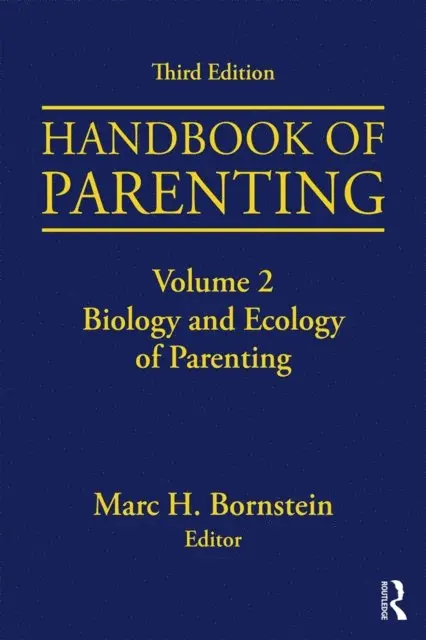
Volume 2, Biology and Ecology of Parenting, relates parenting to its biological roots and sets parenting in its ecological framework. Some aspects of parenting are influenced by the organic makeup of human beings, and the chapters in Part I, on the Biology of Parenting, examine the evolution of parenting, the psychobiological determinants of parenting in nonhumans, and primate parenting, as well as the genetic, prenatal, neuroendocrinological, and neurobiological bases of human parenting. A deep understanding of what it means to parent also depends on the ecologies in which parenting takes place. Beyond the nuclear family, parents are embedded in, influence, and are themselves affected by larger social systems. The chapters in Part II, on the Ecology of Parenting, examine the ancient and modern histories of parenting as well as epidemiology, neighborhoods, educational attainment, socioeconomic status, culture, and environment to provide an overarching relational developmental contextual systems perspective on parenting.
2 005 kr
Läs direkt efter köp
This highly anticipated third edition of the Handbook of Parenting brings together an array of field-leading experts who have worked in different ways toward understanding the many diverse aspects of parenting. Contributors to the Handbook look to the most recent research and thinking to shed light on topics every parent, professional, and policymaker wonders about. Parenting is a perennially "hot" topic. After all, everyone who has ever lived has been parented, and the vast majority of people become parents themselves. No wonder bookstores house shelves of "how-to" parenting books, and magazine racks in pharmacies and airports overflow with periodicals that feature parenting advice. However, almost none of these is evidence-based. The Handbook of Parenting is. Period. Each chapter has been written to be read and absorbed in a single sitting, and includes historical considerations of the topic, a discussion of central issues and theory, a review of classical and modern research, and forecasts of future directions of theory and research. Together, the five volumes in the Handbook cover Children and Parenting, the Biology and Ecology of Parenting, Being and Becoming a Parent, Social Conditions and Applied Parenting, and the Practice of Parenting.
Volume 2, Biology and Ecology of Parenting, relates parenting to its biological roots and sets parenting in its ecological framework. Some aspects of parenting are influenced by the organic makeup of human beings, and the chapters in Part I, on the Biology of Parenting, examine the evolution of parenting, the psychobiological determinants of parenting in nonhumans, and primate parenting, as well as the genetic, prenatal, neuroendocrinological, and neurobiological bases of human parenting. A deep understanding of what it means to parent also depends on the ecologies in which parenting takes place. Beyond the nuclear family, parents are embedded in, influence, and are themselves affected by larger social systems. The chapters in Part II, on the Ecology of Parenting, examine the ancient and modern histories of parenting as well as epidemiology, neighborhoods, educational attainment, socioeconomic status, culture, and environment to provide an overarching relational developmental contextual systems perspective on parenting.
1 961 kr
Läs direkt efter köp
This highly anticipated third edition of the Handbook of Parenting brings together an array of field-leading experts who have worked in different ways toward understanding the many diverse aspects of parenting. Contributors to the Handbook look to the most recent research and thinking to shed light on topics every parent, professional, and policy maker wonders about. Parenting is a perennially "hot" topic. After all, everyone who has ever lived has been parented, and the vast majority of people become parents themselves. No wonder bookstores house shelves of "how-to" parenting books and magazine racks in pharmacies and airports overflow with periodicals that feature parenting advice. However, almost none of these is evidence-based. The Handbook of Parenting is. Period. Each chapter has been written to be read and absorbed in a single sitting, and includes historical considerations of the topic, a discussion of central issues and theory, a review of classical and modern research, and forecasts of future directions of theory and research. Together, the five volumes in the Handbook cover Children and Parenting, the Biology and Ecology of Parenting, Being and Becoming a Parent, Social Conditions and Applied Parenting, and the Practice of Parenting.
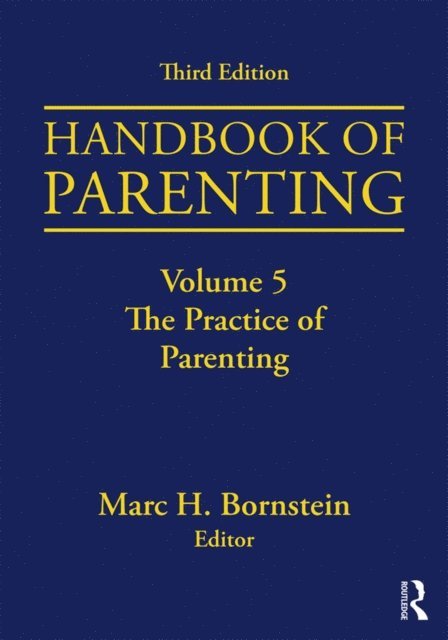
Volume 5, The Practice of Parenting, describes the nuts-and-bolts of parenting as well as the promotion of positive parenting practices. Parents meet the biological, physical, and health requirements of children. Parents interact with children socially. Parents stimulate children to engage and understand the environment and to enter the world of learning. Parents provision, organize, and arrange their children’s home and local environments and the media to which children are exposed. Parents also manage child development vis-à-vis childcare, school, the circles of medicine and law, as well as other social institutions through their active citizenship. The chapters in Part I, on Practical Parenting, review the ethics of parenting, parenting and the development of children''s self-regulation, discipline, prosocial and moral development, and resilience as well as children’s language, play, cognitive, and academic achievement and children’s peer relationships. The chapters in Part II, on Parents and Social Institutions, explore parents and their children’s childcare, activities, media, schools, and healthcare and examine relations between parenthood and the law, public policy, and religion and spirituality.
2 005 kr
Läs direkt efter köp
This highly anticipated third edition of the Handbook of Parenting brings together an array of field-leading experts who have worked in different ways toward understanding the many diverse aspects of parenting. Contributors to the Handbook look to the most recent research and thinking to shed light on topics every parent, professional, and policy maker wonders about. Parenting is a perennially "hot" topic. After all, everyone who has ever lived has been parented, and the vast majority of people become parents themselves. No wonder bookstores house shelves of "how-to" parenting books and magazine racks in pharmacies and airports overflow with periodicals that feature parenting advice. However, almost none of these is evidence-based. The Handbook of Parenting is. Period. Each chapter has been written to be read and absorbed in a single sitting, and includes historical considerations of the topic, a discussion of central issues and theory, a review of classical and modern research, and forecasts of future directions of theory and research. Together, the five volumes in the Handbook cover Children and Parenting, the Biology and Ecology of Parenting, Being and Becoming a Parent, Social Conditions and Applied Parenting, and the Practice of Parenting.
Volume 5, The Practice of Parenting, describes the nuts-and-bolts of parenting as well as the promotion of positive parenting practices. Parents meet the biological, physical, and health requirements of children. Parents interact with children socially. Parents stimulate children to engage and understand the environment and to enter the world of learning. Parents provision, organize, and arrange their children’s home and local environments and the media to which children are exposed. Parents also manage child development vis-à-vis childcare, school, the circles of medicine and law, as well as other social institutions through their active citizenship. The chapters in Part I, on Practical Parenting, review the ethics of parenting, parenting and the development of children''s self-regulation, discipline, prosocial and moral development, and resilience as well as children’s language, play, cognitive, and academic achievement and children’s peer relationships. The chapters in Part II, on Parents and Social Institutions, explore parents and their children’s childcare, activities, media, schools, and healthcare and examine relations between parenthood and the law, public policy, and religion and spirituality.
1 552 kr
Läs direkt efter köp
This highly anticipated third edition of the Handbook of Parenting brings together an array of field-leading experts who have worked in different ways toward understanding the many diverse aspects of parenting. Contributors to the Handbook look to the most recent research and thinking to shed light on topics every parent, professional, and policymaker wonders about. Parenting is a perennially "hot" topic. After all, everyone who has ever lived has been parented, and the vast majority of people become parents themselves. No wonder bookstores house shelves of "how-to" parenting books, and magazine racks in pharmacies and airports overflow with periodicals that feature parenting advice. However, almost none of these is evidence-based. The Handbook of Parenting is. Period. Each chapter has been written to be read and absorbed in a single sitting, and includes historical considerations of the topic, a discussion of central issues and theory, a review of classical and modern research, and forecasts of future directions of theory and research. Together, the five volumes in the Handbook cover Children and Parenting, the Biology and Ecology of Parenting, Being and Becoming a Parent, Social Conditions and Applied Parenting, and the Practice of Parenting.
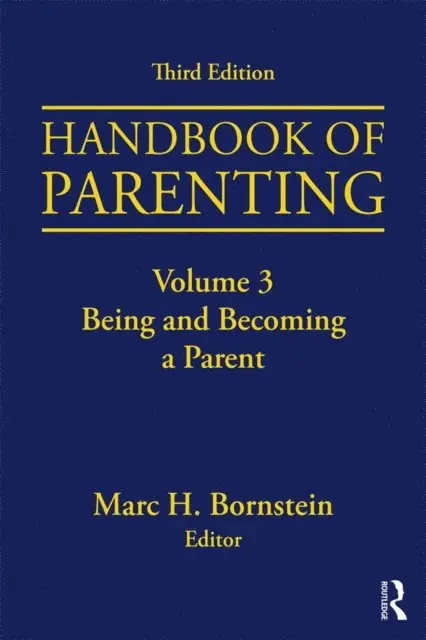
Volume 3, Being and Becoming a Parent, considers a large cast of characters responsible for parenting, each with her or his own customs and agenda, and examines what the psychological characteristics and social interests of those individuals reveal about what parenting is. Chapters in Part I, on The Parent, show just how rich and multifaceted is the constellation of children’s caregivers. Considered first are family systems and then successively mothers and fathers, coparenting and gatekeeping between parents, adolescent parenting, grandparenting, and single parenthood, divorced and remarried parenting, lesbian and gay parents and, finally, sibling caregivers and nonparental caregiving. Parenting also draws on transient and enduring physical, personality, and intellectual characteristics of the individual. The chapters in Part II, on Becoming and Being a Parent, consider the intergenerational transmission of parenting, parenting and contemporary reproductive technologies, the transition to parenthood, and stages of parental development, and then chapters turn to parents'' well-being, emotions, self-efficacy, cognitions, and attributions as well as socialization, personality in parenting, and psychoanalytic theory. These features of parents serve many functions: they generate and shape parental practices, mediate the effectiveness of parenting, and help to organize parenting.
1 587 kr
Läs direkt efter köp
This highly anticipated third edition of the Handbook of Parenting brings together an array of field-leading experts who have worked in different ways toward understanding the many diverse aspects of parenting. Contributors to the Handbook look to the most recent research and thinking to shed light on topics every parent, professional, and policymaker wonders about. Parenting is a perennially "hot" topic. After all, everyone who has ever lived has been parented, and the vast majority of people become parents themselves. No wonder bookstores house shelves of "how-to" parenting books, and magazine racks in pharmacies and airports overflow with periodicals that feature parenting advice. However, almost none of these is evidence-based. The Handbook of Parenting is. Period. Each chapter has been written to be read and absorbed in a single sitting, and includes historical considerations of the topic, a discussion of central issues and theory, a review of classical and modern research, and forecasts of future directions of theory and research. Together, the five volumes in the Handbook cover Children and Parenting, the Biology and Ecology of Parenting, Being and Becoming a Parent, Social Conditions and Applied Parenting, and the Practice of Parenting.
Volume 3, Being and Becoming a Parent, considers a large cast of characters responsible for parenting, each with her or his own customs and agenda, and examines what the psychological characteristics and social interests of those individuals reveal about what parenting is. Chapters in Part I, on The Parent, show just how rich and multifaceted is the constellation of children’s caregivers. Considered first are family systems and then successively mothers and fathers, coparenting and gatekeeping between parents, adolescent parenting, grandparenting, and single parenthood, divorced and remarried parenting, lesbian and gay parents and, finally, sibling caregivers and nonparental caregiving. Parenting also draws on transient and enduring physical, personality, and intellectual characteristics of the individual. The chapters in Part II, on Becoming and Being a Parent, consider the intergenerational transmission of parenting, parenting and contemporary reproductive technologies, the transition to parenthood, and stages of parental development, and then chapters turn to parents'' well-being, emotions, self-efficacy, cognitions, and attributions as well as socialization, personality in parenting, and psychoanalytic theory. These features of parents serve many functions: they generate and shape parental practices, mediate the effectiveness of parenting, and help to organize parenting.
1 961 kr
Läs direkt efter köp
This highly anticipated third edition of the Handbook of Parenting brings together an array of field-leading experts who have worked in different ways toward understanding the many diverse aspects of parenting. Contributors to the Handbook look to the most recent research and thinking to shed light on topics every parent, professional, and policymaker wonders about. Parenting is a perennially "hot" topic. After all, everyone who has ever lived has been parented, and the vast majority of people become parents themselves. No wonder bookstores house shelves of "how-to" parenting books and magazine racks in pharmacies and airports overflow with periodicals that feature parenting advice. However, almost none of these is evidence-based. The Handbook of Parenting is. Period. Each chapter has been written to be read and absorbed in a single sitting, and includes historical considerations of the topic, a discussion of central issues and theory, a review of classical and modern research, and forecasts of future directions of theory and research. Together, the five volumes in the Handbook cover Children and Parenting, the Biology and Ecology of Parenting, Being and Becoming a Parent, Social Conditions and Applied Parenting, and the Practice of Parenting.
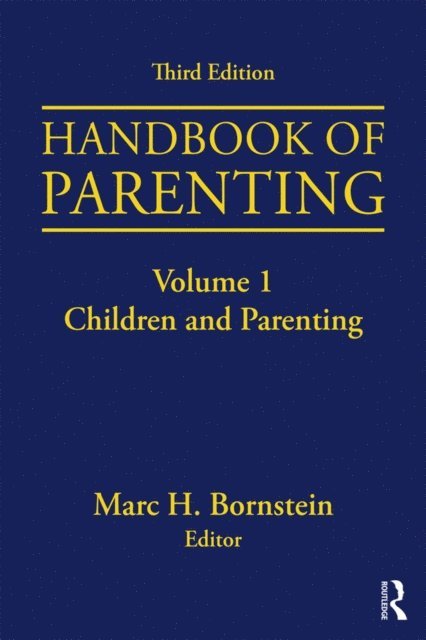
Volume 1, Children and Parenting, considers parenthood as a functional status in the life cycle: Parents protect, nurture, and teach their progeny, even if human development is more dynamic than can be determined by parental caregiving alone. Volume 1 of the Handbook of Parenting begins with chapters concerned with how children influence parenting. Notable are their more obvious characteristics, like child age or developmental stage; but subtler ones, like child gender, physical state, temperament, mental ability, and other individual-differences factors, are also instrumental. The chapters in Part I, on Parenting across the Lifespan, discuss the unique rewards and special demands of parenting children of different ages and stages – infants, toddlers, youngsters in middle childhood, and adolescents—as well as the modern notion of parent-child relationships in emerging adulthood, adulthood, and old age. The chapters in Part II, on Parenting Children of Varying Status, discuss common issues associated with parenting children of different genders and temperaments as well as unique situations of parenting adopted and foster children and children with a variety of special needs, such as those with extreme talent, born preterm, who are socially withdrawn or aggressive, or who fall on the autistic spectrum, manifest intellectual disabilities, or suffer a chronic health condition.
1 892 kr
Läs direkt efter köp
This highly anticipated third edition of the Handbook of Parenting brings together an array of field-leading experts who have worked in different ways toward understanding the many diverse aspects of parenting. Contributors to the Handbook look to the most recent research and thinking to shed light on topics every parent, professional, and policymaker wonders about. Parenting is a perennially "hot" topic. After all, everyone who has ever lived has been parented, and the vast majority of people become parents themselves. No wonder bookstores house shelves of "how-to" parenting books and magazine racks in pharmacies and airports overflow with periodicals that feature parenting advice. However, almost none of these is evidence-based. The Handbook of Parenting is. Period. Each chapter has been written to be read and absorbed in a single sitting, and includes historical considerations of the topic, a discussion of central issues and theory, a review of classical and modern research, and forecasts of future directions of theory and research. Together, the five volumes in the Handbook cover Children and Parenting, the Biology and Ecology of Parenting, Being and Becoming a Parent, Social Conditions and Applied Parenting, and the Practice of Parenting.
Volume 1, Children and Parenting, considers parenthood as a functional status in the life cycle: Parents protect, nurture, and teach their progeny, even if human development is more dynamic than can be determined by parental caregiving alone. Volume 1 of the Handbook of Parenting begins with chapters concerned with how children influence parenting. Notable are their more obvious characteristics, like child age or developmental stage; but subtler ones, like child gender, physical state, temperament, mental ability, and other individual-differences factors, are also instrumental. The chapters in Part I, on Parenting across the Lifespan, discuss the unique rewards and special demands of parenting children of different ages and stages – infants, toddlers, youngsters in middle childhood, and adolescents—as well as the modern notion of parent-child relationships in emerging adulthood, adulthood, and old age. The chapters in Part II, on Parenting Children of Varying Status, discuss common issues associated with parenting children of different genders and temperaments as well as unique situations of parenting adopted and foster children and children with a variety of special needs, such as those with extreme talent, born preterm, who are socially withdrawn or aggressive, or who fall on the autistic spectrum, manifest intellectual disabilities, or suffer a chronic health condition.
2 123 kr
Skickas inom 10-15 vardagar
2 123 kr
Skickas inom 10-15 vardagar
2 250 kr
Skickas inom 10-15 vardagar