Margo Gottlieb - Böcker
Assessment & Accountability in Language Education Programs
A Guide for Administrators and Teachers
589 kr
Skickas inom 3-6 vardagar
Beyond Crises
Overcoming Linguistic and Cultural Inequities in Communities, Schools, and Classrooms
365 kr
Tillfälligt slut
What are some lessons learned from the pandemic?
We learned that, in times of crises, the humanitarian needs of students, families, and ourselves must be a top priority.
We learned that forming effective partnerships with families and communities is essential to the health and well-being of our children.
We were offered a blunt reminder that a system designed to serve the interests of a privileged few was destined to fail our historically underserved students, especially our millions of multilingual learners.
Above all, we learned that the “normal” many of us have yearned for was never good enough—that we must envision a “better world,” where we build on our multilingual students’ unique assets and cultivate their inner brilliance. Only then will we deliver on their promise.
It’s this “better world,” a world in which communities, schools, and classrooms work together as a “whole-child ecosystem,” Beyond Crises: Overcoming Linguistic and Cultural Inequities in Communities, Schools, and Classrooms sets out to create. Taking a look from the outside in, Debbie Zacarian, Margarita Calderón, and Margo Gottlieb address three critical arenas:
1. Imagining Communities describes how to design and enact strengths-based family and community partnerships, including the critical importance of identifying, valuing, and acknowledging each member’s assets and competencies, and the ways recent crises have amplified their struggles.
2. Imagining Schools takes an up-close look at policies, structures, and now irrelevant ways of schooling that call for change and how we might reconfigure professional development to ensure every teacher and administrator is dedicated to the well-being and success of our multilingual learners.
3. Imagining Classrooms demonstrates how to optimize learning opportunities—both virtual and face-to-face—so our diverse students grow cognitively, linguistically, and social-emotionally, and accentuate their talents in knowing and using multiple languages in linguistically and culturally sustainable environments.
“Student and family, classroom, school, and local community are not silos unto themselves,” Debbie, Margarita, and Margo insist. “They are part of a larger whole that is interrelated and interconnected and, even, interdependent on each other. By forming stronger alliances, we can realize the power of truly working, socializing, and flourishing together.” Beyond Crises is the first critical step forward.
Breaking Down the Monolingual Wall
Essential Shifts for Multilingual Learners' Success
386 kr
Skickas inom 5-8 vardagar
Your guide to culturally and linguistically sustaining practices in your dual language classroom and school.
It’s time to set the record straight: Multilingualism is a tremendous asset that must be nurtured and valued and the most effective pathway to multilingualism is dual language education. Despite significant evidence attesting to the cognitive, social/emotional, and economic benefits of multilingualism, the majority of our classrooms and schools are monolingual.
Encouragingly, recent shifts in state policies have increased the demand for dual language programming in our schools. This increased momentum brings new challenges, including the need for more bilingually authorized teachers, high-quality instructional resources, and accurate assessment and accountability in the target languages of instruction. With contributions from ten experts in multilingual education, Breaking Down the Monolingual Wall outlines the systemic and pedagogical approaches necessary for successful multilingual and dual language programs. The book supports educators to:
Shift the paradigm from one that is subtractive and deficit-based to one that is additive and assets-basedEmbed culturally and linguistically sustaining practices in their instructionUnderstand how to promote multilingualism in the context of teaching academic contentDevelop assessments as, for, and of learning in multiple languages.Lead high-quality dual language schools and programsRecruit and retain highly qualified bilingual educatorsOffering a comprehensive overview of bilingual policies and historical context all educators should understand, Breaking Down the Monolingual Wall is an invaluable guide to creating dual language learning environments that build on the precious assets of our multilingual students and families.
410 kr
Skickas inom 5-8 vardagar
Empowering multilingual learners, families, and teachers
With its emphasis on relationship building as the backdrop for linguistically and culturally sustainable assessment, the bestselling second edition of Assessing Multilingual Learners significantly impacted the field of language education. Applying the groundbreaking assessment “as,” “for,” and “of” learning model to new contexts, this updated third edition offers educators welcoming and encouraging ways to support multilingual learners to succeed in school and beyond.
Through eight thoroughly revised chapters, Dr. Margo Gottlieb ties assessment to teaching and learning to foster agency and empowerment for multilingual learners, families, and teachers. This book envisions assessment as a process integral to and embedded in curriculum and instruction through:
Assets-based languageStudent-centered activitiesClassroom assessment toolsPortraits of practice illustrating authentic assessment practicesReferences and resources for stimulating discussionDeep questioning for thinking through processes, dilemmas, or challengesAssessing Multilingual Learners explores the realities and possibilities of classroom assessment as a road to inspire multilingual learners, their families, and teachers to reach great heights.
Collaborative Assessment for Multilingual Learners and Teachers
Pathways to Partnerships
397 kr
Tillfälligt slut
Collaborative assessment practices lead to strong partnerships
Join bestselling authors Margo Gottlieb and Andrea Honigsfeld on an engaging journey to showcase collaborative assessment within assets-driven instructional practices. Integrating instructional and assessment cycles, explore how multilingual learners can interact with each other and their teachers to form lasting partnerships. Using evidence-based, research-informed strategies, Gottlieb and Honigsfeld invite educators to form partnerships to fortify linguistically and culturally sustainable assessment within their classroom routines.
Throughout the learning journey, Collaborative Assessment for Multilingual Learners and Teachers offers:
Practical tips and adaptable templates to reinforce assessment during instructionVignettes that bring practical application of key concepts to lifeProtocols and tools for teachers and multilingual learners to engage in reflective conversations about their learningRecurring colorful icons that capture the travel theme and much more…Collaborative assessment approaches AS, FOR, and OF learning encourage relationship building to foster multilingual learners’ academic, linguistic, cultural, and social-emotional development. This practical guide supports educators in implementing collaborative assessment and welcomes multilingual learners to be partners in the process.
437 kr
Kommande
Rethink how academic languaging can transform content area teaching
For years, the teaching of content-based academic language to multilingual learners has focused on formulas, vocabulary lists, and sentence patterns—often sidelining students’ linguistic and cultural strengths. Gisela Ernst-Slavit and Margo Gottlieb address these challenges by embracing academic languaging, an active, collaborative student-driven process. Academic Languaging offers strategies to integrate language and content learning while fostering student engagement, voice, and agency.
Dedicated chapters on academic languaging for Language Arts, Mathematics, Social Studies, and Science highlight the dimensions of disciplinary language for each subject and provide strategies for moving learning forward with multilingual learners. Additional features include:
“Stop and Think” prompts to help educators connect new ideas with their instructional settingsPrompts at the end of each chapter to encourage deeper thinking and application of the materialMultilingual examples to mirror the varied classroom settings in the U.S. and beyond.The ultimate resource for educators committed to empowering multilingual learners and fostering meaningful, culturally sustaining education, Academic Languaging ensures multilingual learners comprehend academic content and thrive as confident, autonomous drivers of their own learning.
173 kr
Skickas inom 5-8 vardagar
602 kr
Skickas inom 3-6 vardagar
Academic Language in Diverse Classrooms: English Language Arts, Grades 3-5
Promoting Content and Language Learning
564 kr
Skickas inom 3-6 vardagar
Make every student fluent in the language of learning.
Language has always been the center of English Language Arts, but with most states adopting CCSS, the focus on language and literacy across the content areas is required. Today it’s more essential than ever that English language learners and proficient English learners have the supports to access and achieve the language of school.
The Common Core and ELD standards provide pathways to academic success through academic language. Using an integrated Curricular Framework, districts, schools and professional learning communities can:
Design and implement thematic units for learning Draw from content and language standards to set targets for all students Examine standards-centered materials for academic language Collaborate in planning instruction and assessment within and across lessons Consider linguistic and cultural resources of the students Create differentiated content and language objectives Delve deeply into instructional strategies involving academic language Reflect on teaching and learningWith dynamic classrooms and units of learning, this book gives you a streamlined path for designing and implementing curriculum that leads to student mastery of academic language—the key to school success.
“These volumes are packed with practical ideas that will help all teachers attend to language within their classrooms from the discourse level to word/phrase levels. This is a road map for teaching Common Core content in language rich classrooms, and hence a resource every teacher needs within arm’s reach! It’s all here and clearly presented; this is pure gold for everyone who teaches students to speak, listen, read and write in school, with special attention to English language learners.” —Tim Boals, Executive Director of WIDA
Academic Language in Diverse Classrooms: Mathematics, Grades K–2
Promoting Content and Language Learning
564 kr
Skickas inom 3-6 vardagar
Help your students unlock important mathematical concepts!
If you’ve ever watched a student struggle with learning math concepts, you know that academic English can sometimes create stumbling blocks to understanding. To grasp complicated concepts, build skills, and demonstrate achievement, students need to master academic language in math.
The Common Core and ELD standards provide pathways to academic success through academic language. Using an integrated Curricular Framework, districts, schools and professional learning communities can:
Design and implement thematic units for learning Draw from content and language standards to set targets for all students Examine standards-centered materials for academic language Collaborate in planning instruction and assessment within and across lessons Consider linguistic and cultural resources of the students Create differentiated content and language objectives Delve deeply into instructional strategies involving academic language Reflect on teaching and learningEach grade-specific chapter models the types of interactions and learning experiences that help students master both math content and academic language. This essential book shows you why mastery of academic language is the key to students’ academic success.
“With growing numbers of English Language Learners in our classrooms, teachers need to be able to help students as they learn academic vocabulary and concepts. This series offers teachers a practical support, complete with abundant rubrics and detailed plans for teaching math vocabulary!” —Renee Peoples, Teacher Swain County Schools, Bryson City, NC
Academic Language in Diverse Classrooms: Mathematics, Grades 3–5
Promoting Content and Language Learning
474 kr
Skickas inom 3-6 vardagar
Help your students unlock important mathematical concepts!
If you’ve ever watched a student struggle with learning math concepts, you know that academic English can sometimes create stumbling blocks to understanding. To grasp complicated concepts, build skills, and demonstrate achievement, students need to master academic language in math.
The Common Core and ELD standards provide pathways to academic success through academic language. Using an integrated Curricular Framework, districts, schools and professional learning communities can:
Design and implement thematic units for learning Draw from content and language standards to set targets for all students Examine standards-centered materials for academic language Collaborate in planning instruction and assessment within and across lessons Consider linguistic and cultural resources of the students Create differentiated content and language objectives Delve deeply into instructional strategies involving academic language Reflect on teaching and learningEach grade-specific chapter models the types of interactions and learning experiences that help students master both math content and academic language. This essential book shows you why mastery of academic language is the key to students’ academic success.
“With growing numbers of English Language Learners in our classrooms, teachers need to be able to help students as they learn academic vocabulary and concepts. This series offers teachers a practical support, complete with abundant rubrics and detailed plans for teaching math vocabulary!” —Renee Peoples, Teacher Swain County Schools, Bryson City, NC
410 kr
Tillfälligt slut
Because explicit language instruction serves ALL students
Here, at last, is every K-8 teacher’s playbook on the critical role academic language plays in content learning and student achievement. What exactly is so different? Margo Gottlieb and Mariana Castro distill the complexities of language learning into four key uses through which students can probe the interplay between language and content, and demonstrate their knowledge and understanding. It’s as straight-forward as that.Best of all, Language Power is jam-packed with hands-on, replicable resources to help you seamlessly integrate academic language into your daily routines: targeted examples, activities, and templates. Along the way, you’ll learn how to
Identify, plan, assess, and implement academic language instruction using the Discuss, Argue, Recount, and Explain conceptual toolUtilize language within and across domains and content areasApply the inquiry cycle to the theme of academic language useExpand stakeholders to include students other familiesNo matter who your students are, no matter which discipline you teach, the research reads the same: school achievement depends upon effective communication. Read Language Power, implement its resources, and soon see for yourself what a powerful tool language is in realizing this goal.
“This thought-provoking and very practical book will be welcomed by all educators who are striving to provide a more equitable curriculum for students. As Gottlieb and Castro suggest, this endeavor requires classroom teachers to think critically about the language they use with students, and develop the knowledge and skills to provide students with explicit and well-planned support for the development of academic language. Language Power will assist educators to make these endeavors a reality.”Pauline Gibbons, Author of Scaffolding Language, Scaffolding Learning, Second Edition244 kr
Skickas
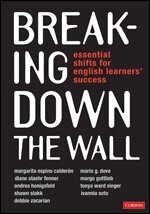
It was a dark and stormy night in Santa Barbara. January 19, 2017. The next day’s inauguration drumroll played on the evening news. Huddled around a table were nine Corwin authors and their publisher, who together have devoted their careers to equity in education. They couldn’t change the weather, they couldn’t heal a fractured country, but they did have the power to put their collective wisdom about EL education upon the page to ensure our multilingual learners reach their highest potential.
Proudly, we introduce you now to the fruit of that effort: Breaking Down the Wall: Essential Shifts for English Learners’ Success.
In this first-of-a-kind collaboration, teachers and leaders, whether in small towns or large urban centers, finally have both the research and the practical strategies to take those first steps toward excellence in educating our culturally and linguistically diverse children. It’s a book to be celebrated because it means we can throw away the dark glasses of deficit-based approaches and see children who come to school speaking a different home language for what they really are: learners with tremendous assets.
The authors’ contributions are arranged in nine chapters that become nine tenets for teachers and administrators to use as calls to actions in their own efforts to realize our English learners’ potential: 1. From Deficit-Based to Asset-Based 2. From Compliance to Excellence 3. From Watering Down to Challenging 4. From Isolation to Collaboration 5. From Silence to Conversation 6. From Language to Language, Literacy, and Content 7. From Assessment of Learning to Assessment for and as Learning 8. From Monolingualism to Multilingualism 9. From Nobody Cares to Everyone/Every Community Cares
Read this book; the chapters speak to one another, a melodic echo of expertise, classroom vignettes, and steps to take. To shift the status quo is neither fast nor easy, but there is a clear process, and it’s laid out here in Breaking Down the Wall. To distill it into a single line would go something like this: if we can assume mutual ownership, if we can connect instruction to all children’s personal, social, cultural, and linguistic identities, then all students will achieve.
398 kr
Skickas inom 5-8 vardagar
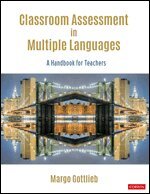
What if multilingual learners had the freedom to interact in more than one language with their peers during classroom assessment? What if multilingual learners and their teachers in dual language settings had opportunities to use assessment data in multiple languages to make decisions? Just imagine the rich linguistic, academic, and cultural reservoirs we could tap as we determine what our multilingual learners know and can do.
Thankfully, Margo Gottlieb is here to provide concrete and actionable guidance on how to create assessment systems that enable understanding of the whole student, not just that fraction of the student who is only visible as an English learner. With Classroom Assessment in Multiple Languages as your guide, you’ll:
Better understand the rationale for and evidence on the value and advantages of classroom assessment in multiple languages Add to your toolkit of classroom assessment practices in one or multiple languages Be more precise and effective in your assessment of multilingual learners by embedding assessment as, for, and of learning into your instructional repertoire Recognize how social-emotional, content, and language learning are all tied to classroom assessment Guide multilingual learners in having voice and choice in the assessment processDespite the urgent need, assessment for multilingual learners is generally tucked into a remote chapter, if touched upon at all in a book; the number of resources narrows even more when multiple languages are brought into play. Here at last is that single resource on how educators and multilingual learners can mutually value languages and cultures in instruction and assessment throughout the school day and over time. We encourage you to get started right away.
“Margo Gottlieb has demonstrated why the field, particularly the field as it involves the teaching of multilingual learners, needs another assessment book, particularly a book like this. . . . Classroom Assessment in Multiple Languages quite likely could serve as a catalyst toward the beginning of an enlightened discourse around assessment that will benefit multilingual learners.”
~Kathy Escamilla