Mark Gardener – författare
2 176 kr
Skickas inom 10-15 vardagar
269 kr
Skickas inom 5-8 vardagar
319 kr
Läs direkt efter köp
R is fast becoming the de facto standard for statistical computing and analysis in science, business, engineering, and related fields. This book examines this complex language using simple statistical examples, showing how R operates in a user-friendly context. Both students and workers in fields that require extensive statistical analysis will find this book helpful as they learn to use R for simple summary statistics, hypothesis testing, creating graphs, regression, and much more. It covers formula notation, complex statistics, manipulating data and extracting components, and rudimentary programming.
R, the open source statistical language increasingly used to handle statistics and produces publication-quality graphs, is notoriously complex This book makes R easier to understand through the use of simple statistical examples, teaching the necessary elements in the context in which R is actually used Covers getting started with R and using it for simple summary statistics, hypothesis testing, and graphs Shows how to use R for formula notation, complex statistics, manipulating data, extracting components, and regression Provides beginning programming instruction for those who want to write their own scriptsBeginning R offers anyone who needs to perform statistical analysis the information necessary to use R with confidence.
319 kr
Läs direkt efter köp
R is fast becoming the de facto standard for statistical computing and analysis in science, business, engineering, and related fields. This book examines this complex language using simple statistical examples, showing how R operates in a user-friendly context. Both students and workers in fields that require extensive statistical analysis will find this book helpful as they learn to use R for simple summary statistics, hypothesis testing, creating graphs, regression, and much more. It covers formula notation, complex statistics, manipulating data and extracting components, and rudimentary programming.
R, the open source statistical language increasingly used to handle statistics and produces publication-quality graphs, is notoriously complex This book makes R easier to understand through the use of simple statistical examples, teaching the necessary elements in the context in which R is actually used Covers getting started with R and using it for simple summary statistics, hypothesis testing, and graphs Shows how to use R for formula notation, complex statistics, manipulating data, extracting components, and regression Provides beginning programming instruction for those who want to write their own scriptsBeginning R offers anyone who needs to perform statistical analysis the information necessary to use R with confidence.
413 kr
Läs direkt efter köp
An essential library of basic commands you can copy and paste into R
The powerful and open-source statistical programming language R is rapidly growing in popularity, but it requires that you type in commands at the keyboard rather than use a mouse, so you have to learn the language of R. But there is a shortcut, and that''s where this unique book comes in. A companion book to Visualize This: The FlowingData Guide to Design, Visualization, and Statistics, this practical reference is a library of basic R commands that you can copy and paste into R to perform many types of statistical analyses.
Whether you''re in technology, science, medicine, business, or engineering, you can quickly turn to your topic in this handy book and find the commands you need.
Comprehensive command reference for the R programming language and a companion book to Visualize This: The FlowingData Guide to Design, Visualization, and Statistics Combines elements of a dictionary, glossary, and thesaurus for the R language Provides easy accessibility to the commands you need, by topic, which you can cut and paste into R as needed Covers getting, saving, examining, and manipulating data; statistical test and math; and all the things you can do with graphs Also includes a collection of utilities that you''ll find usefulSimplify the complex statistical R programming language with The Essential R Reference.
.413 kr
Läs direkt efter köp
An essential library of basic commands you can copy and paste into R
The powerful and open-source statistical programming language R is rapidly growing in popularity, but it requires that you type in commands at the keyboard rather than use a mouse, so you have to learn the language of R. But there is a shortcut, and that''s where this unique book comes in. A companion book to Visualize This: The FlowingData Guide to Design, Visualization, and Statistics, this practical reference is a library of basic R commands that you can copy and paste into R to perform many types of statistical analyses.
Whether you''re in technology, science, medicine, business, or engineering, you can quickly turn to your topic in this handy book and find the commands you need.
Comprehensive command reference for the R programming language and a companion book to Visualize This: The FlowingData Guide to Design, Visualization, and Statistics Combines elements of a dictionary, glossary, and thesaurus for the R language Provides easy accessibility to the commands you need, by topic, which you can cut and paste into R as needed Covers getting, saving, examining, and manipulating data; statistical test and math; and all the things you can do with graphs Also includes a collection of utilities that you''ll find usefulSimplify the complex statistical R programming language with The Essential R Reference.
.860 kr
Läs direkt efter köp
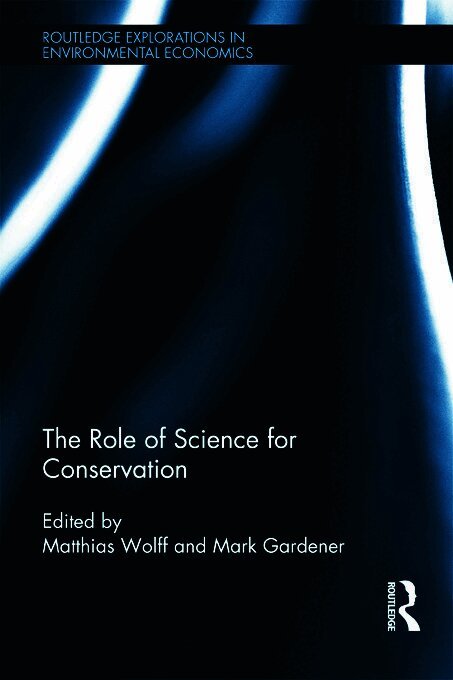
The book integrates the knowledge and reflections of 30 scientists, of which many have dedicated a substantial part of their professional life to the Galapagos archipelago, to the conservation of its biodiversity and to the sustainable management of its resources. The book can be considered a milestone on the way to the successful conservation and sustainable development of this unique world heritage site.
.
860 kr
Läs direkt efter köp
The book integrates the knowledge and reflections of 30 scientists, of which many have dedicated a substantial part of their professional life to the Galapagos archipelago, to the conservation of its biodiversity and to the sustainable management of its resources. The book can be considered a milestone on the way to the successful conservation and sustainable development of this unique world heritage site.
.
749 kr
Skickas inom 10-15 vardagar
550 kr
Skickas inom 5-8 vardagar
1 056 kr
Skickas inom 5-8 vardagar
1 671 kr
Läs direkt efter köp
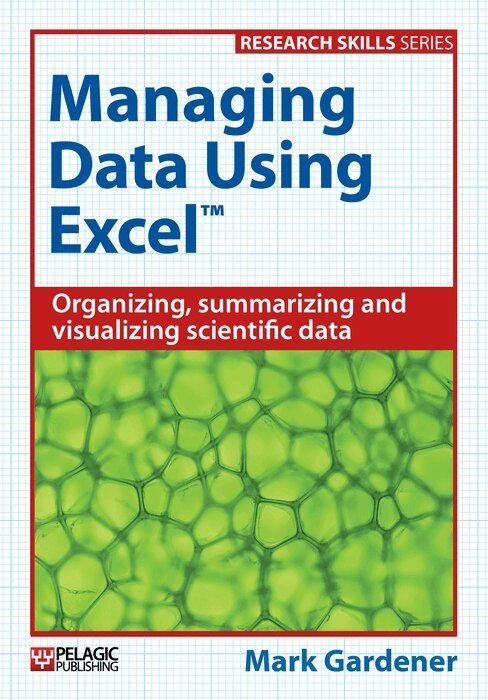
Microsoft Excel is a powerful tool that can transform the way you use data. This book explains in comprehensive and user-friendly detail how to manage, make sense of, explore and share data, giving scientists at all levels the skills they need to maximize the usefulness of their data. Readers will learn how to use Excel to: * Build a dataset – how to handle variables and notes, rearrangements and edits to data. * Check datasets – dealing with typographic errors, data validation and numerical errors. * Make sense of data – including datasets for regression and correlation; summarizing data with averages and variability; and visualizing data with graphs, pivot charts and sparklines. * Explore regression data – finding, highlighting and visualizing correlations. * Explore time-related data – using pivot tables, sparklines and line plots. * Explore association data – creating and visualizing contingency tables. * Explore differences – pivot tables and data visualizations including box-whisker plots. * Share data – methods for exporting and sharing your datasets, summaries and graphs. Alongside the text, Have a Go exercises, Tips and Notes give readers practical experience and highlight important points, and helpful self-assessment exercises and summary tables can be found at the end of each chapter. Supplementary material can also be downloaded on the companion website. Managing Data Using Excel is an essential book for all scientists and students who use data and are seeking to manage data more effectively. It is aimed at scientists at all levels but it is especially useful for university-level research, from undergraduates to postdoctoral researchers.
1 671 kr
Läs direkt efter köp
Microsoft Excel is a powerful tool that can transform the way you use data. This book explains in comprehensive and user-friendly detail how to manage, make sense of, explore and share data, giving scientists at all levels the skills they need to maximize the usefulness of their data. Readers will learn how to use Excel to: * Build a dataset – how to handle variables and notes, rearrangements and edits to data. * Check datasets – dealing with typographic errors, data validation and numerical errors. * Make sense of data – including datasets for regression and correlation; summarizing data with averages and variability; and visualizing data with graphs, pivot charts and sparklines. * Explore regression data – finding, highlighting and visualizing correlations. * Explore time-related data – using pivot tables, sparklines and line plots. * Explore association data – creating and visualizing contingency tables. * Explore differences – pivot tables and data visualizations including box-whisker plots. * Share data – methods for exporting and sharing your datasets, summaries and graphs. Alongside the text, Have a Go exercises, Tips and Notes give readers practical experience and highlight important points, and helpful self-assessment exercises and summary tables can be found at the end of each chapter. Supplementary material can also be downloaded on the companion website. Managing Data Using Excel is an essential book for all scientists and students who use data and are seeking to manage data more effectively. It is aimed at scientists at all levels but it is especially useful for university-level research, from undergraduates to postdoctoral researchers.
616 kr
Skickas inom 5-8 vardagar
1 054 kr
Skickas inom 5-8 vardagar
1 947 kr
Läs direkt efter köp
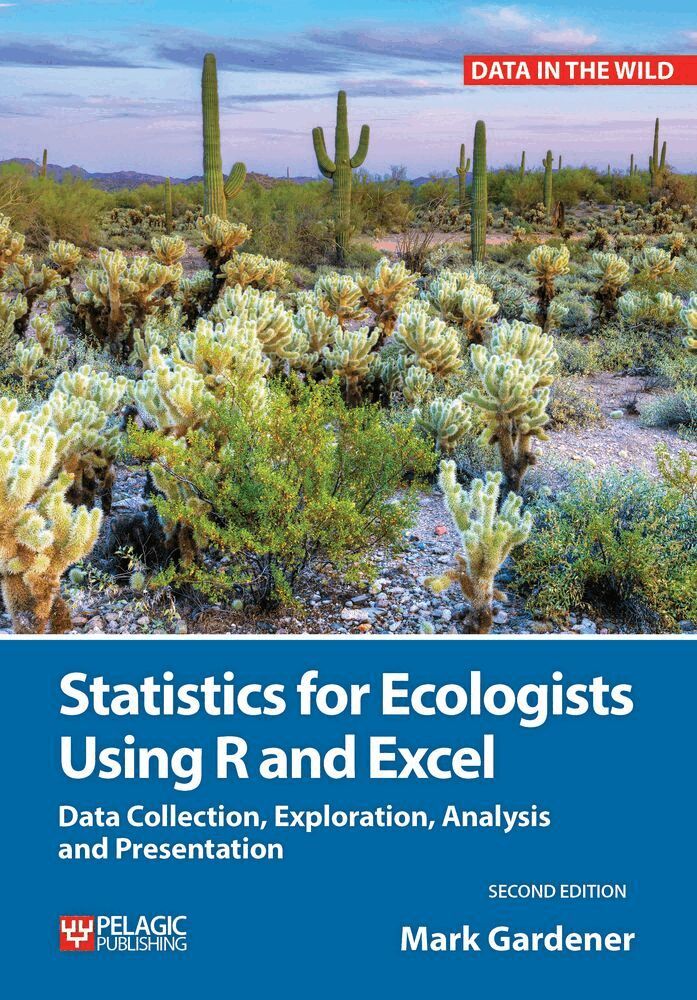
This is a book about the scientific process and how you apply it to data in ecology. You will learn how to plan for data collection, how to assemble data, how to analyze data and finally how to present the results. The book uses Microsoft Excel and the powerful Open Source R program to carry out data handling as well as producing graphs.
Statistical approaches covered include: data exploration; tests for difference – t-test and U-test; correlation – Spearman’s rank test and Pearson product-moment; association including Chi-squared tests and goodness of fit; multivariate testing using analysis of variance (ANOVA) and Kruskal–Wallis test; and multiple regression.
Key skills taught in this book include: how to plan ecological projects; how to record and assemble your data; how to use R and Excel for data analysis and graphs; how to carry out a wide range of statistical analyses including analysis of variance and regression; how to create professional looking graphs; and how to present your results.
New in this edition: a completely revised chapter on graphics including graph types and their uses, Excel Chart Tools, R graphics commands and producing different chart types in Excel and in R; an expanded range of support material online, including; example data, exercises and additional notes & explanations; a new chapter on basic community statistics, biodiversity and similarity; chapter summaries and end-of-chapter exercises.
Praise for the first edition:
This book is a superb way in for all those looking at how to design investigations and collect data to support their findings. – Sue Townsend, Biodiversity Learning Manager, Field Studies Council
[M]akes it easy for the reader to synthesise R and Excel and there is extra help and sample data available on the free companion webpage if needed. I recommended this text to the university library as well as to colleagues at my student workshops on R. Although I initially bought this book when I wanted to discover R I actually also learned new techniques for data manipulation and management in Excel – Mark Edwards, EcoBlogging
A must for anyone getting to grips with data analysis using R and excel. – Amazon 5-star review
It has been very easy to follow and will be perfect for anyone. – Amazon 5-star review
A solid introduction to working with Excel and R. The writing is clear and informative, the book provides plenty of examples and figures so that each string of code in R or step in Excel is understood by the reader. – Goodreads, 4-star review
1 947 kr
Läs direkt efter köp
This is a book about the scientific process and how you apply it to data in ecology. You will learn how to plan for data collection, how to assemble data, how to analyze data and finally how to present the results. The book uses Microsoft Excel and the powerful Open Source R program to carry out data handling as well as producing graphs.
Statistical approaches covered include: data exploration; tests for difference – t-test and U-test; correlation – Spearman’s rank test and Pearson product-moment; association including Chi-squared tests and goodness of fit; multivariate testing using analysis of variance (ANOVA) and Kruskal–Wallis test; and multiple regression.
Key skills taught in this book include: how to plan ecological projects; how to record and assemble your data; how to use R and Excel for data analysis and graphs; how to carry out a wide range of statistical analyses including analysis of variance and regression; how to create professional looking graphs; and how to present your results.
New in this edition: a completely revised chapter on graphics including graph types and their uses, Excel Chart Tools, R graphics commands and producing different chart types in Excel and in R; an expanded range of support material online, including; example data, exercises and additional notes & explanations; a new chapter on basic community statistics, biodiversity and similarity; chapter summaries and end-of-chapter exercises.
Praise for the first edition:
This book is a superb way in for all those looking at how to design investigations and collect data to support their findings. – Sue Townsend, Biodiversity Learning Manager, Field Studies Council
[M]akes it easy for the reader to synthesise R and Excel and there is extra help and sample data available on the free companion webpage if needed. I recommended this text to the university library as well as to colleagues at my student workshops on R. Although I initially bought this book when I wanted to discover R I actually also learned new techniques for data manipulation and management in Excel – Mark Edwards, EcoBlogging
A must for anyone getting to grips with data analysis using R and excel. – Amazon 5-star review
It has been very easy to follow and will be perfect for anyone. – Amazon 5-star review
A solid introduction to working with Excel and R. The writing is clear and informative, the book provides plenty of examples and figures so that each string of code in R or step in Excel is understood by the reader. – Goodreads, 4-star review
1 430 kr
Skickas inom 5-8 vardagar
609 kr
Skickas
708 kr
Skickas inom 3-6 vardagar
1 217 kr
Skickas inom 5-8 vardagar
655 kr
Läs direkt efter köp
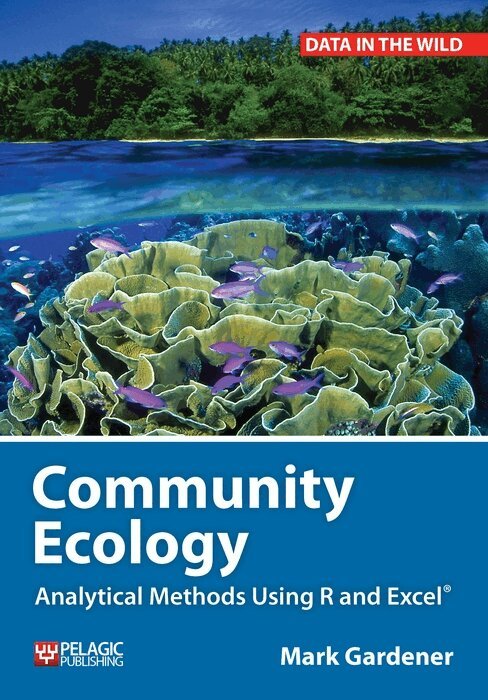
Interactions between species are of fundamental importance to all living systems and the framework we have for studying these interactions is community ecology. This is important to our understanding of the planets biological diversity and how species interactions relate to the functioning of ecosystems at all scales. Species do not live in isolation and the study of community ecology is of practical application in a wide range of conservation issues.
The study of ecological community data involves many methods of analysis. In this book you will learn many of the mainstays of community analysis including: diversity, similarity and cluster analysis, ordination and multivariate analyses. This book is for undergraduate and postgraduate students and researchers seeking a step-by-step methodology for analysing plant and animal communities using R and Excel.
Microsoft''s Excel spreadsheet is virtually ubiquitous and familiar to most computer users. It is a robust program that makes an excellent storage and manipulation system for many kinds of data, including community data. The R program is a powerful and flexible analytical system able to conduct a huge variety of analytical methods, which means that the user only has to learn one program to address many research questions. Its other advantage is that it is open source and therefore completely free. Novel analytical methods are being added constantly to the already comprehensive suite of tools available in R.
Mark Gardener is both an ecologist and an analyst. He has worked in a range of ecosystems around the world and has been involved in research across a spectrum of community types. His knowledge of R is largely self-taught and this gives him insight into the needs of students learning to use R for complicated analyses.
649 kr
Läs direkt efter köp
Interactions between species are of fundamental importance to all living systems and the framework we have for studying these interactions is community ecology. This is important to our understanding of the planets biological diversity and how species interactions relate to the functioning of ecosystems at all scales. Species do not live in isolation and the study of community ecology is of practical application in a wide range of conservation issues.
The study of ecological community data involves many methods of analysis. In this book you will learn many of the mainstays of community analysis including: diversity, similarity and cluster analysis, ordination and multivariate analyses. This book is for undergraduate and postgraduate students and researchers seeking a step-by-step methodology for analysing plant and animal communities using R and Excel.
Microsoft''s Excel spreadsheet is virtually ubiquitous and familiar to most computer users. It is a robust program that makes an excellent storage and manipulation system for many kinds of data, including community data. The R program is a powerful and flexible analytical system able to conduct a huge variety of analytical methods, which means that the user only has to learn one program to address many research questions. Its other advantage is that it is open source and therefore completely free. Novel analytical methods are being added constantly to the already comprehensive suite of tools available in R.
Mark Gardener is both an ecologist and an analyst. He has worked in a range of ecosystems around the world and has been involved in research across a spectrum of community types. His knowledge of R is largely self-taught and this gives him insight into the needs of students learning to use R for complicated analyses.