• Fri frakt över 249 kr
  • •
  • Snabba leveranser
  • •
  • Billiga böcker
Kundservice

Du är på sajten för privatpersoner.

Företag, bibliotek eller offentlig verksamhet?

Du handlar på classic.bokus.com, där alla dina funktioner finns intakta.
Till classic.bokus.com
Bokus logotyp. Gå till startsidan.
  • Erbjudanden
  • Nyheter
  • Student
  • Topplistor
  • Barn & ungdom
  • Bokus Play
  • E-böcker
  • Pocketböcker
  • Spel & pussel

10% rabatt på allt med kod NYSTART10 →

Sidfot

Mina sidor

    Hjälp

    • Kundservice
    • Vanliga frågor och svar
    • Frakt och leverans
    • Retur vid ångerrätt
    • Reklamera vara
    • Betalning
    • Köpvillkor
    • Allmänna villkor
    • Information om webbplatsens tillgänglighet

    Om Bokus

    • Om oss
    • Pressrum
    • För studenter
    • För företag
    • För bibliotek och offentlig verksamhet
    • För leverantörer
    • Hållbarhet

    Populärt

    • Aktuella erbjudanden
    • Presentkort
    • Studentlitteratur
    • Nya böcker
    • Topplistor
    • Signerade böcker
    • Engelska böcker

    Inspiration

    • Boktips
    • BookTok
    • Populära bokserier
    • Barnbokskaraktärer
    • Populära författare
    Logotyp för Bokus
    Följ oss på Facebook (extern länk)Följ oss på Instagram (extern länk)Följ oss på YouTube (extern länk)Följ oss på TikTok (extern länk)
    bokus @ CookiesAnpassa cookiesIntegritetspolicyKöpvillkor
    Till Citymail hemsida (extern länk)Till Budbee hemsida (extern länk)Till Postnord hemsida (extern länk)Till Schenker hemsida (extern länk)Till Early Bird hemsida (extern länk)Till Walleys hemsida (extern länk)
    1. Naturvetenskap och teknik
    2. Matematik och naturvetenskap
    3. Matematik
    4. Matematisk statistik

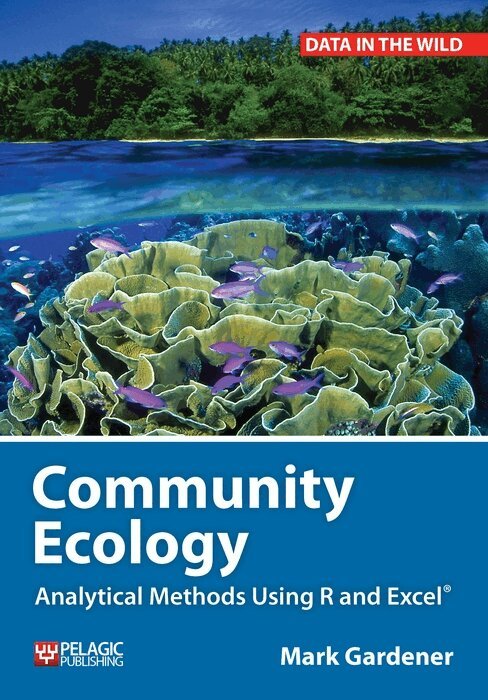
    Community Ecology

    Analytical Methods Using R and Excel

    AvMark Gardener

    Häftad, Engelska, 2014

    Del i serien Data in the Wild

    848 kr

    Beställningsvara. Skickas inom 3-6 vardagar. Fri frakt över 249 kr.

    Fler format och utgåvor

    Inbunden

    1 257 kr

    E-bok

    671 kr

    E-bok

    673 kr

    Beskrivning

    Interactions between species are of fundamental importance to all living systems and the framework we have for studying these interactions is community ecology. This is important to our understanding of the planets biological diversity and how species interactions relate to the functioning of ecosystems at all scales. Species do not live in isolation and the study of community ecology is of practical application in a wide range of conservation issues.The study of ecological community data involves many methods of analysis. In this book you will learn many of the mainstays of community analysis including: diversity, similarity and cluster analysis, ordination and multivariate analyses. This book is for undergraduate and postgraduate students and researchers seeking a step-by-step methodology for analysing plant and animal communities using R and Excel.Microsoft's Excel spreadsheet is virtually ubiquitous and familiar to most computer users. It is a robust program that makes an excellent storage and manipulation system for many kinds of data, including community data. The R program is a powerful and flexible analytical system able to conduct a huge variety of analytical methods, which means that the user only has to learn one program to address many research questions. Its other advantage is that it is open source and therefore completely free. Novel analytical methods are being added constantly to the already comprehensive suite of tools available in R.Mark Gardener is both an ecologist and an analyst. He has worked in a range of ecosystems around the world and has been involved in research across a spectrum of community types. His knowledge of R is largely self-taught and this gives him insight into the needs of students learning to use R for complicated analyses.

    Produktinformation

    • Utgivningsdatum:2014-02-01
    • Mått:170 x 244 x 30 mm
    • Vikt:960 g
    • Format:Häftad
    • Språk:Engelska
    • Serie:Data in the Wild
    • Antal sidor:556
    • Förlag:Pelagic Publishing
    • ISBN:9781907807619

    Utforska kategorier

    • Matematisk statistik inom Naturvetenskap och teknik
    • Biovetenskap inom Naturvetenskap och teknik
    • Affärsapplikationer inom Data och IT

    Mer om författaren

    Mark Gardener (www.gardenersown.co.uk) is an ecologist, lecturer, and writer working in the UK. His primary area of research was in pollination ecology and he has worked in the UK and around the word (principally Australia and the United States). Since his doctorate he has worked in many areas of ecology, often as a teacher and supervisor. He believes that ecological data, especially community data, is the most complicated and ill-behaved and is consequently the most fun to work with. He was introduced to R by a like-minded pedant whilst working in Australia during his doctorate. Learning R was not only fun but opened up a new avenue, making the study of community ecology a whole lot easier. He is currently self-employed and runs courses in ecology, data analysis, and R for a variety of organizations. Mark lives in rural Devon with his wife Christine, a biochemist who consequently has little need of statistics.

    Recensioner i media

    Following an intuitive thread from data entry through to analysis and interpretation, this is intended as a comprehensive course in the main methods of community analysis, both traditional and current. The intimidating length can largely be attributed to the numerous worked examples with full output. Some techniques are demonstrated in both Excel and R, which seems superfluous, since the latter is almost invariably superior. I would have liked more on GREP, an invaluable tool for checking and formatting data, and a notable weakness of Excel. Overall this is a useful resource for postgraduate students, but it could have been more concise and selective.

    Innehållsförteckning

    • 1. Starting to look at communities2. Software tools for community ecology3. Recording your data4. Beginning data exploration: using software tools5. Exploring data: choosing your analytical method6. Exploring data: getting insights7. Diversity: species richness8. Diversity: indices9. Diversity: comparing10. Diversity: sampling scale 11. Rank abundance or dominance models 12. Similarity and cluster analysis13. Association analysis: identifying communities14. Ordination Appendices Bibliography Index