Mark Wigley - Böcker
Visar alla böcker från författaren Mark Wigley. Handla med fri frakt och snabb leverans.
8 produkter
8 produkter
349 kr
Tillfälligt slut
863 kr
Skickas inom 5-8 vardagar
1 525 kr
Skickas inom 11-20 vardagar
A wide-ranging and challenging exploration of design and how it engages with the selfThe field of design has radically expanded. As a practice, design is no longer limited to the world of material objects but rather extends from carefully crafted individual styles and online identities to the surrounding galaxies of personal devices, new materials, interfaces, networks, systems, infrastructures, data, chemicals, organisms, and genetic codes.Superhumanity seeks to explore and challenge our understanding of “design” by engaging with and departing from the concept of the “self.” This volume brings together more than fifty essays by leading scientists, artists, architects, designers, philosophers, historians, archaeologists, and anthropologists, originally disseminated online via e-flux Architecture between September 2016 and February 2017 on the invitation of the Third Istanbul Design Biennial. Probing the idea that we are and always have been continuously reshaped by the artifacts we shape, this book asks: Who designed the lives we live today? What are the forms of life we inhabit, and what new forms are currently being designed? Where are the sites, and what are the techniques, to design others?This vital and far-reaching collection of essays and images seeks to explore and reflect on the ways in which both the concept and practice of design are operative well beyond tangible objects, expanding into the depths of self and forms of life.Contributors: Zeynep Çelik Alexander, Lucia Allais, Shumon Basar, Ruha Benjamin, Franco “Bifo” Berardi, Daniel Birnbaum, Ina Blom, Benjamin H. Bratton, Giuliana Bruno, Tony Chakar, Mark Cousins, Simon Denny, Keller Easterling, Hu Fang, RubÉn Gallo, Liam Gillick, Boris Groys, Rupali Gupte, Andrew Herscher, Tom Holert, Brooke Holmes, Francesca Hughes, AndrÉs Jaque, Lydia Kallipoliti, Thomas Keenan, Sylvia Lavin, Yongwoo Lee, Lesley Lokko, MAP Office, Chus MartÍnez, Ingo Niermann, Ahmet ÖgÜt, Trevor Paglen, Spyros Papapetros, Raqs Media Collective, Juliane Rebentisch, Sophia Roosth, Felicity D. Scott, Jack Self, Prasad Shetty, Hito Steyerl, Kali Stull, Pelin Tan, Alexander Tarakhovsky, Paulo Tavares, Stephan TrÜby, Etienne Turpin, Sven-Olov Wallenstein, Eyal Weizman, Mabel O. Wilson, Brian Kuan Wood, Liam Young, and Arseny Zhilyaev.
364 kr
Skickas inom 7-10 vardagar
A wide-ranging and challenging exploration of design and how it engages with the selfThe field of design has radically expanded. As a practice, design is no longer limited to the world of material objects but rather extends from carefully crafted individual styles and online identities to the surrounding galaxies of personal devices, new materials, interfaces, networks, systems, infrastructures, data, chemicals, organisms, and genetic codes.Superhumanity seeks to explore and challenge our understanding of “design” by engaging with and departing from the concept of the “self.” This volume brings together more than fifty essays by leading scientists, artists, architects, designers, philosophers, historians, archaeologists, and anthropologists, originally disseminated online via e-flux Architecture between September 2016 and February 2017 on the invitation of the Third Istanbul Design Biennial. Probing the idea that we are and always have been continuously reshaped by the artifacts we shape, this book asks: Who designed the lives we live today? What are the forms of life we inhabit, and what new forms are currently being designed? Where are the sites, and what are the techniques, to design others?This vital and far-reaching collection of essays and images seeks to explore and reflect on the ways in which both the concept and practice of design are operative well beyond tangible objects, expanding into the depths of self and forms of life.Contributors: Zeynep Çelik Alexander, Lucia Allais, Shumon Basar, Ruha Benjamin, Franco “Bifo” Berardi, Daniel Birnbaum, Ina Blom, Benjamin H. Bratton, Giuliana Bruno, Tony Chakar, Mark Cousins, Simon Denny, Keller Easterling, Hu Fang, RubÉn Gallo, Liam Gillick, Boris Groys, Rupali Gupte, Andrew Herscher, Tom Holert, Brooke Holmes, Francesca Hughes, AndrÉs Jaque, Lydia Kallipoliti, Thomas Keenan, Sylvia Lavin, Yongwoo Lee, Lesley Lokko, MAP Office, Chus MartÍnez, Ingo Niermann, Ahmet ÖgÜt, Trevor Paglen, Spyros Papapetros, Raqs Media Collective, Juliane Rebentisch, Sophia Roosth, Felicity D. Scott, Jack Self, Prasad Shetty, Hito Steyerl, Kali Stull, Pelin Tan, Alexander Tarakhovsky, Paulo Tavares, Stephan TrÜby, Etienne Turpin, Sven-Olov Wallenstein, Eyal Weizman, Mabel O. Wilson, Brian Kuan Wood, Liam Young, and Arseny Zhilyaev.
384 kr
Skickas inom 7-10 vardagar
Dan Graham, one of America's most important contemporary artists, is best known today for his sculptural works and installations. His photographic works are generally not so well known, despite the fact that he first became famous for his photographic series, Homes for America, pictures of typical American suburbia. To this day the theme of architecture and its surfaces represents an extremely important facet of his work, as does the question of what role it plays in postmodern society and in the context of everyday culture. This publication presents new photographs by Dan Graham, taken in the context of a study trip with the architecture faculty of Columbia University, together with a selection of original photographs from the Homes for America series. The new images exhibit stark similarities to the old pictures, because they were taken in the same locations, in the same deserts of suburban streets and housing that Graham had photographed in the 1960s. This creates a fascinating reference system of repetitions and differences, in terms of both the temporal and the spatial, that asks questions of the viewer about architecture, public space, and their function in society.
337 kr
Skickas inom 7-10 vardagar
Bucky Inc. offers a deep exploration of Richard Buckminster Fuller's work and thought to shed new light on the questions raised by our increasingly electronic world. It shows that Fuller's entire career was a multi-dimensional reflection on the architecture of radio. He always insisted that the real site of architecture is the electromagnetic spectrum. His buildings were delicate mobile instruments for accessing the invisible universe of overlapping signals. Every detail was understood as a way of tuning into hidden waves. Architecture was built in, with, for and as radio. Bucky Inc. rethinks the legacy of one of the key protagonists of the twentieth-century. It draws extensively on Fuller's archive to follow his radical thinking from toilets to telepathy, plastic to prosthetics, and data to deep-space. It shows how the critical arguments and material techniques of arguably the single most exposed designer of the last century were overlooked at the time but have become urgently relevant today.
187 kr
Skickas inom 7-10 vardagar
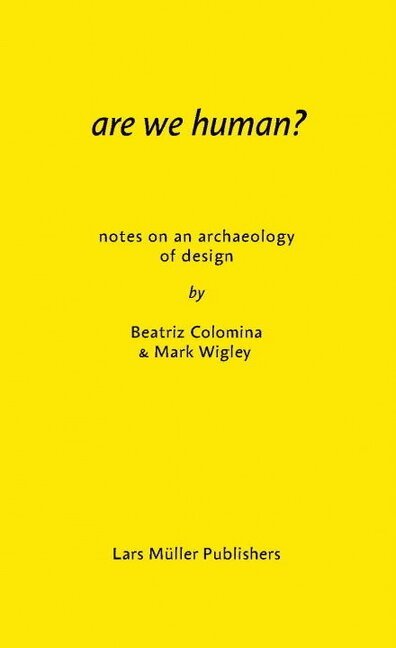
Are We Human? rethinks the philosophy of design in a multi-dimensional exploration from the very first tools and ornaments to the constant buzz of social media. The average day involves the experience of thousands of layers of design that reach to outside space but also reach deep into our bodies and brains. Even the planet itself has been completely encrusted by design as a geological layer. There is no longer an outside to the world of design. Design has become the world. Design is what makes the human. It is the very basis of social life. But design also engineers inequalities and new forms of neglect, such as lawlessness, poverty, and the climate at the same time as the human genome and the weather are being actively redesigned. We can no longer reassure ourselves with the idea of "good design." Design itself needs to be redesigned.
188 kr
Skickas inom 7-10 vardagar
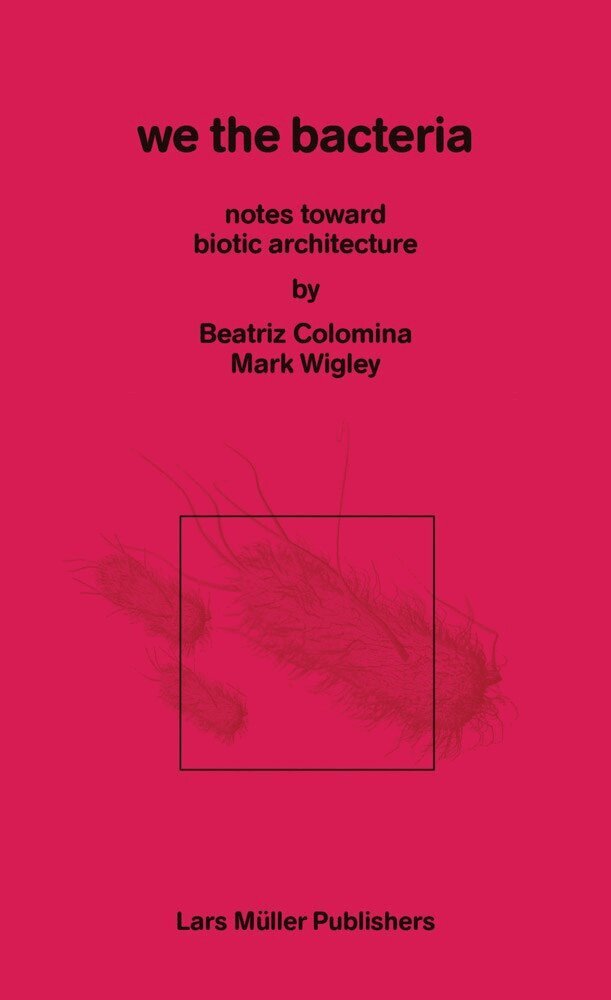
The sequel to the authors’ Are We Human?, this provocative book is an urgent manifesto for an alternative architectural philosophy. It treats bacteria as the real architects, construction workers, maintenance crews and inhabitants of buildings. Colomina and Wigley draw on the latest research into microbes to rethink the past and possible futures of the built environment. The book explores the intimate entanglements of the microbes within bodies and buildings over the last 10,000 years, culminating in the antibiotic philosophy of contemporary architecture. The diseases of our time are diseases of the built environment. The deadly combination of rapidly declining microbial diversity and rising antibiotic-resistant bacteria is as great a threat as climate change. Hostility to bacteria has to give way to new forms of hospitality from a more symbiotic architecture that learns from bacteria, embracing them and reconnecting with soil, plants and other species. Buildings based on fear of bacteria, which is to say fear of life itself, must give way to buildings learning from models of coexistence based on bacteria themselves.The main goal of the book is to rethink the very idea of shelter in terms of forms of inclusion rather than prophylactic forms of exclusion.