Martin E. P. Seligman – författare
Visar alla böcker från författaren Martin E. P. Seligman. Handla med fri frakt och snabb leverans.
23 produkter
23 produkter
Häftad, Engelska
189 kr
Skickas inom 3-6 vardagar
Inbunden, Engelska, 2026
1 697 kr
Skickas inom 5-8 vardagar
This is an open access title available under the terms of a Creative Commons Attribution-Non Commercial-No Derivatives 4.0 International license (CC BY-NC-ND 4.0). It is free to read at Oxford Academic and offered as a free PDF download from OUP and select open access locations.Sponsored by the Adolescent Mental Health Initiative of the Annenberg Public Policy Center (APPC) of the University of Pennsylvania and the Annenberg Foundation Trust at Sunnylands Trust, the third edition of Treating and Preventing Adolescent Mental Health Disorders provides a significant update since the second edition in 2017. It addresses the current state of knowledge about the major mental health disorders that emerge during adolescence, including how the COVID-19 pandemic affected adolescent mental health.Here, experts on adolescent anxiety, schizophrenia, substance use disorders, depression and bipolar disorders, eating disorders, and suicidal behavior thoroughly define each disorder, outline and assess available treatments, discuss prevention strategies, and suggest a research agenda based on what we know and don't yet know about these various conditions. The volume also incorporates chapters on gambling, Internet addiction, and positive youth development, which addresses how we can fully prepare young people to be happy and successful throughout their lives.Concluding chapters discuss overarching issues regarding the behavioral and mental health of adolescents, including overcoming the stigma of mental illness and the research, policy, and practice context for the delivery of evidence-based treatments. Integrating the work of eminent scholars in both psychology and psychiatry, this work will be an essential volume for academics and practicing clinicians and will serve as a wake-up call to mental health professionals and policy makers alike about the state of our nation's response to the needs of adolescents with mental disorders.
E-bok
PDF, Engelska, 2004955 kr
Läs direkt efter köp
"Character" has become a front-and-center topic in contemporary discourse, but this term does not have a fixed meaning. Character may be simply defined by what someone does not do, but a more active and thorough definition is necessary, one that addresses certain vital questions. Is character a singular characteristic of an individual, or is it composed of different aspects? Does character--however we define it--exist in degrees, or is it simply something one happens to have? How can character be developed? Can it be learned? Relatedly, can it be taught, and who might be the most effective teacher? What roles are played by family, schools, the media, religion, and the larger culture? This groundbreaking handbook of character strengths and virtues is the first progress report from a prestigious group of researchers who have undertaken the systematic classification and measurement of widely valued positive traits. They approach good character in terms of separate strengths-authenticity, persistence, kindness, gratitude, hope, humor, and so on-each of which exists in degrees. Character Strengths and Virtues classifies twenty-four specific strengths under six broad virtues that consistently emerge across history and culture: wisdom, courage, humanity, justice, temperance, and transcendence. Each strength is thoroughly examined in its own chapter, with special attention to its meaning, explanation, measurement, causes, correlates, consequences, and development across the life span, as well as to strategies for its deliberate cultivation. This book demands the attention of anyone interested in psychology and what it can teach about the good life.
Inbunden, Engelska, 2016
985 kr
Skickas inom 3-6 vardagar
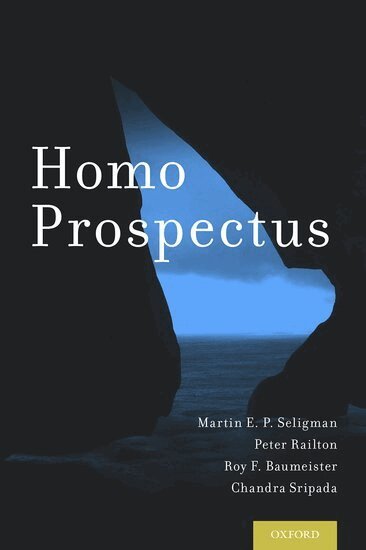
Our species is misnamed. Though sapiens defines human beings as "wise" what humans do especially well is to prospect the future. We are homo prospectus. In this book, Martin E. P. Seligman, Peter Railton, Roy F. Baumeister, and Chandra Sripada argue it is anticipating and evaluating future possibilities for the guidance of thought and action that is the cornerstone of human success. Much of the history of psychology has been dominated by a framework in which people's behavior is driven by past history (memory) and present circumstances (perception and motivation). Homo Prospectus reassesses this idea, pushing focus to the future front and center and opening discussion of a new field of Psychology and Neuroscience.The authors delve into four modes in which prospection operates: the implicit mind, deliberate thought, mind-wandering, and collective (social) imagination. They then explore prospection's role in some of life's most enduring questions: Why do people think about the future? Do we have free will? What is the nature of intuition, and how might it function in ethics? How does emotion function in human psychology? Is there a common causal process in different psychopathologies? Does our creativity change with age?In this remarkable convergence of research in philosophy, statistics, decision theory, psychology, and neuroscience, Homo Prospectus shows how human prospection fundamentally reshapes our understanding of key cognitive processes, thereby improving individual and social functioning. It aims to galvanize interest in this new science from scholars in psychology, neuroscience, and philosophy, as well as an educated public curious about what makes humanity what it is.
E-bok
PDF, Engelska, 2016468 kr
Läs direkt efter köp
Our species is misnamed. Though sapiens defines human beings as "wise" what humans do especially well is to prospect the future. We are homo prospectus. In this book, Martin E. P. Seligman, Peter Railton, Roy F. Baumeister, and Chandra Sripada argue it is anticipating and evaluating future possibilities for the guidance of thought and action that is the cornerstone of human success. Much of the history of psychology has been dominated by a framework in which people''s behavior is driven by past history (memory) and present circumstances (perception and motivation). Homo Prospectus reassesses this idea, pushing focus to the future front and center and opening discussion of a new field of Psychology and Neuroscience.The authors delve into four modes in which prospection operates: the implicit mind, deliberate thought, mind-wandering, and collective (social) imagination. They then explore prospection''s role in some of life''s most enduring questions: Why do people think about the future? Do we have free will? What is the nature of intuition, and how might it function in ethics? How does emotion function in human psychology? Is there a common causal process in different psychopathologies? Does our creativity change with age?In this remarkable convergence of research in philosophy, statistics, decision theory, psychology, and neuroscience, Homo Prospectus shows how human prospection fundamentally reshapes our understanding of key cognitive processes, thereby improving individual and social functioning. It aims to galvanize interest in this new science from scholars in psychology, neuroscience, and philosophy, as well as an educated public curious about what makes humanity what it is.
E-bok
Engelska, 2016464 kr
Läs direkt efter köp
Our species is misnamed. Though sapiens defines human beings as "wise" what humans do especially well is to prospect the future. We are homo prospectus. In this book, Martin E. P. Seligman, Peter Railton, Roy F. Baumeister, and Chandra Sripada argue it is anticipating and evaluating future possibilities for the guidance of thought and action that is the cornerstone of human success. Much of the history of psychology has been dominated by a framework in which people''s behavior is driven by past history (memory) and present circumstances (perception and motivation). Homo Prospectus reassesses this idea, pushing focus to the future front and center and opening discussion of a new field of Psychology and Neuroscience.The authors delve into four modes in which prospection operates: the implicit mind, deliberate thought, mind-wandering, and collective (social) imagination. They then explore prospection''s role in some of life''s most enduring questions: Why do people think about the future? Do we have free will? What is the nature of intuition, and how might it function in ethics? How does emotion function in human psychology? Is there a common causal process in different psychopathologies? Does our creativity change with age?In this remarkable convergence of research in philosophy, statistics, decision theory, psychology, and neuroscience, Homo Prospectus shows how human prospection fundamentally reshapes our understanding of key cognitive processes, thereby improving individual and social functioning. It aims to galvanize interest in this new science from scholars in psychology, neuroscience, and philosophy, as well as an educated public curious about what makes humanity what it is.
E-bok
Engelska, 2004955 kr
Läs direkt efter köp
"Character" has become a front-and-center topic in contemporary discourse, but this term does not have a fixed meaning. Character may be simply defined by what someone does not do, but a more active and thorough definition is necessary, one that addresses certain vital questions. Is character a singular characteristic of an individual, or is it composed of different aspects? Does character--however we define it--exist in degrees, or is it simply something one happens to have? How can character be developed? Can it be learned? Relatedly, can it be taught, and who might be the most effective teacher? What roles are played by family, schools, the media, religion, and the larger culture? This groundbreaking handbook of character strengths and virtues is the first progress report from a prestigious group of researchers who have undertaken the systematic classification and measurement of widely valued positive traits. They approach good character in terms of separate strengths-authenticity, persistence, kindness, gratitude, hope, humor, and so on-each of which exists in degrees. Character Strengths and Virtues classifies twenty-four specific strengths under six broad virtues that consistently emerge across history and culture: wisdom, courage, humanity, justice, temperance, and transcendence. Each strength is thoroughly examined in its own chapter, with special attention to its meaning, explanation, measurement, causes, correlates, consequences, and development across the life span, as well as to strategies for its deliberate cultivation. This book demands the attention of anyone interested in psychology and what it can teach about the good life.
Inbunden, Engelska, 2016
1 376 kr
Skickas inom 5-8 vardagar
How do we thrive in our behaviors and experiences? Positive neuroscience research illuminates the brain mechanisms that enable human flourishing. Supported by the John Templeton Foundation's Positive Neuroscience Project, which Martin E. P. Seligman established in 2008, Positive Neuroscience provides an intersection between neuroscience and positive psychology.In this edited volume, leading researchers describe the neuroscience of social bonding, altruism, and the capacities for resilience and creativity. Part I (Social Bonds) describes the mechanisms that enable humans to connect with one another. Part II (Altruism) focuses on the neural mechanisms underlying the human ability and willingness to confer costly benefits on others. Part III (Resilience and Creativity) examines the mechanisms by which human brains overcome adversity, create, and discover. Specific topics include: a newly discovered nerve type that appears to be specialized for emotional communication; the effects of parenting on the male brain; how human altruism differs from that of other primates; the neural features of extraordinary altruists who have donated kidneys to strangers; and distinctive patterns of brain wiring that endow some people with exceptional musical abilities. Accessible to a broad academic audience, from advanced undergraduates to senior scholars, these subjects have generated a fascinating and highly convergent set of ideas and results, shaping our understanding of human nature.
E-bok
PDF, Engelska, 2016938 kr
Läs direkt efter köp
How do we thrive in our behaviors and experiences? Positive neuroscience research illuminates the brain mechanisms that enable human flourishing. Supported by the John Templeton Foundation''s Positive Neuroscience Project, which Martin E. P. Seligman established in 2008, Positive Neuroscience provides an intersection between neuroscience and positive psychology.In this edited volume, leading researchers describe the neuroscience of social bonding, altruism, and the capacities for resilience and creativity. Part I (Social Bonds) describes the mechanisms that enable humans to connect with one another. Part II (Altruism) focuses on the neural mechanisms underlying the human ability and willingness to confer costly benefits on others. Part III (Resilience and Creativity) examines the mechanisms by which human brains overcome adversity, create, and discover. Specific topics include: a newly discovered nerve type that appears to be specialized for emotional communication; the effects of parenting on the male brain; how human altruism differs from that of other primates; the neural features of extraordinary altruists who have donated kidneys to strangers; and distinctive patterns of brain wiring that endow some people with exceptional musical abilities. Accessible to a broad academic audience, from advanced undergraduates to senior scholars, these subjects have generated a fascinating and highly convergent set of ideas and results, shaping our understanding of human nature.
E-bok
Engelska, 2016946 kr
Läs direkt efter köp
How do we thrive in our behaviors and experiences? Positive neuroscience research illuminates the brain mechanisms that enable human flourishing. Supported by the John Templeton Foundation''s Positive Neuroscience Project, which Martin E. P. Seligman established in 2008, Positive Neuroscience provides an intersection between neuroscience and positive psychology.In this edited volume, leading researchers describe the neuroscience of social bonding, altruism, and the capacities for resilience and creativity. Part I (Social Bonds) describes the mechanisms that enable humans to connect with one another. Part II (Altruism) focuses on the neural mechanisms underlying the human ability and willingness to confer costly benefits on others. Part III (Resilience and Creativity) examines the mechanisms by which human brains overcome adversity, create, and discover. Specific topics include: a newly discovered nerve type that appears to be specialized for emotional communication; the effects of parenting on the male brain; how human altruism differs from that of other primates; the neural features of extraordinary altruists who have donated kidneys to strangers; and distinctive patterns of brain wiring that endow some people with exceptional musical abilities. Accessible to a broad academic audience, from advanced undergraduates to senior scholars, these subjects have generated a fascinating and highly convergent set of ideas and results, shaping our understanding of human nature.
E-bok
Engelska, 2007102 kr
Läs direkt efter köp
New York Times bestselling author Martin E. P. Seligman''s The Optimistic Child is "the first major work to provide an effective program for preventing depression in childhood — and probably later in life" (Aaron T. Beck, author of Love is Never Enough).The epidemic of depression in America strikes 30% of all children. Now Martin E. P. Seligman, the bestselling author of Learned Optimism, and his colleagues offer parents and educators a program clinically proven to cut that risk in half. With this startling research, parents can teach children to apply optimism skills that can curb depression, boost school performance, and improve physical health. These skills provide children with the resilience they need to approach the teenage years and adulthood with confidence. For more than thirty years the self-esteem movement has infiltrated American homes and classrooms with the credo that supplying positive feedback, regardless of the quality of performance, will make children feel better about themselves. But in this era of raising our children to feel good, the hard truth is that they have never been more depressed. As Dr. Seligman writes in this provocative new book, "Teaching optimism is more than, I realized, than just correcting pessimism...It is the creation of a positive strength, a sunny but solid future-mindedness that can be deployed throughout life — not only to fight depression and come back from failure, but also to be the foundation of success and vitality."
Häftad, Engelska, 2007
180 kr
Skickas
Ljudbok
Engelska, 1991130 kr
Lyssna direkt efter köp
ARE YOU HOLDING YOURSELF BACK? Without knowing it, most of us impose limits on our achievement and our happiness by approaching life''s problems and challenges with unnecessary pessimism. Now, Dr. Martin Seligman, a pioneer in cognitive psychology and motivational research, tells you how to identify your own self-defeating thought patterns -- and how to harness the powers of your conscious mind to break those patterns. The Science of Personal Control Based on years of rigorous research, Learned Optimism examines the importance of "explanatory style" -- the way in which we explain our problems and setbacks to ourselves -- and offers a series of exercises that will help you target unhealthy habits of pessimistic thinking and bring them under your control. More powerful and pragmatic than a simple program of positive thinking, Dr. Seligman''s principles of reasoned, flexible optimism will help you: * Attain maximum personal achievement * Avoid feelings of helplessness and depression * Develop a hopeful, healthy outlook "A Marvelous Achievement! Learned Optimism blends hard-edged science with practical advice to give us an understanding of how we hold ourselves back and how we can change for the better." -- Dr. Wayne Dyer
Ljudbok
Engelska, 1994130 kr
Lyssna direkt efter köp
A Simon & Schuster audiobook. Simon & Schuster has a great book for every listener.
Ljudbok
Engelska, 2002234 kr
Lyssna direkt efter köp
A national bestseller, Authentic Happiness launched the revolutionary new science of Positive Psychology—and sparked a coast-to-coast debate on the nature of real happiness.According to esteemed psychologist and bestselling author Martin Seligman, happiness is not the result of good genes or luck. Real, lasting happiness comes from focusing on one’s personal strengths rather than weaknesses—and working with them to improve all aspects of one’s life. Using practical exercises, brief tests, and a dynamic website program, Seligman shows readers how to identify their highest virtues and use them in ways they haven’t yet considered. Accessible and proven, Authentic Happiness is the most powerful work of popular psychology in years.
Häftad, Engelska, 2012
238 kr
Skickas inom 3-6 vardagar
Ljudbok
Engelska, 2011338 kr
Lyssna direkt efter köp
From the bestselling author of Learned Optimism and Authentic Happiness comes “a relentlessly optimistic guidebook on finding and securing individual happiness” (Kirkus Reviews).With this unprecedented promise, internationally esteemed psychologist Martin Seligman begins Flourish, his first book in ten years—and the first to present his dynamic new concept of what well-being really is. Traditionally, the goal of psychology has been to relieve human suffering, but the goal of the Positive Psychology movement, which Dr. Seligman has led for fifteen years, is different—it’s about actually raising the bar for the human condition. Flourish builds on Dr. Seligman’s game-changing work on optimism, motivation, and character to show how to get the most out of life, unveiling an electrifying new theory of what makes a good life—for individuals, for communities, and for nations. In a fascinating evolution of thought and practice, Flourish refines what Positive Psychology is all about. While certainly a part of well-being, happiness alone doesn’t give life meaning. Seligman now asks, What is it that enables you to cultivate your talents, to build deep, lasting relationships with others, to feel pleasure, and to contribute meaningfully to the world? In a word, what is it that allows you to flourish? “Well-being” takes the stage front and center, and Happiness (or Positive Emotion) becomes one of the five pillars of Positive Psychology, along with Engagement, Relationships, Meaning, and Accomplishment—or PERMA, the permanent building blocks for a life of profound fulfillment. Thought-provoking in its implications for education, economics, therapy, medicine, and public policy—the very fabric of society—Flourish tells inspiring stories of Positive Psychology in action, including how the entire U.S. Army is now trained in emotional resilience; how innovative schools can educate for fulfillment in life and not just for workplace success; and how corporations can improve performance at the same time as they raise employee well-being. With interactive exercises to help readers explore their own attitudes and aims, Flourish is a watershed in the understanding of happiness as well as a tool for getting the most out of life. On the cutting edge of a science that has changed millions of lives, Dr. Seligman now creates the ultimate extension and capstone of his bestselling classics, Authentic Happiness and Learned Optimism.
Inbunden, Engelska, 2018
375 kr
Skickas inom 3-6 vardagar
Inbunden, Engelska, 2018
479 kr
Skickas inom 3-6 vardagar
Ljudbok
Engelska, 2023280 kr
Lyssna direkt efter köp
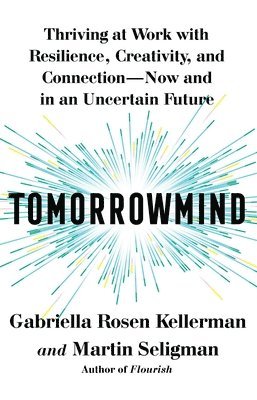
A Greater Good magazine and Behavioral Scientist pick of 2023! Thrive in your career with this radical, future-proofed approach to work in a world where automation, globalization, and downsizing are an urgent and threatening reality—from experts in workplace mental health, Gabriella Kellerman, CPO of BetterUp, and world-renowned psychologist Martin Seligman.In recent years, workplace toxicity, industry volatility, and technology-driven turnover have threatened the psychological well-being of employees. When we can’t flourish at work, both personal success and corporate productivity suffer. As we sit on the cusp of some of the most turbulent economic changes in history, many of us wonder how we can not only survive but flourish in our careers. Now, Tomorrowmind provides essential plans and actionable advice for facing the uncertain future of work. With in-depth and clear-eyed evidence, it offers key skills on everything from resilience and innovation to social connection and foresight. Cultivate a workplace that fosters connection and meaning for yourself or your employees with this timely and crucial guide that is destined to inspire generations of workers.
Inbunden, Engelska, 2023
286 kr
Skickas
Inbunden, Engelska, 2026
380 kr
Kommande
Häftad, Tyska
161 kr
Skickas inom 3-6 vardagar