• Fri frakt över 249 kr
  • •
  • Snabba leveranser
  • •
  • Billiga böcker
Kundservice

Du är på sajten för privatpersoner.

Företag, bibliotek eller offentlig verksamhet?

Du handlar på classic.bokus.com, där alla dina funktioner finns intakta.
Till classic.bokus.com
Bokus logotyp. Gå till startsidan.
  • Erbjudanden
  • Nyheter
  • Student
  • Topplistor
  • Barn & ungdom
  • Bokus Play
  • E-böcker
  • Pocketböcker
  • Spel & pussel

10% rabatt på allt med kod NYSTART10 →

Sidfot

Mina sidor

    Hjälp

    • Kundservice
    • Vanliga frågor och svar
    • Frakt och leverans
    • Retur vid ångerrätt
    • Reklamera vara
    • Betalning
    • Köpvillkor
    • Allmänna villkor
    • Information om webbplatsens tillgänglighet

    Om Bokus

    • Om oss
    • Pressrum
    • För studenter
    • För företag
    • För bibliotek och offentlig verksamhet
    • För leverantörer
    • Hållbarhet

    Populärt

    • Aktuella erbjudanden
    • Presentkort
    • Studentlitteratur
    • Nya böcker
    • Topplistor
    • Signerade böcker
    • Engelska böcker

    Inspiration

    • Boktips
    • BookTok
    • Populära bokserier
    • Barnbokskaraktärer
    • Populära författare
    Logotyp för Bokus
    Följ oss på Facebook (extern länk)Följ oss på Instagram (extern länk)Följ oss på YouTube (extern länk)Följ oss på TikTok (extern länk)
    bokus @ CookiesAnpassa cookiesIntegritetspolicyKöpvillkor
    Till Citymail hemsida (extern länk)Till Budbee hemsida (extern länk)Till Postnord hemsida (extern länk)Till Schenker hemsida (extern länk)Till Early Bird hemsida (extern länk)Till Walleys hemsida (extern länk)
    1. Psykologi och pedagogik
    2. Psykologi
    3. Biologisk psykologi och neuropsykologi

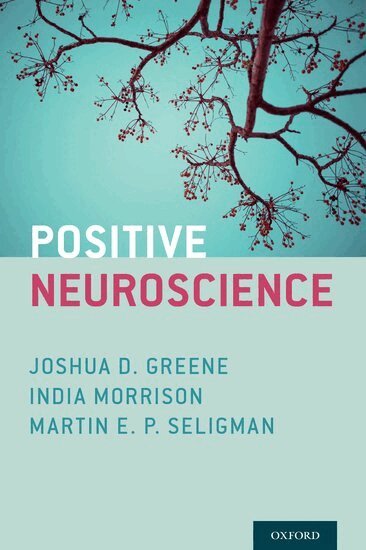
    Positive Neuroscience

    AvJoshua D. Greene,India Morrison

    Inbunden, Engelska, 2016

    1 465 kr

    Beställningsvara. Skickas inom 5-8 vardagar. Fri frakt över 249 kr.

    Beskrivning

    How do we thrive in our behaviors and experiences? Positive neuroscience research illuminates the brain mechanisms that enable human flourishing. Supported by the John Templeton Foundation's Positive Neuroscience Project, which Martin E. P. Seligman established in 2008, Positive Neuroscience provides an intersection between neuroscience and positive psychology.In this edited volume, leading researchers describe the neuroscience of social bonding, altruism, and the capacities for resilience and creativity. Part I (Social Bonds) describes the mechanisms that enable humans to connect with one another. Part II (Altruism) focuses on the neural mechanisms underlying the human ability and willingness to confer costly benefits on others. Part III (Resilience and Creativity) examines the mechanisms by which human brains overcome adversity, create, and discover. Specific topics include: a newly discovered nerve type that appears to be specialized for emotional communication; the effects of parenting on the male brain; how human altruism differs from that of other primates; the neural features of extraordinary altruists who have donated kidneys to strangers; and distinctive patterns of brain wiring that endow some people with exceptional musical abilities. Accessible to a broad academic audience, from advanced undergraduates to senior scholars, these subjects have generated a fascinating and highly convergent set of ideas and results, shaping our understanding of human nature.

    Produktinformation

    • Utgivningsdatum:2016-07-07
    • Mått:236 x 155 x 17 mm
    • Vikt:522 g
    • Format:Inbunden
    • Språk:Engelska
    • Antal sidor:256
    • Förlag:OUP USA
    • ISBN:9780199977925

    Utforska kategorier

    • Biologisk psykologi och neuropsykologi inom Psykologi och pedagogik
    • Biovetenskap inom Naturvetenskap och teknik
    • Kognitiv psykologi inom Psykologi och pedagogik

    Mer om författaren

    Joshua D. Greene, PhD, is Professor of Psychology, a member of the Center for Brain Science faculty, and the director of the Moral Cognition Lab at Harvard University.India Morrison, PhD, is Assistant Professor in the Department of Clinical and Experimental Medicine at Linköping University, Sweden, and co-founder of the Group for Research in Affective Somatosensation and Pain (GRASP).Martin E.P. Seligman, PhD, is Director of the Penn Positive Psychology Center and Zellerbach Family Professor of Psychology in the Penn Department of Psychology, and Director of the Penn Master of Applied Positive Psychology program (MAPP).

    Recensioner i media

    "The field of positive neuroscience is a relatively new one, and this volume brings together work in this field. The chapters themselves are readily accessible and will be of interest to a broad range of readers. This is likely to be an important volume that will spur the growth of this most interesting and important field." --Steven Maier, PhD, Distinguished Professor of Psychology and Director of the Center for Neuroscience, University of Colorado at Boulder"This is a foundational reference source for the field of Positive Neuroscience, edited and written by those who conducted the seminal studies in the field. This is a must-have for any researcher interested in the neural mechanisms associated with positive psychology." --Turhan Canli, PhD, Professor of Integrative Neuroscience and Director of SCAN (Social, Cognitive, and Affective Neuroscience) Center, Stony Brook University"This is a terrific edited work. The editors and contributors are excellent, and the volume is well organized and covers the right topics. I think that this will be a benchmark in the field." --Stephen G. Post, PhD, Professor of Bioethics, Stony Brook University and author of Altruism & Health: Perspectives from Empirical Research (OUP 2007)"the research reported in this book is truly cutting edge." -- volume 61, issue 52 of PsycCRITIQUES

    Innehållsförteckning

    • ContributorsIntroducing Positive NeuroscienceJoshua D. Greene and India Morrison Part I: Social Bonds 1. Affective and Social TouchIndia Morrison 2. The Neural Correlates of Individual Variation in Paternal NurturanceJames K. Rilling and Jennifer Mascaro 3. Toward a Neuroscience of Social ResonanceThalia Wheatley and Beau Sievers Part II: Altruism 4. Prosociality as a form of reward-seekingJamil Zaki and Jason Mitchell 5. Is Human Prosocial Behavior Unique?: Insights and New Questions from Non-Human PrimatesLindsey Drayton and Laurie Santos 6. When Feeling and Doing Diverge: Neural and physiological correlates of the empathy-altruism divideTony W. Buchanan and Stephanie D. Preston 7. Amygdala Tuning Toward Self and OtherVincent Man, Daniel L. Ames, Alexander Todorov, and William A. Cunningham 8. Towards a Neuroscience of Compassion: A brain systems-based model and research agendaYoni K. Ashar, Jessica Andrews-Hanna, Tor D. Wager, and Sona Dimidjian 9. Extraordinary Altruism: A Cognitive Neuroscience PerspectiveAbigail Marsh Part III: Resilience and Creativity 10. Increasing Positive Emotion in Negative Contexts: Emotional Consequences, Neural Correlates, and Implications for ResilienceKateri McRae and Iris Mauss 11. Could Meditation Modulate the Neurobiology of Learning Not to Fear?Britta Hölzel, Sara W. Lazar, and Mohammed Milad 12. The Role of Brain Connectivity in Musical ExperiencePsyche Loui 13. The Function of Positive Emotions in Exploration Hans Melo and Adam Anderson Index