Mary Law - Böcker
Visar alla böcker från författaren Mary Law. Handla med fri frakt och snabb leverans.
5 produkter
5 produkter
1 738 kr
Skickas inom 10-15 vardagar
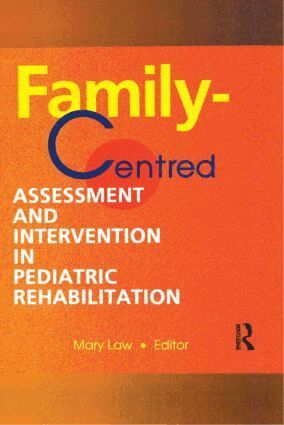
Family-Centred Assessment and Intervention in Pediatric Rehabilitation analyzes the effectiveness of Family-Centred Services (FCS) for children with disabilities or chronic illnesses. This text provides you with the exact definition of FCS and offers proof that parent involvement in children's treatment greatly enhances therapy. You can use the suggestions and methods to integrate parents into therapy, maximizing the family's intervention experiences and making your work more successful and effective.Many clinicians agree that families play a crucial part in deciding what intervention strategies are best for their children. From this text, you will learn that listening to parents and valuing parental input will give you insight into the goals, needs, and ambitions families have for their children. This enables you to choose, with the parent, the interventions that best suit your patients’needs and the needs of their families. In addition to information on how to integrate parents and families into intervention, Family-Centred Assessment and Intervention in Pediatric Rehabilitation offers suggestions that will improve your existing FCS or help you implement a family- centred approach, including:performing therapy in natural settings, such as school or home, to make changes in the children's social and physical environments acknowledging the grieving and adaptation process of families while being compassionate and understanding letting parents describe what they would like their child to be able to do and accomplish in the future putting the parents’concerns and requests first, enabling parents to deal with caring for their child supporting parents and reinforcing them when they have innovative and helpful ideas informing parents on the progress of their children and educating parents on methodologies and strategies used in FCSMany of the suggestions derived from the analysis of current data and original research in Family-Centred Assessment and Intervention in Pediatric Rehabilitation have immediate clinical applicability, allowing you to quickly adapt methods into your intervention processes. This text also provides you with information on types of evaluative methods, such as Measure of Processes of Care (MPOC) and Family-Centred Program Rating Scale (Fam PRS), that will help you determine if your FCS program is working efficiently. Emphasizing the goal of parent interaction in FCS services, Family-Centred Assessment and Intervention in Pediatric Rehabilitation offers methods that will improve your work with families and patients, making services more beneficial and relevant to the child and to their families.
640 kr
Skickas inom 10-15 vardagar
Family-Centred Assessment and Intervention in Pediatric Rehabilitation analyzes the effectiveness of Family-Centred Services (FCS) for children with disabilities or chronic illnesses. This text provides you with the exact definition of FCS and offers proof that parent involvement in children's treatment greatly enhances therapy. You can use the suggestions and methods to integrate parents into therapy, maximizing the family's intervention experiences and making your work more successful and effective.Many clinicians agree that families play a crucial part in deciding what intervention strategies are best for their children. From this text, you will learn that listening to parents and valuing parental input will give you insight into the goals, needs, and ambitions families have for their children. This enables you to choose, with the parent, the interventions that best suit your patients’needs and the needs of their families. In addition to information on how to integrate parents and families into intervention, Family-Centred Assessment and Intervention in Pediatric Rehabilitation offers suggestions that will improve your existing FCS or help you implement a family- centred approach, including:performing therapy in natural settings, such as school or home, to make changes in the children's social and physical environments acknowledging the grieving and adaptation process of families while being compassionate and understanding letting parents describe what they would like their child to be able to do and accomplish in the future putting the parents’concerns and requests first, enabling parents to deal with caring for their child supporting parents and reinforcing them when they have innovative and helpful ideas informing parents on the progress of their children and educating parents on methodologies and strategies used in FCSMany of the suggestions derived from the analysis of current data and original research in Family-Centred Assessment and Intervention in Pediatric Rehabilitation have immediate clinical applicability, allowing you to quickly adapt methods into your intervention processes. This text also provides you with information on types of evaluative methods, such as Measure of Processes of Care (MPOC) and Family-Centred Program Rating Scale (Fam PRS), that will help you determine if your FCS program is working efficiently. Emphasizing the goal of parent interaction in FCS services, Family-Centred Assessment and Intervention in Pediatric Rehabilitation offers methods that will improve your work with families and patients, making services more beneficial and relevant to the child and to their families.
1 000 kr
Skickas inom 10-15 vardagar
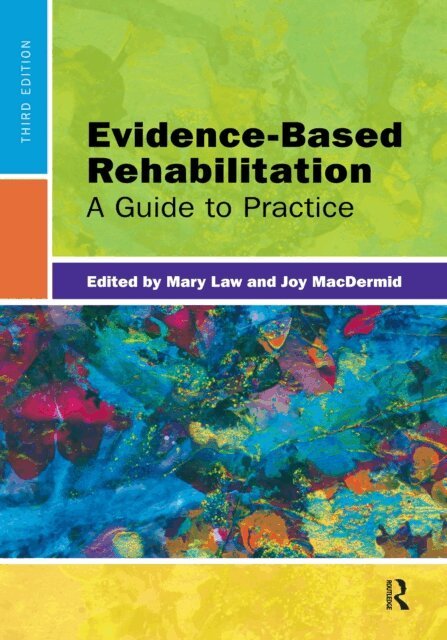
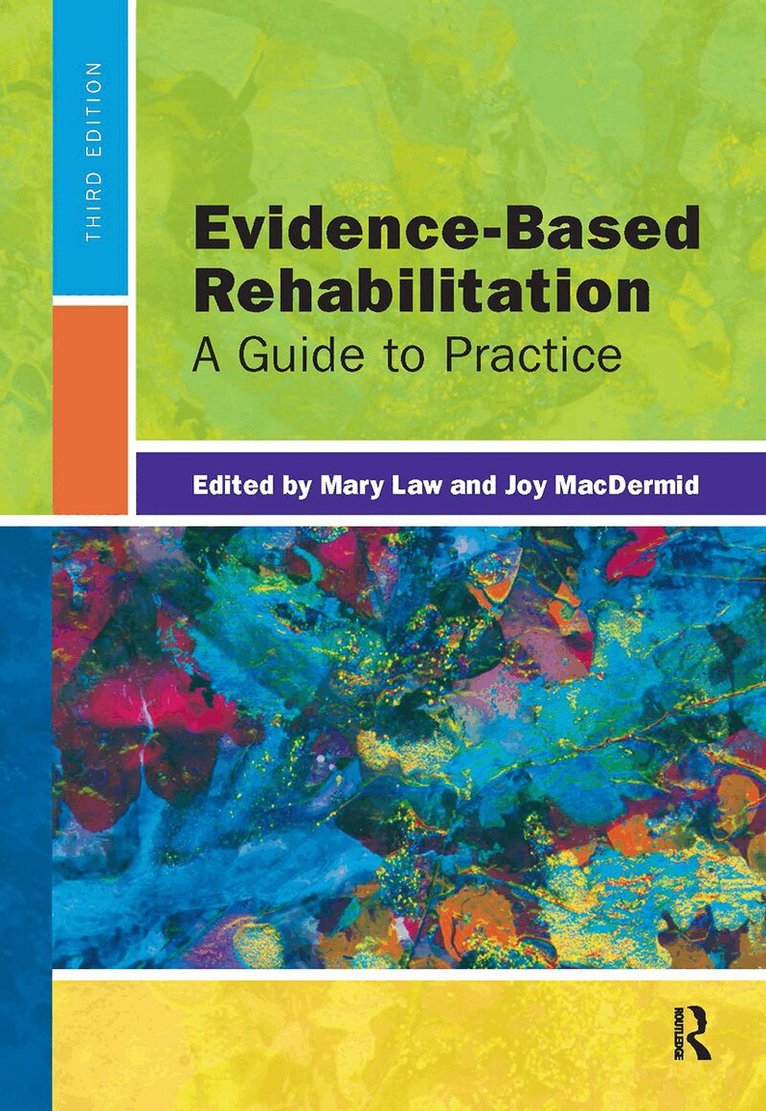
While evidence-based practice (EBP) has greatly influenced rehabilitation in the past decade, it continues to evolve and practitioners need guidance to implement evidence into their practice. Evidence-Based Rehabilitation: A Guide to Practice, the best-selling text providing step-by-step EBP guidance for rehabilitation professionals, has been updated into an expanded Third Edition.In Evidence-Based Rehabilitation, Third Edition Drs. Mary Law and Joy MacDermid, along with their contributors, explain evidence-based rehabilitation, the concepts underlying EBP, and build the reader’s knowledge and skills through specific learning. The text is organized by the steps of the EBP process—introduction to EBP, finding the evidence, assessing the evidence, and using the evidence.EBP focuses first and foremost on making the best decisions for each client and using the best information available. For many rehabilitation practitioners, building skills in EBP is best done one step at a time. Evidence-Based Rehabilitation helps the rehabilitation student and practitioner develop his or her knowledge and skills to implement evidence-based rehabilitation in practice. Benefits of the Third Edition:• All chapters have been updated with new information and resources• New chapters about systematic reviews, and knowledge transfer• Extensive guide available with specific student activities and answers for faculty use• Critical review forms included for student use—these forms have been used by practitioners and researchers around the world for 10 to 20 years• Recognition throughout the book that EBP in rehabilitation means bringing together research evidence, clinical reasoning of the therapist and client values and goals• Fits the standard 3-unit course design with 11 to 12 sessionsIncluded with the text are online supplemental materials for faculty use in the classroom.Designed and written by an occupational therapist and a physical therapist with extensive research, education, and practice experience, Evidence-Based Rehabilitation: A Guide to Practice, Third Edition will guide both occupational therapy and physical therapy students and practitioners as they incorporate evidence-based practice into their work.
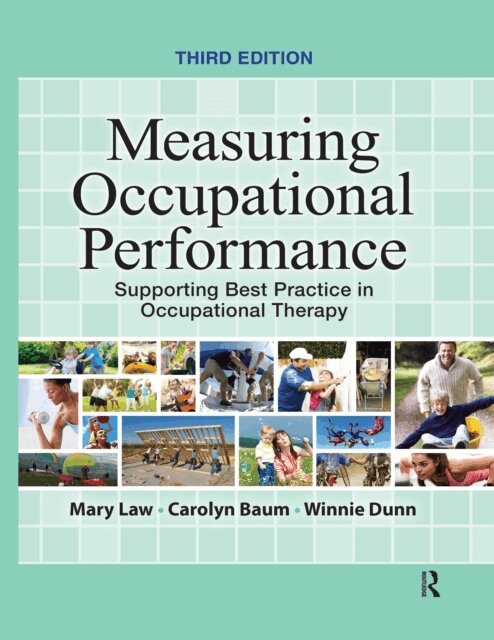
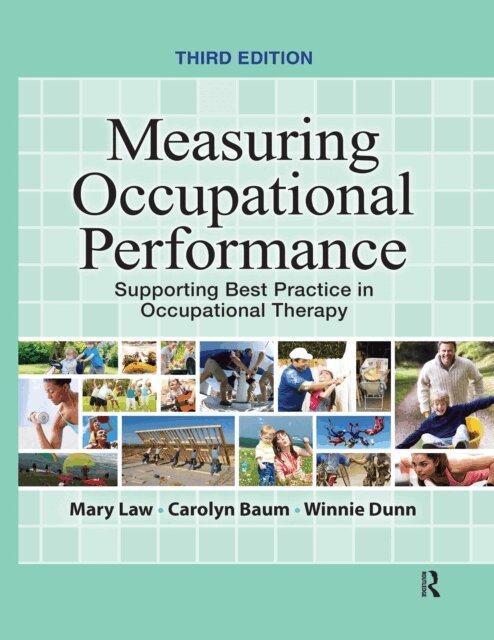
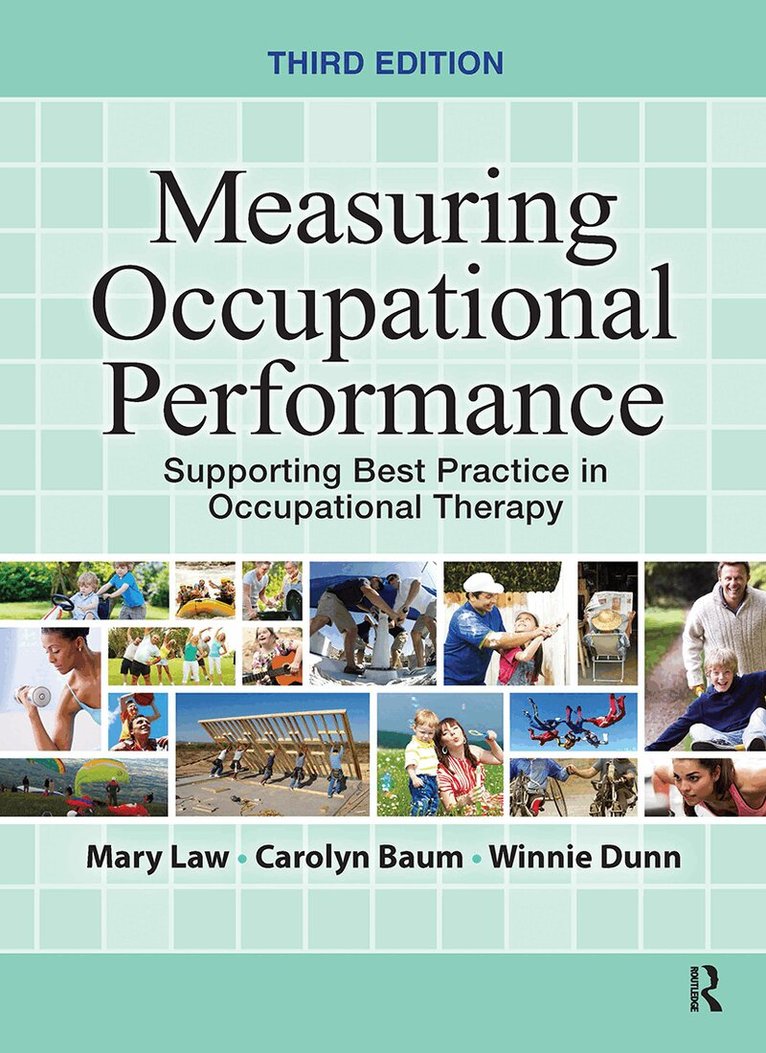
Measuring Occupational Performance
Supporting Best Practice in Occupational Therapy
Inbunden, Engelska, 2016
1 139 kr
Skickas inom 10-15 vardagar
As the profession of occupational therapy continues to mature and expand its practice, the measurement of occupational performance is one of the key avenues that all practicing clinicians will need to explore and master. Measuring Occupational Performance: Supporting Best Practice in Occupational Therapy, Third Edition summarizes the measurement tools needed to assess client occupational performance, to provide the best intervention, and to document the effectiveness of that intervention. These measurement tools are not just a compilation of all that are available for measurement relevant to occupational therapy; they are an elite group of tools carefully selected by the editors through a process of rigorous theoretical, clinical, and scientific reasoning.In this Third Edition, Drs. Mary Law, Carolyn Baum, and Winnie Dunn have updated current chapters and added new topics that have not been covered in past editions, such as a chapter on measuring school performance, a key area of practice. Also included is a chapter on measurement principles and development to highlight the concepts common to all the measures included in the text. The Third Edition also has a focus on the best measures and measures that are used most frequently.Features of the Third Edition:Offers insight into the importance of measuring functional performance, methodologies, measurement issues, and best approach for outcome measurementConveys a broad focus on occupational performance and offers examples from a wide range of practice settings and from multiple spots throughout the lifespanExplains the technical aspects of measurement development and methodologies and which components of functioning are to be measured and howDevelops an understanding of the theoretical aspects and evidence for both standardized tests and non-standardized testsInstructors in educational settings can visit www.efacultylounge.com for additional material to be used for teaching in the classroom.New in the Third Edition: Focus on strengths-based approachesMeasures health and disability at both individual and population levels using the International Classification of Functioning, Disability and Health (ICF)An emphasis on evidence-based practice and using evidence from other disciplines, not just from occupational therapyNew chapter focused on school-based practiceNew content on reliability, validity, and responsivenessNew content on goal attainmentAdditional material on decision making in practiceIn this changing health care environment, Measuring Occupational Performance: Supporting Best Practice in Occupational Therapy, Third Edition explains how core values and beliefs can be put into everyday practice and is the essential reference manual for the evidence-based occupational therapy and occupational therapy assistant student and practitioner.
377 kr
Skickas inom 3-6 vardagar