682 kr
Skickas inom 10-15 vardagar
682 kr
Skickas inom 10-15 vardagar
655 kr
Skickas inom 10-15 vardagar
739 kr
Läs direkt efter köp
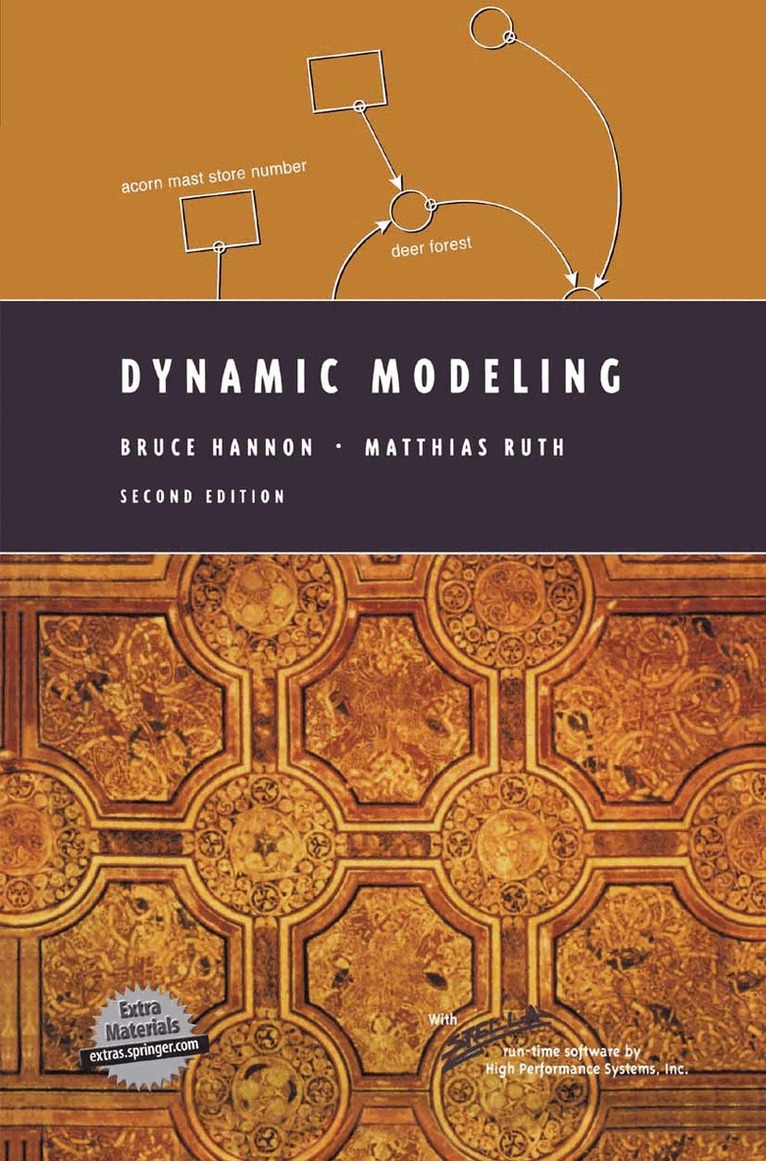
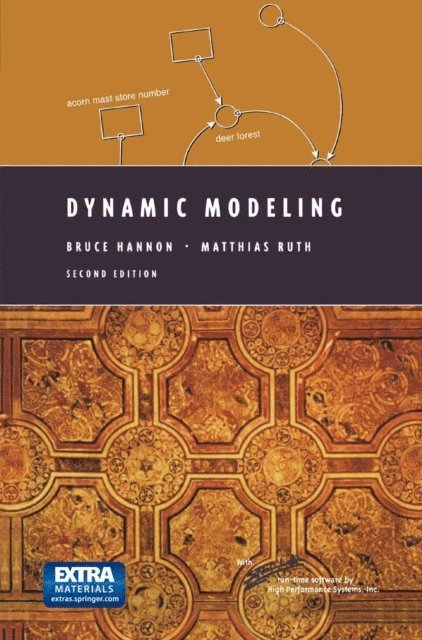
This book, as others in the MDS series, is geared towards making the modeling of disease attractive to students and those with emerging interests in the subject.
Models help us understand the nonlinear dynamics of real-world processes by using the computer to mimic the actual forces that result in a system’s behavior. The growing complexity of human social systems, from individual behavior to that of entire populations makes us increasingly vulnerable to diseases and pests. The ecology of the disease agents and the pests when considered in this social context only adds to the complexity. The feedbacks, lags in the effects of our preventive actions and the randomness in the environment make understanding of these vulnerabilities seem insurmountable. The amount and pace of modern travel provides virus and pest alike with the means to quickly find new hosts in untouched human populations and the ecosystems.
We thus have compelling reasons to understand the dynamics of these combined systems. This book begins with simple examples of human epidemics and then insect dynamics. Next comes the models of ever more complex models of disease carried by interaction of the two. An invasive species model is followed by insect-ecosystem interactions. The general models of chaos and catastrophe are linked to models of disease and pest. The final model is a spatial dynamic spread of disease among a wild animal population.
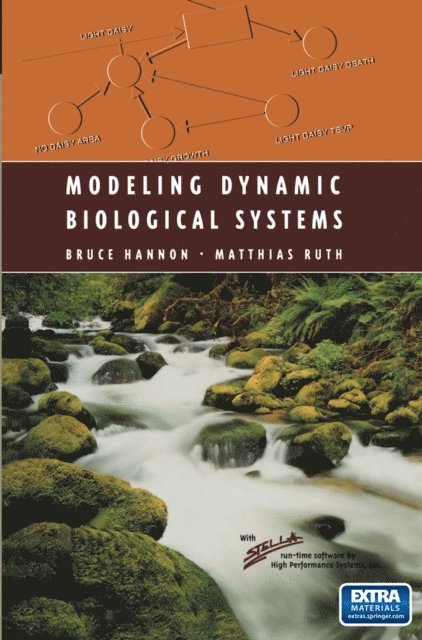
By using the STELLA programs (runtime versions and digital forms of all models are available with the book) we show how with a minimum of mathematical preparation and programming experience, these complex processes can be simulated and their emergent properties discovered. The programs run on both Macintosh and PC based machines.
556 kr
Skickas inom 10-15 vardagar
1 653 kr
Skickas inom 10-15 vardagar
1 705 kr
Skickas inom 10-15 vardagar
2 550 kr
Skickas inom 10-15 vardagar
599 kr
Skickas inom 10-15 vardagar
678 kr
Läs direkt efter köp
Environmental Economics explores the ways in which economic theory and its applications, as practised and taught today, must be modified to explicitly accommodate the goal of sustainability and the vital role played by environmental capital.
Pivoting around the first and second laws of thermodynamics, as well as the principles of ecological resilience, this book is divided into five key parts, which include extensive coverage of environmental microeconomics and macroeconomics. It drills down into issues and challenges including consumer demand; production and supply; market organisation; renewable and non-renewable resources; environmental valuation; macroeconomic stabilisation and international trade and globalisation. Drawing on case studies from forestry, water, soil, air quality and mining, this book will equip readers with skills that enable the analyses of environmental and economic policy issues with a specific focus on the sustainability of the economy. This new edition has been updated throughout and provides further coverage on topics such as energy transition, market organisation and the role of environmental economics in regulatory decision-making including critiques of contemporary policy directives like tradable pollution permits and net zero emissions. Challenges to achieving stabilisation and emission reduction have been expanded to include wars and conflicts such as those in the Middle East and the Russian invasion of Ukraine. This book further reinforces the premise that there are clear limits to growth and that modesty and moderation are superior alternatives.
Rich in pedagogical features, including key concept boxes and review questions at the end of each chapter, this book will be a vital resource for upper-level undergraduate and postgraduate students studying not only environmental economics/ecological economics but also economics in general.
678 kr
Läs direkt efter köp
Environmental Economics explores the ways in which economic theory and its applications, as practised and taught today, must be modified to explicitly accommodate the goal of sustainability and the vital role played by environmental capital.
Pivoting around the first and second laws of thermodynamics, as well as the principles of ecological resilience, this book is divided into five key parts, which include extensive coverage of environmental microeconomics and macroeconomics. It drills down into issues and challenges including consumer demand; production and supply; market organisation; renewable and non-renewable resources; environmental valuation; macroeconomic stabilisation and international trade and globalisation. Drawing on case studies from forestry, water, soil, air quality and mining, this book will equip readers with skills that enable the analyses of environmental and economic policy issues with a specific focus on the sustainability of the economy. This new edition has been updated throughout and provides further coverage on topics such as energy transition, market organisation and the role of environmental economics in regulatory decision-making including critiques of contemporary policy directives like tradable pollution permits and net zero emissions. Challenges to achieving stabilisation and emission reduction have been expanded to include wars and conflicts such as those in the Middle East and the Russian invasion of Ukraine. This book further reinforces the premise that there are clear limits to growth and that modesty and moderation are superior alternatives.
Rich in pedagogical features, including key concept boxes and review questions at the end of each chapter, this book will be a vital resource for upper-level undergraduate and postgraduate students studying not only environmental economics/ecological economics but also economics in general.
796 kr
Läs direkt efter köp
796 kr
Läs direkt efter köp
718 kr
Läs direkt efter köp
1 140 kr
Läs direkt efter köp
556 kr
Skickas inom 10-15 vardagar
1 216 kr
Skickas inom 10-15 vardagar
710 kr
Läs direkt efter köp
1 587 kr
Läs direkt efter köp
1 024 kr
Skickas inom 10-15 vardagar
877 kr
Läs direkt efter köp
1 148 kr
Läs direkt efter köp
2 478 kr
Skickas inom 10-15 vardagar
556 kr
Skickas inom 10-15 vardagar
720 kr
Skickas inom 10-15 vardagar
4 021 kr
Skickas inom 5-8 vardagar
1 654 kr
Skickas inom 5-8 vardagar
305 kr
Läs direkt efter köp
''Ecological economics has roots in numerous disciplines including various branches of economics, ecology, physics, systems analysis and the study of technology. In his succinct Advanced Introduction to Ecological Economics, Matthias Ruth shows how each of these lines of intellectual inquiry has contributed to the development of ecological economics. He covers its history, main findings and current issues closing with a valuable discussion of complexity and the challenges for analysis and management in a full world.''- Peter A. Victor, York University, Canada
Any human endeavor is shaped by, and shapes, changes in the physical and biological environment. In this Advanced Introduction, Matthias Ruth draws on a diverse set of theories, methods and applications to critically assess key concepts in ecological economics.
Understanding biophysical foundations of economic growth and development is at the core of ecological economics. The author provides a precise introduction to the interdependencies between economic and environmental change, focusing on the fundamental dependence of the economy on the environment, as a provider of energy, materials and waste assimilation services.
Key features include:•
an advanced introduction to theories, methods and applications of ecological economics that are reflective rather than enumerative•clarification of the differences between traditional resource and environmental economics•valuable insights from the Global South as well as from experiences in industrialized countries to explore the topic in depth.Offering a unique insight into a field that is still in its formative years of development, this concise and accessible Advanced Introduction will greatly benefit students, researchers and instructors in environmental science and ecological economics.
322 kr
Skickas inom 5-8 vardagar
3 524 kr
Skickas inom 5-8 vardagar
861 kr
Läs direkt efter köp
Original and multi-disciplinary contributions illustrate the nuances in the way resilience is interpreted through corresponding case studies and applications. The use of diverse tools, such as cost-effectiveness analysis, multi-criteria decision analysis, transition theory and network science provides readers with a balanced treatment of both theoretical issues surrounding resilience and applications to specific socio-technical systems. Case studies from across the globe are used to discuss the ways in which natural disasters, terror attacks, cyber attacks and infrastructure impact the resilience of these systems.
Timely and innovative, this Handbook is an ideal resource for university think-tanks, researchers and advanced students exploring the resilience of both social and technical systems. Planners and policy-makers will also greatly benefit from the lessons drawn from contemporary case studies.
Contributors include: D.L. Alderson, U. Bhatia, R. Biggs, C.R. Binder, R. Bowman, A. Cryan, N. Dormady, D. Fannon, K. Fischer, L. Fischer, A.R. Ganguly, B. Giese, S. Goessling-Reisemann, E. Gordon, H.-D. Hellige, B. Helmuth, S. Hiermaier, S. Lehnhoff, I. Linkov, K. Maciejewski, T. Malloy, S. Mirzaee, S. Mühlemeier, K. Poinsatte-Jones, A. Roa-Henriquez, J.C. Rocha, A. Rose, H. Rosoff, M. Ruth, A.J. Schaffer, B. Scharte, M. Schneider, S. Scyphers, J.C Stephens, P. Thier, B.D. Trump, A. von Gleich, M.E. Warner, D.D. Woods, R. Wyss