Meg Rithmire - Böcker
Visar alla böcker från författaren Meg Rithmire. Handla med fri frakt och snabb leverans.
3 produkter
3 produkter
929 kr
Skickas inom 7-10 vardagar
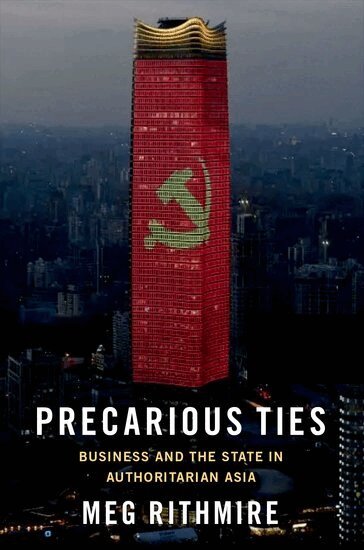
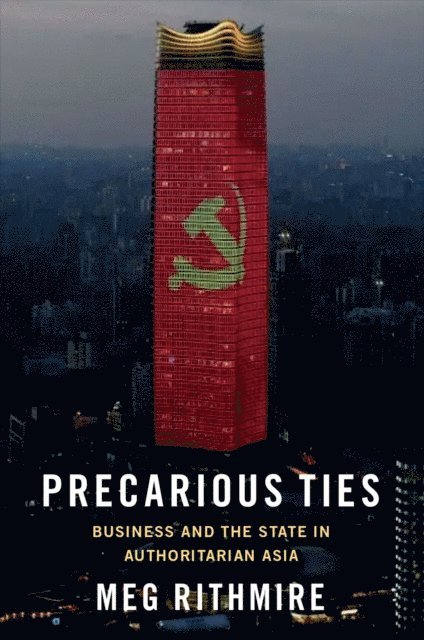
Developing Asia has been the site of some of the last century's fastest growing economies as well as some of the world's most durable authoritarian regimes. Many accounts of rapid growth alongside monopolies on political power have focused on crony relationships between the state and business. But these relationships have not always been smooth, as anti-corruption campaigns, financial and banking crises, and dramatic bouts of liberalization and crackdown demonstrate. Why do partnerships between political and business elites fall apart over time? And why do some partnerships produce stable growth and others produce crisis or stagnation?In Precarious Ties, Meg Rithmire offers a novel account of the relationships between business and political elites in three authoritarian regimes in developing Asia: Indonesia under Suharto's New Order, Malaysia under the Barisan Nasional, and China under the Chinese Communist Party. All three regimes enjoyed periods of high growth and supposed alliances between autocrats and capitalists. Over time, however, the relationships between capitalists and political elites changed, and economic outcomes diverged. While state-business ties in Indonesia and China created dangerous dynamics like capital flight, fraud, and financial crisis, Malaysia's state-business ties contributed to economic stagnation.To understand these developments, Rithmire presents two conceptual models of state-business relations that explain their genesis and why variation occurs over time. She shows that mutual alignment occurs when an authoritarian regime organizes its institutions, or even its informal practices, to induce capitalists to invest in growth and development. Mutual endangerment, on the other hand, obtains when economic and political elites are entangled in corrupt dealings and invested in perpetuating each other's dominance. The loss of power on one side would bring about the demise of the other. Rithmire contends that the main factors explaining why one pattern dominates over the other are trust between business and political elites, determined during regime formation, and the dynamics of financial liberalization. Empirically rich and sweeping in scope, Precarious Ties offers lessons for all nations in which the state and the private sector are deeply entwined.
282 kr
Skickas inom 5-8 vardagar
Developing Asia has been the site of some of the last century's fastest growing economies as well as some of the world's most durable authoritarian regimes. Many accounts of rapid growth alongside monopolies on political power have focused on crony relationships between the state and business. But these relationships have not always been smooth, as anti-corruption campaigns, financial and banking crises, and dramatic bouts of liberalization and crackdown demonstrate. Why do partnerships between political and business elites fall apart over time? And why do some partnerships produce stable growth and others produce crisis or stagnation?In Precarious Ties, Meg Rithmire offers a novel account of the relationships between business and political elites in three authoritarian regimes in developing Asia: Indonesia under Suharto's New Order, Malaysia under the Barisan Nasional, and China under the Chinese Communist Party. All three regimes enjoyed periods of high growth and supposed alliances between autocrats and capitalists. Over time, however, the relationships between capitalists and political elites changed, and economic outcomes diverged. While state-business ties in Indonesia and China created dangerous dynamics like capital flight, fraud, and financial crisis, Malaysia's state-business ties contributed to economic stagnation.To understand these developments, Rithmire presents two conceptual models of state-business relations that explain their genesis and why variation occurs over time. She shows that mutual alignment occurs when an authoritarian regime organizes its institutions, or even its informal practices, to induce capitalists to invest in growth and development. Mutual endangerment, on the other hand, obtains when economic and political elites are entangled in corrupt dealings and invested in perpetuating each other's dominance. The loss of power on one side would bring about the demise of the other. Rithmire contends that the main factors explaining why one pattern dominates over the other are trust between business and political elites, determined during regime formation, and the dynamics of financial liberalization. Empirically rich and sweeping in scope, Precarious Ties offers lessons for all nations in which the state and the private sector are deeply entwined.
233 kr
China's contemporary political economy features an emboldened role for the state as owner and regulator, and with markets expected to act in the service of party-state goals. How has the relationship between the state and different types of firms evolved? This Element situates China's reform-era political economy in comparative analytic perspective with attention to adaptations of its model over time. Just as other types of economies have generated internal dynamics and external reactions that undermine initial arrangements, so too has China's political economy. While China's state has always played a core role in development, over time prioritization of growth has shifted to a variant of state capitalism best described as, "party-state capitalism," which emphasizes risk management and leadership by the Chinese Communist Party (CCP). Rather than reflecting long-held intentions of the CCP, the transition to party-state capitalism emerged from reactions to perceived threats and problems, some domestic and some external. These adaptations are refracted in the contemporary crises of global capitalism.This title is also available as open access on Cambridge Core.