N. Craig Smith - Böcker
Visar alla böcker från författaren N. Craig Smith. Handla med fri frakt och snabb leverans.
12 produkter
12 produkter
1 473 kr
Skickas inom 5-8 vardagar
Individuals are generally considered morally responsible for their actions. Who or what is responsible when those individuals become part of business organizations? Can we correctly ascribe moral responsibility to the organization itself? If so, what are the grounds for this claim and to what extent do the individuals also remain morally responsible? If not, does moral responsibility fall entirely to specific individuals within the organization and can they be readily identified? A perennial question in business ethics has concerned the extent to which business organizations can be correctly said to have moral responsibilities and obligations. In philosophical terms, this is a question of "corporate moral agency." Whether firms can be said to be moral agents and to have the capacity for moral responsibility has significant practical consequences. In most legal systems in the world, business firms are recognized as "persons" with the ability to own property, to maintain and defend lawsuits, and to self-organize governance structures. To recognize that these "business persons" can also act morally or immorally as organizations, however, would justify the imposition of other legal constraints and normative expectations on organizations. In the criminal law, for example, the idea that an organized firm may itself have criminal culpability is accepted in many countries (such as the United States) but rejected in others (such as Germany). This book collects new contributions by leading business scholars in business ethics, philosophy, and related disciplines to extend our understanding of the "moral responsibility of firms."
545 kr
Skickas inom 5-8 vardagar
Individuals are generally considered morally responsible for their actions. Who or what is responsible when those individuals become part of business organizations? Can we correctly ascribe moral responsibility to the organization itself? If so, what are the grounds for this claim and to what extent do the individuals also remain morally responsible? If not, does moral responsibility fall entirely to specific individuals within the organization and can they be readily identified?A perennial question in business ethics has concerned the extent to which business organizations can be correctly said to have moral responsibilities and obligations. In philosophical terms, this is a question of "corporate moral agency." Whether firms can be said to be moral agents and have the capacity for moral responsibility has significant practical consequences. In most legal systems in the world, business firms are recognized as "persons" with the ability to own property, to maintain and defend lawsuits, and to self-organize governance structures. However to recognize that these "business persons" can also act morally or immorally as organizations would justify the imposition of other legal constraints and normative expectations on organizations. In the criminal law, for example, the idea that an organized firm may itself have criminal culpability is accepted in many countries (such as the United States) but rejected in others (such as Germany).This book presents contributions by leading business scholars in business ethics, philosophy, and related disciplines to extend our understanding of the "moral responsibility" of firms.
782 kr
Skickas inom 7-10 vardagar
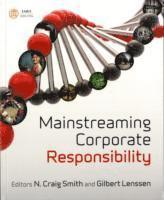
As managers find that they must grapple with increasingly complex social and environmental problems as an integral part of business strategy and operations, they require different knowledge, skills and competencies than in the past. Mainstreaming Corporate Responsibility pioneers a way for business schools to equip future business leaders and managers to meet these challenges. Based upon a curriculum development project run by the INSEAD Social Innovation Centre, London Business School and EABIS, this book is a collection of texts and cases for use in courses across the business disciplines as well as courses on Corporate Responsibility. Watch the Editor of Mainstreaming Corporate Responsibility:http://tv.insead.edu/video/Most+Recent/100/5253 Watch two of the chapter authors:http://knowledge.insead.edu/video/index.cfm?vid=313
1 011 kr
Skickas inom 7-10 vardagar
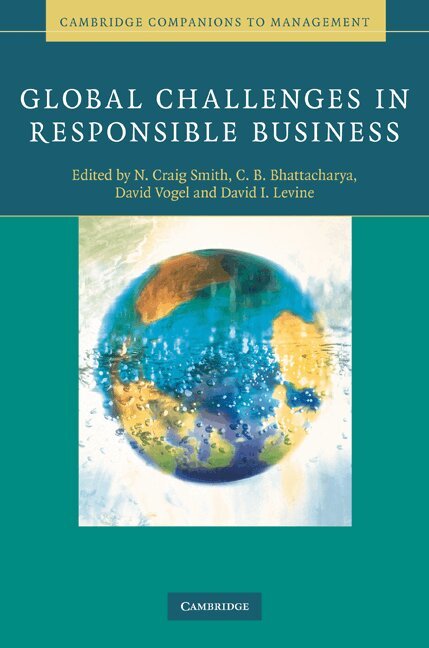
Corporate responsibility has gone global. It has secured the attention of business leaders, governments and NGOs to an unprecedented extent. Increasingly, it is argued that business must play a constructive role in addressing massive global challenges. Business is not responsible for causing most of the problems associated with, for example, extreme poverty and hunger, child mortality and HIV/AIDS. However, it is often claimed that business has a responsibility to help ameliorate many of these problems and, indeed, it may be the only institution capable of effectively addressing some of them. Global Challenges in Responsible Business addresses the implications for business of corporate responsibility in the context of globalization and the social and environmental problems we face today. Featuring research from Europe, North America, Asia and Africa, it focuses on three major themes: embedding corporate responsibility, corporate responsibility and marketing, and corporate responsibility in developing countries.
370 kr
Skickas inom 7-10 vardagar
Corporate responsibility has gone global. It has secured the attention of business leaders, governments and NGOs to an unprecedented extent. Increasingly, it is argued that business must play a constructive role in addressing massive global challenges. Business is not responsible for causing most of the problems associated with, for example, extreme poverty and hunger, child mortality and HIV/AIDS. However, it is often claimed that business has a responsibility to help ameliorate many of these problems and, indeed, it may be the only institution capable of effectively addressing some of them. Global Challenges in Responsible Business addresses the implications for business of corporate responsibility in the context of globalization and the social and environmental problems we face today. Featuring research from Europe, North America, Asia and Africa, it focuses on three major themes: embedding corporate responsibility, corporate responsibility and marketing, and corporate responsibility in developing countries.
2 288 kr
Skickas inom 10-15 vardagar
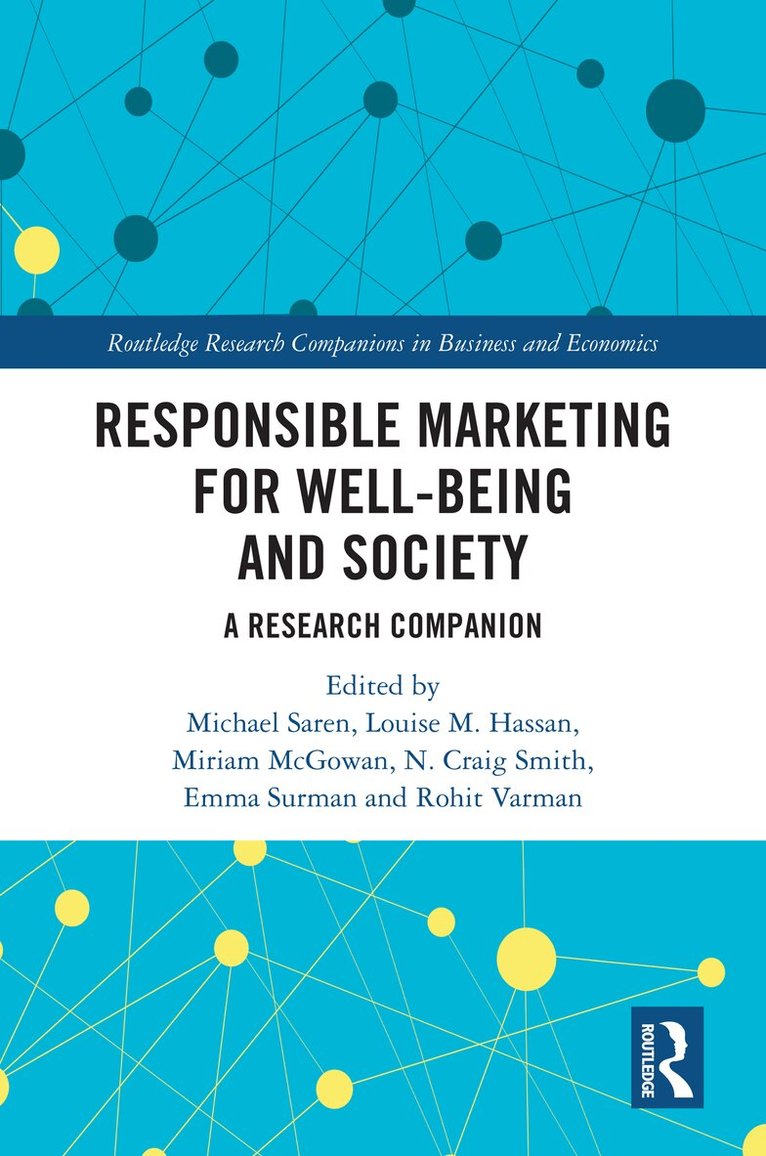
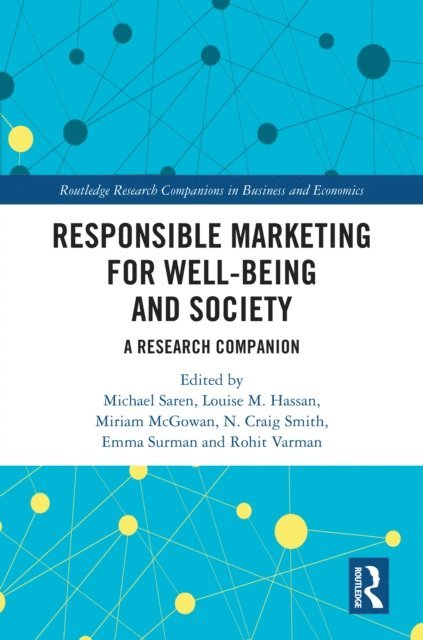
This book provides an overview of recent and current research which defines and scopes the field of responsible marketing in one single edited book. It brings together diverse perspectives from contributors at Birmingham University, leading the academic development of knowledge of the subject, to contribute to the learning curriculum and reach out to those interested in improving marketing practices and standards. Responsible Marketing for Well-being and Society draws together a rich and diverse body of scholarly research from a variety of perspectives from individual to global, macro and micro, producer and consumer, environmental, stakeholder, supply chain, and other intermediary viewpoints. The embryonic research in this field involves different philosophical and methodological positions, theoretical approaches, and research communities including aspects of corporate social responsibility, marketing ethics, critical marketing, consumer culture theory, and macromarketing.The book takes a predominantly organisational or enterprise-level perspective in order to understand and explain how individuals and organisations can manage their marketing activities and relationships responsibly. The actions of other stakeholders are also a crucial component in achieving responsible outcomes; therefore, a broader perspective on the impacts of marketing decisions and actions on other stakeholders, such as consumers, employees, the environment, and society, is also taken as a basis for analysis and discussion. The book provides an authoritative overview for the academic market, including university libraries, research teams, PhD students, and independent researchers.The topics and contents of responsible marketing are relevant to several disciplinary fields of study including, marketing, advertising, retailing and other business subjects, consumer studies, sustainability, ethics, public policy, media studies, psychology, economics, and other social sciences.
649 kr
Skickas inom 10-15 vardagar
This book provides an overview of recent and current research which defines and scopes the field of responsible marketing in one single edited book. It brings together diverse perspectives from contributors at Birmingham University, leading the academic development of knowledge of the subject, to contribute to the learning curriculum and reach out to those interested in improving marketing practices and standards. Responsible Marketing for Well-being and Society draws together a rich and diverse body of scholarly research from a variety of perspectives from individual to global, macro and micro, producer and consumer, environmental, stakeholder, supply chain, and other intermediary viewpoints. The embryonic research in this field involves different philosophical and methodological positions, theoretical approaches, and research communities including aspects of corporate social responsibility, marketing ethics, critical marketing, consumer culture theory, and macromarketing.The book takes a predominantly organisational or enterprise-level perspective in order to understand and explain how individuals and organisations can manage their marketing activities and relationships responsibly. The actions of other stakeholders are also a crucial component in achieving responsible outcomes; therefore, a broader perspective on the impacts of marketing decisions and actions on other stakeholders, such as consumers, employees, the environment, and society, is also taken as a basis for analysis and discussion. The book provides an authoritative overview for the academic market, including university libraries, research teams, PhD students, and independent researchers.The topics and contents of responsible marketing are relevant to several disciplinary fields of study including, marketing, advertising, retailing and other business subjects, consumer studies, sustainability, ethics, public policy, media studies, psychology, economics, and other social sciences.
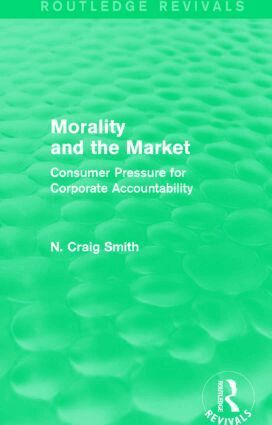
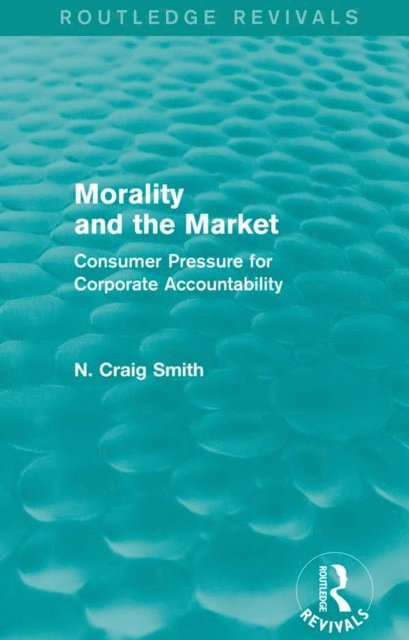
Morality and the Market (Routledge Revivals)
Consumer Pressure for Corporate Accountability
Inbunden, Engelska, 2014
2 634 kr
Skickas inom 10-15 vardagar
Can businesses abandon the axiom that the customer is always right when consumers start questioning the ethics of business practices? Professor Craig Smith examines the theory and practice of ethical purchase behaviour, a crucial mechanism for ensuring social responsibility in business. He explains how and why consumers have used their purchasing power to influence corporate policies and practices. He argues the case for the social control of business, drawing on perspectives from marketing, economics, politics, sociology, and business policy. He concludes that the market may act as an arbiter of ‘good’ and ‘bad’ business practice. Dr Smith considers the practical aspects of ethical purchase behaviour, focusing on consumer boycotts as a specific form of this consumer behaviour, and explains how boycotted businesses should respond. This title, first published in 1990, is ideal for both business students and those who have a business of their own.
Morality and the Market (Routledge Revivals)
Consumer Pressure for Corporate Accountability
Häftad, Engelska, 2016
635 kr
Skickas inom 10-15 vardagar
Can businesses abandon the axiom that the customer is always right when consumers start questioning the ethics of business practices? Professor Craig Smith examines the theory and practice of ethical purchase behaviour, a crucial mechanism for ensuring social responsibility in business. He explains how and why consumers have used their purchasing power to influence corporate policies and practices. He argues the case for the social control of business, drawing on perspectives from marketing, economics, politics, sociology, and business policy. He concludes that the market may act as an arbiter of ‘good’ and ‘bad’ business practice. Dr Smith considers the practical aspects of ethical purchase behaviour, focusing on consumer boycotts as a specific form of this consumer behaviour, and explains how boycotted businesses should respond. This title, first published in 1990, is ideal for both business students and those who have a business of their own.
12 203 kr
Tillfälligt slut
The burgeoning field of marketing ethics looks at the moral issues and controversies surrounding marketing theory and practice. This four-volume set focuses on understanding marketing ethics from a management perspective, including articles that: provide ways of thinking about marketing ethics; offer a descriptive account of how marketers make decisions with ethical content; present normative guidance for marketing decision-making; and address specific ethical issues in marketing practice. The editors′ introduction provides an overview of the literature included in the set as well as identifying directions for future research.Volume One: Foundations of Marketing Ethics provides a conceptualization of the field, including some of the earliest contributions on the topic. Volume Two: Positive Marketing Ethics looks at how managers make ethical marketing decisions. Volume Three: Normative Marketing Ethics focuses on normative marketing ethics, which is primarily concerned with the prescriptive considerations of how marketers should make decisions with ethical content. Volume Four: Ethical Issues in Marketing addresses the effects and possible solutions to the major ethical issues arising in the practice of marketing, both at the micro/firm level and at the more macro/systemic level.
781 kr
Skickas inom 10-15 vardagar
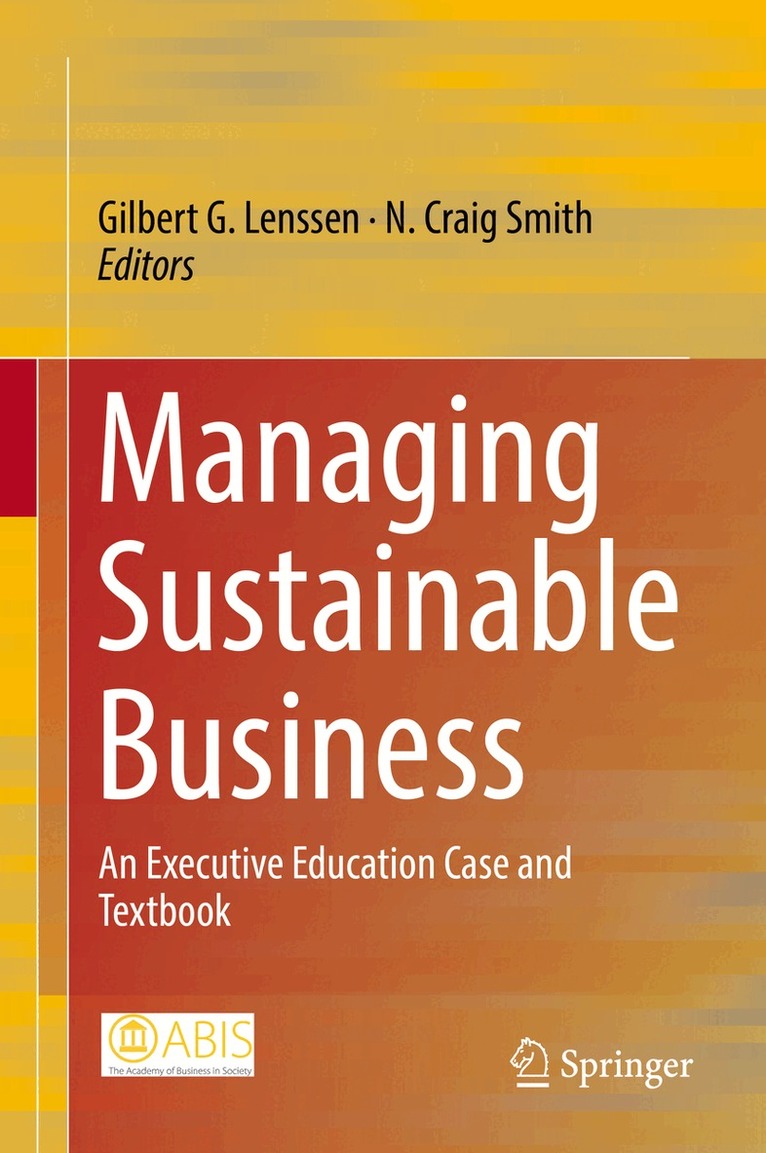
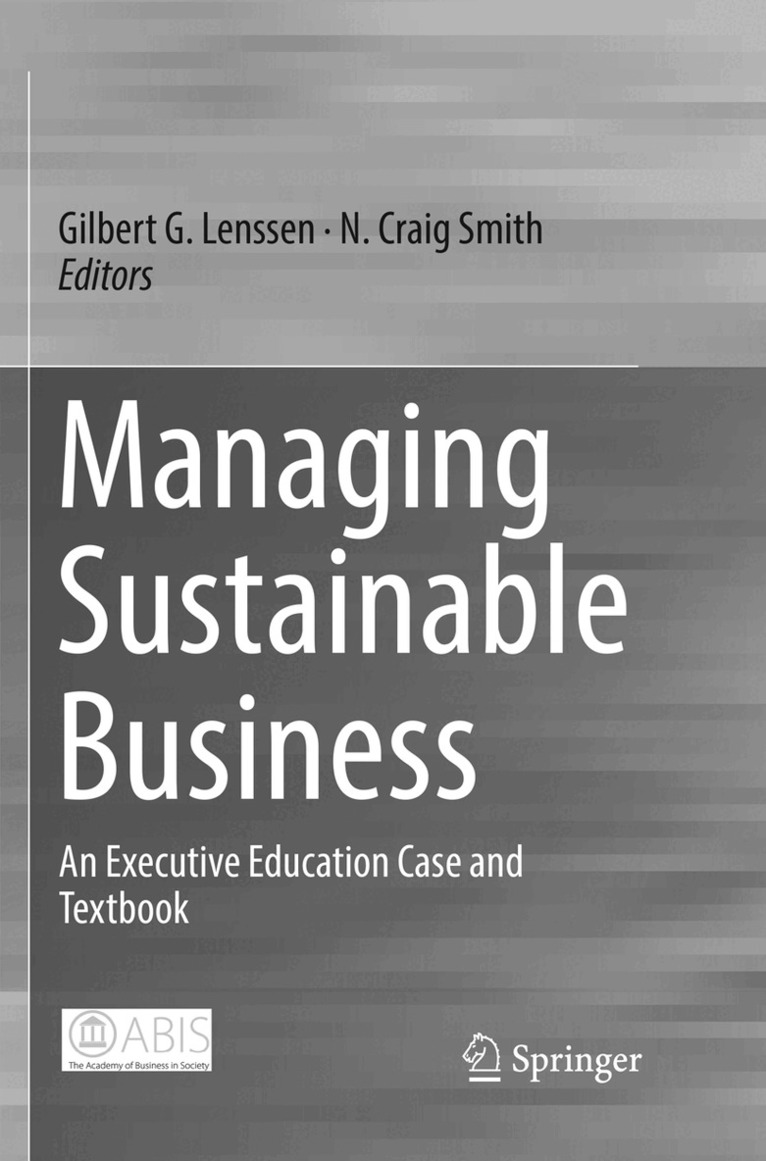
This book offers 32 texts and case studies from across a wide range of business sectors around a managerial framework for Sustainable Business. The case studies are developed for and tested in executive education programmes at leading business schools.The book is based on the premise that the key for managing the sustainable business is finding the right balance over time between managing competitiveness and profitability AND managing the context of the business with its political, social and ecological risks and opportunities. In that way, a sustainable business is highly responsive to the demands and challenges from both markets and societies and managers embrace the complexity, ambivalence and uncertainty that goes along with this approach.The book presents a framework that facilitates the adoption of best business practice. This framework leads executives through a systematic approach of strategic analysis and business planning in risk management, issues management, stakeholder management, sustainable business development and strategic differentiation, business model innovation and developing dynamic capabilities. The approach helps broaden the understanding of what sustainable performance means, by protecting business value against sustainability risks and creating business value from sustainability opportunities.
626 kr
Skickas inom 10-15 vardagar
This book offers 32 texts and case studies from across a wide range of business sectors around a managerial framework for Sustainable Business. The case studies are developed for and tested in executive education programmes at leading business schools.The book is based on the premise that the key for managing the sustainable business is finding the right balance over time between managing competitiveness and profitability AND managing the context of the business with its political, social and ecological risks and opportunities. In that way, a sustainable business is highly responsive to the demands and challenges from both markets and societies and managers embrace the complexity, ambivalence and uncertainty that goes along with this approach.The book presents a framework that facilitates the adoption of best business practice. This framework leads executives through a systematic approach of strategic analysis and business planning in risk management, issues management, stakeholder management, sustainable business development and strategic differentiation, business model innovation and developing dynamic capabilities. The approach helps broaden the understanding of what sustainable performance means, by protecting business value against sustainability risks and creating business value from sustainability opportunities.