N. Veena – författare
2 125 kr
Läs direkt efter köp
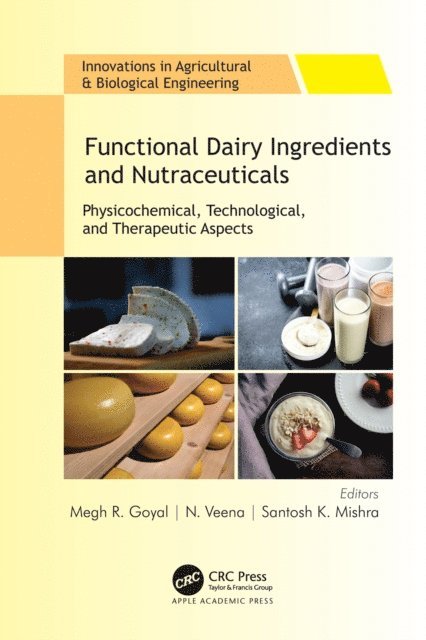
Here is a comprehensive summary of new research and advancements in the unique functional and nutraceutical therapeutic and physiochemical aspects of dairy foods. The book explores the specific health benefits of dairy ingredients in nutraceuticals and functional foods as well as delves into production techniques that enhancement their therapeutic value.
The first section of the book looks at the physicochemical and technological aspects of milk-derived components, discussing production, extraction and purification, and functional and technological applications of various functional dairy ingredients (such as lactulose, casein and whey protein-derived bioactive peptides). The volume also considers the therapeutic aspects of dairy ingredients, detailing the physiological and health effects of colostrum, oligosaccharides, conjugated linoleic acid, and lactoferrin. The third section focuses on enhancing the functionality of dairy foods by assessing the functional attributes that can be augmented by the addition of nutraceuticals such as probiotics, vitamins, and minerals or by the removal of cholesterol.
Functional Dairy Ingredients and Nutraceuticals: Physicochemical, Technological, and Therapeutic Aspects provides an abundance of important research on the use of dairy ingredients in functional foods and nutraceuticals that will be valued by researchers, scientists, students, growers, traders, processors, industries, and others involved with the physicochemical, technological and therapeutic aspects of various nutraceuticals and functional dairy ingredients and their application in food and dairy industry.
2 125 kr
Läs direkt efter köp
Here is a comprehensive summary of new research and advancements in the unique functional and nutraceutical therapeutic and physiochemical aspects of dairy foods. The book explores the specific health benefits of dairy ingredients in nutraceuticals and functional foods as well as delves into production techniques that enhancement their therapeutic value.
The first section of the book looks at the physicochemical and technological aspects of milk-derived components, discussing production, extraction and purification, and functional and technological applications of various functional dairy ingredients (such as lactulose, casein and whey protein-derived bioactive peptides). The volume also considers the therapeutic aspects of dairy ingredients, detailing the physiological and health effects of colostrum, oligosaccharides, conjugated linoleic acid, and lactoferrin. The third section focuses on enhancing the functionality of dairy foods by assessing the functional attributes that can be augmented by the addition of nutraceuticals such as probiotics, vitamins, and minerals or by the removal of cholesterol.
Functional Dairy Ingredients and Nutraceuticals: Physicochemical, Technological, and Therapeutic Aspects provides an abundance of important research on the use of dairy ingredients in functional foods and nutraceuticals that will be valued by researchers, scientists, students, growers, traders, processors, industries, and others involved with the physicochemical, technological and therapeutic aspects of various nutraceuticals and functional dairy ingredients and their application in food and dairy industry.
2 255 kr
Läs direkt efter köp
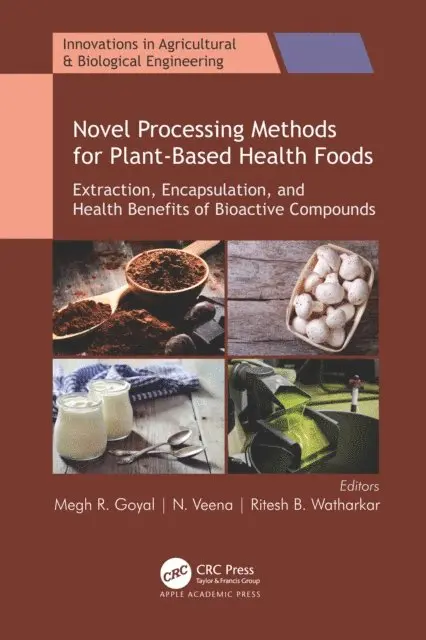
This new volume presents an array of new and emerging techniques in the food processing sector, focusing on the extraction, encapsulation, and health benefits of bioactive Compounds. It illustrates various applications of novel food processing extraction and encapsulation techniques along with the health and safety aspects of plant-derived bioactive compounds and functional foods
Some of the sustainable and green extraction techniques discussed include novel extraction techniques, such as microwave-assisted extraction (MAE), ultrasonic assisted extraction (UAE), supercritical fluid extraction (SFE), accelerated solvent extraction (ASE), and rapid solid-liquid extraction (RSLE).
The volume also covers the principles and methods of encapsulation, its role and application in protection and stabilization and as a targeted delivery system for enhanced nutritional health benefits. Various encapsulation methods, such as spray drying, spray cooling/chilling, fluidized bed coating, coacervation, liposome entrapment, extrusion, inclusion complexation, etc., are discussed in detail for application in the food industry.
Novel Processing Methods for Plant-Based Health Foods: Extraction, Encapsulation, and Health Benefits of Bioactive Compounds also highlights the potential of nutraceuticals and biological active compounds in human health, various sources, consumers’ acceptance, safety aspects, and their application in development of functional foods.
This volume offers many tremendous applications in different areas of the food industry, including in food processing, preservation, health-promoting properties, and safety and quality evaluation of plant-based foods. The book provides a wealth of information and will be an excellent reference material for researchers, scientists, students, growers, traders, processors, industry professionals, and others on the emerging food processing approaches for extraction and encapsulation of plant-based bioactive compounds and health-promoting properties of plant-derived nutraceuticals and safety aspects in production of functional foods.
2 255 kr
Läs direkt efter köp
This new volume presents an array of new and emerging techniques in the food processing sector, focusing on the extraction, encapsulation, and health benefits of bioactive Compounds. It illustrates various applications of novel food processing extraction and encapsulation techniques along with the health and safety aspects of plant-derived bioactive compounds and functional foods
Some of the sustainable and green extraction techniques discussed include novel extraction techniques, such as microwave-assisted extraction (MAE), ultrasonic assisted extraction (UAE), supercritical fluid extraction (SFE), accelerated solvent extraction (ASE), and rapid solid-liquid extraction (RSLE).
The volume also covers the principles and methods of encapsulation, its role and application in protection and stabilization and as a targeted delivery system for enhanced nutritional health benefits. Various encapsulation methods, such as spray drying, spray cooling/chilling, fluidized bed coating, coacervation, liposome entrapment, extrusion, inclusion complexation, etc., are discussed in detail for application in the food industry.
Novel Processing Methods for Plant-Based Health Foods: Extraction, Encapsulation, and Health Benefits of Bioactive Compounds also highlights the potential of nutraceuticals and biological active compounds in human health, various sources, consumers’ acceptance, safety aspects, and their application in development of functional foods.
This volume offers many tremendous applications in different areas of the food industry, including in food processing, preservation, health-promoting properties, and safety and quality evaluation of plant-based foods. The book provides a wealth of information and will be an excellent reference material for researchers, scientists, students, growers, traders, processors, industry professionals, and others on the emerging food processing approaches for extraction and encapsulation of plant-based bioactive compounds and health-promoting properties of plant-derived nutraceuticals and safety aspects in production of functional foods.
2 125 kr
Läs direkt efter köp
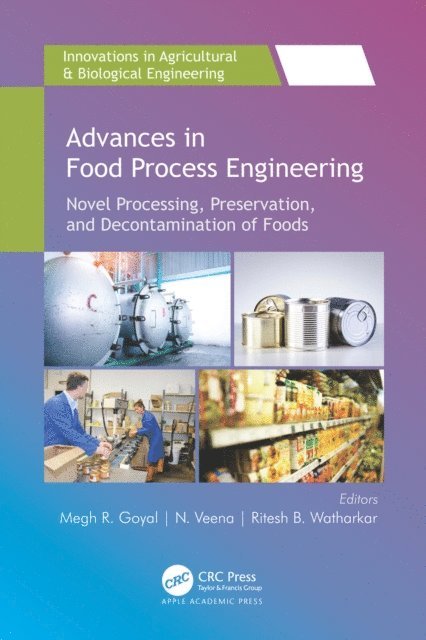
This new volume highlights a selection of novel applications for food processing, food preservation, and food decontamination methods. It discusses the principles, benefits, and techniques used and presents recent developments and applications of ultrasonication. It explores supercritical fluid extraction and supercritical fluid chromatography, extrusion technology, advanced drying and dehydration technologies, and encapsulation methods as important tools in the processing of food. It addresses the basic membrane processing technologies along with their advantages and disadvantages. The volume presents the application and use of mathematical models for measuring and regulating fermentation procedures. It also provides an understanding of how the hydration kinetics of grains can help in optimization and scaling of processes on a large industrial scale. Topics on decontamination methods for foods are included, such as an overview of concepts, basic principles, potential applications, and prospects and limitations of cold plasma technology and irradiation in the food processing sector.
2 125 kr
Läs direkt efter köp
This new volume highlights a selection of novel applications for food processing, food preservation, and food decontamination methods. It discusses the principles, benefits, and techniques used and presents recent developments and applications of ultrasonication. It explores supercritical fluid extraction and supercritical fluid chromatography, extrusion technology, advanced drying and dehydration technologies, and encapsulation methods as important tools in the processing of food. It addresses the basic membrane processing technologies along with their advantages and disadvantages. The volume presents the application and use of mathematical models for measuring and regulating fermentation procedures. It also provides an understanding of how the hydration kinetics of grains can help in optimization and scaling of processes on a large industrial scale. Topics on decontamination methods for foods are included, such as an overview of concepts, basic principles, potential applications, and prospects and limitations of cold plasma technology and irradiation in the food processing sector.
2 125 kr
Läs direkt efter köp
This new volume explores emerging and advanced techniques in the food processing sector. Novel food processing methods such as ultrasound processing, microwave heating, advanced drying methods, and nonthermal technologies are discussed in detail. The volume also covers the application of irradiation and encapsulation methods, microbial valorizing, and other novel food processing and preservation methods. Mathematical modeling concepts and case studies are also included to illustrate applications of modeling techniques in food processing. The volume promotes the understanding of the thermodynamics of food polymers, structural design principles, structural hierarchy, and the steps involved in food structuring and structure measurement techniques.
2 125 kr
Läs direkt efter köp
This new volume explores emerging and advanced techniques in the food processing sector. Novel food processing methods such as ultrasound processing, microwave heating, advanced drying methods, and nonthermal technologies are discussed in detail. The volume also covers the application of irradiation and encapsulation methods, microbial valorizing, and other novel food processing and preservation methods. Mathematical modeling concepts and case studies are also included to illustrate applications of modeling techniques in food processing. The volume promotes the understanding of the thermodynamics of food polymers, structural design principles, structural hierarchy, and the steps involved in food structuring and structure measurement techniques.
2 406 kr
Läs direkt efter köp
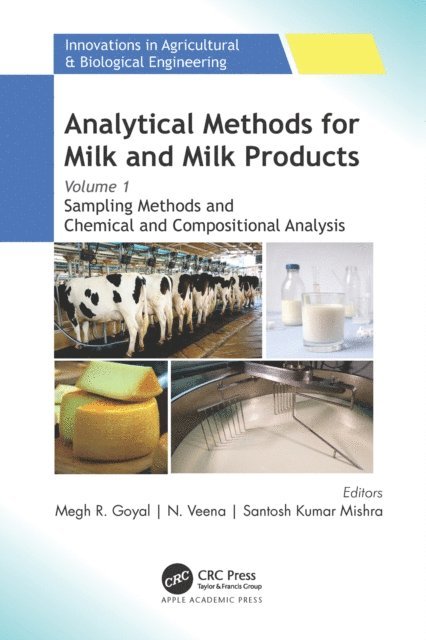
Here is a new three-volume set that comprehensively illustrates a wide range of analytical techniques and methodologies for assessing the physical, chemical, and microbiological properties of milk and milk products to ensure nutritional and technological quality and safety of milk and milk products.
This volume presents the main analytical techniques and methodologies and their application to the compounds involved in nutritional and technological quality of milk and milk products. It covers the sampling methods and chemical analysis of milk, highlighting the standard methods used for calibration of different glassware, sampling procedures of milk and milk products, and the physicochemical and compositional aspects and assessment of the quality of raw milk intended for processing and manufacturing. The book describes the compositional analysis of frozen and fat-rich products, including the physicochemical and compositional analysis of dairy products that include cream, butter, butter oil, clarified fat (ghee), ice cream, and frozen desserts. Each of the laboratory exercises includes an introduction, objective, principle of method, chemicals and apparatus required, sample preparation, experimentation, data collection sheet and calculations, and resource materials.
The other volumes are:
Volume 2: Physicochemical Analysis of Concentrated, Coagulated, and Fermented Products
Volume 3: Microbiological Analysis, Isolation, and Characterization
Together, these three volumes are a complete and thorough reference on analytical methods for milk and milk products.
2 385 kr
Läs direkt efter köp
Here is a new three-volume set that comprehensively illustrates a wide range of analytical techniques and methodologies for assessing the physical, chemical, and microbiological properties of milk and milk products to ensure nutritional and technological quality and safety of milk and milk products.
This volume presents the main analytical techniques and methodologies and their application to the compounds involved in nutritional and technological quality of milk and milk products. It covers the sampling methods and chemical analysis of milk, highlighting the standard methods used for calibration of different glassware, sampling procedures of milk and milk products, and the physicochemical and compositional aspects and assessment of the quality of raw milk intended for processing and manufacturing. The book describes the compositional analysis of frozen and fat-rich products, including the physicochemical and compositional analysis of dairy products that include cream, butter, butter oil, clarified fat (ghee), ice cream, and frozen desserts. Each of the laboratory exercises includes an introduction, objective, principle of method, chemicals and apparatus required, sample preparation, experimentation, data collection sheet and calculations, and resource materials.
The other volumes are:
Volume 2: Physicochemical Analysis of Concentrated, Coagulated, and Fermented Products
Volume 3: Microbiological Analysis, Isolation, and Characterization
Together, these three volumes are a complete and thorough reference on analytical methods for milk and milk products.
2 385 kr
Läs direkt efter köp
This new three-volume set comprehensively illustrates a wide range of analytical techniques and methodologies for assessing the physical, chemical, and microbiological properties of milk and milk products to ensure nutritional and technological quality and safety of milk and milk products.
This volume focuses on various analytical methods for physicochemical and compositional analysis of concentrated, coagulated, and fermented dairy products in detail. It also describes the standard methodologies for the analysis of nutraceutical components and food additives commonly used in various dairy products to meet technological and nutritional quality standards.
The other volumes are:
Volume 1: Sampling Methods, Chemical, and Compositional Analysis
Volume 3: Microbiological Analysis is forthcoming.
Together, these three volumes will be a complete and thorough reference on analytical methods for milk and milk products. The volumes will be valuable for researchers, scientists, food analysts, food analysis and research laboratory personnel involved in the area of milk and milk products analysis as well as for faculty and students.
2 385 kr
Läs direkt efter köp
This new three-volume set comprehensively illustrates a wide range of analytical techniques and methodologies for assessing the physical, chemical, and microbiological properties of milk and milk products to ensure nutritional and technological quality and safety of milk and milk products.
This volume focuses on various analytical methods for physicochemical and compositional analysis of concentrated, coagulated, and fermented dairy products in detail. It also describes the standard methodologies for the analysis of nutraceutical components and food additives commonly used in various dairy products to meet technological and nutritional quality standards.
The other volumes are:
Volume 1: Sampling Methods, Chemical, and Compositional Analysis
Volume 3: Microbiological Analysis is forthcoming.
Together, these three volumes will be a complete and thorough reference on analytical methods for milk and milk products. The volumes will be valuable for researchers, scientists, food analysts, food analysis and research laboratory personnel involved in the area of milk and milk products analysis as well as for faculty and students.
2 385 kr
Läs direkt efter köp
This valuable resource on the microbiological analysis of milk and milk products delves into various aspects of bacterial enumeration, pathogen detection, mastitis milk identification, quality testing for starter cultures, isolation and characterization of lactic acid bacteria (LAB), safety assessment protocols for probiotics, DNA isolation methods, molecular characterization techniques, and statistical tools for laboratory data analysis. It presents an in-depth description of the methodologies for isolation, identification, and confirmatory tests for various hygiene and safety indicator organisms.
Together with Volume 1: Sampling Methods and Chemical and Compositional Analysis and Volume 2: Physicochemical Analysis of Concentrated, Coagulated, and Fermented Products, this 3-volume work is a valuable resource on the scientific analysis of milk and milk products.
2 385 kr
Läs direkt efter köp
This valuable resource on the microbiological analysis of milk and milk products delves into various aspects of bacterial enumeration, pathogen detection, mastitis milk identification, quality testing for starter cultures, isolation and characterization of lactic acid bacteria (LAB), safety assessment protocols for probiotics, DNA isolation methods, molecular characterization techniques, and statistical tools for laboratory data analysis. It presents an in-depth description of the methodologies for isolation, identification, and confirmatory tests for various hygiene and safety indicator organisms.
Together with Volume 1: Sampling Methods and Chemical and Compositional Analysis and Volume 2: Physicochemical Analysis of Concentrated, Coagulated, and Fermented Products, this 3-volume work is a valuable resource on the scientific analysis of milk and milk products.
1 825 kr
Skickas inom 10-15 vardagar
1 936 kr
Skickas inom 10-15 vardagar
1 825 kr
Skickas inom 10-15 vardagar
1 825 kr
Skickas inom 10-15 vardagar
7 126 kr
Skickas inom 10-15 vardagar
2 047 kr
Skickas inom 10-15 vardagar
2 047 kr
Skickas inom 10-15 vardagar
2 047 kr
Skickas inom 10-15 vardagar