Paweł Modrzyński - Böcker
Visar alla böcker från författaren Paweł Modrzyński. Handla med fri frakt och snabb leverans.
3 produkter
3 produkter
Cities in International Decision-Making
The Impact of European Cities on International Law and Relations
Inbunden, Engelska, 2025
1 275 kr
Skickas inom 7-10 vardagar
With illustrative case studies on international organizations and transnational city networks across Europe, this innovative book argues that cities are becoming more active participants in international law-making and challenging the previously dominant nation-state approach of recent history.Chapters explore key literature and legal regulations surrounding cities, providing the latest information on their international normative activities. This book includes multiple interviews conducted with the official representatives of cities and various international institutions, such as UN-Habitat, the EU Committee of the Regions, and the Congress for Local and Regional Authorities of the Council of Europe. The authors investigate how, despite their strong role in international relations and international law implementation, the importance of cities has still not been adequately reflected in the structures of the Council of Europe, the EU and the UN. Ultimately, the book finds that cities have more impact on policy-making than on decision-making processes.Cities in International Decision-Making is a rich resource for academics and students of international relations, political science, international law and urban studies. It is also a beneficial read for city authorities, policy-makers, external experts and think-tank analysts.
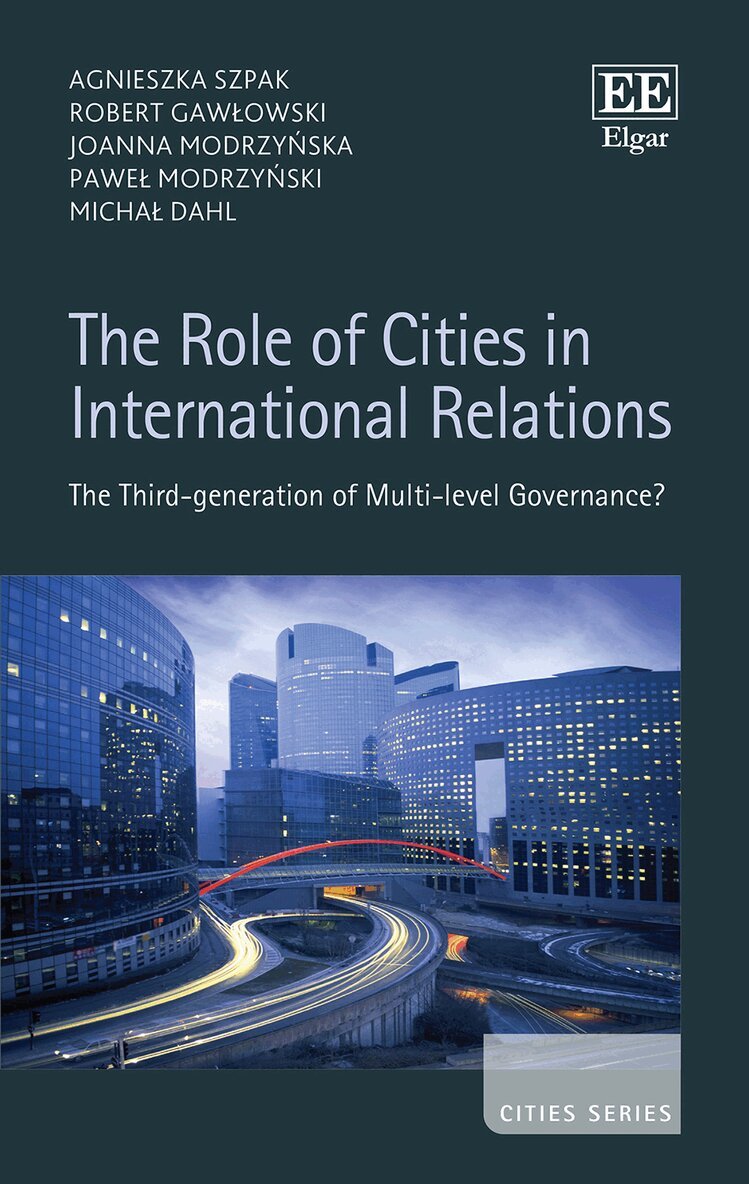
Role of Cities in International Relations
The Third-generation of Multi-level Governance?
Inbunden, Engelska, 2022
1 559 kr
Skickas inom 7-10 vardagar
Concerns about the position and function of nation-states in the international arena have led to a growing interest in the role of cities in international relations. This timely book advances the argument that cities are becoming active and informal actors in international law-making, indicating the emergence of a ‘third generation’ of multi-level governance. Expansive in scope, the book investigates various areas of city cooperation such as the economy, migration, security, sustainable development, ecology, and the position of cities in international law. Interviews conducted with the official representatives of several cities and international institutions, including UN-Habitat, the EU Committee of the Regions, and the Congress for Local and Regional Authorities of the Council of Europe, offer key insights into the most pressing urban issues of the 21st century. Examining the latest information on the international activities of cities, this engaging book explores the possibility that cities may soon reach the level of international subjects, capable of both implementing and creating international law. Contributing to the under-represented literature on the evolving function of cities in the modern world, this prescient book will be of interest to academics and students of urban studies, international relations, political science, and international law. City authorities dealing with international cooperation will benefit from its consideration of further development opportunities.
613 kr
Skickas inom 7-10 vardagar
Shared Service Centers (SSCs) support the management of administratively complex enterprises. Originating in the private sector, SSCs have increasingly been adopted in the public sector in an effort to reduce administrative costs, improve the quality of public services, reduce the risk of management error and make better use of human resources.The first book to thoroughly examine the organization, development and effectiveness of the shared service market in local governments across Poland, this study explores the process of creating SSCs, the key elements of unit management, the barriers and threats to both the creation and operation of SSCs, and the strategic technological solutions that local governments have utilized in shared service provision. The author argues that the implementation of SSCs represents the initial stage on the way to improving the effectiveness of public and local government administration, while stressing that further organizational changes and standardization processes are needed to achieve greater effectiveness, in a conclusion which makes essential reading for both practitioners in local government and scholars across the fields of public management, administration and economics.