Peter Skafish – författare
Visar alla böcker från författaren Peter Skafish. Handla med fri frakt och snabb leverans.
6 produkter
6 produkter
Inbunden, Engelska, 2023
1 312 kr
Skickas inom 5-8 vardagar
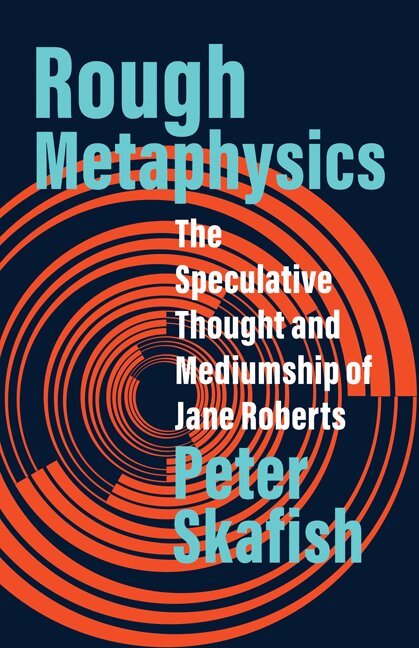
A powerful case for why anthropology should study outsiders of thought and their speculative ideas What sort of thinking is needed to study anomalies in thought? In this trenchantly argued and beautifully written book, anthropologist Peter Skafish explores this provocative question by examining the writings of the medium and “rough metaphysician” Jane Roberts (1929–1984). Through a close interpretation of her own published texts as well as those she understood herself to have dictated for her cohort of channeled personalities-including one, named “Seth,” who would inspire the New Age movement-Skafish shows her intuitive and dreamlike work to be a source of rigorously inventive ideas about science, ontology, translation, and pluralism. Arguing that Roberts’s writings contain philosophies ahead of their time, he also asks: How might our understanding of speculative thinking change if we consider the way untrained writers, occult visionaries, and their counterparts in other cultural traditions undertake it? What can outsider thinkers teach us about the limitations of even our most critical intellectual habits?Rough Metaphysics is at once an ethnography of the books of a strange and yet remarkable writer, a commentary on the unlikely philosophy contained in them, and a call for a new way of doing (and undoing) philosophy through anthropology, and vice versa. In guiding the reader through Roberts’s often hallucinatory “world of concepts,” Skafish also develops a series of original interpretations of thinkers-from William James to Claude LÉvi-Strauss to Paul Feyerabend-who have been vital to anthropologists and their fellow travelers.Seductively written and surprising in its turns of thought, Rough Metaphysics is a feast for anyone who wants to learn how to think something new, especially about thought.
Häftad, Engelska, 2023
320 kr
Skickas inom 5-8 vardagar
A powerful case for why anthropology should study outsiders of thought and their speculative ideas What sort of thinking is needed to study anomalies in thought? In this trenchantly argued and beautifully written book, anthropologist Peter Skafish explores this provocative question by examining the writings of the medium and “rough metaphysician” Jane Roberts (1929–1984). Through a close interpretation of her own published texts as well as those she understood herself to have dictated for her cohort of channeled personalities-including one, named “Seth,” who would inspire the New Age movement-Skafish shows her intuitive and dreamlike work to be a source of rigorously inventive ideas about science, ontology, translation, and pluralism. Arguing that Roberts’s writings contain philosophies ahead of their time, he also asks: How might our understanding of speculative thinking change if we consider the way untrained writers, occult visionaries, and their counterparts in other cultural traditions undertake it? What can outsider thinkers teach us about the limitations of even our most critical intellectual habits?Rough Metaphysics is at once an ethnography of the books of a strange and yet remarkable writer, a commentary on the unlikely philosophy contained in them, and a call for a new way of doing (and undoing) philosophy through anthropology, and vice versa. In guiding the reader through Roberts’s often hallucinatory “world of concepts,” Skafish also develops a series of original interpretations of thinkers-from William James to Claude LÉvi-Strauss to Paul Feyerabend-who have been vital to anthropologists and their fellow travelers.Seductively written and surprising in its turns of thought, Rough Metaphysics is a feast for anyone who wants to learn how to think something new, especially about thought.
Inbunden, Engelska, 2016
1 965 kr
Skickas inom 10-15 vardagar
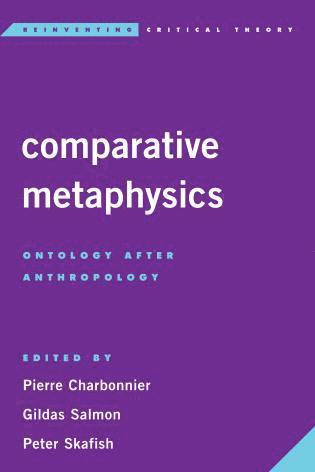
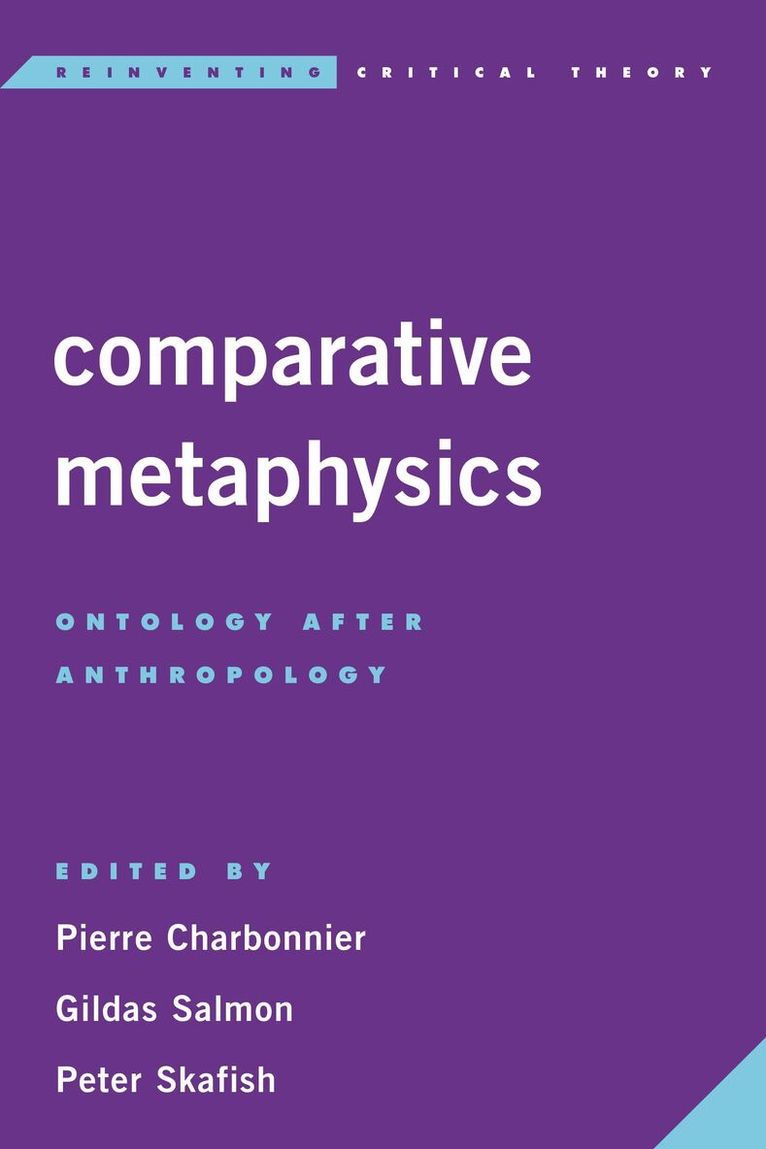
How does the ontological turn in anthropology redefine what modern, Western ontology is in practice, and offer the beginnings of a new ontological pluralism? On a planet that is increasingly becoming a single, metaphysically homogeneous world, anthropology remains one of the few disciplines that recognizes that being has been thought with very different concepts and can still be rendered in terms quite different than those placed on it today. Yet despite its critical acuity, even the most philosophically oriented anthropology often remains segregated from philosophical discussions aimed at rethinking such terms. What would come of an anthropology more fully committed to being a source of (post-) philosophical concepts? What would happen to philosophy if it began to think with and through these concepts? How, finally, does comparison condition these two projects ? This book addresses these questions from a variety of perspectives, all of which nonetheless hold in common the view that “philosophy” has been displaced and altered by the modes of thought of other collectives. An international group of authors, including Eduardo Viveiros de Castro, Marilyn Strathern, Philippe Descola, and Bruno Latour, explore how the new anthropology/philosophy conjuncture opens new horizons of critique.
Häftad, Engelska, 2016
696 kr
Skickas inom 10-15 vardagar
How does the ontological turn in anthropology redefine what modern, Western ontology is in practice, and offer the beginnings of a new ontological pluralism? On a planet that is increasingly becoming a single, metaphysically homogeneous world, anthropology remains one of the few disciplines that recognizes that being has been thought with very different concepts and can still be rendered in terms quite different than those placed on it today. Yet despite its critical acuity, even the most philosophically oriented anthropology often remains segregated from philosophical discussions aimed at rethinking such terms. What would come of an anthropology more fully committed to being a source of (post-) philosophical concepts? What would happen to philosophy if it began to think with and through these concepts? How, finally, does comparison condition these two projects ? This book addresses these questions from a variety of perspectives, all of which nonetheless hold in common the view that “philosophy” has been displaced and altered by the modes of thought of other collectives. An international group of authors, including Eduardo Viveiros de Castro, Marilyn Strathern, Philippe Descola, and Bruno Latour, explore how the new anthropology/philosophy conjuncture opens new horizons of critique.
E-bok
Engelska, 2016730 kr
Läs direkt efter köp
How does the ontological turn in anthropology redefine what modern, Western ontology is in practice, and offer the beginnings of a new ontological pluralism? On a planet that is increasingly becoming a single, metaphysically homogeneous world, anthropology remains one of the few disciplines that recognizes that being has been thought with very different concepts and can still be rendered in terms quite different than those placed on it today. Yet despite its critical acuity, even the most philosophically oriented anthropology often remains segregated from philosophical discussions aimed at rethinking such terms. What would come of an anthropology more fully committed to being a source of (post-) philosophical concepts? What would happen to philosophy if it began to think with and through these concepts? How, finally, does comparison condition these two projects ? This book addresses these questions from a variety of perspectives, all of which nonetheless hold in common the view that “philosophy” has been displaced and altered by the modes of thought of other collectives. An international group of authors, including Eduardo Viveiros de Castro, Marilyn Strathern, Philippe Descola, and Bruno Latour, explore how the new anthropology/philosophy conjuncture opens new horizons of critique.
Häftad, Engelska, 2017
274 kr
Tillfälligt slut
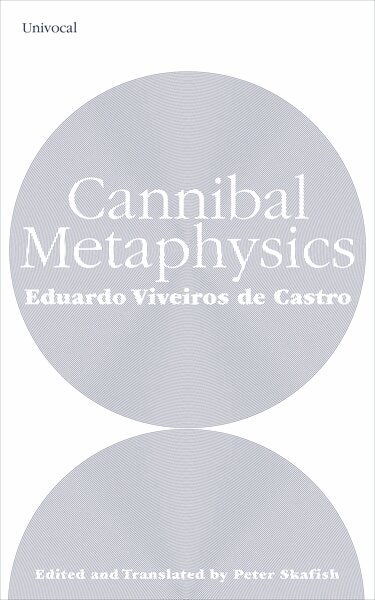
The iconoclastic Brazilian anthropologist and theoretician Eduardo Viveiros de Castro, well known in his discipline for helping initiate its “ontological turn,” offers a vision of anthropology as “the practice of the permanent decolonization of thought.” After showing that Amazonian and other Amerindian groups inhabit a radically different conceptual universe than ours-in which nature and culture, human and nonhuman, subject and object are conceived in terms that reverse our own-he presents the case for anthropology as the study of such “other” metaphysical schemes, and as the corresponding critique of the concepts imposed on them by the human sciences. Along the way, he spells out the consequences of this anthropology for thinking in general via a major reassessment of the work of Claude LÉvi-Strauss, arguments for the continued relevance of Deleuze and Guattari, dialogues with the work of Philippe Descola, Bruno Latour, and Marilyn Strathern, and inventive treatments of problems of ontology, translation, and transformation. Bold, unexpected, and profound, Cannibal Metaphysics is one of the chief works marking anthropology’s current return to the theoretical center stage.