Philip G. Roeder – författare
Visar alla böcker från författaren Philip G. Roeder. Handla med fri frakt och snabb leverans.
9 produkter
Red Sunset
The Failure of Soviet Politics
Häftad, 1993
697 kr
Lägg i varukorg
Why did the Soviet system fail? How is it that a political order, born of revolution, perished from stagnation? What caused a seemingly stable polity to collapse? Philip Roeder finds the answer to these questions in the Bolshevik "constitution"--the fundamental rules of the Soviet system that …
Postcommunism and the Theory of Democracy
Av Richard D. Anderson, M. Steven Fish m. fl.
Häftad, 2001
881 kr
Lägg i varukorg
Why did the wave of democracy that swept the former Soviet Union and Eastern Europe starting more than a decade ago develop in ways unexpected by observers who relied on existing theories of democracy? In Postcommunism and the Theory of Democracy, four distinguished scholars conduct the first major …
Where Nation-States Come From
Institutional Change in the Age of Nationalism
Häftad, 2007
1042 kr
Lägg i varukorg
To date, the world can lay claim to little more than 190 sovereign independent entities recognized as nation-states, while by some estimates there may be up to eight hundred more nation-state projects underway and seven to eight thousand potential projects. Why do a few such endeavors come to …
Postcommunism and the Theory of Democracy
Av Philip G. Roeder, Stephen E. Hanson m. fl.
E-bok, 2021
642 kr
Lägg i varukorg
Why did the wave of democracy that swept the former Soviet Union and Eastern Europe starting more than a decade ago develop in ways unexpected by observers who relied on existing theories of democracy? In Postcommunism and the Theory of Democracy , four distinguished scholars conduct the first …
Sustainable Peace
Power and Democracy After Civil Wars
Av Philip G. Roeder, Donald Rothchild
Inbunden, 2005
1649 kr
Lägg i varukorg
How can leaders craft political institutions that will sustain the peace and foster democracy in ethnically divided societies after conflicts as destructive as civil wars? Under turbulent conditions the leaders of ethnic groups, governments, and international organizations face the challenge of …
Sustainable Peace
Power and Democracy After Civil Wars
Av Philip G. Roeder, Donald Rothchild
Häftad, 2005
389 kr
Lägg i varukorg
How can leaders craft political institutions that will sustain the peace and foster democracy in ethnically divided societies after conflicts as destructive as civil wars? Under turbulent conditions the leaders of ethnic groups, governments, and international organizations face the challenge of …
Where Nation-States Come From
Institutional Change in the Age of Nationalism
E-bok, 2012
785 kr
Lägg i varukorg
To date, the world can lay claim to little more than 190 sovereign independent entities recognized as nation-states, while by some estimates there may be up to eight hundred more nation-state projects underway and seven to eight thousand potential projects. Why do a few such endeavors come to …
Red Sunset
The Failure of Soviet Politics
E-bok, 2021
955 kr
Lägg i varukorg
Why did the Soviet system fail? How is it that a political order, born of revolution, perished from stagnation? What caused a seemingly stable polity to collapse? Philip Roeder finds the answer to these questions in the Bolshevik "constitution"--the fundamental rules of the Soviet system that …
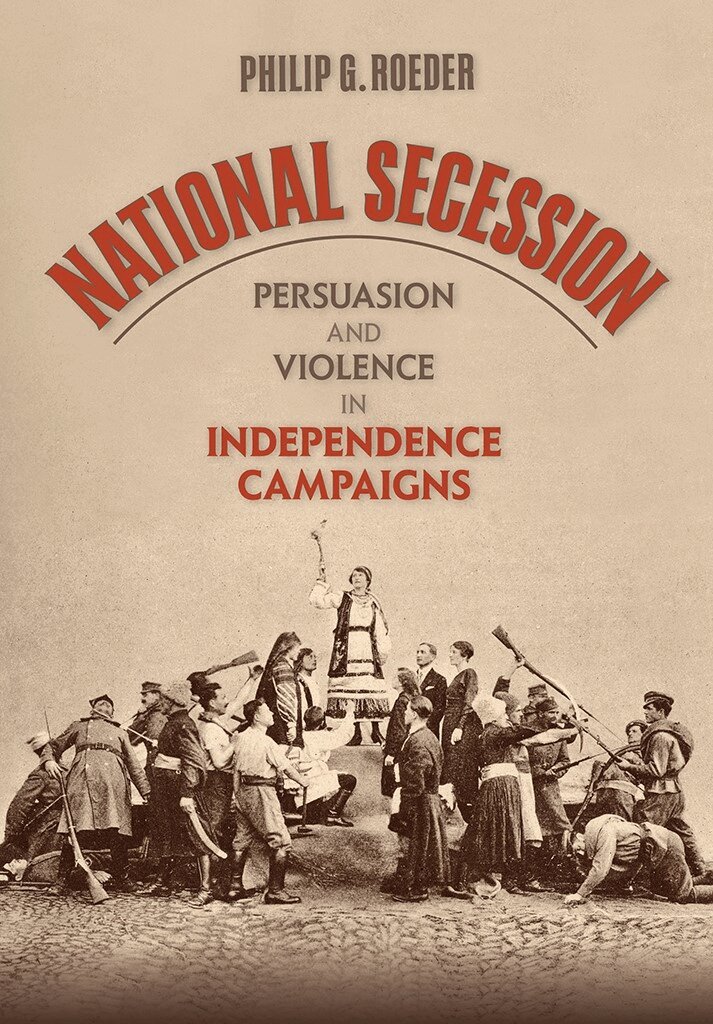
National Secession
Persuasion and Violence in Independence Campaigns
Inbunden, 2018
678 kr
Lägg i varukorg
How do some national-secessionist campaigns get on the global agenda whereas others do not? Which projects for new nation-states, Philip Roeder asks, give rise to mayhem in the politics of existing states? National secession has been explained by reference to identities, grievances, greed, and …