Quinn Slobodian – författare
261 kr
Skickas
146 kr
293 kr
Skickas inom 3-6 vardagar
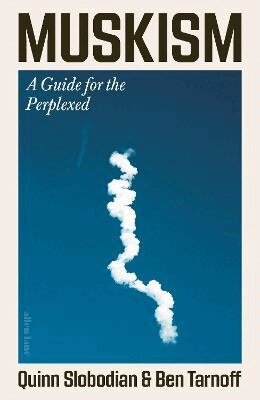
"Muskism cuts straight to the core of the man and the moment, explaining how a mercurial, conspiracy-prone, vicious bastard can inspire loyalty and billions in other peoples' money, and the nightmare world he wants to build with those billions." –Cory Doctorow, author of Enshittification
A New Yorker Most Anticipated Book of the Year • A Financial Times Most Anticipated Nonfiction Book of the Year • A Kirkus Most Anticipated Nonfiction Book of Spring 2026• A Literary Hub Most Anticipated Book of the Year
A pyrotechnic examination of Elon Musk as a symptom and avatar of our postliberal age
Everyone’s got an Elon take. He’s a messiah. A menace; a genius; a clown. The verdicts differ, but they share one theme: they treat him as an individual.
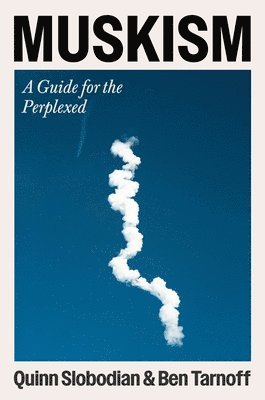
Muskism argues otherwise. Elon Musk isn’t a glitch in the system—he is the system. His worldview promises sovereignty through technology: plug in, power up, and become self-reliant. But the more you connect, the more he owns you.
If Fordism defined the capitalism of the twentieth century, Muskism may define the twenty-first. Fordism helped build the welfare state. Musk undoes it. He thrives on dependence while preaching freedom. His cars run on subsidies; his satellites run the battlefield; his social networks train the AI that trains us.
Muskism sells itself as the future but entrenches age-old hierarchies. It offers autonomy for some and exclusion for others. It’s pro-natalist but anti-immigrant, futurist but reactionary. It speaks of humanity but warns against empathy.
Quinn Slobodian and Ben Tarnoff cut through the hype and the hate to reveal what Musk really represents: a new political economy, where to be “free” means to serve a Technoking. Muskism isn’t about the man. It’s about the machine that made him—and the world he’s making next. To read Muskism is to understand the machinery that made the man, and the world he’s making next, based on his philosophy of power in the spheres of:
Silicon Valley: A sharp analysis of Elon Musk as more than a tech CEO, introducing “Muskism” as a new Silicon Valley paradigm shaping artificial intelligence, startups, and 21st-century capitalism.Big Tech, AI & the Future of Capitalism: Examines Tesla, SpaceX, and digital platforms through concepts like techno-sovereignty, automation, and “state symbiosis,” revealing how Big Tech is restructuring markets, innovation, and economic power.Geopolitics, Power & the Tech Billionaire Era: Explores how Musk’s companies influence global politics, infrastructure, and governance—from satellite networks to energy systems—showing how private tech power is reshaping international relations.255 kr
Skickas
124 kr
Skickas
264 kr
Skickas
255 kr
Skickas
256 kr
Skickas inom 5-8 vardagar
166 kr
Läs direkt efter köp
388 kr
Skickas inom 5-8 vardagar
570 kr
Läs direkt efter köp
186 kr
Läs direkt efter köp
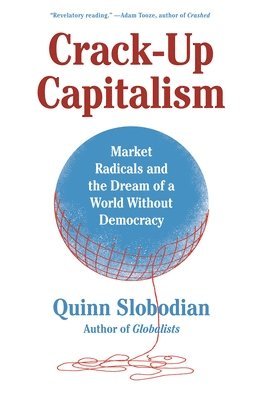
A Fortune best nonfiction book of 2023In a revelatory dispatch from the frontier of capitalist extremism, an acclaimed historian of ideas shows how free marketeers are realizing their ultimate goal: an end to nation-states and the constraints of democracy.Look at a map of the world and you’ll see a colorful checkerboard of nation-states. But this is not where power actually resides. Over the last decade, globalization has shattered the map into different legal spaces: free ports, tax havens, special economic zones. With the new spaces, ultracapitalists have started to believe that it is possible to escape the bonds of democratic government and oversight altogether.Crack-Up Capitalism follows the most notorious radical libertarians—from Milton Friedman to Peter Thiel—around the globe as they search for the perfect space for capitalism. Historian Quinn Slobodian leads us from Hong Kong in the 1970s to South Africa in the late days of apartheid, from the neo-Confederate South to the former frontier of the American West, from the medieval City of London to the gold vaults of right-wing billionaires, and finally into the world’s oceans and war zones, charting the relentless quest for a blank slate where market competition is unfettered by democracy.A masterful work of economic and intellectual history, Crack-Up Capitalism offers both a new way of looking at the world and a new vision of coming threats. Full of rich details and provocative analysis, Crack-Up Capitalism offers an alarming view of a possible future.
208 kr
Skickas
2 058 kr
Skickas inom 3-6 vardagar
326 kr
Läs direkt efter köp
In keeping with the tenets of socialist internationalism, the political culture of the German Democratic Republic strongly emphasized solidarity with the non-white world: children sent telegrams to Angela Davis in prison, workers made contributions from their wages to relief efforts in Vietnam and Angola, and the deaths of Patrice Lumumba, Ho Chi Minh, and Martin Luther King, Jr. inspired public memorials. Despite their prominence, however, scholars have rarely examined such displays in detail. Through a series of illuminating historical investigations, this volume deploys archival research, ethnography, and a variety of other interdisciplinary tools to explore the rhetoric and reality of East German internationalism.
Comrades of Color
East Germany in the Cold War World
594 kr
Skickas inom 3-6 vardagar
260 kr
Läs direkt efter köp
161 kr
Lyssna direkt efter köp
Brought to you by Penguin.Look at a map of the world and you''ll see a neat patchwork of nation-states. But this is not where power actually resides. From the 1990s onwards, globalization has shattered the map, leading to an explosion of new legal entities: tax havens, free ports, city-states, gated enclaves and special economic zones. These new spaces are freed from ordinary forms of regulation, taxation and mutual obligation - and with them, ultracapitalists believe that it is possible to escape the bonds of democratic government and oversight altogether.Historian Quinn Slobodian follows the most notorious radical libertarians - from Milton Friedman to Peter Thiel - around the globe as they search for the perfect home for their free market fantasy. The hunt leads from Hong Kong in the 1970s to South Africa in the late days of apartheid, from the neo-Confederate South to the medieval City of London, and finally into the world''s oceans and war zones, charting the relentless quest for a blank slate where capitalism and democracy can be finally uncoupled.Crack-Up Capitalism is a propulsive history of the recent past, and an alarming view of our near future.©2023 Quinn Slobodian (P)2023 Penguin Audio
122 kr
Läs direkt efter köp
174 kr
Lyssna direkt efter köp
Brought to you by Penguin.A revelatory exploration of how today’s rightwing authoritarianism emerged not in opposition to neoliberalism, but from within it
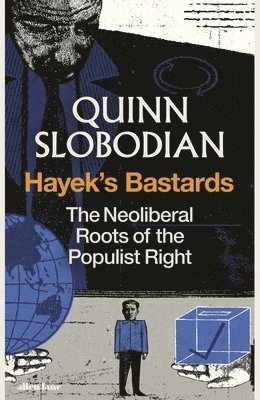
After the end of the Cold War, neoliberalism, with its belief in the virtues of markets and competition, seemed to have triumphed. Communism had been defeated – and Friedrich Hayek, the spiritual father of neoliberal economics, had just about lived to see it. But in the decades that followed, Hayek’s disciples knew that they had a problem. The rise of social movements, from civil rights and feminism to environmentalism, were now proving roadblocks in the road to freedom, nurturing a culture of government dependency, public spending, political correctness and special pleading. Neoliberals needed an antidote.In this illuminating new book, historian Quinn Slobodian reveals how, from the 1990s onwards, neoliberal thinkers turned to nature, in an attempt to roll back social changes and to return to a hierarchy of gender, race and cultural difference. He explores how these thinkers drew on the language of science, from cognitive psychology to genetics, in order to embed the idea of ‘competition’ ever deeper into social life, and to advocate cultural homogeneity as essential for markets to truly work. Reading and misreading the writings of their sages, Friedrich Hayek and Ludwig von Mises, they forged the alliances with racial psychologists, neoconfederates, ethnonationalists that would become known as the alt-right.Hayek’s Bastards shows that many contemporary iterations of the Far Right, from Javier Milei to Donald Trump, emerged not in opposition to neoliberalism, but within it. As repellent as their politics may be, these supposed disruptors are not defectors from the neoliberal order, but its latest cheerleaders.‘An essential read to understand the times in which we live'' - Lea Ypi© Quinn Slobodian 2025 (P) Penguin Audio 2025
160 kr
Kommande
340 kr
Skickas inom 3-6 vardagar
281 kr
Skickas inom 5-8 vardagar
297 kr
Skickas inom 3-6 vardagar
Globalisten
303 kr
Skickas inom 3-6 vardagar
343 kr
Skickas inom 3-6 vardagar
343 kr
Skickas inom 3-6 vardagar
128 kr
Läs direkt efter köp
343 kr
Skickas inom 5-8 vardagar
102 kr
Läs direkt efter köp