Radim Belohlavek - Böcker
Visar alla böcker från författaren Radim Belohlavek. Handla med fri frakt och snabb leverans.
7 produkter
7 produkter
1 531 kr
Skickas inom 5-8 vardagar
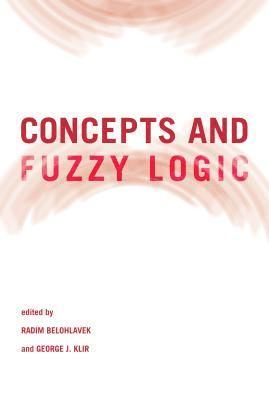
The term "fuzzy logic" (FL), as it is understood in this book, stands for all aspects of representing and manipulating knowledge based on the rejection of the most fundamental principle of classical logic: the principle of bivalence. According to this principle, each declarative sentence is required to be either true or false. In fuzzy logic, these classical truth values are not abandoned. However, additional, intermediary truth values between true and false are allowed, which are interpreted as degrees of truth. This opens a new way of thinking--thinking in terms of degrees rather than absolutes. For example, it led to the definition of a new category of sets, referred to as fuzzy sets, in which membership is a matter of degree. The book examines the genesis and development of fuzzy logic. It surveys the prehistory of fuzzy logic and inspects circumstances that eventually lead to the emergence of fuzzy logic. The book explores in detail the development of propositional, predicate, and other calculi that admit degrees of truth, which are known as fuzzy logic in the narrow sense. Fuzzy logic in the broad sense, whose primary aim is to utilize degrees of truth for emulating common-sense human reasoning in natural language, is scrutinized as well. The book also examines principles for developing mathematics based on fuzzy logic and provides overviews of areas in which this has been done most effectively. It also presents a detailed survey of established and prospective applications of fuzzy logic in various areas of human affairs, and provides an assessment of the significance of fuzzy logic as a new paradigm.
184 kr
Tillfälligt slut
Del 20 - IFSR International Series in Systems Science and Systems Engineering
Fuzzy Relational Systems
Foundations and Principles
Inbunden, Engelska, 2002
1 584 kr
Skickas inom 10-15 vardagar
This study deals with fuzzy relational systems, in other words, systems of fuzzy relations defined on a set. Fuzzy relational systems represent a mathematical framework for fuzzy relational modelling which is the most successful part of fuzzy logic. The book deals with foundational aspects of fuzzy relational systems. It starts (Chapter 2) with motivations and discussions about fuzzy approach. The result of this are some requirements for the structures of truth values for fuzzy logic. These structures are analyzed in subsequent sections. Chapter 3 is a key one and develops a general theory of fuzzy relational systems, paying special attention to issues which are degenerate in classical "non-fuzzy" case. Chapter 4 deals with binary fuzzy relations and particularly with similarity and order, two of the most frequently used types of binary relations. Chapter 5 deals with binary fuzzy relations (interpreted as fuzzy relations between a set of objects and a set of attributes) and formal analysis of such relations. Chapter 6 focuses on the problem of composition and decomposition of binary fuzzy relations.Chapter 7 contains miscellaneous topics: fuzzy closure operators; similarity spaces; selected applications; and a formal deductive system of fuzzy logic. Each Chapter is closed by bibliographical remarks. The book contains bibliography and an index of key terms. The book provides a general framework for dealing with fuzzy relational systems and brings several new results.
1 584 kr
Skickas inom 10-15 vardagar
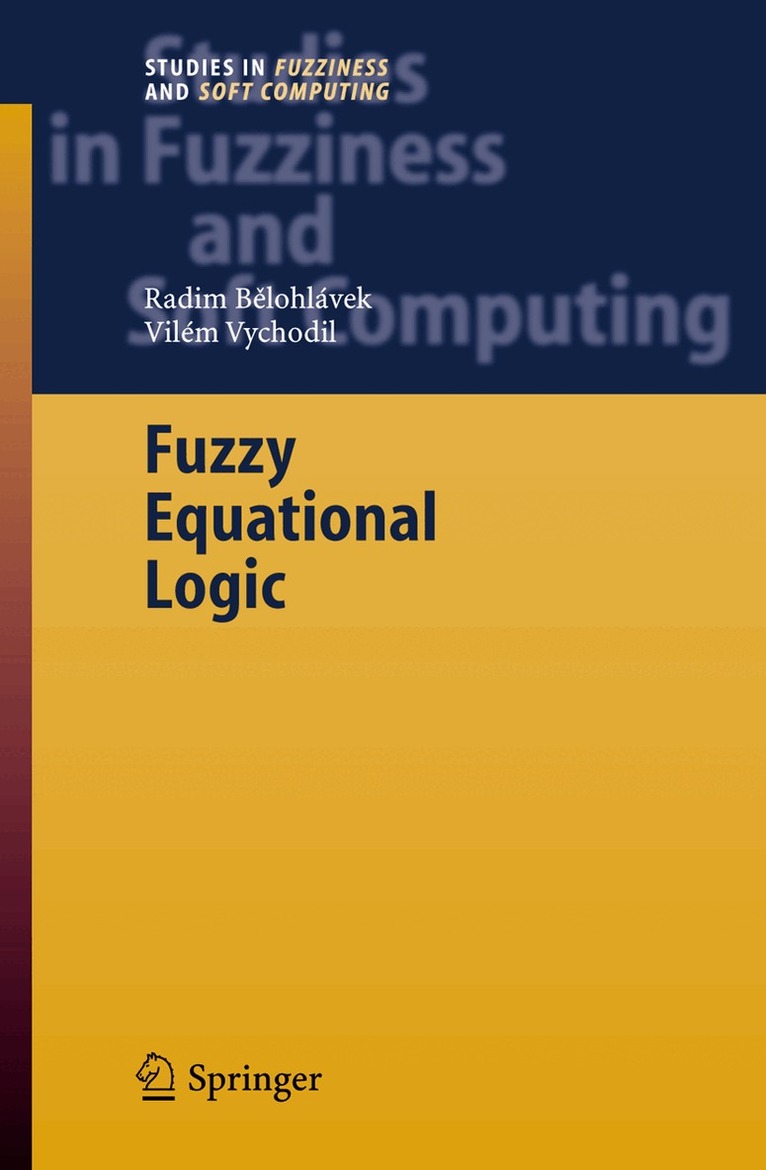
Since their inception, fuzzy sets and fuzzy logic became popular. The reason is that the very idea of fuzzy sets and fuzzy logic attacks an old tradition in science, namely bivalent (black-or-white, all-or-none) judg ment and reasoning and the thus resulting approach to formation of scientific theories and models of reality. The idea of fuzzy logic, briefly speaking, is just the opposite of this tradition: instead of full truth and falsity, our judgment and reasoning also involve intermediate truth values. Application of this idea to various fields has become known under the term fuzzy approach (or graded truth approach). Both prac tice (many successful engineering applications) and theory (interesting nontrivial contributions and broad interest of mathematicians, logicians, and engineers) have proven the usefulness of fuzzy approach. One of the most successful areas of fuzzy methods is the application of fuzzy relational modeling. Fuzzy relations represent formal means for modeling of rather nontrivial phenomena (reasoning, decision, control, knowledge extraction, systems analysis and design, etc. ) in the pres ence of a particular kind of indeterminacy called vagueness. Models and methods based on fuzzy relations are often described by logical formulas (or by natural language statements that can be translated into logical formulas). Therefore, in order to approach these models and methods in an appropriate formal way, it is desirable to have a general theory of fuzzy relational systems with basic connections to (formal) language which enables us to describe relationships in these systems.
1 632 kr
Skickas inom 10-15 vardagar
Concept Lattices and Their Applications
Fourth International Conference, CLA 2006 Tunis, Tunisia, October 30-November 1, 2006 Selected Papers
Häftad, Engelska, 2008
538 kr
Skickas inom 10-15 vardagar
This book constitutes the refereed proceedings of the Fourth International Conference on Concept Lattices and their Applications, CLA 2006, held in Tunis, Tunisia, October 30-November 1, 2006.The 18 revised full papers together with 3 invited contributions presented were carefully reviewed and selected from 41 submissions. The topics include formal concept analysis, foundations of FCA, mathematical structures related to FCA, relationship of FCA to other methods of data analysis, visualization of data in FCA, and applications of FCA.
1 584 kr
Skickas inom 10-15 vardagar