Reinhart Koselleck – författare
Visar alla böcker från författaren Reinhart Koselleck. Handla med fri frakt och snabb leverans.
20 produkter
20 produkter
Häftad, Engelska, 2004
397 kr
Skickas inom 5-8 vardagar
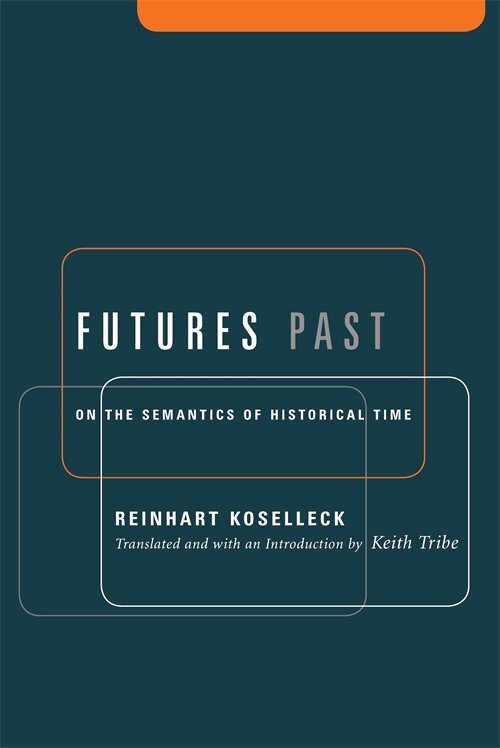
Modernity in the late eighteenth century transformed all domains of European life -intellectual, industrial, and social. Not least affected was the experience of time itself: ever-accelerating change left people with briefer intervals of time in which to gather new experiences and adapt. In this provocative and erudite book Reinhart Koselleck, a distinguished philosopher of history, explores the concept of historical time by posing the question: what kind of experience is opened up by the emergence of modernity? Relying on an extraordinary array of witnesses and texts from politicians, philosophers, theologians, and poets to Renaissance paintings and the dreams of German citizens during the Third Reich, Koselleck shows that, with the advent of modernity, the past and the future became 'relocated' in relation to each other.The promises of modernity -freedom, progress, infinite human improvement -produced a world accelerating toward an unknown and unknowable future within which awaited the possibility of achieving utopian fulfillment. History, Koselleck asserts, emerged in this crucial moment as a new temporality providing distinctly new ways of assimilating experience.In the present context of globalization and its resulting crises, the modern world once again faces a crisis in aligning the experience of past and present. To realize that each present was once an imagined future may help us once again place ourselves within a temporality organized by human thought and humane ends as much as by the contingencies of uncontrolled events.
Häftad, Engelska, 2018
354 kr
Skickas
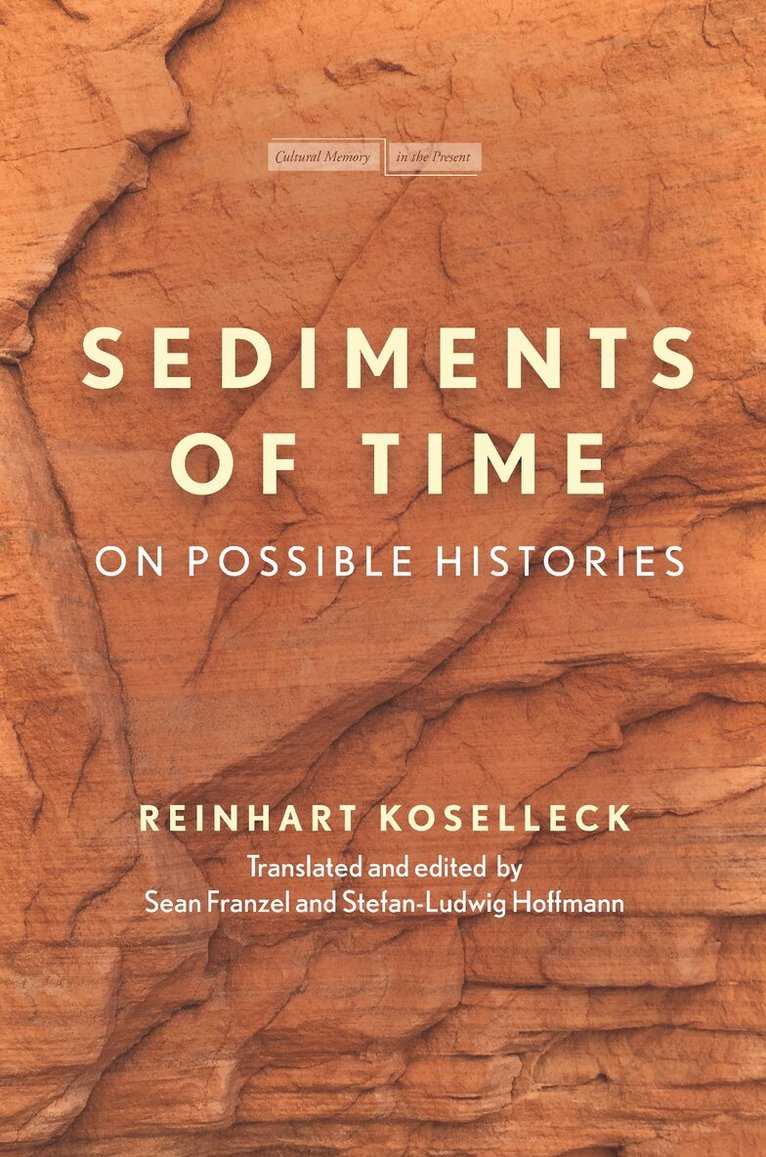
Sediments of Time features the most important essays by renowned German historian Reinhart Koselleck not previously available in English, several of them essential to his theory of history. The volume sheds new light on Koselleck's crucial concerns, including his theory of sediments of time; his theory of historical repetition, duration, and acceleration; his encounters with philosophical hermeneutics and political and legal thought; his concern with the limits of historical meaning; and his views on historical commemoration, including that of the Second World War and the Holocaust. A critical introduction addresses some of the challenges and potentials of Koselleck's reception in the Anglophone world.
Häftad, Engelska, 2002
385 kr
Skickas inom 5-8 vardagar
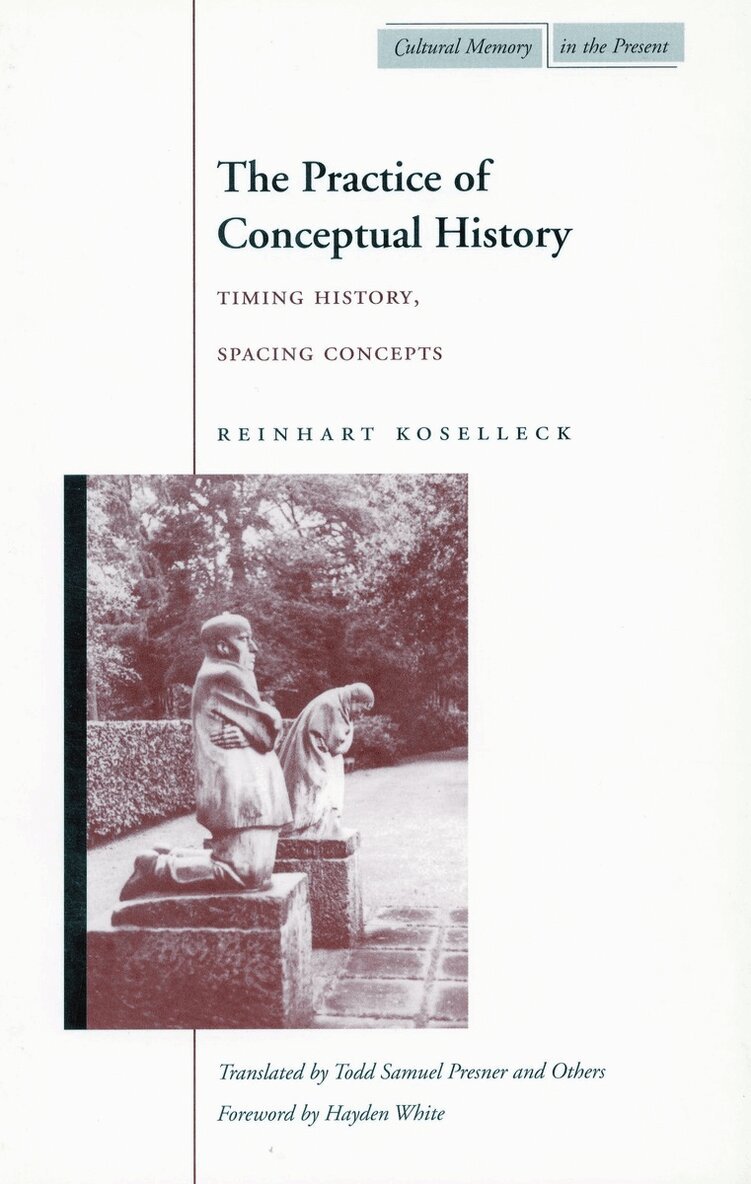
Reinhart Koselleck is one of the most important theorists of history and historiography of the last half century. His work has implications for contemporary cultural studies that extend far beyond discussions of the practical problems of historical method. He is the foremost exponent and practitioner of Begriffsgeschichte, a methodology of historical studies that focuses on the invention and development of the fundamental concepts underlying and informing a distinctively historical manner of being in the world.The eighteen essays in this volume illustrate the four theses of Koselleck's concept of history. First, historical process is marked by a distinctive kind of temporality different from that found in nature. This temporality is multileveled and subject to different rates of acceleration and deceleration, and functions not only as a matrix within which historical events happen but also as a causal force in the determination of social reality in its own right.Second, historical reality is social reality, an internally differentiated structure of functional relationships in which the rights and interests of one group collide with those of other groups, and lead to the kinds of conflict in which defeat is experienced as an ethical failure requiring reflection on "what went wrong" to determine the historical significance of the conflict itself.Third, the history of historiography is a history of the evolution of the language of historians. In this respect, Koselleck's work converges with that of Barthes, Foucault, and Derrida, all of whom stress the status of historiography as discourse rather than as discipline, and feature the constitutive nature of historical discourse as against its claim to literal truthfulness.Finally, the fourth aspect of Koselleck's notion of the concept of history is that a properly historicist concept of history is informed by the realization that what we call modernity is nothing more than an aspect of the discovery of history's concept in our age. The aporias of modernism—in arts and letters as well as in the human and natural sciences—are a function of the discovery of the historicity of both society and knowledge.
Häftad, Svenska, 2004
221 kr
Skickas
Översättning från tyska av valda texter
Häftad, Engelska, 2000
556 kr
Skickas inom 5-8 vardagar
Inbunden, Engelska, 2002
1 597 kr
Skickas inom 10-15 vardagar
Reinhart Koselleck is one of the most important theorists of history and historiography of the last half century. His work has implications for contemporary cultural studies that extend far beyond discussions of the practical problems of historical method. He is the foremost exponent and practitioner of Begriffsgeschichte, a methodology of historical studies that focuses on the invention and development of the fundamental concepts underlying and informing a distinctively historical manner of being in the world.The eighteen essays in this volume illustrate the four theses of Koselleck's concept of history. First, historical process is marked by a distinctive kind of temporality different from that found in nature. This temporality is multileveled and subject to different rates of acceleration and deceleration, and functions not only as a matrix within which historical events happen but also as a causal force in the determination of social reality in its own right.Second, historical reality is social reality, an internally differentiated structure of functional relationships in which the rights and interests of one group collide with those of other groups, and lead to the kinds of conflict in which defeat is experienced as an ethical failure requiring reflection on "what went wrong" to determine the historical significance of the conflict itself.Third, the history of historiography is a history of the evolution of the language of historians. In this respect, Koselleck's work converges with that of Barthes, Foucault, and Derrida, all of whom stress the status of historiography as discourse rather than as discipline, and feature the constitutive nature of historical discourse as against its claim to literal truthfulness.Finally, the fourth aspect of Koselleck's notion of the concept of history is that a properly historicist concept of history is informed by the realization that what we call modernity is nothing more than an aspect of the discovery of history's concept in our age. The aporias of modernism—in arts and letters as well as in the human and natural sciences—are a function of the discovery of the historicity of both society and knowledge.
Inbunden, Engelska, 2018
1 529 kr
Skickas inom 5-8 vardagar
Sediments of Time features the most important essays by renowned German historian Reinhart Koselleck not previously available in English, several of them essential to his theory of history. The volume sheds new light on Koselleck's crucial concerns, including his theory of sediments of time; his theory of historical repetition, duration, and acceleration; his encounters with philosophical hermeneutics and political and legal thought; his concern with the limits of historical meaning; and his views on historical commemoration, including that of the Second World War and the Holocaust. A critical introduction addresses some of the challenges and potentials of Koselleck's reception in the Anglophone world.
E-bok
Engelska, 2018422 kr
Läs direkt efter köp
Sediments of Time features the most important essays by renowned German historian Reinhart Koselleck not previously available in English, several of them essential to his theory of history. The volume sheds new light on Koselleck's crucial concerns, including his theory of sediments of time; his theory of historical repetition, duration, and acceleration; his encounters with philosophical hermeneutics and political and legal thought; his concern with the limits of historical meaning; and his views on historical commemoration, including that of the Second World War and the Holocaust. A critical introduction addresses some of the challenges and potentials of Koselleck's reception in the Anglophone world.
Del 15 - Ancien Régime, Aufklärung Und Revolution
Französische Revolution als Bruch des gesellschaftlichen Bewußtseins
Inbunden, Tyska, 1988
2 041 kr
Skickas inom 3-6 vardagar
2 497 kr
Läs direkt efter köp
Das Wagnis einer neuen Gesamtdarstellung, welche die facettenreichen Ergebnisse der Spezialforschung wirklich verarbeitet, dürfte weniger schwer fallen, wenn es vorbereitet wird durch repräsentative Querschnitte zu den Hauptbereichen der Revolutionsgeschichte unter integrierenden gemeinsamen Fragestellungen. Einen solchen weiterführenden Gemeinschaftsbeitrag zu leisten, war das Ziel der Bielefelder Arbeitstagung, aus welcher der vorliegende Band hervorgegangen ist.
Del 36 - suhrkamp taschenbücher wissenschaft
Kritik und Krise
Häftad, Tyska
241 kr
Skickas inom 3-6 vardagar
Del 757 - suhrkamp taschenbücher wissenschaft
Vergangene Zukunft
Häftad, Tyska
292 kr
Skickas inom 3-6 vardagar
Del 1656 - suhrkamp taschenbücher wissenschaft
Zeitschichten
Häftad, Tyska
260 kr
Skickas inom 3-6 vardagar
Del 1926 - suhrkamp taschenbücher wissenschaft
Begriffsgeschichten
Häftad, Tyska
325 kr
Skickas inom 3-6 vardagar
Del 2090 - suhrkamp taschenbücher wissenschaft
Vom Sinn und Unsinn der Geschichte
Häftad, Tyska, 2013
237 kr
Skickas inom 3-6 vardagar
Inbunden, Tyska, 2023
406 kr
Skickas inom 3-6 vardagar
Inbunden, Tyska, 2023
334 kr
Skickas inom 3-6 vardagar
Häftad, Tyska, 2004
3 857 kr
Skickas inom 3-6 vardagar
E-bok
Spanska, 2021170 kr
Läs direkt efter köp
El nombre de Reinhart Koselleck ha pasado a la posteridad por ser, junto a Werner Conze y Otto Brunner, el editor del portentoso diccionario "Conceptos históricos fundamentales. Léxico histórico del lenguaje político-social en Alemania", del que se han extraído las tres voces que se reúnen en el presente volumen. Koselleck fue el principal proveedor de las directrices programáticas de esa cartografía conceptual de la modernidad, a la par trabajo teórico y de campo, historia conceptual uncida a una teoría de los tiempos históricos. En el lapso temporal cubierto por dicho programa, de 1750 a 1850, se forja y adquiere pregnancia la tríada conceptual aquí propuesta: lustración, progreso, modernidad.A la primicia conceptual y terminológica de la Ilustración le es inherente una conciencia de ruptura que llega a su apoteosis con la Revolución francesa y anuncia la mudanza del mismo concepto de revolución, que de significar previamente un movimiento cíclico y recurrente pasa a mentar un acontecimiento único e irrepetible y a inaugurar un futuro ignoto. Aquí se inCuba la modernidad entendida como un tiempo nuevo, el de la aceleración, que, para autoafirmarse, se ve constreñido a desgajar de sí lo que lo refuta, esto es, lo antiguo, recurriendo a la estrategia de emanciparse compulsivamente de la tradición. El progreso, etimológicamente "paso hacia delante", es decantación hacia el futuro. El siglo de las Luces, el ingreso en la época moderna, la era del progreso, constituye así uno de los episodios álgidos del "futurocentrismo".
E-bok
Spanska, 2023170 kr
Läs direkt efter köp
El centro de la obra de Reinhart Koselleck lo ocupa la denominada «historia de los conceptos», cuyo paradigma él desarrolló en su calidad de «historiador pensante», como le llamara Hans-Georg Gadamer, convirtiéndolo en fundamento del monumental diccionario Conceptos históricos fundamentales, editado junto con Otto Brunner y Werner Conze. La historia de los conceptos se dirige específicamente contra una historia de las ideas abstracta y se orienta hacia el estudio de los usos lingüísticos en la vida social, política y jurídica. Este enfoque es así capaz de medir las experiencias y expectativas concretas en el punto de articulación entre las fuentes, ligadas al lenguaje, y la realidad político-social.Los escritos reunidos en este volumen constituyen la parte más significativa del último legado intelectual de Koselleck. En ellos se narra la historia del mundo moderno a través de las historias de conceptos como «revolución», «crisis», «ilustración», «emancipación», Bildung y «utopía». Se pone así de manifiesto el doble estatuto de estos conceptos: su función de indicadores y de factores del proceso histórico. El análisis semántico-pragmático de los conceptos hace visibles tanto las continuidades como los puntos de ruptura dentro de la historia social y cultural, haciendo posible una forma propia de experiencia histórica: la historia de los conceptos se convierte en un medio para la autoilustración histórica del tiempo presente.