Rémy Madinier – författare
Visar alla böcker från författaren Rémy Madinier. Handla med fri frakt och snabb leverans.
12 produkter
Politics of Religion in Indonesia
Syncretism, Orthodoxy, and Religious Contention in Java and Bali
Av Michel Picard, Rémy Madinier
Inbunden, 2011
2510 kr
Lägg i varukorg
Indonesia is a remarkable case study for religious politics. While not being a theocratic country, it is not secular either, with the Indonesian state officially defining what constitutes religion, and every citizen needing to be affiliated to one of them. This book focuses on Java and Bali, and …
Politics of Religion in Indonesia
Syncretism, Orthodoxy, and Religious Contention in Java and Bali
Av Remy Madinier, Michel Picard
E-bok, 2011
1051 kr
Lägg i varukorg
Indonesia is a remarkable case study for religious politics. While not being a theocratic country, it is not secular either, with the Indonesian state officially defining what constitutes religion, and every citizen needing to be affiliated to one of them. This book focuses on Java and Bali, and …
Politics of Religion in Indonesia
Syncretism, Orthodoxy, and Religious Contention in Java and Bali
Av Remy Madinier, Michel Picard
E-bok, 2011
1074 kr
Lägg i varukorg
Indonesia is a remarkable case study for religious politics. While not being a theocratic country, it is not secular either, with the Indonesian state officially defining what constitutes religion, and every citizen needing to be affiliated to one of them. This book focuses on Java and Bali, and …
Politics of Religion in Indonesia
Syncretism, Orthodoxy, and Religious Contention in Java and Bali
Av Michel Picard, Rémy Madinier
Häftad, 2014
909 kr
Lägg i varukorg
Indonesia is a remarkable case study for religious politics. While not being a theocratic country, it is not secular either, with the Indonesian state officially defining what constitutes religion, and every citizen needing to be affiliated to one of them. This book focuses on Java and Bali, and …
L’Indonésie, entre démocratie musulmane et islam intégral
Histoire du parti Masjumi (1945-1960)
E-bok, 2011
482 kr
Lägg i varukorg
Premier pays musulman du monde, l''Indonésie donna naissance, dans la décennie ayant suivi son indépendance, à l''une des tentatives les plus abouties pour concilier principes islamiques et démocratie. Fondé en 1945 autour du projet d''un Etat islamique, interdit en 1960 pour avoir défendu la …
L’islam des marges
Mission chrétienne et espaces périphériques du monde musulman XVI-XXe siècles
Av Remy Madinier, Bernard Heyberger
E-bok, 2011
381 kr
Lägg i varukorg
Malgré sa grande importance symbolique, encore perceptible de nos jours, l’histoire de la mission chrétienne vers l’islam fut d’abord celle d’un échec retentissant. Face au constat de l’inconvertibilité du monde musulman, les missionnaires se concentrèrent sur les populations chrétiennes présentes …
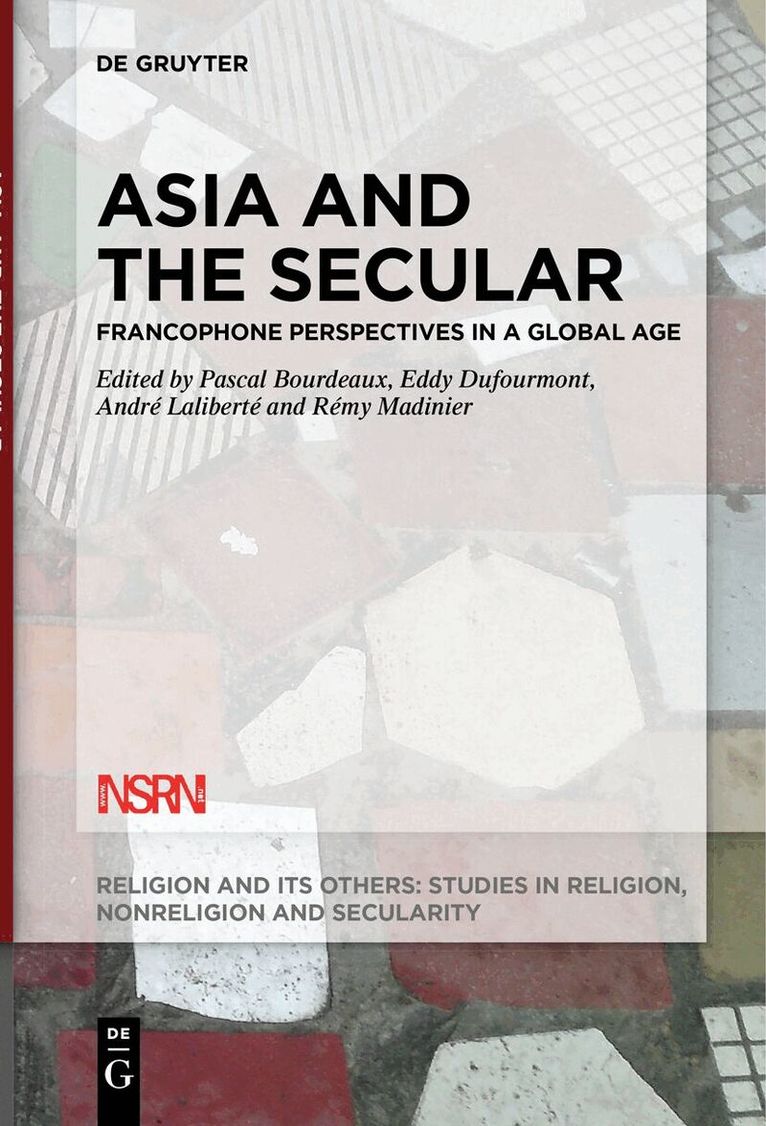
Asia and the Secular
Francophone Perspectives in a Global Age
Av Remy Madinier, Andre Laliberte m. fl.
E-bok, 2022
1257 kr
Lägg i varukorg
This volume looks at the secular state in the context of contemporary Asia and investigates whether there existed before modernity antecedents to the condition of secularity, understood as the differentiation of the sphere of the religious from other spheres of social life. The chapters presented …
Asia and the Secular
Francophone Perspectives in a Global Age
Av Remy Madinier, Andre Laliberte m. fl.
E-bok, 2022
1298 kr
Lägg i varukorg
This volume looks at the secular state in the context of contemporary Asia and investigates whether there existed before modernity antecedents to the condition of secularity, understood as the differentiation of the sphere of the religious from other spheres of social life. The chapters presented …
Asia and the Secular
Francophone Perspectives in a Global Age
Av Pascal Bourdeaux, Eddy Dufourmont m. fl.
Inbunden, 2022
1475 kr
Lägg i varukorg
This volume looks at the secular state in the context of contemporary Asia and investigates whether there existed before modernity antecedents to the condition of secularity, understood as the differentiation of the sphere of the religious from other spheres of social life. The chapters presented …
Asia and the Secular
Francophone Perspectives in a Global Age
Av Pascal Bourdeaux, Eddy Dufourmont m. fl.
Häftad, 2024
268 kr
Lägg i varukorg
This volume looks at the secular state in the context of contemporary Asia and investigates whether there existed before modernity antecedents to the condition of secularity, understood as the differentiation of the sphere of the religious from other spheres of social life. The chapters presented …
La Question Laïque Vue d'Asie
Regards Croisés Sur Les Relations États-Religions
Av Pascal Bourdeaux, Eddy Dufourmont m. fl.
Inbunden, 2025
1476 kr
Lägg i varukorg
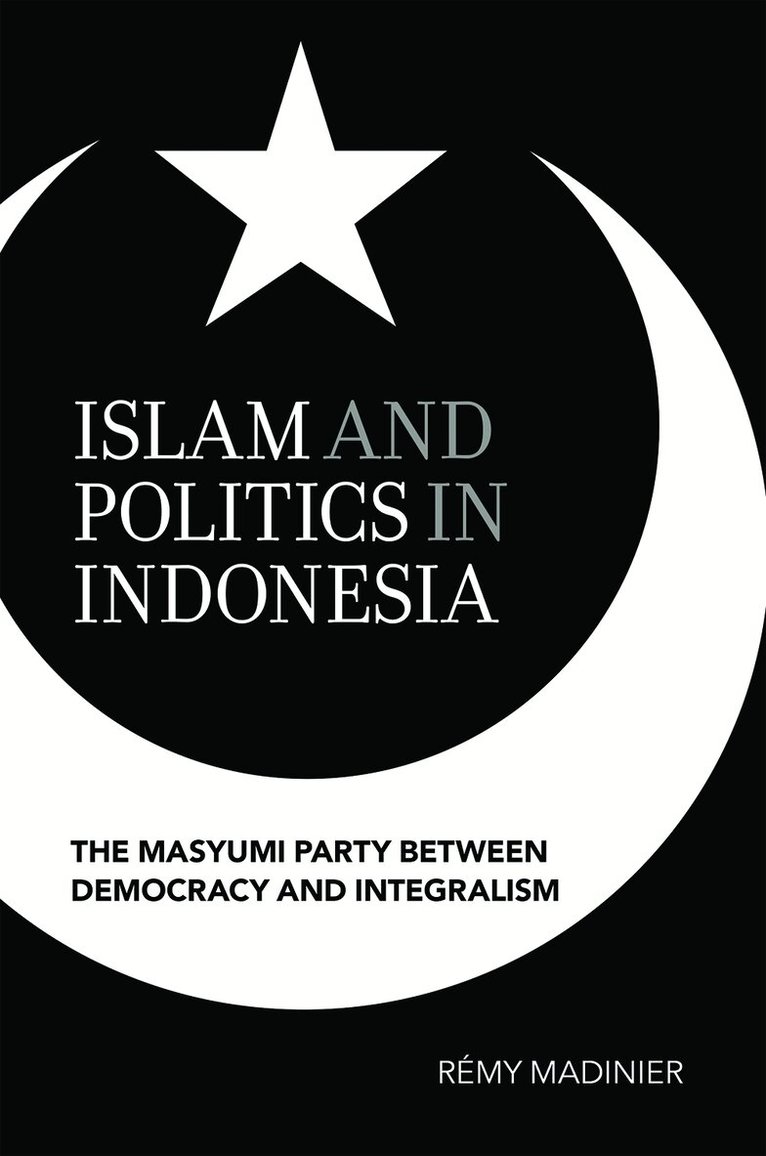
Islam and Politics in Indonesia
The Masyumi Party Between Democracy and Integralism
Häftad, 2015
454 kr
Lägg i varukorg
The Masyumi Party, which was active in Indonesia from 1945 to 1960, constitutes the boldest attempt to date at reconciling Islam and democracy. Masyumi proposed a vision of society and government which was not bound by a literalist application of Islamic doctrine but rather inspired by the values …