Ricardo Sanín-Restrepo - Böcker
Visar alla böcker från författaren Ricardo Sanín-Restrepo. Handla med fri frakt och snabb leverans.
11 produkter
11 produkter
1 343 kr
Skickas inom 10-15 vardagar
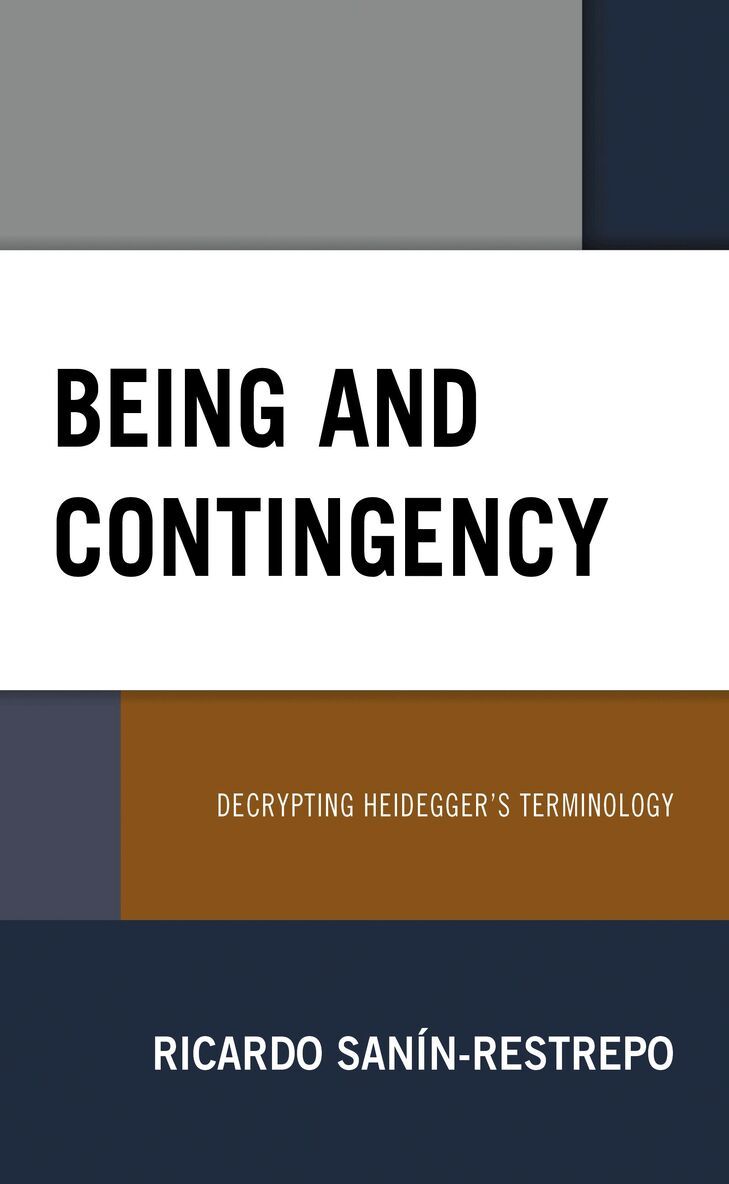
Heidegger´s construction of Being is paramount in Western philosophy and arguably the most enduring effort to construct a presupposition free ontology. Nevertheless, using the theory of encryption of power, we can discover that the result of his effort is a sophisticated perpetuation of a kind of knowing and of doing that alienates the possibility of any kind of politics as a commonality of differences. This book connects the theory of encryption of power with an array of ground-breaking philosophical and scientific traditions of the last hundred years in order to perforate and depose Heidegger´s metaphysics, through his construction of the ready-to-hand. Through a hypothetical language game, based on Wittgenstein´s “language games” (The “X” game of language) this book decrypts Heidegger´s construction of Being while also decrypting and empowering the Wittgensteinian philosophy of language along with it.The idea of decryption demonstrates that, through particular forms of language use and philosophy, the world as we know it is encrypted; forms of resistance and life are covered over by a surface of control and determination that leads to economic and political forms like capitalism, fascism and liberalism. Decryption is a way of unconcealing what has been concealed. By staging this encounter, Sanin-Restrepo brings the insights of decolonial theory to bear on the main body of Western philosophy and directly on Heidegger himself.
434 kr
Skickas inom 10-15 vardagar
Heidegger´s construction of Being is paramount in Western philosophy and arguably the most enduring effort to construct a presupposition free ontology. Nevertheless, using the theory of encryption of power, we can discover that the result of his effort is a sophisticated perpetuation of a kind of knowing and of doing that alienates the possibility of any kind of politics as a commonality of differences. This book connects the theory of encryption of power with an array of ground-breaking philosophical and scientific traditions of the last hundred years in order to perforate and depose Heidegger´s metaphysics, through his construction of the ready-to-hand. Through a hypothetical language game, based on Wittgenstein´s “language games” (The “X” game of language) this book decrypts Heidegger´s construction of Being while also decrypting and empowering the Wittgensteinian philosophy of language along with it.The idea of decryption demonstrates that, through particular forms of language use and philosophy, the world as we know it is encrypted; forms of resistance and life are covered over by a surface of control and determination that leads to economic and political forms like capitalism, fascism and liberalism. Decryption is a way of unconcealing what has been concealed. By staging this encounter, Sanin-Restrepo brings the insights of decolonial theory to bear on the main body of Western philosophy and directly on Heidegger himself.
1 142 kr
Skickas inom 10-15 vardagar
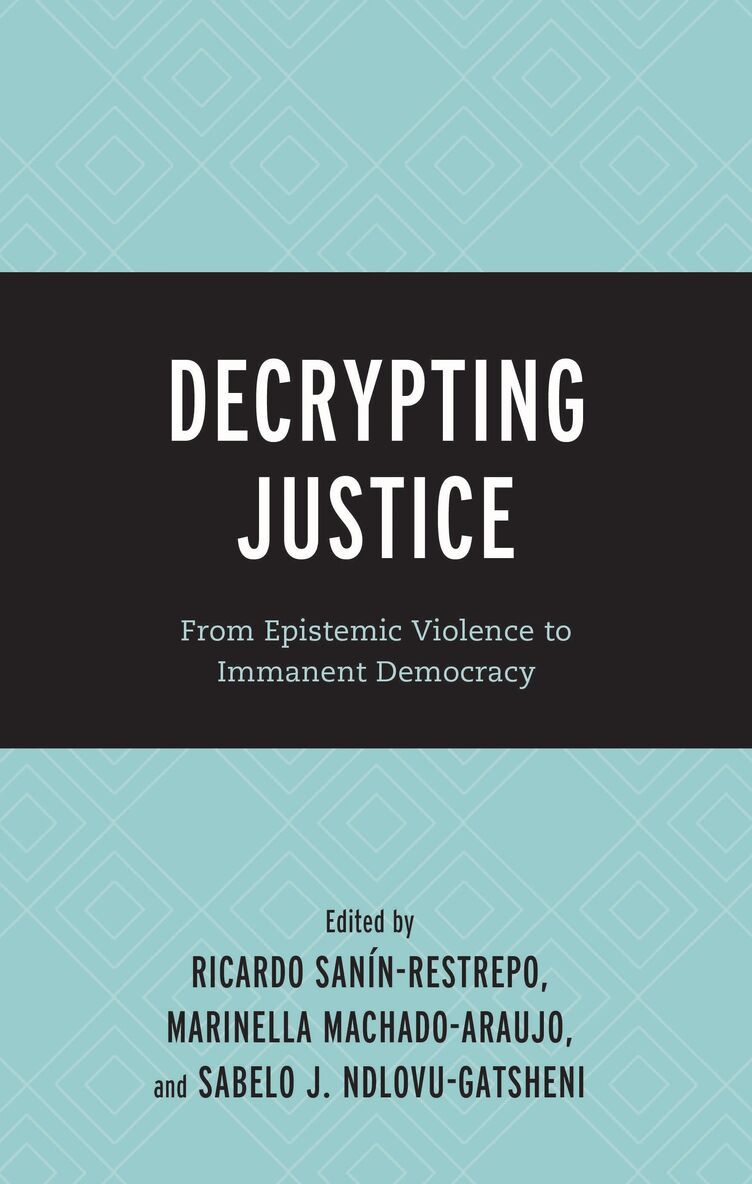
This book deploys the theory of encryption of to decrypt justice, setting in opposition Justice, written with the hegemonic capital letters of Western ideas, and justice, in its everyday workings within disparate communal forms and the exercise of multiplicity. As it decrypts justice, the book argues that late-coloniality, through its construction of the “hidden people,” shattered the possibility of true communities in the service of a transcendent model, consisting ofthe market, the constitution, the nation, and the economy. The first three chapters serve as the theoretical backbone of the book, engaging sovereignty, posthumanism, Artificial Intelligence, and epistemic injustice. Chapters 4 and 5 describe the emancipation of the people through alternate communal practices: “Quilombismo” in Brazil and “Corazonar” of Tseltal women in Mexico. Chapter 7 examines the Tosepan’s practices in Mexico to decrypt hegemonic territorial forms, and chapters 6 and 8 explore how Western judicial systems disempower the people, focusing on Central American migrants and critiques from the Colombian peace process.Edited by Ricardo Sanín-Restrepo, Marinella Machado-Araujo, and Sabelo J. Ndlovu-Gatsheni, Decrypting Justice: From Epistemic Violence to Immanent Democracy is a transforming force, not only in the way which we understand reality but also in the tools with which we build it.
1 678 kr
Kommande
Hopeful Political Imagination
Courage and Fantastic Critique in the Age of Meltdown
Inbunden, Engelska, 2025
1 142 kr
Skickas inom 10-15 vardagar
Bringing political criticism, a variety of theoretical approaches, and the author’s concrete experiences together, this book offers a political definition of hope as a utopian signifier, rooted in concrete processes of historical differentiation. Oscar Guardiola-Rivera addresses the problem of current limitations to the exercise of political imagination which severely contain, encrypt, and obscure our vision of social alternatives and normative possibilities? While grounding ethical and political stances on liberation philosophy and the anthropology of visual systems, A Hopeful Political Imagination: Courage and Fantastic Critique in the Age of Meltdown engages in dialogue with theories of encryption, a-legality, and the critique of anthropological absolutism coming from decolonial and ecological approaches. It allows us to understand 'decryption' as reversing encrypting linguistic and spatial processes in modernity, and proposes a new approach called 'fantastic critique' to reinvent the dynamics of power, judgement, time and the imagination, based on historical, literary, and philosophical examples. This book recovers and reimagines principles of hope and courage as republican, ethical virtues of revelation of what is figured and made in movement together, for practical action.
1 142 kr
Skickas inom 10-15 vardagar
This book presents a genealogy of the concept of political theology through the theory of encryption of power. The legitimacy of political power, largely overlooked in traditional political theory and philosophy, is largely rooted in what has come to be known as political theology, although the current state may be formally secular. This concept is essential for philosophical interpretations that can unveil and address the complex interconnections between religion and politics, as well as faith and power. This book employs the theory of the encryption of power and the ontological idea of an-anarchy—that is, a practice of thought without foundations and centered on flow, potency, and contingency—to provide a brief genealogy of the idea of political theology, exploring its key authors, both classical (such as Schmitt, Benjamin, and Taubes) and contemporary, including feminist, black, and decolonial perspectives. These contemporary approaches emerge from processes that decrypt power and, by moving beyond the sovereign framework, antagonize political-economic authority. The book also examines phenomena such as Christofascism, prosperity theology, and neo-Pentecostalism in politics, alongside other significant themes relevant to today’s world.
1 331 kr
Skickas inom 5-8 vardagar
Using the theory of encryption of power in a tight connection with the theory of archism sheds light on sovereignty and thus politics.Archism is that prevailing form of power that seeks to go nameless insofar as it claims to be ubiquitous and just how politics is. The theory of encryption of power explains how the use of language monopolizes and hides power, preventing access to it through the denial and neutralization of differences based on class, race, and gender. Archism and the theory of encryption of power are intimately linked: one potentializes and sharpens the other to bring together an especially pernicious form of sovereignty and its role in our world. Coloniality exists because it encrypts power. The encryption of power hides the ubiquity of archism and, in this way, preserves and enhances its power. A transcendent model, one that poses as ordinary, dictates from a vanishing point of invisibility—outside language and any relation—the conditions to which every and any form of beingness must abide in order to be and thus to exercise power.This collection, edited by James R. Martel and Ricardo Sanín-Restrepo, explores these questions in parallel with decolonial theory and critical and subaltern studies, using conceptual tools that allow us to think difference without the interference of the void of normality, a position from where the possible may come to be. In the name of the people, the people are made vulnerable to dispossession and exclusion; in the name of democracy, democracy is undermined and potentially destroyed. Theorizing encryption challenges the linkages between liberalism and colonialism, capitalism and sovereignty, constitution and economy, and their claims of necessity.
1 833 kr
Skickas inom 10-15 vardagar
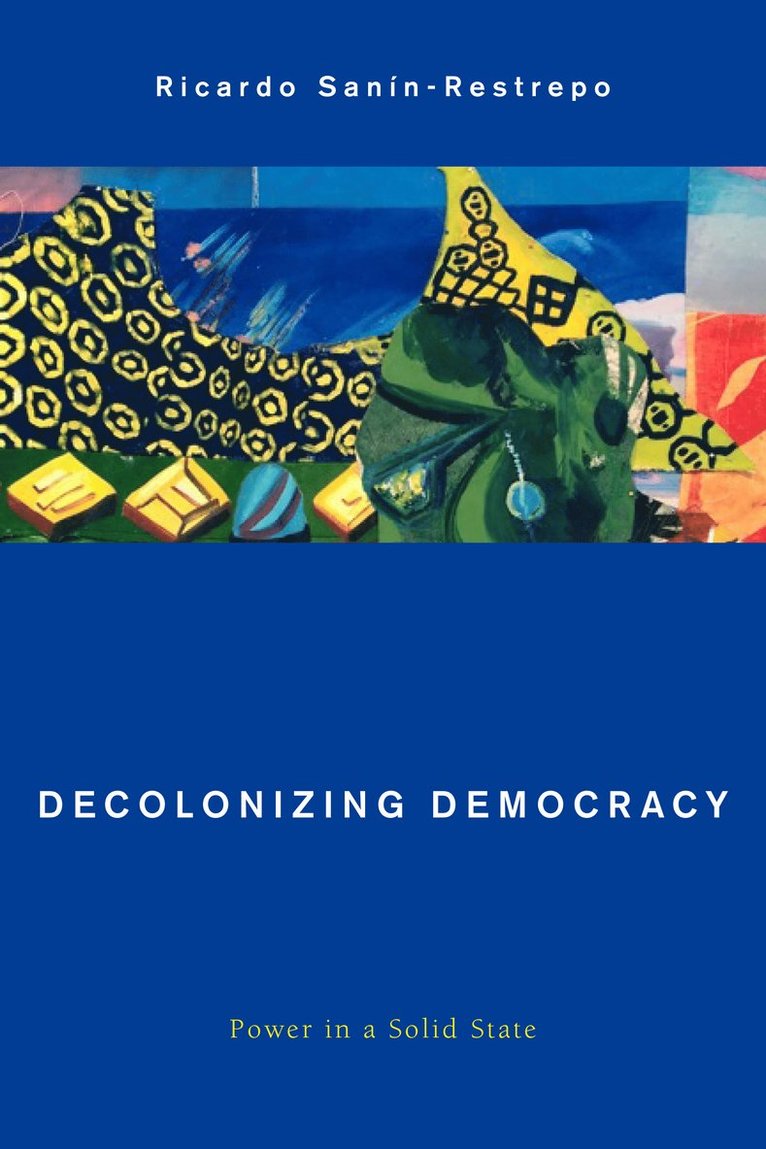
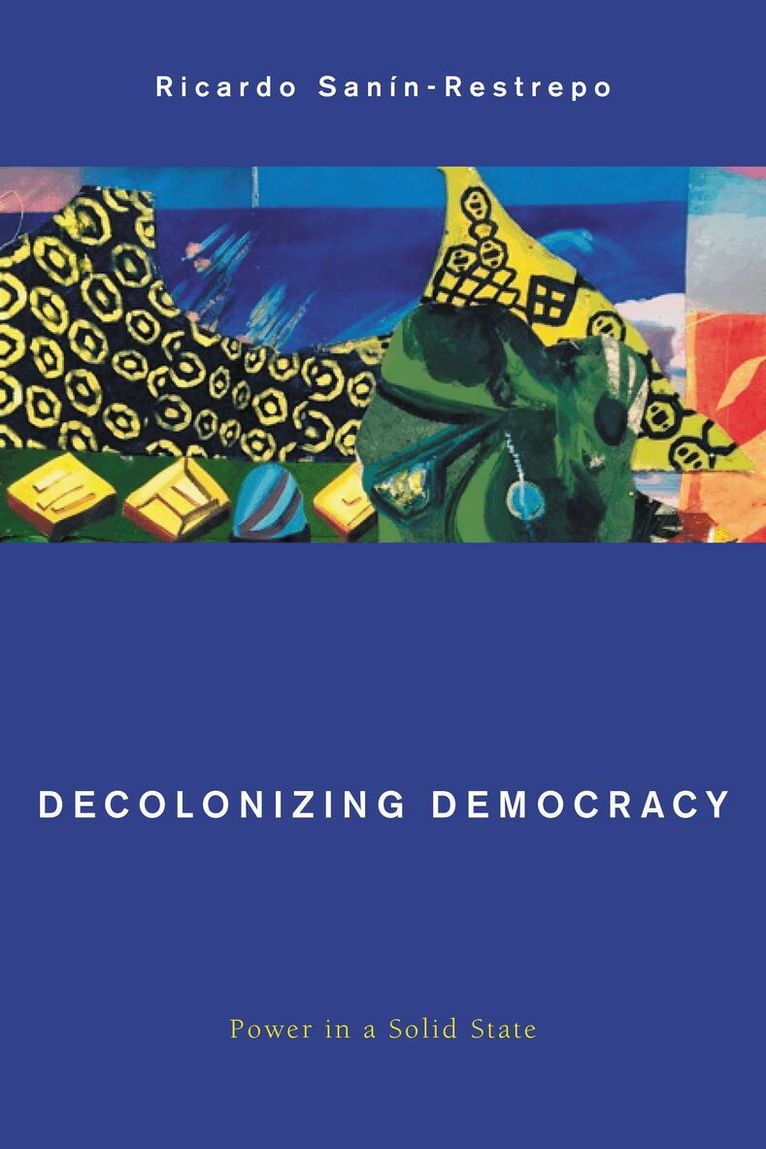
Democracy is the apparent motor of globalization, binding together ideas and institutions such as citizenship, human rights, race, the free market, multiculturalism, development, politics and the economy. This book looks to overturn this dogma and demonstrate that ‘liberal’ democracy in fact encrypts and naturalizes the horrors of capitalism and of coloniality, while denying true or radical democracy, principally through constitutions and constitutional theory.Ricardo Sanín-Restrepo turns to the colonized, the marginalized, the creolized, and creates two novel concepts of politics, the “hidden people” and the “decryption of power” to reach a politics through and of radical democracy. The book shows that democracy is the only space of proper politics and the essential opposition of colonization and power as potestas. Sanín-Restrepo connects post-structuralism, subaltern studies, critical legal studies, de-colonial studies and Caribbean thought to muster the necessary theoretical tools to propose new grounds to decrypt the semblance of democracy that is liberalism and thus to demonstrate that democracy, far from being the standardized rule of the majority, a simple process or an institution, is the true being in the world and of the world.
675 kr
Skickas inom 10-15 vardagar
Democracy is the apparent motor of globalization, binding together ideas and institutions such as citizenship, human rights, race, the free market, multiculturalism, development, politics and the economy. This book looks to overturn this dogma and demonstrate that ‘liberal’ democracy in fact encrypts and naturalizes the horrors of capitalism and of coloniality, while denying true or radical democracy, principally through constitutions and constitutional theory.Ricardo Sanín-Restrepo turns to the colonized, the marginalized, the creolized, and creates two novel concepts of politics, the “hidden people” and the “decryption of power” to reach a politics through and of radical democracy. The book shows that democracy is the only space of proper politics and the essential opposition of colonization and power as potestas. Sanín-Restrepo connects post-structuralism, subaltern studies, critical legal studies, de-colonial studies and Caribbean thought to muster the necessary theoretical tools to propose new grounds to decrypt the semblance of democracy that is liberalism and thus to demonstrate that democracy, far from being the standardized rule of the majority, a simple process or an institution, is the true being in the world and of the world.
1 703 kr
Skickas inom 10-15 vardagar
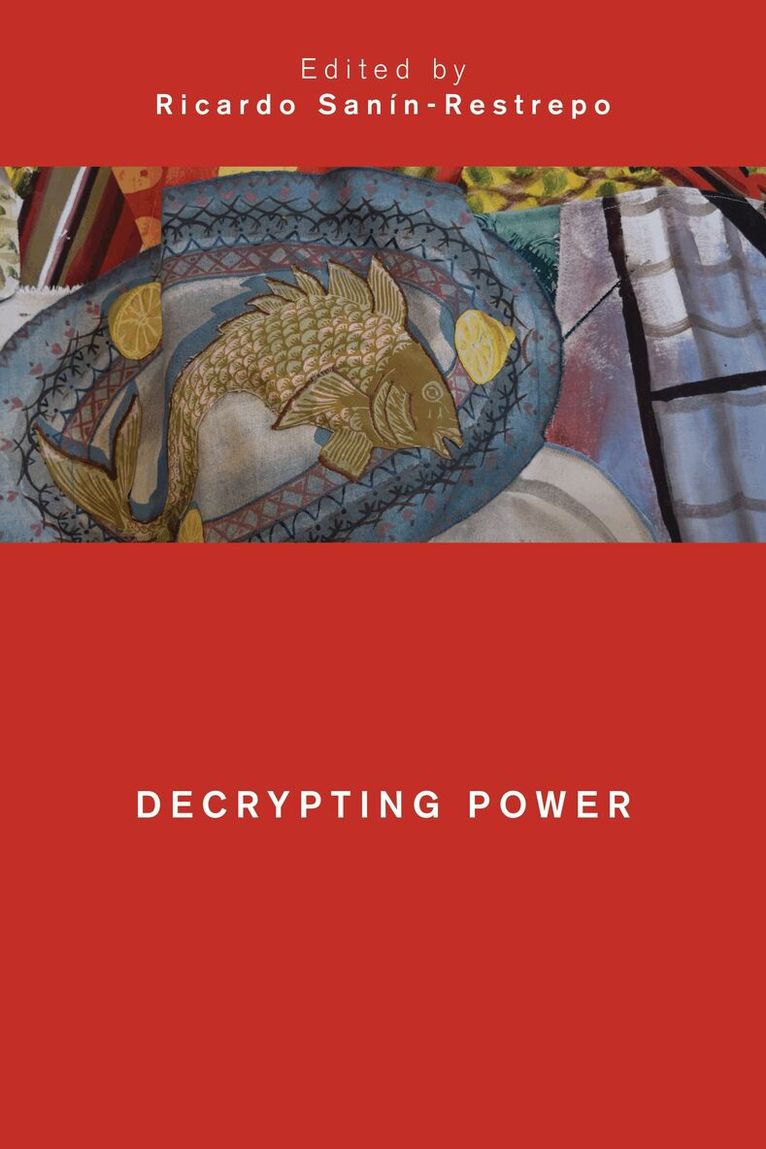
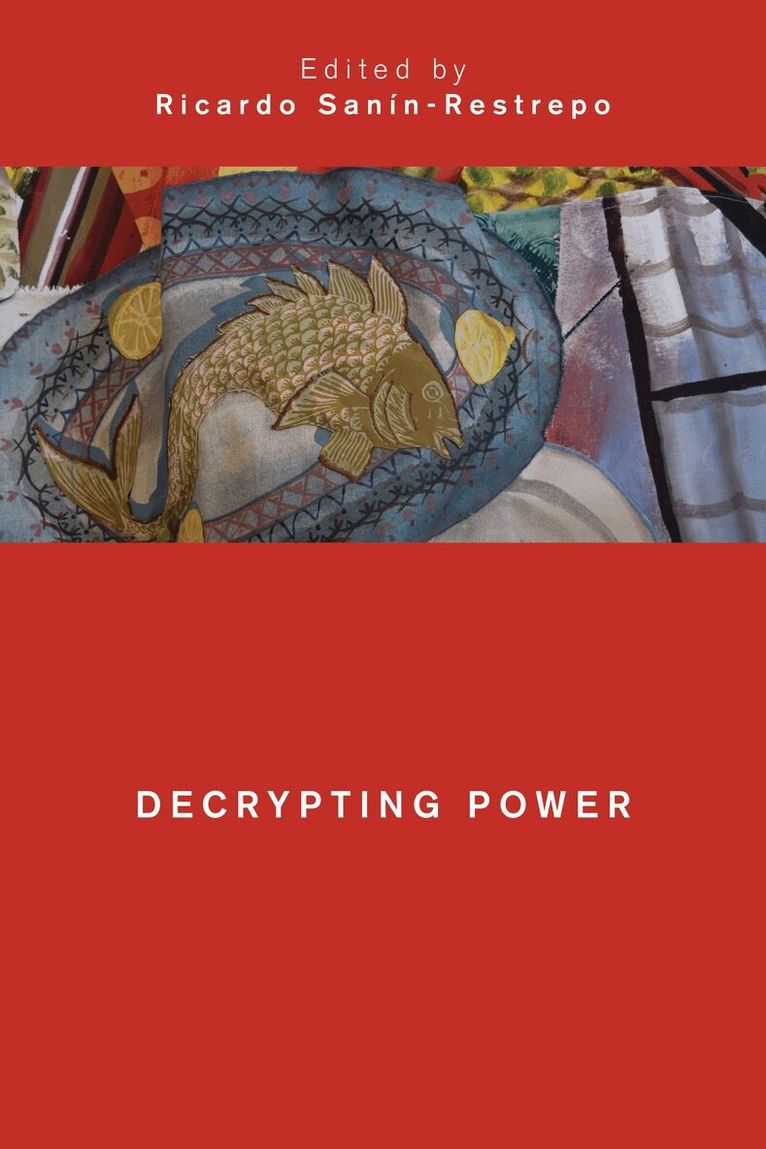
Decrypting Power aims to reach a unifying concept that allows the connection of the fundamental theses stemming from critical legal studies, Subaltern studies, decolonization, law and society, global political economy, critical geopolitics and theories of de-coloniality. This volume proposes that this concept is the ‘encryption of power’, a category of analysis that reveals the weakness of political liberalism when it takes the place of the legitimate fundament of democracy, as well as its consummate capacity to conceal new mechanisms of global power. The theory of encryption of power understands that there is only a world where difference exists as the fundamental and sole order, but also that such a possibility is heavily obstructed by the concentration of power in forms of oppression. The world hangs on the thread of this entangled reality, made up of difference and its denial, of democracy and its simulations, of truth and its codifications. The decryption of power is then, above all, a theory of justice essential to radical democracy, which comes fully-equipped to prevail over the conditions that deny the possibility of an egalitarian world.
515 kr
Skickas inom 10-15 vardagar
Decrypting Power aims to reach a unifying concept that allows the connection of the fundamental theses stemming from critical legal studies, Subaltern studies, decolonization, law and society, global political economy, critical geopolitics and theories of de-coloniality. This volume proposes that this concept is the ‘encryption of power’, a category of analysis that reveals the weakness of political liberalism when it takes the place of the legitimate fundament of democracy, as well as its consummate capacity to conceal new mechanisms of global power. The theory of encryption of power understands that there is only a world where difference exists as the fundamental and sole order, but also that such a possibility is heavily obstructed by the concentration of power in forms of oppression. The world hangs on the thread of this entangled reality, made up of difference and its denial, of democracy and its simulations, of truth and its codifications. The decryption of power is then, above all, a theory of justice essential to radical democracy, which comes fully-equipped to prevail over the conditions that deny the possibility of an egalitarian world.