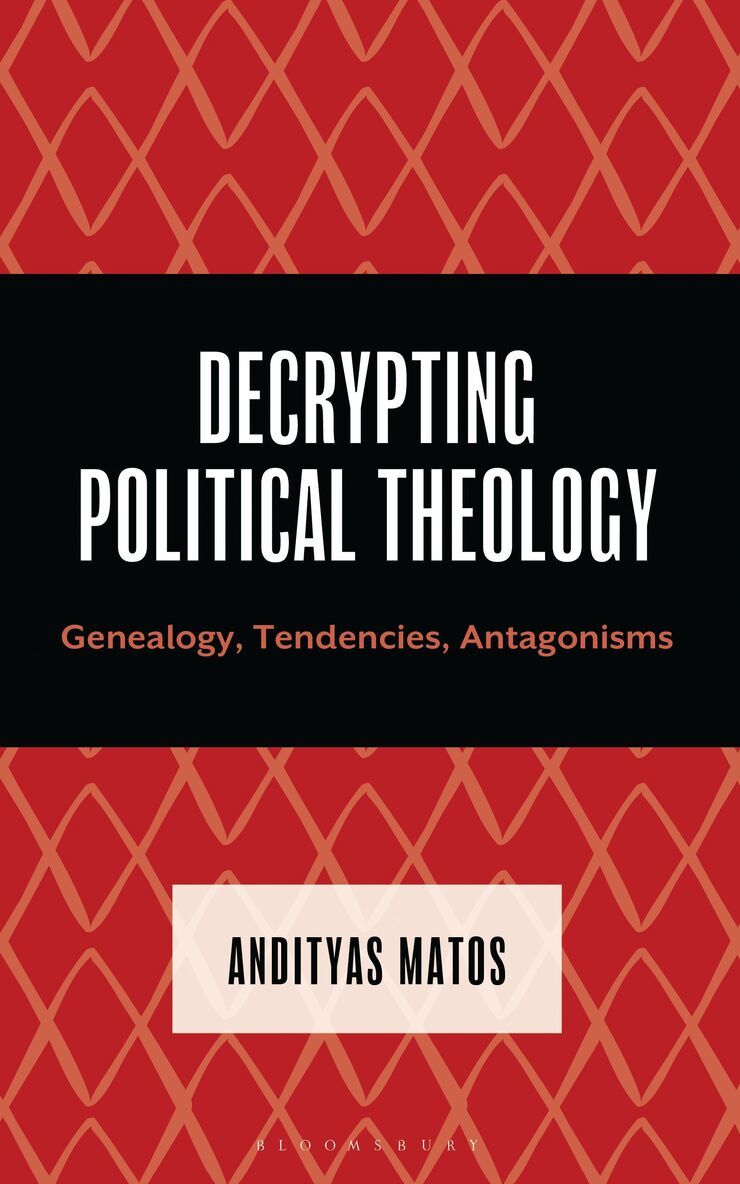
Inbunden, Engelska, 2026
Decrypting Political Theology
Genealogy, Tendencies, Antagonisms
Av Andityas Matos, Ricardo Sanín-Restrepo
Del i serien Decrypting Power and Coloniality: Philosophical Perspectives from and through the Global South
1203 kr
Beställningsvara. Skickas inom 10-15 vardagar. Fri frakt över 249 kr.
Beskrivning
Produktinformation
- Utgivningsdatum: 2026-02-19
- Mått: 150 x 230 x 18 mm
- Vikt: 500 g
- Format: Inbunden
- Språk: Engelska
- Serie: Decrypting Power and Coloniality: Philosophical Perspectives from and through the Global South
- Antal sidor: 240
- Förlag: Bloomsbury Publishing Plc
- ISBN: 9781666978650
Utforska kategorier
Mer om författaren
Andityas Matos is professor of philosophy of law at Universidade Federal de Minas Gerais, Brazil.
Recensioner i media
In this intelligent and important book Andityas Matos presents a thesis that is perfectly understandable and agreeable: politics cannot free itself from an implicit or explicit reference to religious transcendence. In this way, post-structuralist and post-colonial critical thought engages with political theology by seeking a non-authoritarian origin of politics, thereby bringing forth in this work a democratic approach to political theology, articulated in a compelling and innovative manner. Another noteworthy aspect is the author’s critical attention to old and new forms of anti-democratic and foundationalist political theology, such as the sacralisation of politics and economics and the politicisation of religion. Against this, the author presents the idea of democracy as a way of life that embraces the transcendent dimension in order to avoid falling into structures of domination.
Betyg & recensioner
0 recensioner
Inga recensioner tillgängliga.