Richard Ashdowne – författare
Visar alla böcker från författaren Richard Ashdowne. Handla med fri frakt och snabb leverans.
5 produkter
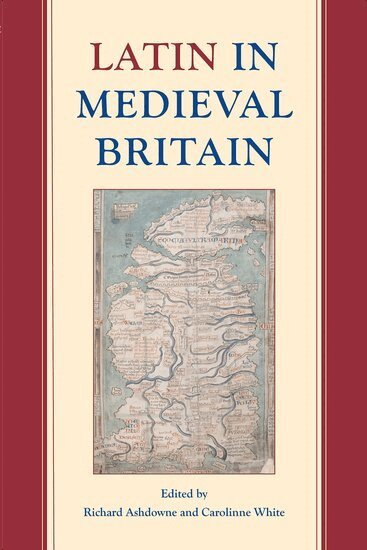
Latin in Medieval Britain
Av Richard Ashdowne, Carolinne White
Inbunden, 2017
1426 kr
Lägg i varukorg
Latin continued to be used across Europe long after the end of the Roman Empire. This collection considers key issues arising from the use of Latin in Britain from the 6th to the 16th centuries. Latin in this period was not the native language of its users but was nevertheless used extensively for …
Writing Latin
Av James Morwood, Richard Ashdowne
E-bok, 2016
401 kr
Lägg i varukorg
A completely new guide to writing Latin from scratch, this user-friendly book includes key features such as: broad coverage - all the major grammatical constructions of the Latin language are covered, reinforcing what students have learnt from reading Latin; thorough accessible explanations - no …
Writing Latin
Av James Morwood, Richard Ashdowne
E-bok, 2016
390 kr
Lägg i varukorg
A completely new guide to writing Latin from scratch, this user-friendly book includes key features such as: broad coverage - all the major grammatical constructions of the Latin language are covered, reinforcing what students have learnt from reading Latin; thorough accessible explanations - no …
Bureaucrat, the Correspondent, and the Wars of the Roses
The Second Continuation of the Crowland Chronicle and The Usurpation of Richard III
Av Dan Embree, Richard Ashdowne
Inbunden, 2026
2377 kr
Kommande
The two texts in this volume, The Second Continuation of the Chronicle of Crowland Abbey and Dominic Mancini’s Usurpation of Richard III, are the principal contemporary witnesses to the Wars of the Roses, particularly to the opaque and controversial reign of Richard III. The Crowland chronicler – …
Writing Latin
Av James Morwood, Richard Ashdowne
Häftad, 2007
366 kr
Lägg i varukorg
A completely new guide to writing Latin from scratch, this user-friendly book includes key features such as: broad coverage - all the major grammatical constructions of the Latin language are covered, reinforcing what students have learnt from reading Latin; thorough accessible explanations - no …