Rip G. Rice - Böcker
Visar alla böcker från författaren Rip G. Rice. Handla med fri frakt och snabb leverans.
6 produkter
6 produkter
2 155 kr
Skickas inom 10-15 vardagar
Several general books are available on ultraviolet light and its applications. However, this is the first comprehensive monograph that deals with its application to water and wastewater treatment. There is a rapidly growing interest in using UV light in water sanitation due to the increased knowledge of the potential health and environmental impacts of disinfection byproducts.Ultraviolet Light in Water and Wastewater Sanitation integrates the fundamental physics applicable to water and wastewater sanitation, the engineering aspects, and the practical experience in the field. The text analyzes the concerns associated with this application of UV light and brings together comprehensive information on the presently available UV technologies applicable to water and wastewater treatment including: lamp technologies, criteria of evaluation and choice of technology; fundamental principles; performance criteria for disinfection; design criteria and methods; synergistic use of UV and oxidants (advanced oxidation); and functional requirements and potential advantages and drawbacks of the technique.Ultraviolet Light in Water and Wastewater Sanitation is the only treatise currently available combining fundamental knowledge, recommendations for design, evaluations of performance, and future prospects for this application. Water and wastewater treatment professionals, water utility employees, governmental regulators, and chemists will find this book an essential and unique reference for a technology which has received growing regulatory acceptance.
2 692 kr
Skickas inom 10-15 vardagar
A review of the nation’s new coverages serves as a ready reminder that drinking water safety is more than regional of local concern. In recent times, the print media alone has drawn attention to barium, bacteria, heavy metals, and increasingly organic contaminants, in public water supplies located in Florida, Rhode Island, Texas, Oregon, Illinois, Minnesota, North Carolina, Michigan, and California, to name a few. In an effort to address one of the major issues confronting the future of the nation’s drinking water supplies, chemical contamination, the Drinking Water Research Foundation and the American Chemical Society presented the symposium, "Safe Drinking Water: the Impact of Chemicals on a Limited Resource." To add balance to the total presentation, two papers were included that were not part of the symposium. Many questions as to the public significance of hundreds of organic chemicals known to be present in the national drinking water supply are waiting to be answered. In some areas of the country, aid rain-induced alterations of the natural leaching process represent an unexplored potential source of toxic pollutants. Finding workable ways to clean up the water supply will be an ongoing task.Addressing these questions, as well as investigating how other countries are responding to these problems, the alternate sources available, such as bottled water, and point of use devices, the presenters in this symposium have attempted to explain the problems, situation, and alternatives. As progress is made in one area, setbacks will occur in another. As we eliminate problems thought chemical technology, we often create others, such as contamination of our waters. While all the situations, problems, and alternatives are not discussed in these proceedings, it is hoped that some attention will be brought to the public, government, and private sectors so that future work will be done to assure the nation of safe drinking water resources.
752 kr
Skickas inom 10-15 vardagar
A review of the nation’s new coverages serves as a ready reminder that drinking water safety is more than regional of local concern. In recent times, the print media alone has drawn attention to barium, bacteria, heavy metals, and increasingly organic contaminants, in public water supplies located in Florida, Rhode Island, Texas, Oregon, Illinois, Minnesota, North Carolina, Michigan, and California, to name a few. In an effort to address one of the major issues confronting the future of the nation’s drinking water supplies, chemical contamination, the Drinking Water Research Foundation and the American Chemical Society presented the symposium, "Safe Drinking Water: the Impact of Chemicals on a Limited Resource." To add balance to the total presentation, two papers were included that were not part of the symposium.
576 kr
Skickas inom 10-15 vardagar
Several general books are available on ultraviolet light and its applications. However, this is the first comprehensive monograph that deals with its application to water and wastewater treatment. There is a rapidly growing interest in using UV light in water sanitation due to the increased knowledge of the potential health and environmental impacts of disinfection byproducts.Ultraviolet Light in Water and Wastewater Sanitation integrates the fundamental physics applicable to water and wastewater sanitation, the engineering aspects, and the practical experience in the field. The text analyzes the concerns associated with this application of UV light and brings together comprehensive information on the presently available UV technologies applicable to water and wastewater treatment including: lamp technologies, criteria of evaluation and choice of technology; fundamental principles; performance criteria for disinfection; design criteria and methods; synergistic use of UV and oxidants (advanced oxidation); and functional requirements and potential advantages and drawbacks of the technique.Ultraviolet Light in Water and Wastewater Sanitation is the only treatise currently available combining fundamental knowledge, recommendations for design, evaluations of performance, and future prospects for this application. Water and wastewater treatment professionals, water utility employees, governmental regulators, and chemists will find this book an essential and unique reference for a technology which has received growing regulatory acceptance.
701 kr
Skickas inom 5-8 vardagar
2 229 kr
Skickas inom 11-20 vardagar
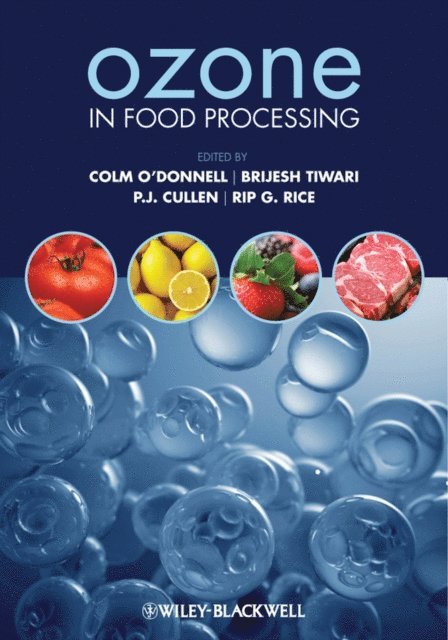
This book is the first to bring together essential information on the application of ozone in food processing, providing an insight into the current state-of-the-art and reviewing established and emerging applications in food processing, preservation and waste management. The chemical and physical properties of ozone are described, along with its microbial inactivation mechanisms. The various methods of ozone production are compared, including their economic and technical aspects. Several chapters are dedicated to the major food processing applications: fruit and vegetables, grains, meat, seafood and food hydrocolloids, and the effects on nutritional and quality parameters will be reviewed throughout. Further chapters examine the role of ozone in water treatment, in food waste treatment and in deactivating pesticide residues. The international regulatory and legislative picture is addressed, as are the health and safety implications of ozone processing and possible future trends.