Robbie Ethridge – författare
Visar alla böcker från författaren Robbie Ethridge. Handla med fri frakt och snabb leverans.
15 produkter
15 produkter
Häftad, Engelska, 2009
394 kr
Skickas inom 10-15 vardagar
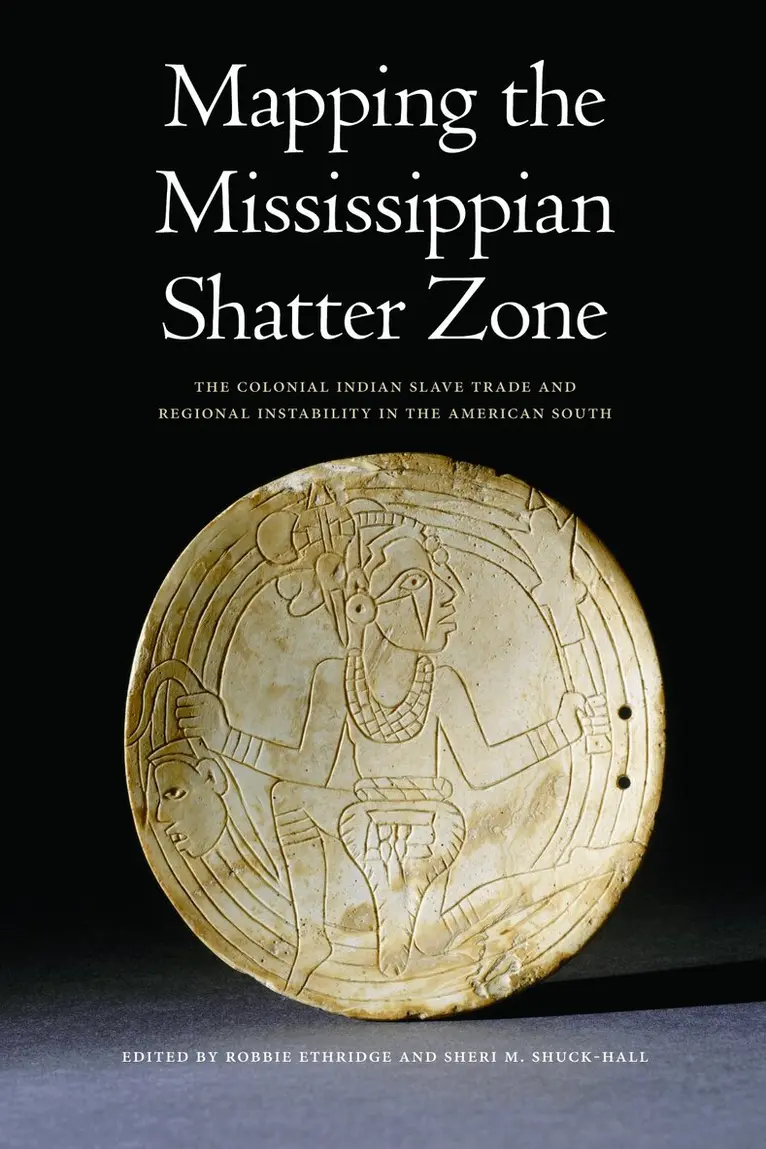
During the two centuries following European contact, the world of late prehistoric Mississippian chiefdoms collapsed and Native communities there fragmented, migrated, coalesced, and reorganized into new and often quite different societies. The editors of this volume, Robbie Ethridge and Sheri M. Shuck-Hall, argue that such a period and region of instability and regrouping constituted a "shatter zone." In this anthology, archaeologists, ethnohistorians, and anthropologists analyze the shatter zone created in the colonial South by examining the interactions of American Indians and European colonists. The forces that destabilized the region included especially the frenzied commercial traffic in Indian slaves conducted by both Europeans and Indians, which decimated several southern Native communities; the inherently fluid political and social organization of precontact Mississippian chiefdoms; and the widespread epidemics that spread across the South. Using examples from a range of Indian communities—Muskogee, Catawba, Iroquois, Alabama, Coushatta, Shawnee, Choctaw, Westo, and Natchez—the contributors assess the shatter zone region as a whole, and the varied ways in which Native peoples wrestled with an increasingly unstable world and worked to reestablish order.
Inbunden, Engelska, 2023
752 kr
Skickas inom 10-15 vardagar
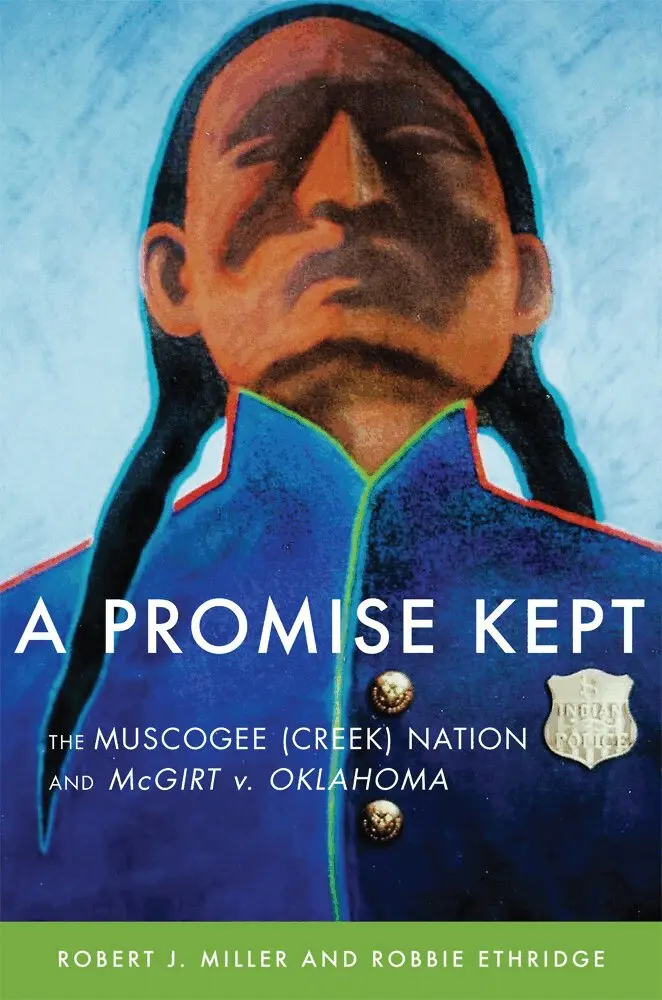
“At the end of the Trail of Tears there was a promise,” U.S. Supreme Court Justice Neil Gorsuch wrote in the decision issued on July 9, 2020, in the case of McGirt v. Oklahoma. And that promise, made in treaties between the United States and the Muscogee (Creek) Nation more than 150 years earlier, would finally be kept. With the Court’s ruling, the full extent of the Muscogee (Creek) Reservation was reaffirmed—meaning that 3.25 million acres of land in Oklahoma, including part of the city of Tulsa, were recognized once again as “Indian Country” as defined by federal law. A Promise Kept explores the circumstances and implications of McGirt v. Oklahoma, likely the most significant Indian law case in well over 100 years. Combining legal analysis and historical context, this book gives an in-depth, accessible account of how the case unfolded and what it might mean for Oklahomans, the Muscogee (Creek) Nation, and other tribes throughout the United States.For context, Robbie Ethridge traces the long history of the Muscogee (Creek) Nation from its inception in present-day Georgia and Alabama in the seventeenth century; through the tribe’s rise to regional prominence in the colonial era, the tumultuous years of Indian Removal, and the Civil War and allotment; and into its resurgence in Oklahoma in the twentieth and twenty-first centuries. Against this historical background, Robert J. Miller considers McGirt v. Oklahoma, examining important related cases, precedents that informed the Court’s decision, and future ramifications—legal, civil, regulatory, and practical—for the Muscogee (Creek) Nation, federal Indian law, the United States, the state of Oklahoma, and Indian nations in Oklahoma and elsewhere. Their work clarifies the stakes of a decision that, while long overdue, raises numerous complex issues profoundly affecting federal, state, and tribal relations and law—and will continue to do so for the foreseeable future.
Häftad, Engelska, 2023
279 kr
Skickas inom 10-15 vardagar
“At the end of the Trail of Tears there was a promise,” U.S. Supreme Court Justice Neil Gorsuch wrote in the decision issued on July 9, 2020, in the case of McGirt v. Oklahoma. And that promise, made in treaties between the United States and the Muscogee (Creek) Nation more than 150 years earlier, would finally be kept. With the Court’s ruling, the full extent of the Muscogee (Creek) Reservation was reaffirmed—meaning that 3.25 million acres of land in Oklahoma, including part of the city of Tulsa, were recognized once again as “Indian Country” as defined by federal law. A Promise Kept explores the circumstances and implications of McGirt v. Oklahoma, likely the most significant Indian law case in well over 100 years. Combining legal analysis and historical context, this book gives an in-depth, accessible account of how the case unfolded and what it might mean for Oklahomans, the Muscogee (Creek) Nation, and other tribes throughout the United States.For context, Robbie Ethridge traces the long history of the Muscogee (Creek) Nation from its inception in present-day Georgia and Alabama in the seventeenth century; through the tribe’s rise to regional prominence in the colonial era, the tumultuous years of Indian Removal, and the Civil War and allotment; and into its resurgence in Oklahoma in the twentieth and twenty-first centuries. Against this historical background, Robert J. Miller considers McGirt v. Oklahoma, examining important related cases, precedents that informed the Court’s decision, and future ramifications—legal, civil, regulatory, and practical—for the Muscogee (Creek) Nation, federal Indian law, the United States, the state of Oklahoma, and Indian nations in Oklahoma and elsewhere. Their work clarifies the stakes of a decision that, while long overdue, raises numerous complex issues profoundly affecting federal, state, and tribal relations and law—and will continue to do so for the foreseeable future.
Häftad, Engelska, 2003
451 kr
Skickas inom 10-15 vardagar
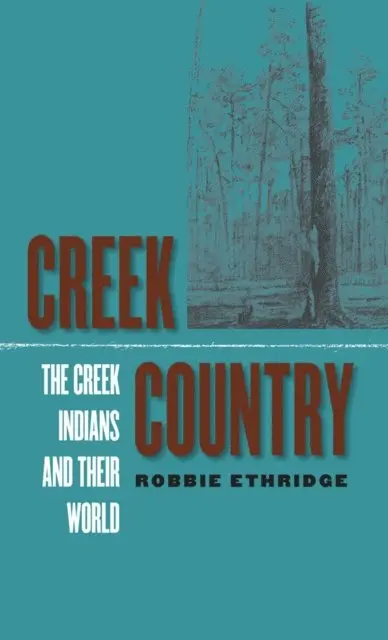
Reconstructing the human and natural environment of the Creek Indians in frontier Georgia, Mississippi, Alabama, and Tennessee, Robbie Ethridge illuminates a time of wrenching transition. Creek Country presents a compelling portrait of a culture in crisis, of its resiliency in the face of profound change, and of the forces that pushed it into decisive, destructive conflict. Ethridge begins in 1796 with the arrival of U.S. Indian Agent Benjamin Hawkins, whose tenure among the Creeks coincided with a period of increased federal intervention in tribal affairs, growing tension between Indians and non-Indians, and pronounced strife within the tribe. In a detailed description of Creek town life, the author reveals how social structures were stretched to accommodate increased engagement with whites and blacks. The Creek economy, long linked to the outside world through the deerskin trade, had begun to fail. Ethridge details the Creeks' efforts to diversify their economy, especially through experimental farming and ranching, and the ecological crisis that ensued. Disputes within the tribe culminated in the Red Stick War, a civil war among Creeks that quickly spilled over into conflict between Indians and white settlers and was ultimately used by U.S. authorities to justify their policy of Indian removal. |Reconstructing the human and natural environment of the Creek Indians in frontier Georgia, Mississippi, Alabama, and Tennessee, Ethridge presents a compelling portrait of a culture in economic, political, and ecological crisis; of its resiliency in the face of profound change; and of the forces that pushed it into decisive, destructive conflict.
E-bok
Engelska, 2004347 kr
Läs direkt efter köp
Reconstructing the human and natural environment of the Creek Indians in frontier Georgia, Mississippi, Alabama, and Tennessee, Robbie Ethridge illuminates a time of wrenching transition. Creek Country presents a compelling portrait of a culture in crisis, of its resiliency in the face of profound change, and of the forces that pushed it into decisive, destructive conflict.Ethridge begins in 1796 with the arrival of U.S. Indian Agent Benjamin Hawkins, whose tenure among the Creeks coincided with a period of increased federal intervention in tribal affairs, growing tension between Indians and non-Indians, and pronounced strife within the tribe. In a detailed description of Creek town life, the author reveals how social structures were stretched to accommodate increased engagement with whites and blacks. The Creek economy, long linked to the outside world through the deerskin trade, had begun to fail. Ethridge details the Creeks'' efforts to diversify their economy, especially through experimental farming and ranching, and the ecological crisis that ensued. Disputes within the tribe culminated in the Red Stick War, a civil war among Creeks that quickly spilled over into conflict between Indians and white settlers and was ultimately used by U.S. authorities to justify their policy of Indian removal.
Häftad, Engelska, 2013
451 kr
Skickas inom 10-15 vardagar
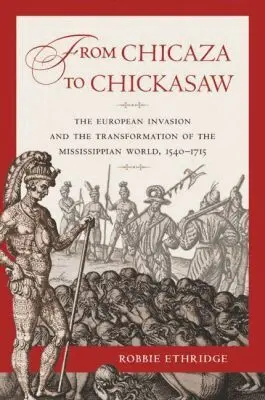
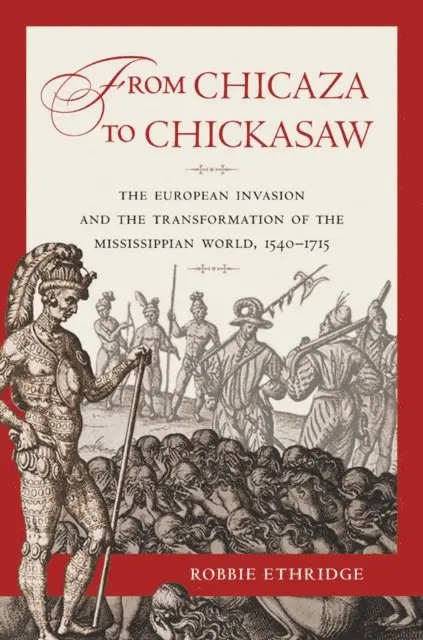
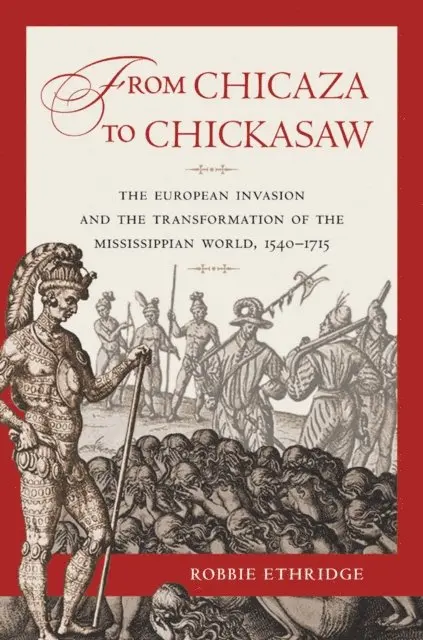
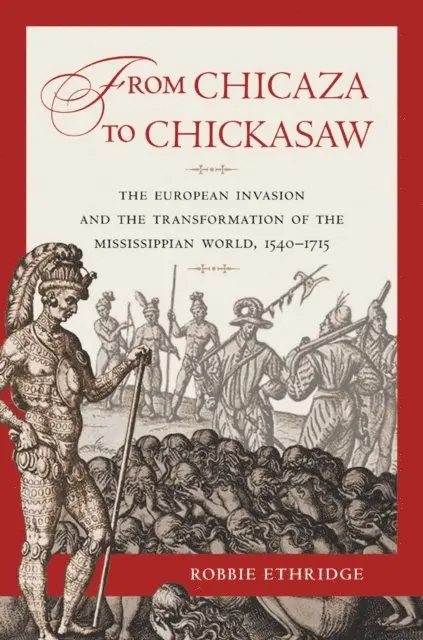
In this sweeping regional history, anthropologist Robbie Ethridge traces the metamorphosis of the Native South from first contact in 1540 to the dawn of the eighteenth century, when indigenous people no longer lived in a purely Indian world but rather on the edge of an expanding European empire. Using a framework that Ethridge calls the ""Mississippian shatter zone"" to explicate these tumultuous times, From Chicaza to Chickasaw examines the European invasion, the collapse of the precontact Mississippian world, and the restructuring of discrete chiefdoms into coalescent Native societies in a colonial world. The story of one group--the Chickasaws--is closely followed through this period.
E-bok
Engelska, 2010433 kr
Läs direkt efter köp
In this sweeping regional history, anthropologist Robbie Ethridge traces the metamorphosis of the Native South from first contact in 1540 to the dawn of the eighteenth century, when indigenous people no longer lived in a purely Indian world but rather on the edge of an expanding European empire. Using a framework that Ethridge calls the "Mississippian shatter zone" to explicate these tumultuous times, From Chicaza to Chickasaw examines the European invasion, the collapse of the precontact Mississippian world, and the restructuring of discrete chiefdoms into coalescent Native societies in a colonial world. The story of one group--the Chickasaws--is closely followed through this period.
E-bok
Engelska, 2009621 kr
Läs direkt efter köp
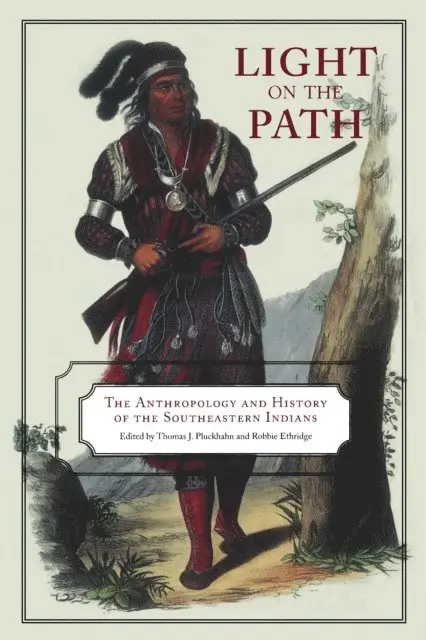
Social history of the native peoples of the American South, bridging prehistory and history The past 20 years have witnessed a change in the study of the prehistory and history of the native peoples of the American South. This paradigm shift is the bridging of prehistory and history to fashion a seamless social history that includes not only the 16th-century Late Mississippian period and the 18th-century colonial period but also the largely forgotten--and critically important--century in between. The shift is in part methodological, for it involves combining methods from anthropology, history, and archaeology. It is also conceptual and theoretical, employing historical and archaeological data to reconstruct broad patterns of history--not just political history with Native Americans as a backdrop, nor simply an archaeology with added historical specificity, but a true social history of the Southeastern Indians, spanning their entire existence in the American South. The scholarship underlying this shift comes from many directions, but much of the groundwork can be attributed to Charles Hudson. The papers in this volume were contributed by Hudson’s colleagues and former students (many now leading scholars themselves) in his honor. The assumption links these papers is that of a historical transformation between Mississippian societies and the Indian societies of the historic era that requires explanation and critical analysis. In all of the chapters, the legacy of Hudson’s work is evident. Anthropologists, archaeologists, and historians are storming the bridge that connects prehistory and history in a manner unimaginable 20 years ago. While there remains much work to do on the path toward understanding this transformation and constructing a complete social history of the Southeastern Indians, the work of Charles Hudson and his colleagues have shown the way.
E-bok
PDF, Engelska, 20131 039 kr
Läs direkt efter köp
In this sweeping regional history, anthropologist Robbie Ethridge traces the metamorphosis of the Native South from first contact in 1540 to the dawn of the eighteenth century, when indigenous people no longer lived in a purely Indian world but rather on the edge of an expanding European empire. Using a framework that Ethridge calls the "Mississippian shatter zone" to explicate these tumultuous times, From Chicaza to Chickasaw examines the European invasion, the collapse of the precontact Mississippian world, and the restructuring of discrete chiefdoms into coalescent Native societies in a colonial world. The story of one group--the Chickasaws--is closely followed through this period.
Häftad, Engelska, 2008
394 kr
Skickas inom 10-15 vardagar
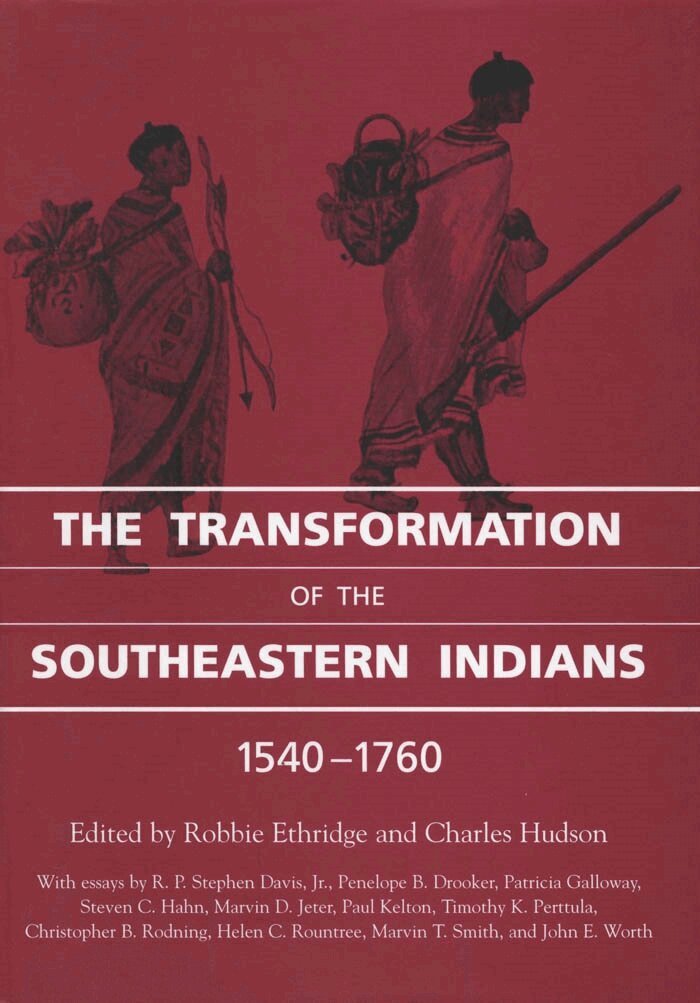
With essays by Stephen Davis, Penelope Drooker, Patricia K. Galloway, Steven Hahn, Charles Hudson, Marvin Jeter, Paul Kelton, Timothy Pertulla, Christopher Rodning, Helen Rountree, Marvin T. Smith, and John Worth The first two-hundred years of Western civilization in the Americas was a time when fundamental and sometimes catastrophic changes occurred in Native American communities in the South. In The Transformation of the Southeastern Indians, historians, anthropologists, and archaeologists provide perspectives on how this era shaped American Indian society for later generations and how it even affects these communities today. This collection of essays presents the most current scholarship on the social history of the South, identifying and examining the historical forces, trends, and events that were attendant to the formation of the Indians of the colonial South. The essayists discuss how Southeastern Indian culture and society evolved. They focus on such aspects as the introduction of European diseases to the New World, long-distance migration and relocation, the influences of the Spanish mission system, the effects of the English plantation system, the northern fur trade of the English, and the French, Dutch, and English trade of Indian slaves and deerskins in the South. This book covers the full geographic and social scope of the Southeast, including the indigenous peoples of Florida, Virginia, Maryland, the Appalachian Mountains, the Carolina Piedmont, the Ohio Valley, and the Central and Lower Mississippi Valleys. Robbie Ethridge is an assistant professor of anthropology and southern studies at the University of Mississippi. Charles Hudson is Franklin Professor of Anthropology and History at the University of Georgia.
E-bok
PDF, Engelska, 2010398 kr
Läs direkt efter köp
With essays by Stephen Davis, Penelope Drooker, Patricia K. Galloway, Steven Hahn, Charles Hudson, Marvin Jeter, Paul Kelton, Timothy Pertulla, Christopher Rodning, Helen Rountree, Marvin T. Smith, and John Worth The first two-hundred years of Western civilization in the Americas was a time when fundamental and sometimes catastrophic changes occurred in Native American communities in the South. In The Transformation of the Southeastern Indians, 1540–1760, historians, anthropologists, and archaeologists provide perspectives on how this era shaped American Indian society for later generations and how it even affects these communities today. This collection of essays presents the most current scholarship on the social history of the South, identifying and examining the historical forces, trends, and events that were attendant to the formation of the Indians of the colonial South. The essayists discuss how Southeastern Indian culture and society evolved. They focus on such aspects as the introduction of European diseases to the New World, long-distance migration and relocation, the influences of the Spanish mission system, the effects of the English plantation system, the northern fur trade of the English, and the French, Dutch, and English trade of Indian slaves and deerskins in the South. This book covers the full geographic and social scope of the Southeast, including the indigenous peoples of Florida, Virginia, Maryland, the Appalachian Mountains, the Carolina Piedmont, the Ohio Valley, and the Central and Lower Mississippi Valleys.
Inbunden, Engelska, 2020
981 kr
Skickas inom 10-15 vardagar
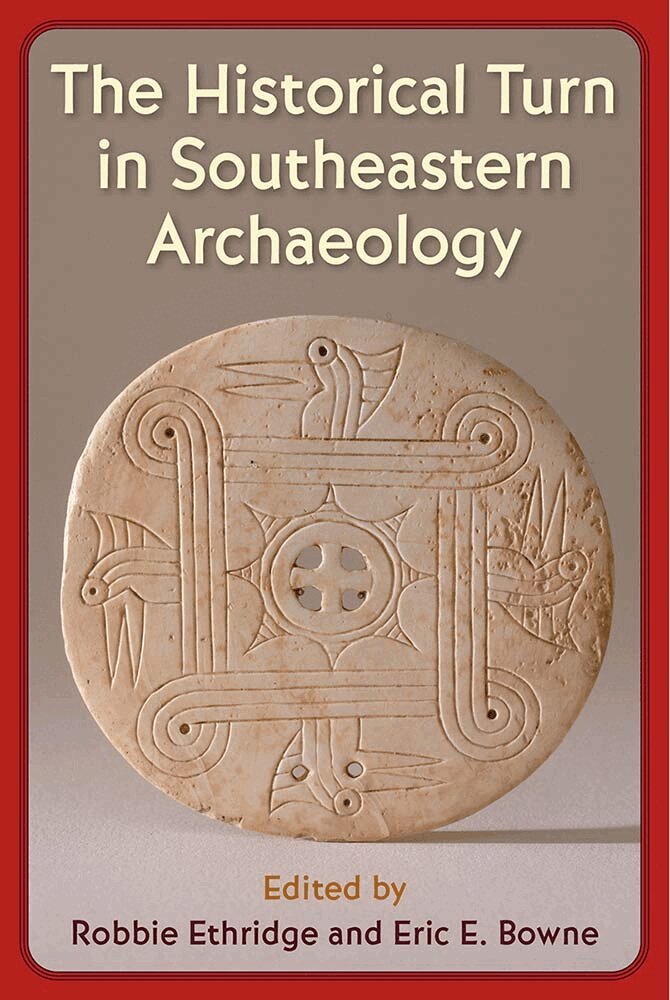
This volume uses case studies to capture the recent emphasis on history in archaeological reconstructions of America's deep past. Previously, archaeologists studying "prehistoric" America focused on long-term evolutionary change, imagining ancient societies like living organisms slowly adapting to environmental challenges. Contributors to this volume demonstrate how today's researchers are incorporating a new awareness that the precolonial era was also shaped by people responding to historical trends and forces.Essays in this volume delve into sites across what is now the United States Southeast—the St. Johns River Valley, the Gulf Coast, Greater Cahokia, Fort Ancient, the southern Appalachians, and the Savannah River Valley. Prominent scholars of the region highlight the complex interplay of events, human decision-making, movements, and structural elements that combined to shape native societies. The research in this volume represents a profound shift in thinking about precolonial and colonial history and begins to erase the false divide between ancient and contemporary America.
E-bok
PDF, Engelska, 2004347 kr
Läs direkt efter köp
Reconstructing the human and natural environment of the Creek Indians in frontier Georgia, Mississippi, Alabama, and Tennessee, Robbie Ethridge illuminates a time of wrenching transition. Creek Country presents a compelling portrait of a culture in crisis, of its resiliency in the face of profound change, and of the forces that pushed it into decisive, destructive conflict.Ethridge begins in 1796 with the arrival of U.S. Indian Agent Benjamin Hawkins, whose tenure among the Creeks coincided with a period of increased federal intervention in tribal affairs, growing tension between Indians and non-Indians, and pronounced strife within the tribe. In a detailed description of Creek town life, the author reveals how social structures were stretched to accommodate increased engagement with whites and blacks. The Creek economy, long linked to the outside world through the deerskin trade, had begun to fail. Ethridge details the Creeks'' efforts to diversify their economy, especially through experimental farming and ranching, and the ecological crisis that ensued. Disputes within the tribe culminated in the Red Stick War, a civil war among Creeks that quickly spilled over into conflict between Indians and white settlers and was ultimately used by U.S. authorities to justify their policy of Indian removal.
E-bok
PDF, Engelska, 2010433 kr
Läs direkt efter köp
In this sweeping regional history, anthropologist Robbie Ethridge traces the metamorphosis of the Native South from first contact in 1540 to the dawn of the eighteenth century, when indigenous people no longer lived in a purely Indian world but rather on the edge of an expanding European empire. Using a framework that Ethridge calls the "Mississippian shatter zone" to explicate these tumultuous times, From Chicaza to Chickasaw examines the European invasion, the collapse of the precontact Mississippian world, and the restructuring of discrete chiefdoms into coalescent Native societies in a colonial world. The story of one group--the Chickasaws--is closely followed through this period.
E-bok
PDF, Engelska, 20131 299 kr
Läs direkt efter köp
In this sweeping regional history, anthropologist Robbie Ethridge traces the metamorphosis of the Native South from first contact in 1540 to the dawn of the eighteenth century, when indigenous people no longer lived in a purely Indian world but rather on the edge of an expanding European empire. Using a framework that Ethridge calls the "Mississippian shatter zone" to explicate these tumultuous times, From Chicaza to Chickasaw examines the European invasion, the collapse of the precontact Mississippian world, and the restructuring of discrete chiefdoms into coalescent Native societies in a colonial world. The story of one group--the Chickasaws--is closely followed through this period.