Robert Beachy – författare
Visar alla böcker från författaren Robert Beachy. Handla med fri frakt och snabb leverans.
11 produkter
11 produkter
Häftad, Engelska, 2015
181 kr
Skickas
E-bok
Engelska, 2014212 kr
Läs direkt efter köp
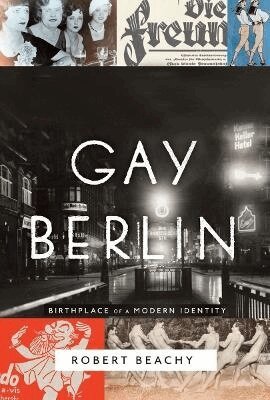
An unprecedented examination of the ways in which the uninhibited urban sexuality, sexual experimentation, and medical advances of pre-Weimar Berlin created and molded our modern understanding of sexual orientation and gay identity.Known already in the 1850s for the friendly company of its “warm brothers” (German slang for men who love other men), Berlin, before the turn of the twentieth century, became a place where scholars, activists, and medical professionals could explore and begin to educate both themselves and Europe about new and emerging sexual identities. From Karl Heinrich Ulrichs, a German activist described by some as the first openly gay man, to the world of Berlin’s vast homosexual subcultures, to a major sex scandal that enraptured the daily newspapers and shook the court of Emperor William II—and on through some of the very first sex reassignment surgeries—Robert Beachy uncovers the long-forgotten events and characters that continue to shape and influence the way we think of sexuality today. Chapter by chapter Beachy’s scholarship illuminates forgotten firsts, including the life and work of Dr. Magnus Hirschfeld, first to claim (in 1896) that same-sex desire is an immutable, biologically determined characteristic, and founder of the Institute for Sexual Science. Though raided and closed down by the Nazis in 1933, the institute served as, among other things, “a veritable incubator for the science of tran-sexuality,” scene of one of the world’s first sex reassignment surgeries. Fascinating, surprising, and informative—Gay Berlin is certain to be counted as a foundational cultural examination of human sexuality.From the Hardcover edition.
Inbunden, Engelska, 2007
2 333 kr
Skickas inom 10-15 vardagar
The question of who actually ran cities in the eighteenth, nineteenth, and twentieth centuries has been increasingly debated in recent years. As well as trying to understand the distribution of political power and the rise of broad political participation, urban historians have questioned how and whether elites retained influence in municipal government. The essays in this collection provide a detailed examination of the relationship between urban elites and the exercise of 'power', bringing together economic, social and cultural history with the political history of power resources and decision-making. The volume challenges common perceptions of a monolithic urban elite by looking at specific case studies. Collectively these essays provide a more sophisticated view of the exercise of urban power as the negotiation of various elite groups defined by their economic, social, political or cultural privilege. To contribute to this complex account of the history of cities, elites, and their influence, the collection applies a range of methodological approaches to studying European and American cities, as well as the wider world.
Häftad, Engelska, 2016
797 kr
Skickas inom 10-15 vardagar
The question of who actually ran cities in the eighteenth, nineteenth, and twentieth centuries has been increasingly debated in recent years. As well as trying to understand the distribution of political power and the rise of broad political participation, urban historians have questioned how and whether elites retained influence in municipal government. The essays in this collection provide a detailed examination of the relationship between urban elites and the exercise of 'power', bringing together economic, social and cultural history with the political history of power resources and decision-making. The volume challenges common perceptions of a monolithic urban elite by looking at specific case studies. Collectively these essays provide a more sophisticated view of the exercise of urban power as the negotiation of various elite groups defined by their economic, social, political or cultural privilege. To contribute to this complex account of the history of cities, elites, and their influence, the collection applies a range of methodological approaches to studying European and American cities, as well as the wider world.
E-bok
Engelska, 2017970 kr
Läs direkt efter köp
The question of who actually ran cities in the eighteenth, nineteenth, and twentieth centuries has been increasingly debated in recent years. As well as trying to understand the distribution of political power and the rise of broad political participation, urban historians have questioned how and whether elites retained influence in municipal government. The essays in this collection provide a detailed examination of the relationship between urban elites and the exercise of ''power'', bringing together economic, social and cultural history with the political history of power resources and decision-making. The volume challenges common perceptions of a monolithic urban elite by looking at specific case studies. Collectively these essays provide a more sophisticated view of the exercise of urban power as the negotiation of various elite groups defined by their economic, social, political or cultural privilege. To contribute to this complex account of the history of cities, elites, and their influence, the collection applies a range of methodological approaches to studying European and American cities, as well as the wider world.
E-bok
PDF, Engelska, 2017970 kr
Läs direkt efter köp
The question of who actually ran cities in the eighteenth, nineteenth, and twentieth centuries has been increasingly debated in recent years. As well as trying to understand the distribution of political power and the rise of broad political participation, urban historians have questioned how and whether elites retained influence in municipal government. The essays in this collection provide a detailed examination of the relationship between urban elites and the exercise of ''power'', bringing together economic, social and cultural history with the political history of power resources and decision-making. The volume challenges common perceptions of a monolithic urban elite by looking at specific case studies. Collectively these essays provide a more sophisticated view of the exercise of urban power as the negotiation of various elite groups defined by their economic, social, political or cultural privilege. To contribute to this complex account of the history of cities, elites, and their influence, the collection applies a range of methodological approaches to studying European and American cities, as well as the wider world.
E-bok
PDF, 2007407 kr
Läs direkt efter köp
Recent work on the history of migration and the Atlantic World has underscored the importance of the political economies of Europe, Africa, and the Americas in the eighteenth century, emphasizing the impact of these exchanges on political relations and state-building, and on economic structures, commerce, and wealth. Too little of this work explores culture and identity outside the Anglo-American context, especially as reflected through religious developments of radical Pietists and other Germans, the second largest group of migrants to the American colonies in the eighteenth century. This volume offers a fresh vantage point from which to examine the Atlantic World. Quick to traverse the conventional political boundaries that divided European states and American colonies, Moravians departed their homeland to form new congregations in the most cosmopolitan European cities as well as on the North American frontier. Pious Pursuits explores the lives and beliefs of Atlantic World Moravians, as well as their communities and culture, and it provides a new framework for analysis of the Atlantic World that is comparative and transnational.
Inbunden, Engelska, 2005
2 010 kr
Skickas inom 10-15 vardagar
Looking at women, business and finance in the long nineteenth century, this book challenges our traditional understanding of 'separate spheres' - whereby men operated in the public world of work and women in the private realm of the domestic. Drawing on case studies throughout Europe, this book reveals that there was much greater diversity in women's economic experience across all social strata than has previously been understood.International contributors take a new look at women's roles in finance and investment, family-owned businesses, retailing, service activities, and the artisanal trades. They reveal that elite and middle-class women often manipulated financial resources in a highly sophisticated manner. Family-owned businesses and retail trade geared to women, such as grocery and fashion, also offered women opportunities. Throughout, the book considers the impact of industrialization on women's economic agency and examines women in the accommodation business in London, female entrepreneurs in Italy, prostitutes in Germany, family businesses in Sweden, women in publishing in Spain and much more.
Häftad, Engelska, 2005
508 kr
Skickas inom 10-15 vardagar
Looking at women, business and finance in the long nineteenth century, this book challenges our traditional understanding of 'separate spheres' - whereby men operated in the public world of work and women in the private realm of the domestic. Drawing on case studies throughout Europe, this book reveals that there was much greater diversity in women's economic experience across all social strata than has previously been understood.International contributors take a new look at women's roles in finance and investment, family-owned businesses, retailing, service activities, and the artisanal trades. They reveal that elite and middle-class women often manipulated financial resources in a highly sophisticated manner. Family-owned businesses and retail trade geared to women, such as grocery and fashion, also offered women opportunities. Throughout, the book considers the impact of industrialization on women's economic agency and examines women in the accommodation business in London, female entrepreneurs in Italy, prostitutes in Germany, family businesses in Sweden, women in publishing in Spain and much more.
Inbunden, Engelska, 2007
2 058 kr
Skickas inom 3-6 vardagar
Recent work on the history of migration and the Atlantic World has underscored the importance of the political economies of Europe, Africa, and the Americas in the eighteenth century, emphasizing the impact of these exchanges on political relations and state-building, and on economic structures, commerce, and wealth. Too little of this work explores culture and identity outside the Anglo-American context, especially as reflected through religious developments of radical Pietists and other Germans, the second largest group of migrants to the American colonies in the eighteenth century.This volume offers a fresh vantage point from which to examine the Atlantic World. Quick to traverse the conventional political boundaries that divided European states and American colonies, Moravians departed their homeland to form new congregations in the most cosmopolitan European cities as well as on the North American frontier. Pious Pursuits explores the lives and beliefs of Atlantic World Moravians, as well as their communities and culture, and it provides a new framework for analysis of the Atlantic World that is comparative and transnational.
E-bok
PDF, Tyska, 201491 kr
Läs direkt efter köp
Die »imagined gay community" im Weimarer Berlin: Ein früher Freiraum homosexueller Kultur in Deutschland.Während seiner Zeit in Berlin 1929 traf der englische Schriftsteller W. H. Auden in der Straßenbahn eine Frau, die mit ihm zu flirten begann. In seinem unpublizierten »Berliner Tagebuch" beschreibt der angehende Dichter seine imaginäre Antwort: »Ich wollte ihr sagen: Ich bin schwul". Obwohl Auden kaum Deutsch sprach, konnte er jene perfekte Erwiderung in einer Berliner Mundart formulieren. Die Wahl seiner Worte zeigt dabei sein Bewusstsein für die eigene sexuelle Orientierung.Das Weimarer Berlin wird schon lange als Spielplatz sexueller Minderheiten gehandelt. Die Hauptstadtabenteuer ausländischer und auch deutscher Besucher waren jedoch mehr als bloßer »Sex-Tourismus". Das Berlin zur Zeit der Weimarer Republik war insofern einzigartig, als es Auden, seinen Freunden und Gleichgesinnten wie kein anderer Ort sonst erlaubte, Selbstbewusstsein und Sensibilität zu entwickeln. So boten die lebhafte wissenschaftliche Erforschung der Homosexualität, der juristische Reformaktivismus sowie das offene homosexuelle Milieu mit eigenständigen Medien und eigenem Nachtleben Raum für die Entwicklung einer homosexuellen Identität des Individuums wie auch der »imagined gay community".