Robert H. Frank – författare
Visar alla böcker från författaren Robert H. Frank. Handla med fri frakt och snabb leverans.
23 produkter
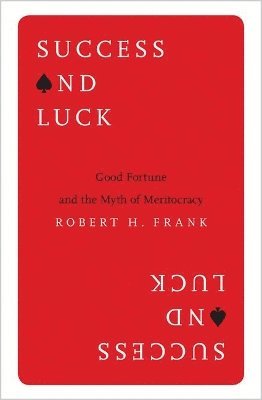
Success and Luck
Good Fortune and the Myth of Meritocracy
Häftad, 2017
193 kr
Lägg i varukorg
From New York Times bestselling author and economics columnist Robert Frank, a compelling book that explains why the rich underestimate the importance of luck in their success, why that hurts everyone, and what we can do about it How important is luck in economic success? No question more reliably …
Passions Within Reasons
Häftad, 1989
349 kr
Lägg i varukorg
The idea rests on a simple paradox, namely, that in many situations the conscious pursuit of self-interest is incompatible with its attainment. We are all comfortable with the notion that someone who strives to be spontaneous can never succeed. So too, on brief reflection, will it become apparent …
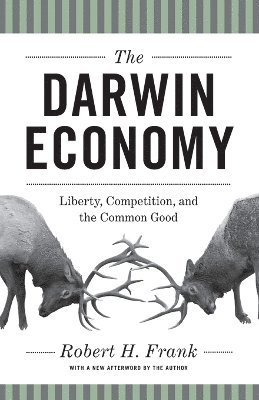
Darwin Economy
Liberty, Competition, and the Common Good
Häftad, 2012
156 kr
Lägg i varukorg
Who was the greater economist--Adam Smith or Charles Darwin? The question seems absurd. Darwin, after all, was a naturalist, not an economist. But Robert Frank, New York Times economics columnist and best-selling author of The Economic Naturalist, predicts that within the next century Darwin will …
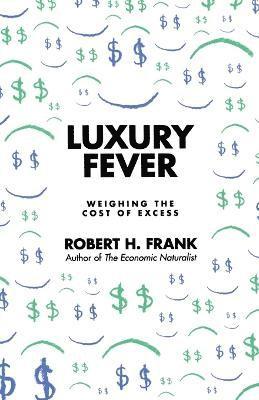
Luxury Fever
Weighing the Cost of Excess
Häftad, 2010
288 kr
Lägg i varukorg
The turn of the twenty-first century witnessed a spectacular rise in gross consumption. With the super-rich setting the pace, everyone spent furiously in a desperate attempt to keep up. As cars and houses grew larger and more expensive, the costs were enormous--not only monetarily but also …
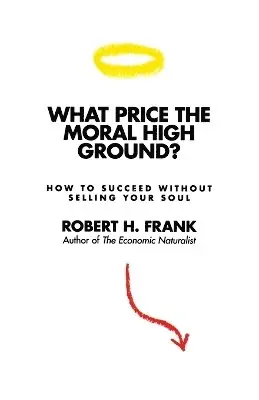
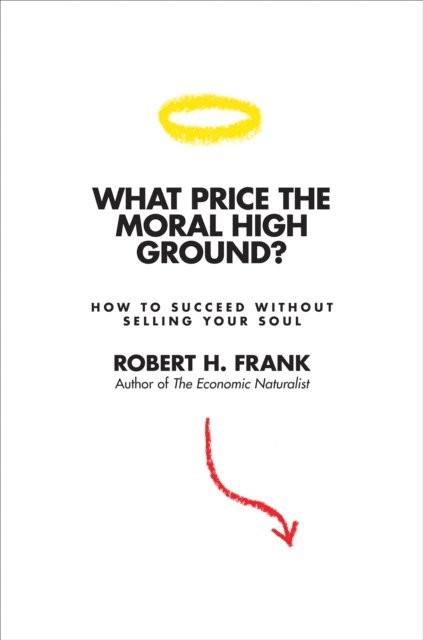
What Price the Moral High Ground?
How to Succeed without Selling Your Soul
Häftad, 2010
191 kr
Lägg i varukorg
Financial disasters--and stories of the greedy bankers who precipitated them--seem to underscore the idea that self-interest will always trump concerns for the greater good. Indeed, this idea is supported by the prevailing theories in both economics and evolutionary biology. But is it valid? In …
Success and Luck
Good Fortune and the Myth of Meritocracy
Inbunden, 2016
236 kr
Lägg i varukorg
From New York Times bestselling author and economics columnist Robert Frank, a compelling book that explains why the rich underestimate the importance of luck in their success, why that hurts everyone, and what we can do about it How important is luck in economic success? No question more reliably …
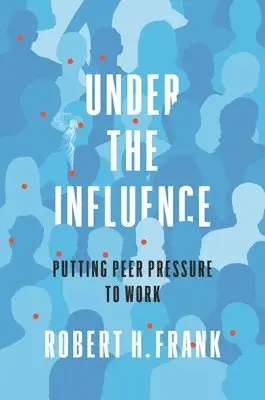
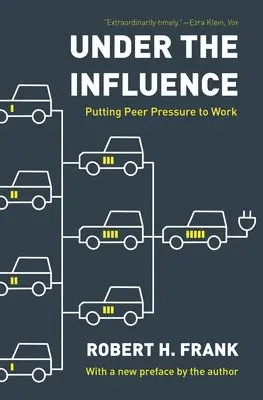
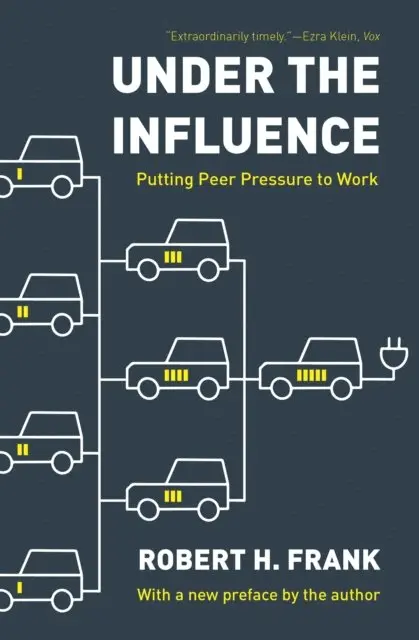
Under the Influence
Putting Peer Pressure to Work
Häftad, 2021
164 kr
Lägg i varukorg
From New York Times bestselling author and economics columnist Robert Frank, bold new ideas for creating environments that promise a brighter futurePsychologists have long understood that social environments profoundly shape our behavior, sometimes for the better, often for the worse. But social …
Under the Influence
Putting Peer Pressure to Work
E-bok, 2021
222 kr
Lägg i varukorg
From New York Times bestselling author and economics columnist Robert Frank, bold new ideas for creating environments that promise a brighter future Psychologists have long understood that social environments profoundly shape our behavior, sometimes for the better, often for the worse. But social …
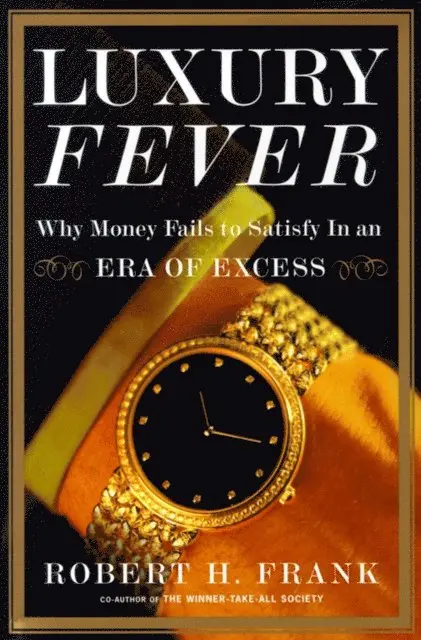
Luxury Fever
Why Money Fails to Satisfy In An Era of Excess
E-bok, 2001
226 kr
Lägg i varukorg
A new luxury fever has America in its grip. Independent of stock prices, recessions, and inflation rates, the past two decades have witnessed a spectacular and uninterrupted rise in luxury consumption. Ordinary, functional goods are no longer acceptable. Our cars have gotten larger, heavier, and …
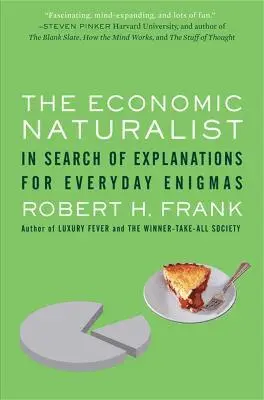
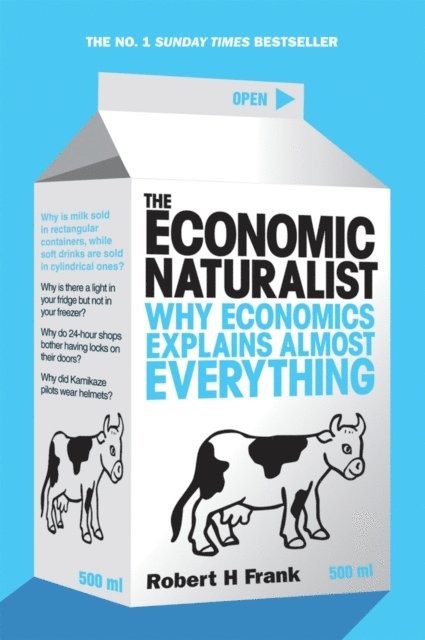
Economic Naturalist
Why Economics Explains Almost Everything
Häftad, 2008
192 kr
Lägg i varukorg
Have you ever wondered why there is a light in your fridge but not in your freezer? Or why 24-hour shops bother having locks on their doors? Or why soft drink cans are cylindrical, but milk cartons are square? The answer is simple: economics.For years, economist Robert Frank has been encouraging …
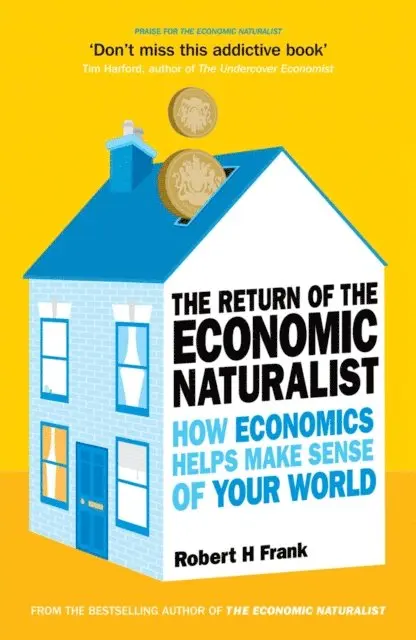
Return of The Economic Naturalist
How Economics Helps Make Sense of Your World
Häftad, 2009
181 kr
Lägg i varukorg
The Economic Naturalist is back with a whole batch of intriguing new questions and answers, drawn from his New York Times columns, that reveal how we really behave when confronted with economic choices. Do tax cuts for business owners really stimulate employment? Why shouldn't we just leave …
Return of The Economic Naturalist
How Economics Helps Make Sense of Your World
E-bok, 2009
147 kr
Lägg i varukorg
The Economic Naturalist is back with a whole batch of intriguing new questions and answers, drawn from his New York Times columns, that reveal how we really behave when confronted with economic choices. Do tax cuts for business owners really stimulate employment? Why shouldn't we just leave …
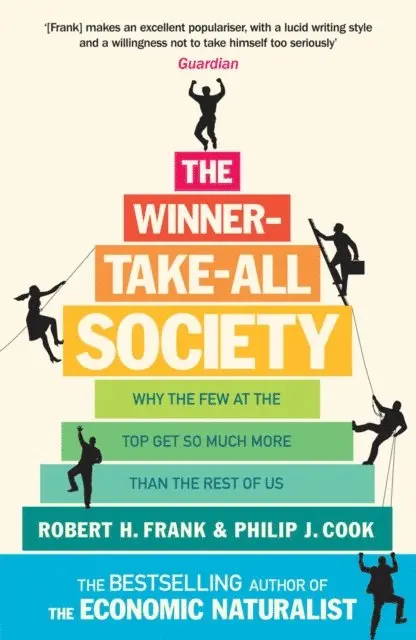
Winner-Take-All Society
Why the Few at the Top Get So Much More Than the Rest of Us
Av Philip J Cook, Robert H Frank
E-bok, 2010
147 kr
Lägg i varukorg
Why does the top one per cent of the population capture such a disproportionate amount of the wealth? Why do top athletes win dozens of sponsorship deals, yet competitors who finish just moments behind struggle to attract a single deal? Why does one product become a runaway success, while others …
Economic Naturalist
Why Economics Explains Almost Everything
E-bok, 2011
147 kr
Lägg i varukorg
Have you ever wondered why there is a light in your fridge but not in your freezer? Or why 24-hour shops bother having locks on their doors? Or why soft drink cans are cylindrical, but milk cartons are square? The answer is simple: economics.For years, economist Robert Frank has been encouraging …
What Price the Moral High Ground?
How to Succeed without Selling Your Soul
E-bok, 2014
265 kr
Lägg i varukorg
Financial disasters--and stories of the greedy bankers who precipitated them--seem to underscore the idea that self-interest will always trump concerns for the greater good. Indeed, this idea is supported by the prevailing theories in both economics and evolutionary biology. But is it valid? In …
Success and Luck
Good Fortune and the Myth of Meritocracy
E-bok, 2016
251 kr
Lägg i varukorg
From New York Times bestselling author and economics columnist Robert Frank, a compelling book that explains why the rich underestimate the importance of luck in their success, why that hurts everyone, and what we can do about it How important is luck in economic success? No question more reliably …
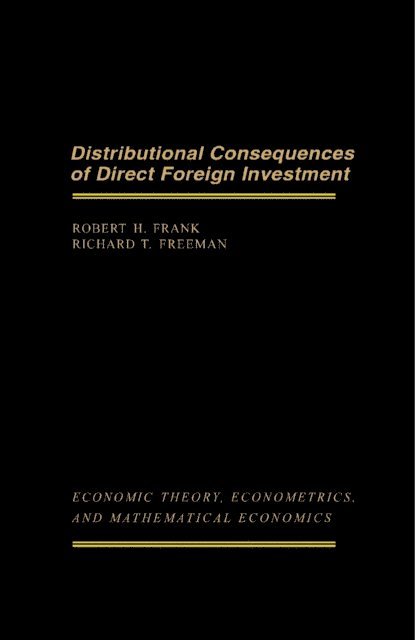
Distributional Consequences of Direct Foreign Investment
Av Richard T. Freeman, Robert H. Frank m. fl.
E-bok, 2014
378 kr
Lägg i varukorg
Distributional Consequences of Direct Foreign Investment examines the net effect of direct foreign investment (DFI) on both U.S. employment demand in the short run and on the level and distribution of domestic income in the long run. Topics covered range from measurement of home-foreign …
Success and Luck
Good Fortune and the Myth of Meritocracy
Ljudbok, 2016
514 kr
Lägg i varukorg
How important is luck in economic success? No question more reliably divides conservatives from liberals. As conservatives correctly observe, people who amass great fortunes are almost always talented and hardworking. But liberals are also correct to note that countless others have those same …
Frånsprungen : hur ökad ojämlikhet drabbar medelklassen
Häftad, 2009
216 kr
Lägg i varukorg
Vad sker i ett samhälle när de som redan är rika blir ännu rikare och allt mer avlägsnar sig från folkflertalet och dess villkor? I Frånsprungen visar Robert H. Frank hur den ökade ojämlikheten i USA har drivit fram en "utgiftskapprustning" där medelklassen utarmas i sina försök att hålla jämna …
Principles of Microeconomics + Discoverecon Code Card [With Discoverecon Code Card]
Av Robert H. Frank, Ben S. Bernanke
Häftad
2413 kr
Tillfälligt slut
Under the Influence
Putting Peer Pressure to Work
Inbunden, 2020
238 kr
Tillfälligt slut
From New York Times bestselling author and economics columnist Robert Frank, bold new ideas for creating environments that promise a brighter futurePsychologists have long understood that social environments profoundly shape our behavior, sometimes for the better, often for the worse. But social …





![Robert H. Frank, Ben S. Bernanke - Principles of Microeconomics + Discoverecon Code Card [With Discoverecon Code Card], Häftad. Tillgänglighet: Tillfälligt slut](https://image.bokus.com/images2/9780073230603_766)