Sally Dyson – författare
Visar alla böcker från författaren Sally Dyson. Handla med fri frakt och snabb leverans.
16 produkter
16 produkter
Häftad, Engelska, 2018
2 910 kr
Skickas inom 5-8 vardagar
Client experience (CX) is by no means a new concept. Ever since the service industry came into being, providing excellent customer service has been a key concern, with particular focus on how the client experiences the service they are receiving. Yet, client experience is rarely delivered well. Inconsistencies, errors, and an endlessly unanswered phone lead to frustration on the part of the client, and a feeling that they are worth little more than a signature on the monthly timesheet. So, how do law firms, and individual lawyers, ensure they exceed expectations, and deliver the best customer experience possible? And what benefits - tangible and intangible - does this bring? Innovations in Client Experience brings together a collection of global contributors, giving their thoughts and advice on how the legal profession can up its game in client experience, offering innovative strategies and pragmatic advice to those law firms concerned they need to improve their CX.
E-bok
Engelska, 20213 207 kr
Läs direkt efter köp
Pandemics bring the world to a standstill. All economies are based on confidence, yet during and after a pandemic, uncertainty and fear abound. The entire professional services sector the world over - which includes law firms, accounting firms, brokerages, consulting firms, etc. - are cash-based, people-centric, and relationship-driven businesses. The rapid changes to relationships - both professional and personal - caused by a pandemic are structural and deep. The definition of "business as usual" is altered, and all professional services providers need to adapt and change quickly to respond to the new ways that employees, clients, and everyone else will behave, communicate, buy, and use their services in the future. The speed at which information travels will not slow down.
E-bok
PDF, Engelska, 20213 207 kr
Läs direkt efter köp
Pandemics bring the world to a standstill. All economies are based on confidence, yet during and after a pandemic, uncertainty and fear abound. The entire professional services sector the world over - which includes law firms, accounting firms, brokerages, consulting firms, etc. - are cash-based, people-centric, and relationship-driven businesses. The rapid changes to relationships - both professional and personal - caused by a pandemic are structural and deep. The definition of "business as usual" is altered, and all professional services providers need to adapt and change quickly to respond to the new ways that employees, clients, and everyone else will behave, communicate, buy, and use their services in the future. The speed at which information travels will not slow down.
E-bok
Engelska, 20212 716 kr
Läs direkt efter köp
Client experience (CX) is by no means a new concept. Ever since the service industry came into being, providing excellent customer service has been a key concern, with particular focus on how the client experiences the service they are receiving. Yet, client experience is rarely delivered well. Inconsistencies, errors, and an endlessly unanswered phone lead to frustration on the part of the client, and a feeling that they are worth little more than a signature on the monthly timesheet. So, how do law firms, and individual lawyers, ensure they exceed expectations, and deliver the best customer experience possible? And what benefits - tangible and intangible - does this bring? Innovations in Client Experience brings together a collection of global contributors, giving their thoughts and advice on how the legal profession can up its game in client experience, offering innovative strategies and pragmatic advice to those law firms concerned they need to improve their CX.
E-bok
PDF, Engelska, 20212 716 kr
Läs direkt efter köp
Client experience (CX) is by no means a new concept. Ever since the service industry came into being, providing excellent customer service has been a key concern, with particular focus on how the client experiences the service they are receiving. Yet, client experience is rarely delivered well. Inconsistencies, errors, and an endlessly unanswered phone lead to frustration on the part of the client, and a feeling that they are worth little more than a signature on the monthly timesheet. So, how do law firms, and individual lawyers, ensure they exceed expectations, and deliver the best customer experience possible? And what benefits - tangible and intangible - does this bring? Innovations in Client Experience brings together a collection of global contributors, giving their thoughts and advice on how the legal profession can up its game in client experience, offering innovative strategies and pragmatic advice to those law firms concerned they need to improve their CX.
E-bok
Engelska, 20212 094 kr
Läs direkt efter köp
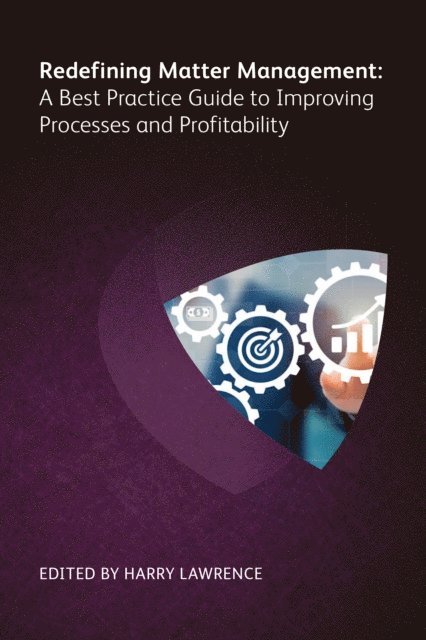
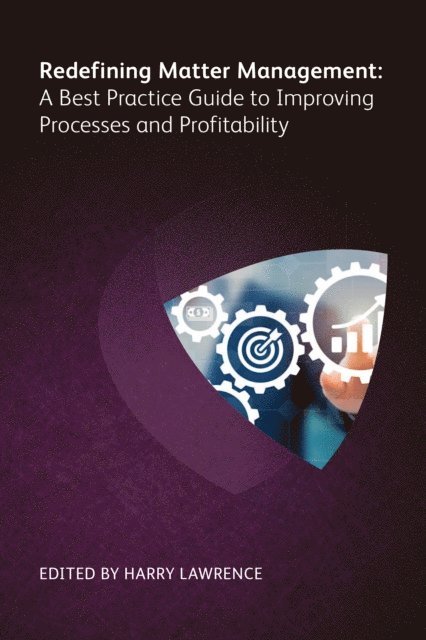
Time - as they say - is money. It is not an uncommon fact that lawyers today spend unnecessary amounts of time seeking out information, and therefore unnecessary amounts of money. In well-established fields, change is often slow; perhaps none more so than in the legal world. Though progress is being made, uptake has been rather slow, much to the dismay of those in the information management business. Conversely to its cousin, case management, matter management should be thought of more in terms of low-volume but high-value information. The process thus lends itself nicely to forming centralized systems within organizations. It is so pervasive as to allow users to make decisions (e.g. conflict resolution) before matters are even opened, and can maintain a high level of time data accuracy and transparency via unalterable fundamental data. From innovative and simple interfaces to enhanced reporting tools, from notification systems to customizable workflows, triumphs within matter management have enabled companies to become more efficient by saving time and money, and to engage stakeholders in a meaningful way. Redefining Matter Management: A Best Practice Guide to Improving Processes and Profitability is a collection of case studies that highlights some of the most important achievements and ideas in the field today.
E-bok
PDF, Engelska, 20212 170 kr
Läs direkt efter köp
Time - as they say - is money. It is not an uncommon fact that lawyers today spend unnecessary amounts of time seeking out information, and therefore unnecessary amounts of money. In well-established fields, change is often slow; perhaps none more so than in the legal world. Though progress is being made, uptake has been rather slow, much to the dismay of those in the information management business. Conversely to its cousin, case management, matter management should be thought of more in terms of low-volume but high-value information. The process thus lends itself nicely to forming centralized systems within organizations. It is so pervasive as to allow users to make decisions (e.g. conflict resolution) before matters are even opened, and can maintain a high level of time data accuracy and transparency via unalterable fundamental data. From innovative and simple interfaces to enhanced reporting tools, from notification systems to customizable workflows, triumphs within matter management have enabled companies to become more efficient by saving time and money, and to engage stakeholders in a meaningful way. Redefining Matter Management: A Best Practice Guide to Improving Processes and Profitability is a collection of case studies that highlights some of the most important achievements and ideas in the field today.
E-bok
Engelska, 2011988 kr
Läs direkt efter köp
With legal fees coming under increasing scrutiny, all law firms, whether they charge by the hour or operate alternative fee arrangements (AFAs) will need to negotiate fees; be it a discount to an hourly rate or a year-long fixed retainer. Budgeting and negotiating skills will be needed by all fee earners with responsibility for agreeing any fees or discounts. The more a firm uses AFAs, the more important budgeting and negotiating becomes. Budgeting and Negotiating Fees with Clients: A Lawyer''s Guide is a must-have handbook for individual lawyers, firm leaders and directors of support services who are looking to tackle these challenges head on at both an operational and a strategic level. It provides: * Clear analysis of the increasing importance of budgeting and negotiating fees for all firms whether they have adopted AFAs or rely on hourly rates; * A step-by-step guide for improving individual behaviour and firm-wide processes; and * Practical tools for generating consistently profitable fee structures. Supported by case studies from law firms and law firm clients, along with input from other management consultants, this report covers topics including: * Fee models adopted by law firms; * How AFAs are intensifying the need for budgeting and negotiating skills; * Alternative fees - risks and how to avoid them; * Understanding law firm financial data - a prerequisite for successful budgeting and negotiation; * Creating a realistic matter budget; * An introduction to legal project management; * Overcoming obstacles to negotiating fees effectively; * Managing the negotiation process effectively; * Obtaining the desired fees and structures; * Tips, tactics and tricks for negotiating; * Developing a strategy for better budgeting and negotiating; * Implementing change and embedding best practice; * Business tools for budgeting, negotiating and client communication; * How to operate value billing; and * Best practice law firm negotiation from a client''s perspective. This invaluable resource also includes supporting checklists and templates to allow readers to start putting the lessons learnt throughout the report into practice immediately.
E-bok
PDF, Engelska, 20111 024 kr
Läs direkt efter köp
With legal fees coming under increasing scrutiny, all law firms, whether they charge by the hour or operate alternative fee arrangements (AFAs) will need to negotiate fees; be it a discount to an hourly rate or a year-long fixed retainer. Budgeting and negotiating skills will be needed by all fee earners with responsibility for agreeing any fees or discounts. The more a firm uses AFAs, the more important budgeting and negotiating becomes. Budgeting and Negotiating Fees with Clients: A Lawyer''s Guide is a must-have handbook for individual lawyers, firm leaders and directors of support services who are looking to tackle these challenges head on at both an operational and a strategic level. It provides: * Clear analysis of the increasing importance of budgeting and negotiating fees for all firms whether they have adopted AFAs or rely on hourly rates; * A step-by-step guide for improving individual behaviour and firm-wide processes; and * Practical tools for generating consistently profitable fee structures. Supported by case studies from law firms and law firm clients, along with input from other management consultants, this report covers topics including: * Fee models adopted by law firms; * How AFAs are intensifying the need for budgeting and negotiating skills; * Alternative fees - risks and how to avoid them; * Understanding law firm financial data - a prerequisite for successful budgeting and negotiation; * Creating a realistic matter budget; * An introduction to legal project management; * Overcoming obstacles to negotiating fees effectively; * Managing the negotiation process effectively; * Obtaining the desired fees and structures; * Tips, tactics and tricks for negotiating; * Developing a strategy for better budgeting and negotiating; * Implementing change and embedding best practice; * Business tools for budgeting, negotiating and client communication; * How to operate value billing; and * Best practice law firm negotiation from a client''s perspective. This invaluable resource also includes supporting checklists and templates to allow readers to start putting the lessons learnt throughout the report into practice immediately.
E-bok
Engelska, 20132 716 kr
Läs direkt efter köp
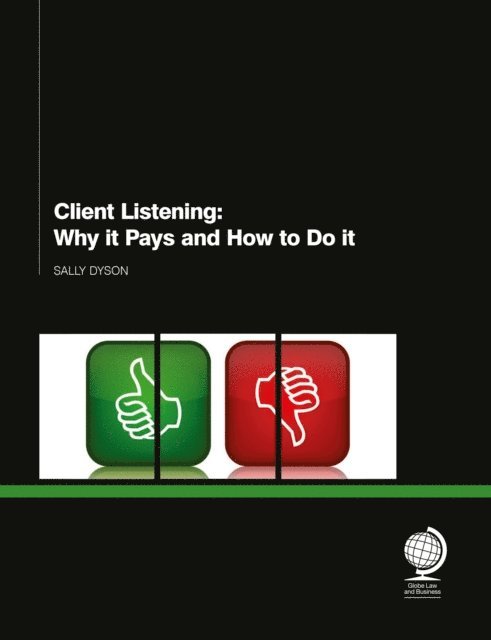
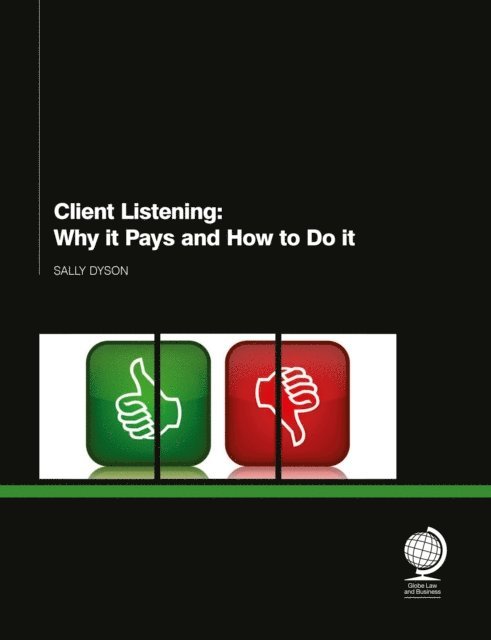
"Client listening is the single most important marketing activity." - Paul Amit, Head of Sector and Client Marketing, DLA Piper. Forward-thinking firms know that listening effectively to their clients is crucial for improving client service, value, retention, and, ultimately, profitability. It can also help future-proof your firm by embedding client relationships, and anticipating client needs. Client Listening: Why It Pays and How to Do it, will show you how to design and implement effective client listening programmes and act on the intelligence gleaned to secure these critical benefits for your firm. It highlights the important factors that must be considered before launching a client listening programme, and offers practical advice to ensure its success. Topics include how to: * Identify the role of client listening within your firm''s broader CRM and BD initiatives; * Overcome typical objections from individual lawyers to engaging in client listening; * Determine the type of client listening activities which best fit your firm''s culture, budget, timetable, and purposes; * Design and conduct effective client questionnaires and interviews (how-to guide included); and * Ensure client feedback is reported, shared, absorbed, and converted into action appropriately. Real-life case studies from DLA Piper, Ashurst, CMS Cameron McKenna, K&L Gates, and KPMG reveal how firms are currently using client listening as a means to deepen client relationships and develop more responsive, value-added services. Useful appendices are also included to assist you with the design, launch, and fine-tuning of your own client listening programmes. These include: * A client listening planner; * A sample client invitation; and * A sample discussion guide for a client service review.
E-bok
PDF, Engelska, 20132 621 kr
Läs direkt efter köp
"Client listening is the single most important marketing activity." - Paul Amit, Head of Sector and Client Marketing, DLA Piper. Forward-thinking firms know that listening effectively to their clients is crucial for improving client service, value, retention, and, ultimately, profitability. It can also help future-proof your firm by embedding client relationships, and anticipating client needs. Client Listening: Why It Pays and How to Do it, will show you how to design and implement effective client listening programmes and act on the intelligence gleaned to secure these critical benefits for your firm. It highlights the important factors that must be considered before launching a client listening programme, and offers practical advice to ensure its success. Topics include how to: * Identify the role of client listening within your firm''s broader CRM and BD initiatives; * Overcome typical objections from individual lawyers to engaging in client listening; * Determine the type of client listening activities which best fit your firm''s culture, budget, timetable, and purposes; * Design and conduct effective client questionnaires and interviews (how-to guide included); and * Ensure client feedback is reported, shared, absorbed, and converted into action appropriately. Real-life case studies from DLA Piper, Ashurst, CMS Cameron McKenna, K&L Gates, and KPMG reveal how firms are currently using client listening as a means to deepen client relationships and develop more responsive, value-added services. Useful appendices are also included to assist you with the design, launch, and fine-tuning of your own client listening programmes. These include: * A client listening planner; * A sample client invitation; and * A sample discussion guide for a client service review.
Häftad, Engelska, 2021
2 328 kr
Skickas inom 5-8 vardagar
We all know that law is a people business. Clients buy from lawyers whom they like, respect, and trust, and they judge those lawyers and their firms on the quality of service that the firm provides, the results achieved, and whether they receive value for money. This applies to corporate, institutional, and private clients alike. For their business plans to be connected to reality, partners and law firm leaders must learn how they are perceived by their clients and adapt accordingly. They do this by listening to their clients. Historically this was through informal, fireside chats. In recent years, many firms have devised formal client listening programs and in recent years there has been an explosion of review sites and social media channels enabling clients to leave their unfiltered and public feedback, whether solicited or not. Forward-looking firms are adopting multi-channel approaches to taking feedback to maximize the intelligence they gather and to adapt to clients' own preferences. As ever, the most nimble and adaptable will reap the rewards.The Client Experience: How to Optimize Client Service and Deliver Value looks at the client experience from end-to-end, from client listening programs to journey mapping, from customer audits to how legal tech can help improve the way a client interacts with a law firm throughout its relationship. A client-centric business model is essential for future law firm success and the authors of this far-reaching title utilize their own experience and real-life case studies to drill down into the importance of maintaining the one thing no business can do without: its client.
E-bok
Engelska, 20212 170 kr
Läs direkt efter köp
We all know that law is a people business. Clients buy from lawyers whom they like, respect, and trust, and they judge those lawyers and their firms on the quality of service that the firm provides, the results achieved, and whether they receive value for money. This applies to corporate, institutional, and private clients alike. For their business plans to be connected to reality, partners and law firm leaders must learn how they are perceived by their clients and adapt accordingly. They do this by listening to their clients. Historically this was through informal, fireside chats. In recent years, many firms have devised formal client listening programs and in recent years there has been an explosion of review sites and social media channels enabling clients to leave their unfiltered and public feedback, whether solicited or not. Forward-looking firms are adopting multi-channel approaches to taking feedback to maximize the intelligence they gather and to adapt to clients’ own preferences. As ever, the most nimble and adaptable will reap the rewards.The Client Experience: How to Optimize Client Service and Deliver Value looks at the client experience from end-to-end, from client listening programs to journey mapping, from customer audits to how legal tech can help improve the way a client interacts with a law firm throughout its relationship. A client-centric business model is essential for future law firm success and the authors of this far-reaching title utilize their own experience and real-life case studies to drill down into the importance of maintaining the one thing no business can do without: its client.
E-bok
PDF, Engelska, 20212 170 kr
Läs direkt efter köp
We all know that law is a people business. Clients buy from lawyers whom they like, respect, and trust, and they judge those lawyers and their firms on the quality of service that the firm provides, the results achieved, and whether they receive value for money. This applies to corporate, institutional, and private clients alike. For their business plans to be connected to reality, partners and law firm leaders must learn how they are perceived by their clients and adapt accordingly. They do this by listening to their clients. Historically this was through informal, fireside chats. In recent years, many firms have devised formal client listening programs and in recent years there has been an explosion of review sites and social media channels enabling clients to leave their unfiltered and public feedback, whether solicited or not. Forward-looking firms are adopting multi-channel approaches to taking feedback to maximize the intelligence they gather and to adapt to clients’ own preferences. As ever, the most nimble and adaptable will reap the rewards.The Client Experience: How to Optimize Client Service and Deliver Value looks at the client experience from end-to-end, from client listening programs to journey mapping, from customer audits to how legal tech can help improve the way a client interacts with a law firm throughout its relationship. A client-centric business model is essential for future law firm success and the authors of this far-reaching title utilize their own experience and real-life case studies to drill down into the importance of maintaining the one thing no business can do without: its client.
Häftad, Engelska, 2011
894 kr
Skickas
With legal fees coming under increasing scrutiny, all law firms, whether they charge by the hour or operate alternative fee arrangements (AFAs) will need to negotiate fees; be it a discount to an hourly rate or a year-long fixed retainer. Budgeting and negotiating skills will be needed by all fee earners with responsibility for agreeing any fees or discounts. The more a firm uses AFAs, the more important budgeting and negotiating becomes. Budgeting and Negotiating Fees with Clients: A Lawyer's Guide is a must-have handbook for individual lawyers, firm leaders and directors of support services who are looking to tackle these challenges head on at both an operational and a strategic level. It provides: * Clear analysis of the increasing importance of budgeting and negotiating fees for all firms whether they have adopted AFAs or rely on hourly rates; * A step-by-step guide for improving individual behaviour and firm-wide processes; and * Practical tools for generating consistently profitable fee structures. Supported by case studies from law firms and law firm clients, along with input from other management consultants, this report covers topics including: * Fee models adopted by law firms; * How AFAs are intensifying the need for budgeting and negotiating skills; * Alternative fees - risks and how to avoid them; * Understanding law firm financial data - a prerequisite for successful budgeting and negotiation; * Creating a realistic matter budget; * An introduction to legal project management; * Overcoming obstacles to negotiating fees effectively; * Managing the negotiation process effectively; * Obtaining the desired fees and structures; * Tips, tactics and tricks for negotiating; * Developing a strategy for better budgeting and negotiating; * Implementing change and embedding best practice; * Business tools for budgeting, negotiating and client communication; * How to operate value billing; and * Best practice law firm negotiation from a client's perspective. This invaluable resource also includes supporting checklists and templates to allow readers to start putting the lessons learnt throughout the report into practice immediately.
Häftad, Engelska, 2013
2 910 kr
Skickas inom 5-8 vardagar
"Client listening is the single most important marketing activity." - Paul Amit, Head of Sector and Client Marketing, DLA Piper. Forward-thinking firms know that listening effectively to their clients is crucial for improving client service, value, retention, and, ultimately, profitability. It can also help future-proof your firm by embedding client relationships, and anticipating client needs. Client Listening: Why It Pays and How to Do it, will show you how to design and implement effective client listening programmes and act on the intelligence gleaned to secure these critical benefits for your firm. It highlights the important factors that must be considered before launching a client listening programme, and offers practical advice to ensure its success. Topics include how to: * Identify the role of client listening within your firm's broader CRM and BD initiatives; * Overcome typical objections from individual lawyers to engaging in client listening; * Determine the type of client listening activities which best fit your firm's culture, budget, timetable, and purposes; * Design and conduct effective client questionnaires and interviews (how-to guide included); and * Ensure client feedback is reported, shared, absorbed, and converted into action appropriately. Real-life case studies from DLA Piper, Ashurst, CMS Cameron McKenna, K&L Gates, and KPMG reveal how firms are currently using client listening as a means to deepen client relationships and develop more responsive, value-added services. Useful appendices are also included to assist you with the design, launch, and fine-tuning of your own client listening programmes. These include: * A client listening planner; * A sample client invitation; and * A sample discussion guide for a client service review.