Scott Highhouse - Böcker
Visar alla böcker från författaren Scott Highhouse. Handla med fri frakt och snabb leverans.
5 produkter
5 produkter
1 899 kr
Skickas inom 10-15 vardagar
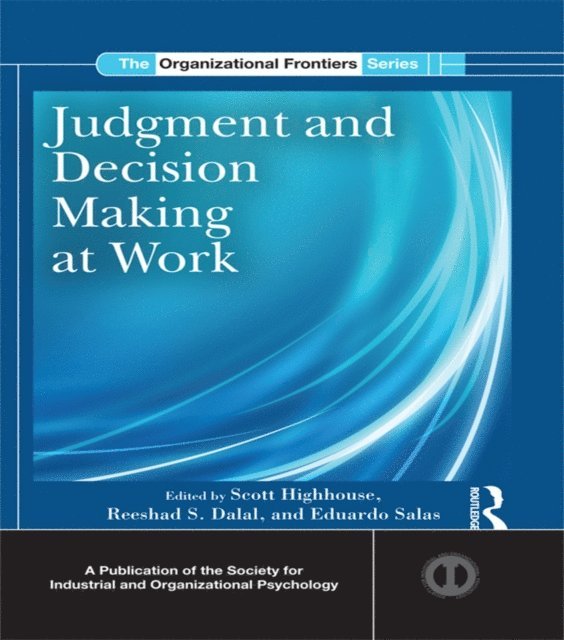
Employees are constantly making decisions and judgments that have the potential to affect themselves, their families, their work organizations, and on some occasion even the broader societies in which they live. A few examples include: deciding which job applicant to hire, setting a production goal, judging one’s level of job satisfaction, deciding to steal from the cash register, agreeing to help organize the company’s holiday party, forecasting corporate tax rates two years later, deciding to report a coworker for sexual harassment, and predicting the level of risk inherent in a new business venture. In other words, a great many topics of interest to organizational researchers ultimately reduce to decisions made by employees.Yet, numerous entreaties notwithstanding, industrial and organizational psychologists typically have not incorporated a judgment and decision-making perspective in their research. The current book begins to remedy the situation by facilitating cross-pollination between the disciplines of organizational psychology and decision-making. The book describes both laboratory and more “naturalistic” field research on judgment and decision-making, and applies it to core topics of interest to industrial and organizational psychologists: performance appraisal, employee selection, individual differences, goals, leadership, teams, and stress, among others. The book also suggests ways in which industrial and organizational psychology research can benefit the discipline of judgment and decision-making. The authors of the chapters in this book conduct research at the intersection of organizational psychology and decision-making, and consequently are uniquely positioned to bridging the divide between the two disciplines.
2 179 kr
Skickas inom 11-20 vardagar
Psychology is of interest to academics from many fields, as well as to the thousands of academic and clinical psychologists and general public who can't help but be interested in learning more about why humans think and behave as they do. This award-winning twelve-volume reference covers every aspect of the ever-fascinating discipline of psychology and represents the most current knowledge in the field. This ten-year revision now covers discoveries based in neuroscience, clinical psychology's new interest in evidence-based practice and mindfulness, and new findings in social, developmental, and forensic psychology.
784 kr
Skickas inom 10-15 vardagar
Employees are constantly making decisions and judgments that have the potential to affect themselves, their families, their work organizations, and on some occasion even the broader societies in which they live. A few examples include: deciding which job applicant to hire, setting a production goal, judging one’s level of job satisfaction, deciding to steal from the cash register, agreeing to help organize the company’s holiday party, forecasting corporate tax rates two years later, deciding to report a coworker for sexual harassment, and predicting the level of risk inherent in a new business venture. In other words, a great many topics of interest to organizational researchers ultimately reduce to decisions made by employees.Yet, numerous entreaties notwithstanding, industrial and organizational psychologists typically have not incorporated a judgment and decision-making perspective in their research. The current book begins to remedy the situation by facilitating cross-pollination between the disciplines of organizational psychology and decision-making. The book describes both laboratory and more “naturalistic” field research on judgment and decision-making, and applies it to core topics of interest to industrial and organizational psychologists: performance appraisal, employee selection, individual differences, goals, leadership, teams, and stress, among others. The book also suggests ways in which industrial and organizational psychology research can benefit the discipline of judgment and decision-making. The authors of the chapters in this book conduct research at the intersection of organizational psychology and decision-making, and consequently are uniquely positioned to bridging the divide between the two disciplines.
2 289 kr
Skickas inom 10-15 vardagar
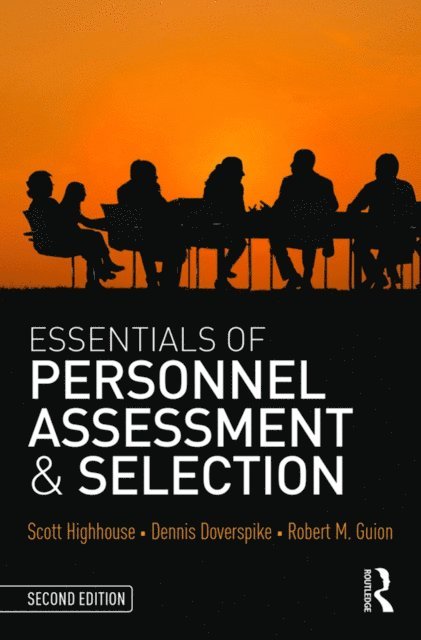
This second edition provides managers and students the nuts and bolts of assessment processes and selection techniques. With this knowledge, managers learn to make informed personnel decisions based on the results of tests and assessments. The book emphasizes that employee performance predictions require well-formed hypotheses about personal characteristics that may be related to valued behavior at work. It also stresses the need for developing a theory of the attribute one hypothesizes as a predictor—a thought process too often missing from work on selection procedures. Topics such as team-member selection, situational judgment tests, nontraditional tests, individual assessment, and testing for diversity are explored. The book covers both basic and advanced concepts in personnel selection in a straightforward, readable style intended to be used in both undergraduate and graduate courses in Personnel Selection and Assessment.
845 kr
Skickas inom 10-15 vardagar
This second edition provides managers and students the nuts and bolts of assessment processes and selection techniques. With this knowledge, managers learn to make informed personnel decisions based on the results of tests and assessments. The book emphasizes that employee performance predictions require well-formed hypotheses about personal characteristics that may be related to valued behavior at work. It also stresses the need for developing a theory of the attribute one hypothesizes as a predictor—a thought process too often missing from work on selection procedures. Topics such as team-member selection, situational judgment tests, nontraditional tests, individual assessment, and testing for diversity are explored. The book covers both basic and advanced concepts in personnel selection in a straightforward, readable style intended to be used in both undergraduate and graduate courses in Personnel Selection and Assessment.