Scott L. Althaus - Böcker
Visar alla böcker från författaren Scott L. Althaus. Handla med fri frakt och snabb leverans.
4 produkter
4 produkter
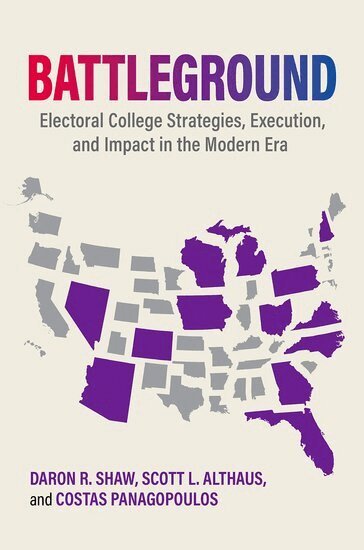
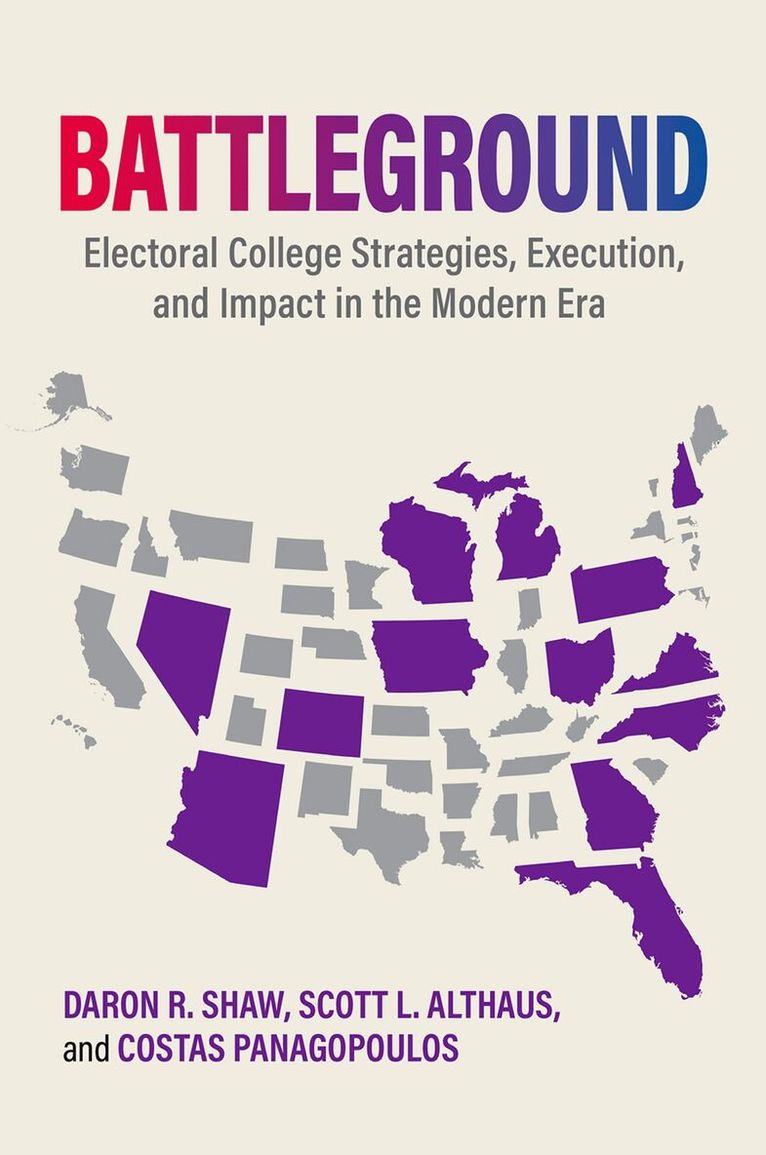
Battleground
Electoral College Strategies, Execution, and Impact in the Modern Era
Inbunden, Engelska, 2024
969 kr
Skickas inom 7-10 vardagar
Covering the beginning of the television era to the present, Battleground provides an unprecedented look at the Electoral College strategies used by US presidential campaigns from 1952 to 2020 and what difference they make on election day.Although US presidential campaigns are among the most closely followed events in the world, academic research tends to conclude that they are much less important for shaping election-day outcomes than broader economic conditions and more gradual socio-political trends. If so, then what campaigners do and say might be entertaining, but should rarely have a decisive influence on who wins the White House. Yet because academic studies typically treat presidential elections as singular events, there is surprisingly little research that considers the strategies that parties pursue in presidential campaigning across multiple election years, how those strategies have evolved over time, or what difference those strategies might make on election day. Drawing on internal campaign records and novel data sources covering every presidential election from 1952 through 2020, Battleground identifies the Electoral College strategies for every major presidential campaign in the modern era, assesses how well they executed their plans, and illuminates what difference their state-by-state allocation of candidate visits and television spending made on election day. From Eisenhower to Trump, Daron R. Shaw, Scott Althaus, and Costas Panagopoulos show how battleground states have been selected and contested, and why campaign strategies are important for shaping Electoral College outcomes. They find that presidential campaigns in the modern era have been consistently strategic, sophisticated, and effective. As a result, campaign strategies can still be pivotal for shaping Electoral College outcomes, even if their influence looks somewhat different today than in 1952. Battleground provides readers with a sophisticated yet straightforward look at how (and how much) presidential campaigns affect the selection of the most powerful person in the world.
Battleground
Electoral College Strategies, Execution, and Impact in the Modern Era
Häftad, Engelska, 2024
255 kr
Skickas inom 5-8 vardagar
Covering the beginning of the television era to the present, Battleground provides an unprecedented look at the Electoral College strategies used by US presidential campaigns from 1952 to 2020 and what difference they make on election day.Although US presidential campaigns are among the most closely followed events in the world, academic research tends to conclude that they are much less important for shaping election-day outcomes than broader economic conditions and more gradual socio-political trends. If so, then what campaigners do and say might be entertaining, but should rarely have a decisive influence on who wins the White House. Yet because academic studies typically treat presidential elections as singular events, there is surprisingly little research that considers the strategies that parties pursue in presidential campaigning across multiple election years, how those strategies have evolved over time, or what difference those strategies might make on election day. Drawing on internal campaign records and novel data sources covering every presidential election from 1952 through 2020, Battleground identifies the Electoral College strategies for every major presidential campaign in the modern era, assesses how well they executed their plans, and illuminates what difference their state-by-state allocation of candidate visits and television spending made on election day. From Eisenhower to Trump, Daron R. Shaw, Scott Althaus, and Costas Panagopoulos show how battleground states have been selected and contested, and why campaign strategies are important for shaping Electoral College outcomes. They find that presidential campaigns in the modern era have been consistently strategic, sophisticated, and effective. As a result, campaign strategies can still be pivotal for shaping Electoral College outcomes, even if their influence looks somewhat different today than in 1952. Battleground provides readers with a sophisticated yet straightforward look at how (and how much) presidential campaigns affect the selection of the most powerful person in the world.
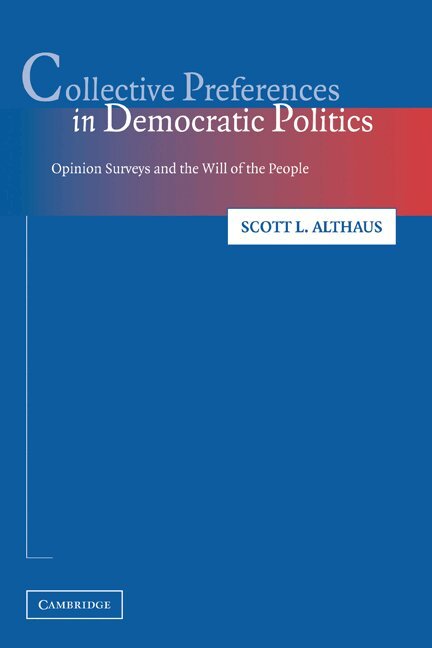
Collective Preferences in Democratic Politics
Opinion Surveys and the Will of the People
Häftad, Engelska, 2003
447 kr
Skickas inom 7-10 vardagar
Since so few people appear knowledgeable about public affairs, one might question whether collective policy preferences revealed in opinion surveys accurately convey the distribution of voices and interests in a society. This study, the first comprehensive treatment of the relationship between knowledge, representation, and political equality in opinion surveys, suggests some surprising answers. Knowledge does matter, and the way it is distributed in society can cause collective preferences to reflect disproportionately the opinions of some groups more than others. Sometimes collective preferences seem to represent something like the will of the people, but frequently they do not. Sometimes they rigidly enforce political equality in the expression of political viewpoints, but often they do not. The primary culprit is not any inherent shortcoming in the methods of survey research. Rather, it is the limited degree of knowledge held by ordinary citizens about public affairs. Accounting for these factors can help better appreciate thepossibilities for using opinion polls to represent the people's voice.
Collective Preferences in Democratic Politics
Opinion Surveys and the Will of the People
Inbunden, Engelska, 2003
647 kr
Skickas inom 7-10 vardagar
Since so few people appear knowledgeable about public affairs, one might question whether collective policy preferences revealed in opinion surveys accurately convey the distribution of voices and interests in a society. This study, the first comprehensive treatment of the relationship between knowledge, representation, and political equality in opinion surveys, suggests some surprising answers. Knowledge does matter, and the way it is distributed in society can cause collective preferences to reflect disproportionately the opinions of some groups more than others. Sometimes collective preferences seem to represent something like the will of the people, but frequently they do not. Sometimes they rigidly enforce political equality in the expression of political viewpoints, but often they do not. The primary culprit is not any inherent shortcoming in the methods of survey research. Rather, it is the limited degree of knowledge held by ordinary citizens about public affairs. Accounting for these factors can help better appreciate thepossibilities for using opinion polls to represent the people's voice.