Serge P. Hoogendoorn – författare
Visar alla böcker från författaren Serge P. Hoogendoorn. Handla med fri frakt och snabb leverans.
7 produkter
7 produkter
E-bok
Engelska, 20141 473 kr
Läs direkt efter köp
A single source of information for researchers and professionals, Traffic Simulation and Data: Validation Methods and Applications offers a complete overview of traffic data collection, state estimation, calibration and validation for traffic modelling and simulation. It derives from the Multitude Project-a European Cost Action project that incorpo
Häftad, Engelska, 2017
1 268 kr
Skickas inom 10-15 vardagar
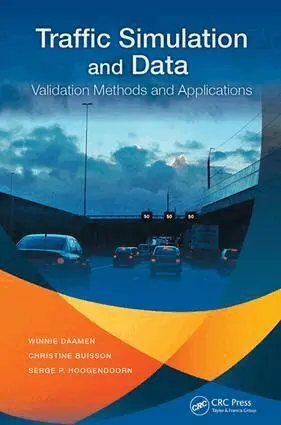
A single source of information for researchers and professionals, Traffic Simulation and Data: Validation Methods and Applications offers a complete overview of traffic data collection, state estimation, calibration and validation for traffic modelling and simulation. It derives from the Multitude Project—a European Cost Action project that incorporates work packages defining traffic simulation practice and research; highway and network modeling; and synthesis, dissemination, and training. This book addresses the calibration and validation of traffic models, and introduces necessary frameworks and techniques. It also includes viable methods for sensitivity analyses, and incorporates relevant tools for application. The book begins with a brief summary of various data collection techniques that can be applied to collect different data types. It then showcases various data processing and enhancement techniques for improving the quality of collected data. It also introduces the techniques according to the type of estimation, for example microscopic data enhancement, traffic state estimation, feature extraction and parameter identification techniques, and origin–destination matrix estimation. The material discusses the measures of performance, data error and goodness of fit, and optimization algorithms. It also contains the sensitivity analyses of parameters in traffic models. Describes the various tasks of calibration and validationConsiders the best use of available dataPresents the sensitivity analysis methodDiscusses typical issues of data error in transportation system data and how these errors can impact simulation resultsDetails various methodologies for data collection, sensitivity analysis, calibration, and validationExamines benefits that result from the application of these methodsTraffic Simulation and Data: Validation Methods and Applications serves as a key resource for transport engineers and planners, researchers, and graduate students in transport engineering and planning.
Inbunden, Engelska, 2014
3 089 kr
Skickas inom 10-15 vardagar
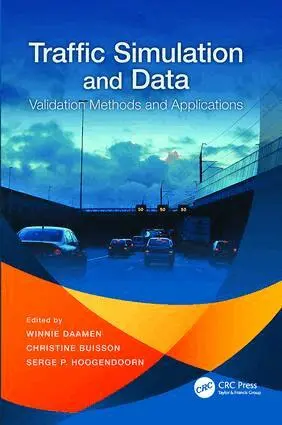
A single source of information for researchers and professionals, Traffic Simulation and Data: Validation Methods and Applications offers a complete overview of traffic data collection, state estimation, calibration and validation for traffic modelling and simulation. It derives from the Multitude Project—a European Cost Action project that incorporates work packages defining traffic simulation practice and research; highway and network modeling; and synthesis, dissemination, and training. This book addresses the calibration and validation of traffic models, and introduces necessary frameworks and techniques. It also includes viable methods for sensitivity analyses, and incorporates relevant tools for application. The book begins with a brief summary of various data collection techniques that can be applied to collect different data types. It then showcases various data processing and enhancement techniques for improving the quality of collected data. It also introduces the techniques according to the type of estimation, for example microscopic data enhancement, traffic state estimation, feature extraction and parameter identification techniques, and origin–destination matrix estimation. The material discusses the measures of performance, data error and goodness of fit, and optimization algorithms. It also contains the sensitivity analyses of parameters in traffic models. Describes the various tasks of calibration and validationConsiders the best use of available dataPresents the sensitivity analysis methodDiscusses typical issues of data error in transportation system data and how these errors can impact simulation resultsDetails various methodologies for data collection, sensitivity analysis, calibration, and validationExamines benefits that result from the application of these methodsTraffic Simulation and Data: Validation Methods and Applications serves as a key resource for transport engineers and planners, researchers, and graduate students in transport engineering and planning.
E-bok
PDF, Engelska, 20141 460 kr
Läs direkt efter köp
A single source of information for researchers and professionals, Traffic Simulation and Data: Validation Methods and Applications offers a complete overview of traffic data collection, state estimation, calibration and validation for traffic modelling and simulation. It derives from the Multitude Project-a European Cost Action project that incorpo
Inbunden, Engelska, 2005
2 174 kr
Skickas inom 10-15 vardagar
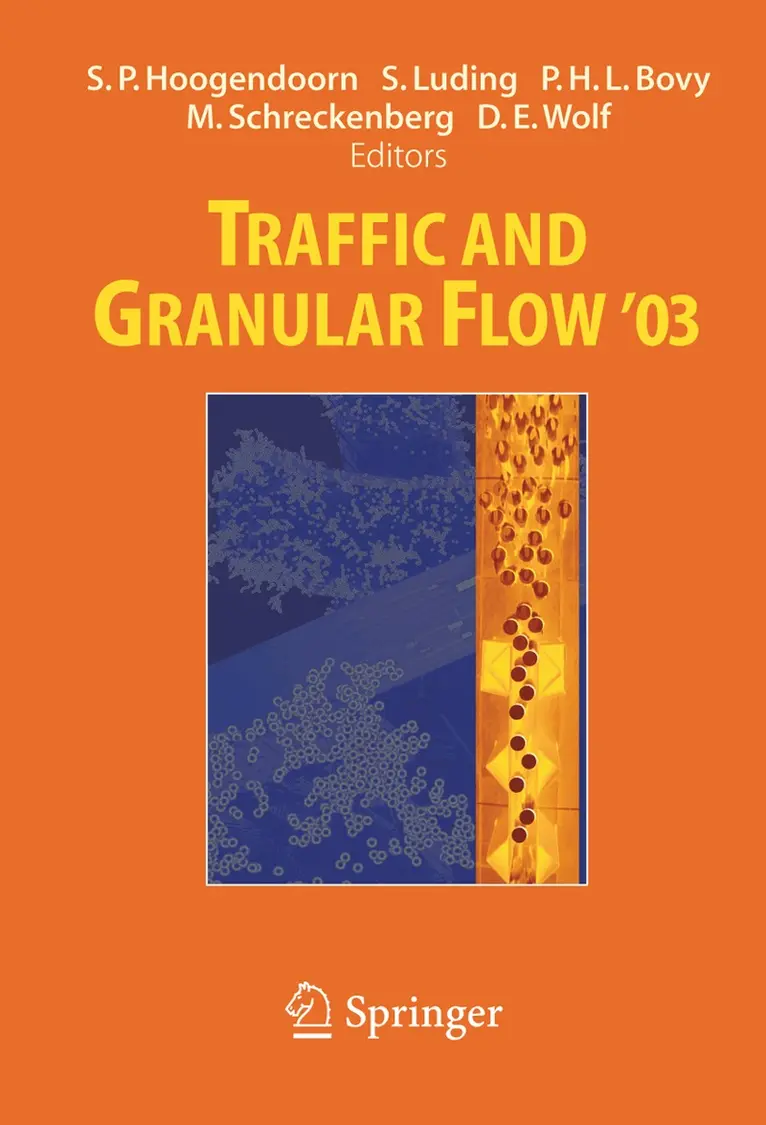
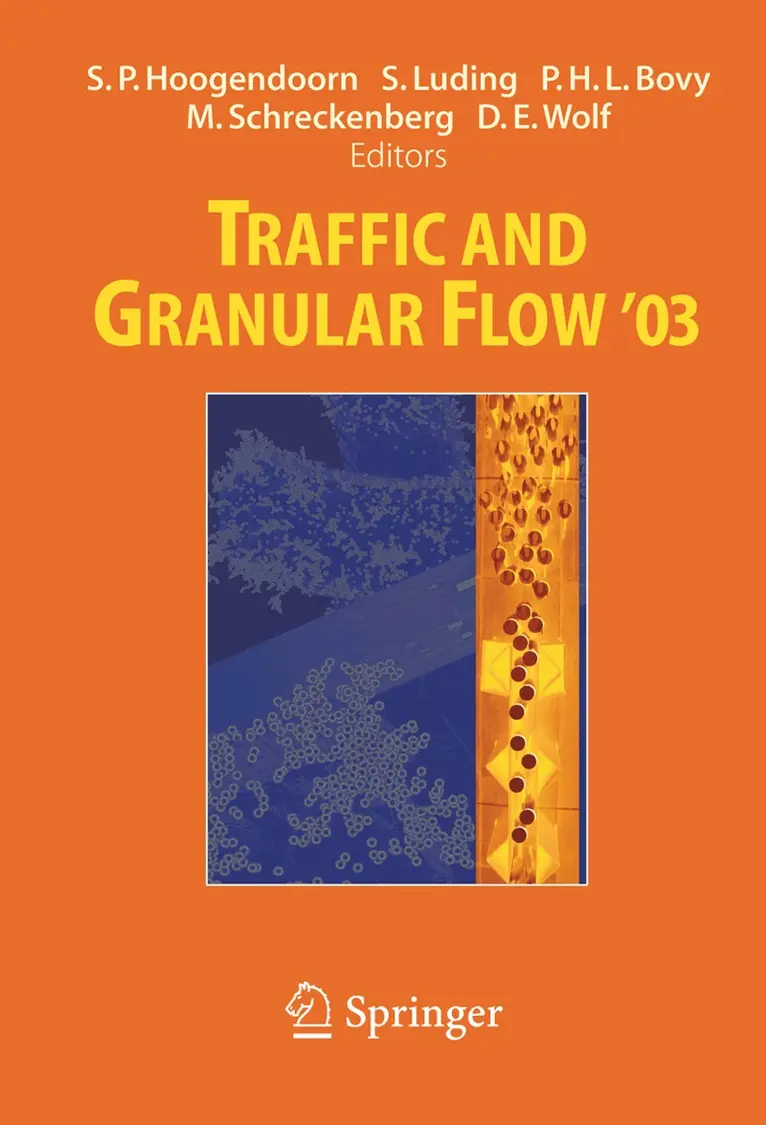
This book continues the biannual series of conference proceedings, which has become a classical reference in traffic and granular research alike. It addresses new developments at the borderline between physics, engineering and computational science. Complex systems, where many simple agents, be it vehicles or particles, give rise to surprising and fascinating phenomena. Topics include highway, pedestrian and internet traffic, long range interactions, two-phase flow, nonlinear pattern formation, data acquisition and technological applications.
E-bok
PDF, Engelska, 20072 765 kr
Läs direkt efter köp
These proceedings are the fifth in the series Traffic and Granular Flow, and we hope they will be as useful a reference as their predecessors. Both the realistic modelling of granular media and traffic flow present important challenges at the borderline between physics and engineering, and enormous progress has been made since 1995, when this series started. Still the research on these topics is thriving, so that this book again contains many new results. Some highlights addressed at this conference were the influence of long range electric and magnetic forces and ambient fluids on granular media, new precise traffic measurements, and experiments on the complex decision making of drivers. No doubt the “hot topics” addressed in granular matter research have diverged from those in traffic since the days when the obvious analogies between traffic jams on highways and dissipative clustering in granular flow intrigued both c- munities alike. However, now just this diversity became a stimulating feature of the conference. Many of us feel that our joint interest in complex systems, where many simple agents, be it vehicles or particles, give rise to surprising and fascin- ing phenomena, is ample justification for bringing these communities together: Traffic and Granular Flow has fostered cooperation and friendship across the scientific disciplines.
Häftad, Engelska, 2010
2 174 kr
Skickas inom 10-15 vardagar
These proceedings are the fifth in the series Traffic and Granular Flow, and we hope they will be as useful a reference as their predecessors. Both the realistic modelling of granular media and traffic flow present important challenges at the borderline between physics and engineering, and enormous progress has been made since 1995, when this series started. Still the research on these topics is thriving, so that this book again contains many new results. Some highlights addressed at this conference were the influence of long range electric and magnetic forces and ambient fluids on granular media, new precise traffic measurements, and experiments on the complex decision making of drivers. No doubt the “hot topics” addressed in granular matter research have diverged from those in traffic since the days when the obvious analogies between traffic jams on highways and dissipative clustering in granular flow intrigued both c- munities alike. However, now just this diversity became a stimulating feature of the conference. Many of us feel that our joint interest in complex systems, where many simple agents, be it vehicles or particles, give rise to surprising and fascin- ing phenomena, is ample justification for bringing these communities together: Traffic and Granular Flow has fostered cooperation and friendship across the scientific disciplines.