Settimo Termini - Böcker
Visar alla böcker från författaren Settimo Termini. Handla med fri frakt och snabb leverans.
10 produkter
10 produkter
1 422 kr
Skickas inom 10-15 vardagar
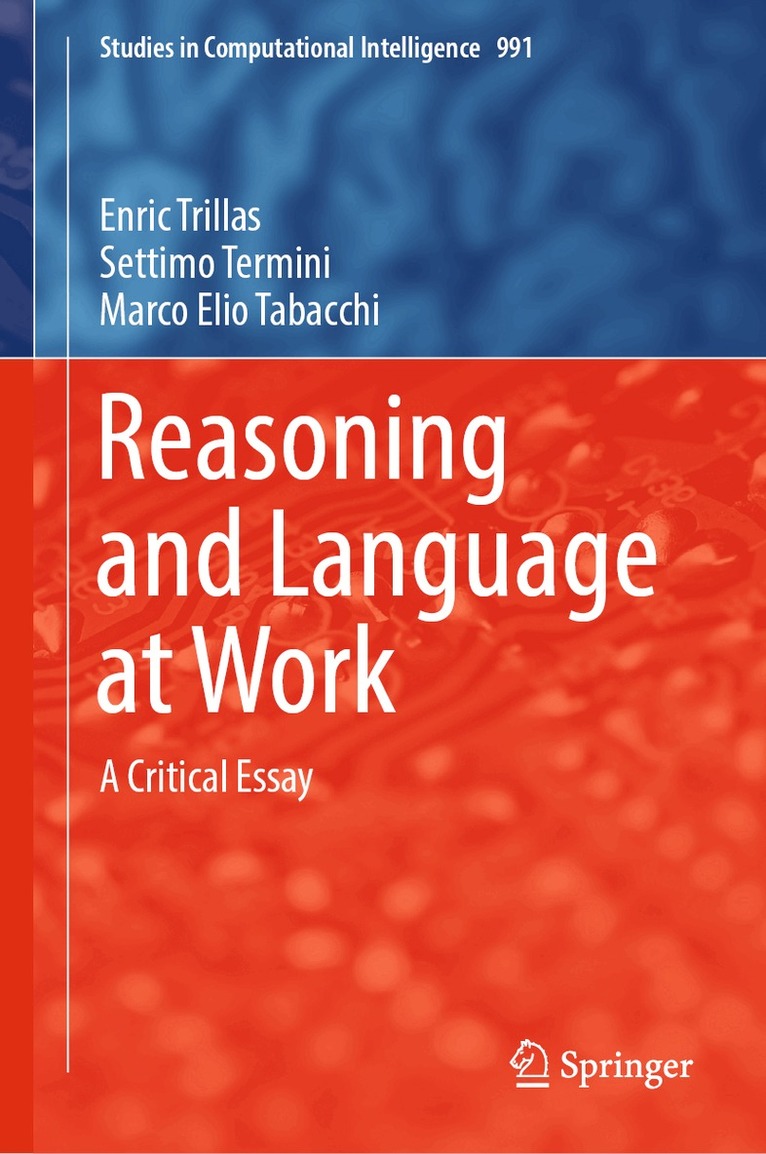
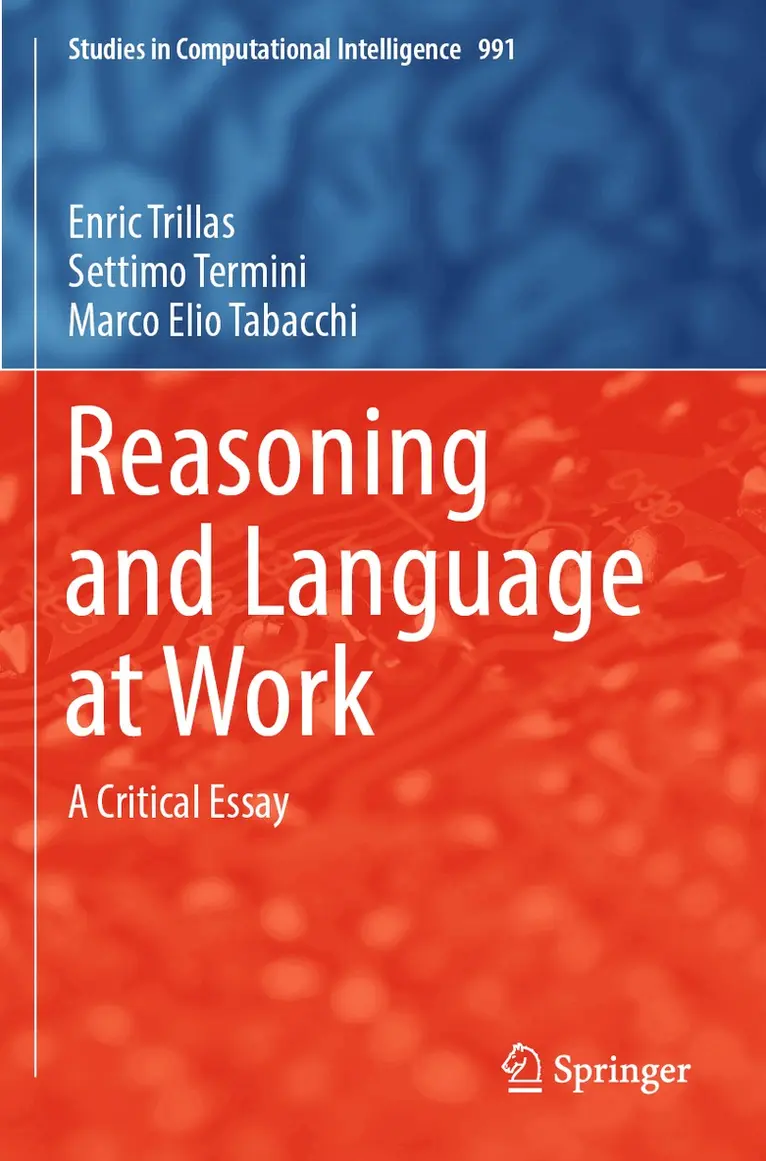
This book furthers the historical and technical debate by looking at reasoning as the action of language when it is devoted to explaining or foretelling, based on the authors’ centennial combined experience in fuzzy logic. A simple logical model mixing abductions and deductions is introduced in order to attain speculations, conjectures that may be responsible for induction, and creativity in reasoning. A central point and a dire hypothesis of the book are that such process can be implemented by computation and as such can lead to a new approach to automatic thinking and reasoning. On top of the technical approach, the relationship between reasoning and thinking is also analyzed trying to establish links with notions and concepts of thinkers from the European Middle Age to the current days.This book is recommended to young researchers that are interested in either the scientific or philosophical aspects of computational thinking, and can further the debate between the two approaches.
1 422 kr
Skickas inom 10-15 vardagar
This book furthers the historical and technical debate by looking at reasoning as the action of language when it is devoted to explaining or foretelling, based on the authors’ centennial combined experience in fuzzy logic. A simple logical model mixing abductions and deductions is introduced in order to attain speculations, conjectures that may be responsible for induction, and creativity in reasoning. A central point and a dire hypothesis of the book are that such process can be implemented by computation and as such can lead to a new approach to automatic thinking and reasoning. On top of the technical approach, the relationship between reasoning and thinking is also analyzed trying to establish links with notions and concepts of thinkers from the European Middle Age to the current days.This book is recommended to young researchers that are interested in either the scientific or philosophical aspects of computational thinking, and can further the debate between the two approaches.
Del 437 - Studies in Fuzziness and Soft Computing
Meandering Around Fuzziness
Inbunden, Engelska, 2025
2 378 kr
Skickas inom 10-15 vardagar
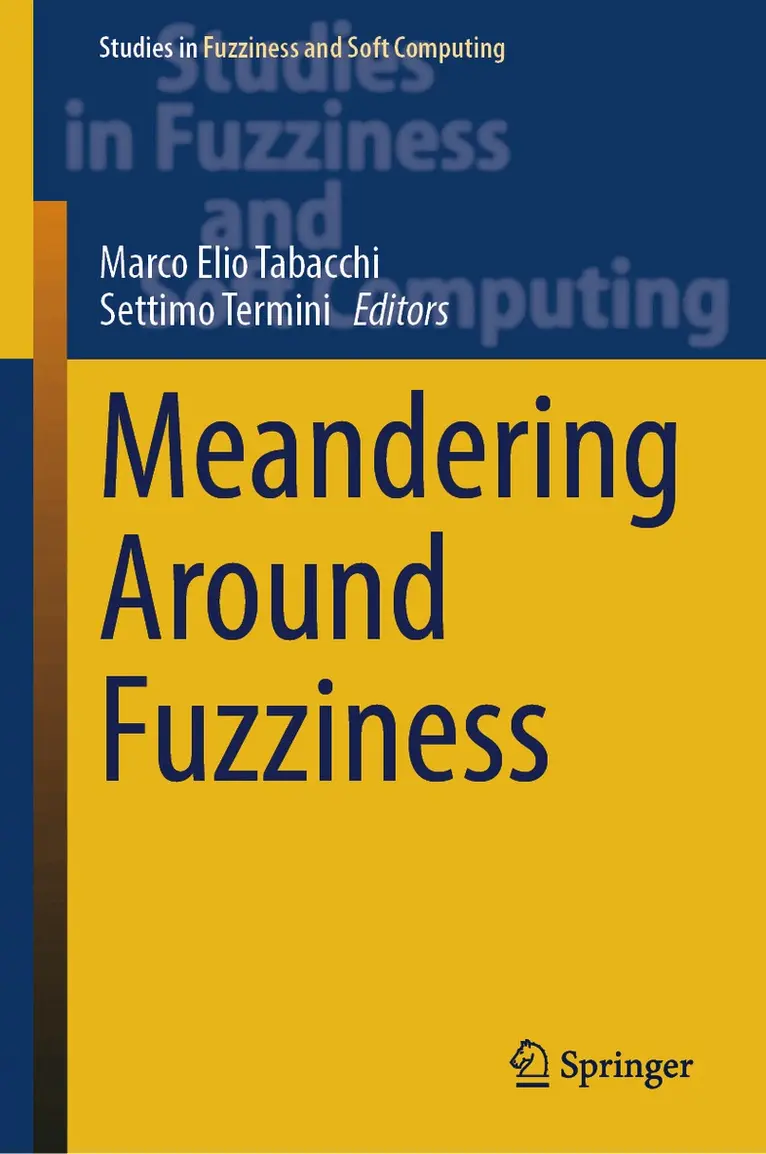
The present book, showing the meandering of the authors within the intricate grove of aspects of different nature (technical, mathematical and epistemological) of fuzziness, offers to the reader a chance for easily focusing the main questions of an interdisciplinary debate. The reader can, in fact, inspect nooks and crannies of this forest more hidden than those of a casual visitor even of the authors themselves, under the guide of this book which is both a Baedeker of an unknown territory and a preliminary map. The reader is allowed, then, to form a personal idea of the questions involved and possibly to afford the questions in a new way, when looking for a personal investigation on them. The meandering touches upon, in fact, very general questions at the interplay of epistemology, logic and applications. Think about, for instance, the connection between fuzziness and vagueness. Are they only different names used by different communities of scholars or they represent truly different ways of looking at what happens in our representations when we depart from the reassuring (but limiting) picture of a black and white world without any shade? More, is the theory of fuzziness measures only a sort of extension of the notion of information in a fuzzy world or is (also) something more? Enric Trillas strongly argues in favor of a radical thesis: “this theory is what definitely certifies that fuzziness is a scientific notion, since measurabilility is one of the essential requirements to be scientific.” This import of this point of view is wider that it can seem, since it also paves the way, indicating general conditions to be fulfilled, for accepting as “scientific” also any other different formal explicatum of the informal explicandum of vagueness. By moving around the woods under the guide of the authors, the reader will also discover that all the meaningful results have been found since a useful and apt conceptual environment did exist. The one of information sciences under the changing of different labels and characterizing names, Cybernetics, System theory before names that are still in the arena. The presence of this favorable context is what allowed to pose “meaningful questions” which, subsequently, helped the discovery of innovative results. The book presents a mixture of unpublished essays and already published ones which had been presented, along the time, to difference audiences. The former stress the joint relevance of the latter ones which would have not appeared by seeing the single items in isolation. The book offers an original view on the intricacy of the relationships among conceptual questions and technical developments which certainly will help the reader to move with much easy in the intricacy and the darkness of the forest where the authors dared, first, to move.
Del 298 - Studies in Fuzziness and Soft Computing
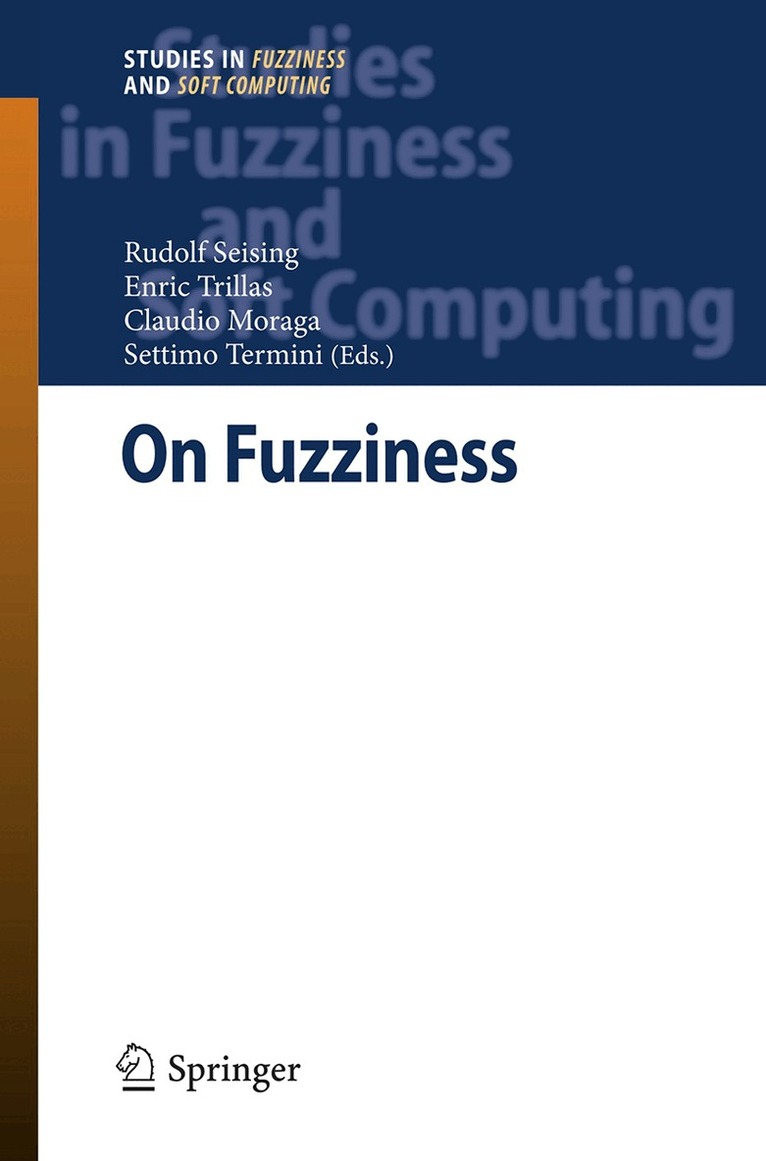
On Fuzziness
A Homage to Lotfi A. Zadeh – Volume 1
Inbunden, Engelska, 2013
1 624 kr
Skickas inom 10-15 vardagar
The notion of Fuzziness stands as one of the really new concepts that have recently enriched the world of Science. Science grows not only through technical and formal advances on one side and useful applications on the other side, but also as consequence of the introduction and assimilation of new concepts in its corpus. These, in turn, produce new developments and applications. And this is what Fuzziness, one of the few new concepts arisen in the XX Century, has been doing so far. This book aims at paying homage to Professor Lotfi A. Zadeh, the “father of fuzzy logic” and also at giving credit to his exceptional work and personality. In a way, this is reflected in the variety of contributions collected in the book. In some of them the authors chose to speak of personal meetings with Lotfi; in others, they discussed how certain papers of Zadeh were able to open for them a new research horizon. Some contributions documented results obtained from the author/s after taking inspiration from a particular idea of Zadeh, thus implicitly acknowledging him.Finally, there are contributions of several “third generation fuzzysists or softies” who were firstly led into the world of Fuzziness by a disciple of Lotfi Zadeh, who, following his example, took care of opening for them a new road in science. Rudolf Seising is Adjoint Researcher at the European Centre for Soft Computing in Mieres, Asturias (Spain).Enric Trillas and Claudio Moraga are Emeritus Researchers at the European Centre for Soft Computing, Mieres, Asturias (Spain).Settimo Termini is Professor ofTheoretical Computer Science at the University of Palermo, Italy and Affiliated Researcher at the European Centre for Soft Computing, Mieres, Asturias (Spain)
Del 299 - Studies in Fuzziness and Soft Computing
On Fuzziness
A Homage to Lotfi A. Zadeh – Volume 2
Inbunden, Engelska, 2012
1 624 kr
Skickas inom 10-15 vardagar
The notion of Fuzziness stands as one of the really new concepts that have recently enriched the world of Science. Science grows not only through technical and formal advances on one side and useful applications on the other side, but also as consequence of the introduction and assimilation of new concepts in its corpus. These, in turn, produce new developments and applications. And this is what Fuzziness, one of the few new concepts arisen in the XX Century, has been doing so far. This book aims at paying homage to Professor Lotfi A. Zadeh, the “father of fuzzy logic” and also at giving credit to his exceptional work and personality. In a way, this is reflected in the variety of contributions collected in the book. In some of them the authors chose to speak of personal meetings with Lotfi; in others, they discussed how certain papers of Zadeh were able to open for them a new research horizon. Some contributions documented results obtained from the author/s after taking inspiration from a particular idea of Zadeh, thus implicitly acknowledging him.Finally, there are contributions of several “third generation fuzzysists or softies” who were firstly led into the world of Fuzziness by a disciple of Lotfi Zadeh, who, following his example, took care of opening for them a new road in science. Rudolf Seising is Adjoint Researcher at the European Centre for Soft Computing in Mieres, Asturias (Spain).Enric Trillas and Claudio Moraga are Emeritus Researchers at the European Centre for Soft Computing, Mieres, Asturias (Spain).Settimo Termini is Professor of TheoreticalComputer Science at the University of Palermo, Italy and Affiliated Researcher at the European Centre for Soft Computing, Mieres, Asturias (Spain)
Del 299 - Studies in Fuzziness and Soft Computing
On Fuzziness
A Homage to Lotfi A. Zadeh – Volume 2
Häftad, Engelska, 2015
1 577 kr
Skickas inom 10-15 vardagar
The notion of Fuzziness stands as one of the really new concepts that have recently enriched the world of Science. Science grows not only through technical and formal advances on one side and useful applications on the other side, but also as consequence of the introduction and assimilation of new concepts in its corpus. These, in turn, produce new developments and applications. And this is what Fuzziness, one of the few new concepts arisen in the XX Century, has been doing so far. This book aims at paying homage to Professor Lotfi A. Zadeh, the “father of fuzzy logic” and also at giving credit to his exceptional work and personality. In a way, this is reflected in the variety of contributions collected in the book. In some of them the authors chose to speak of personal meetings with Lotfi; in others, they discussed how certain papers of Zadeh were able to open for them a new research horizon. Some contributions documented results obtained from the author/s after taking inspiration from a particular idea of Zadeh, thus implicitly acknowledging him.Finally, there are contributions of several “third generation fuzzysists or softies” who were firstly led into the world of Fuzziness by a disciple of Lotfi Zadeh, who, following his example, took care of opening for them a new road in science. Rudolf Seising is Adjoint Researcher at the European Centre for Soft Computing in Mieres, Asturias (Spain).Enric Trillas and Claudio Moraga are Emeritus Researchers at the European Centre for Soft Computing, Mieres, Asturias (Spain).Settimo Termini is Professor of TheoreticalComputer Science at the University of Palermo, Italy and Affiliated Researcher at the European Centre for Soft Computing, Mieres, Asturias (Spain)
Del 298 - Studies in Fuzziness and Soft Computing
On Fuzziness
A Homage to Lotfi A. Zadeh – Volume 1
Häftad, Engelska, 2015
1 624 kr
Skickas inom 10-15 vardagar
The notion of Fuzziness stands as one of the really new concepts that have recently enriched the world of Science. Science grows not only through technical and formal advances on one side and useful applications on the other side, but also as consequence of the introduction and assimilation of new concepts in its corpus. These, in turn, produce new developments and applications. And this is what Fuzziness, one of the few new concepts arisen in the XX Century, has been doing so far. This book aims at paying homage to Professor Lotfi A. Zadeh, the “father of fuzzy logic” and also at giving credit to his exceptional work and personality. In a way, this is reflected in the variety of contributions collected in the book. In some of them the authors chose to speak of personal meetings with Lotfi; in others, they discussed how certain papers of Zadeh were able to open for them a new research horizon. Some contributions documented results obtained from the author/s after taking inspiration from a particular idea of Zadeh, thus implicitly acknowledging him.Finally, there are contributions of several “third generation fuzzysists or softies” who were firstly led into the world of Fuzziness by a disciple of Lotfi Zadeh, who, following his example, took care of opening for them a new road in science. Rudolf Seising is Adjoint Researcher at the European Centre for Soft Computing in Mieres, Asturias (Spain).Enric Trillas and Claudio Moraga are Emeritus Researchers at the European Centre for Soft Computing, Mieres, Asturias (Spain).Settimo Termini is Professor ofTheoretical Computer Science at the University of Palermo, Italy and Affiliated Researcher at the European Centre for Soft Computing, Mieres, Asturias (Spain)
1 064 kr
Skickas inom 10-15 vardagar
The aim of this Volume of scientific essays is twofold. From one side, by remembering the scientific figure of Eduardo R. Caianiello, it aims at focusing his outstanding contributions - from theoretical physics to cybernetics - which after so many years still represent occasion of innovative paths to be fruitfully followed. It must be stressed the contribution that his interdisciplinary methodology can still be of great help in affording and solving present day complex problems. On the other side, it aims at pinpointing with the help of the scientists contributing to the Volume - some crucial problems in present day research in the fields of interest of Eduardo Caianiello and which are still among the main lines of investigation of some of the Istitutes founded by Eduardo (Istituto di Cibernetica del CNR, IIAS, etc).
Storie e protagonisti della matematica italiana
per raccontare 20 anni di "Lettera Matematica Pristem"
Häftad, Italienska, 2013
231 kr
Skickas inom 10-15 vardagar
20 anni fa – anzi qualcuno in più – iniziava le sue pubblicazioni “Lettera Matematica PRISTEM”, espressione di un gruppo di ricerca della “Bocconi” cui aderiscono anche docenti e studiosi di altre Università. La “Lettera” ha rappresentato un tentativo coraggioso di svecchiare la comunicazione matematica, di renderla meno accademica e più giornalistica con l’uso delle immagini, del colore e di un linguaggio diretto. Un tentativo di inserire la Matematica nei più ampi processi che riguardano la scuola e la società.In questo libro, i tre direttori della rivista sfogliano le sue annate per ricordare storie e personaggi (matematici e non) attorno a cui la “Lettera” è cresciuta e che di fatto hanno contribuito alla formazione della sua linea editoriale.Le testimonianze, i ricordi e i commenti sono seguiti anno per anno da un articolo comparso quell’anno sulla “Lettera”. Ne esce una descrizione del mondo matematico, visto dall’interno, molto più vivace di quanto solitamente si pensa che sia. Altro che semplice calcolo! La Matematica va avanti e la “Lettera” racconta in quali direzioni. Talora procede con appassionate discussioni e qualche polemica che accompagna la ricerca o l’insegnamento o la gestione delle istituzioni scientifiche: anche di queste, in 20 anni, la “Lettera” ha cercato di dare puntualmente conto.
1 064 kr
Skickas inom 10-15 vardagar
The aim of this volume of scientific essays is twofold. On the one hand, by remembering the scientific figure of Eduardo R. Caianiello, it aims at focusing on his outstanding contributions – from theoretical physics to cybernetics – which after so many years still represent occasion of innovative paths to be fruitfully followed. It must be stressed the contribution that his interdisciplinary methodology can still be of great help in affording and solving present day complex problems. On the other hand, it aims at pinpointing with the help of the scientists contributing to the volume – some crucial problems in present day research in the fields of interest of Eduardo Caianiello and which are still among the main lines of investigation of some of the Institutes founded by Eduardo (Istituto di Cibernetica del CNR, IIAS, etc).