Shripad Tuljapurkar – författare
Visar alla böcker från författaren Shripad Tuljapurkar. Handla med fri frakt och snabb leverans.
13 produkter
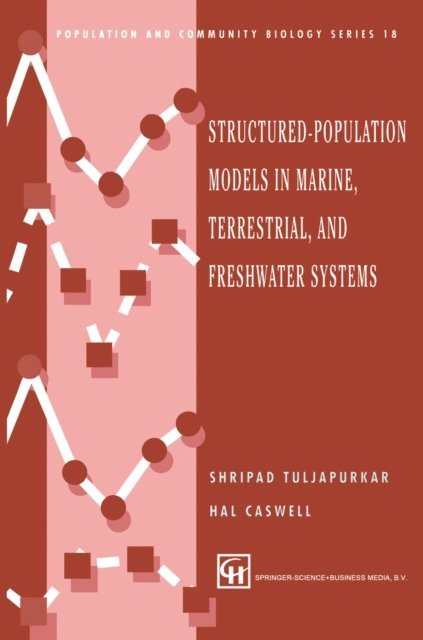
Structured-Population Models in Marine, Terrestrial, and Freshwater Systems
Av Michael Bruen, Lucien-Yves Maystre m. fl.
Häftad, 1997
1643 kr
Lägg i varukorg
In the summer of 1993, twenty-six graduate and postdoctoral stu dents and fourteen lecturers converged on Cornell University for a summer school devoted to structured-population models. This school was one of a series to address concepts cutting across the traditional boundaries separating …
Population, Resources and Development
Riding the Age Waves - Volume 1
Av Shripad Tuljapurkar, Ian Pool m. fl.
Inbunden, 2005
1098 kr
Lägg i varukorg
In the 21st century, the populations of the world’s nations will display large and long-lived changes in age structure. Many of these began with fertility change and are amplified by declining mortality and by migration within and between nations. Demography will matter in this century not by force …
Population, Resources and Development
Riding the Age Waves - Volume 1
Av Vipan Prachuabmoh, Ian Pool m. fl.
E-bok, 2005
1427 kr
Lägg i varukorg
In the 21 st century, the populations of the world’s nations will display large and long-lived changes in age structure. Many of these began with fertility change and are amplified by declining mortality and by migration within and between nations. Demography will matter in this century not by …
Population, Resources and Development
Riding the Age Waves - Volume 1
Av Shripad Tuljapurkar, Ian Pool m. fl.
Häftad, 2006
1095 kr
Lägg i varukorg
In the 21st century, the populations of the world’s nations will display large and long-lived changes in age structure. Many of these began with fertility change and are amplified by declining mortality and by migration within and between nations. Demography will matter in this century not by force …
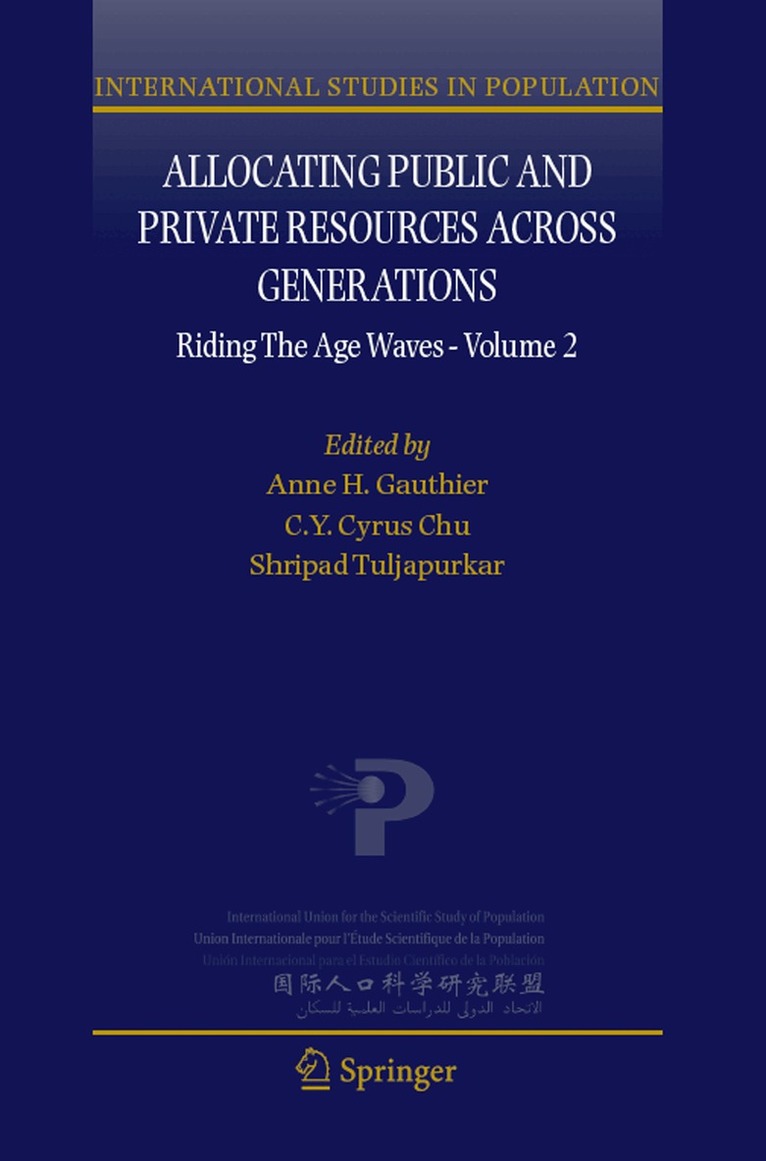
Allocating Public and Private Resources across Generations
Riding the Age Waves - Volume 2
Av Anne H. Gauthier, C.Y. Cyrus Chu m. fl.
Inbunden, 2006
1095 kr
Lägg i varukorg
In rapidly industrializing countries, demographic changes continue to have significant effects on the well-being of individuals and families, and as aggregate human and financial capital. These effects may be analyzed in terms of inter-generational transfers of time, money, goods, and services. The …
Allocating Public and Private Resources across Generations
Riding the Age Waves - Volume 2
Av Shripad Tuljapurkar, C.Y. Cyrus Chu m. fl.
E-bok, 2007
1427 kr
Lägg i varukorg
In rapidly industrializing countries, demographic changes continue to have significant effects on the well-being of individuals and families, and as aggregate human and financial capital. These effects may be analyzed in terms of inter-generational transfers of time, money, goods, and services. The …
Allocating Public and Private Resources across Generations
Riding the Age Waves - Volume 2
Av Anne H. Gauthier, C.Y. Cyrus Chu m. fl.
Häftad, 2007
1098 kr
Lägg i varukorg
In rapidly industrializing countries, demographic changes continue to have significant effects on the well-being of individuals and families, and as aggregate human and financial capital. These effects may be analyzed in terms of inter-generational transfers of time, money, goods, and services. The …
Structured-Population Models in Marine, Terrestrial, and Freshwater Systems
Av Hal Caswell, Shripad Tuljapurkar
E-bok, 2012
2111 kr
Lägg i varukorg
In the summer of 1993, twenty-six graduate and postdoctoral stu dents and fourteen lecturers converged on Cornell University for a summer school devoted to structured-population models. This school was one of a series to address concepts cutting across the traditional boundaries separating …
Population Dynamics in Variable Environments
Häftad, 1990
551 kr
Lägg i varukorg
Demography relates observable facts about individuals to the dynamics of populations. If the dynamics are linear and do not change over time, the classical theory of Lotka (1907) and Leslie (1945) is the central tool of demography. This book addresses the situation when the assumption of constancy …
Population Dynamics in Variable Environments
E-bok, 2013
734 kr
Lägg i varukorg
Demography relates observable facts about individuals to the dynamics of populations. If the dynamics are linear and do not change over time, the classical theory of Lotka (1907) and Leslie (1945) is the central tool of demography. This book addresses the situation when the assumption of constancy …
Ageing in Advanced Industrial States
Riding the Age Waves - Volume 3
Av Shripad Tuljapurkar, Naohiro Ogawa m. fl.
Inbunden, 2010
1128 kr
Lägg i varukorg
Population growth slowed across the world in the last decades of the 20th century, changing substantially our view of the future. The 21st century is likely to see the end to world population growth and become the century of population aging, marked by low fertility and ever-increasing life …
Ageing in Advanced Industrial States
Riding the Age Waves - Volume 3
Av Anne H. Gauthier, Naohiro Ogawa m. fl.
E-bok, 2010
821 kr
Lägg i varukorg
Population growth slowed across the world in the last decades of the 20 th century, changing substantially our view of the future. The 21 st century is likely to see the end to world population growth and become the century of population aging, marked by low fertility and ever-increasing life …
Ageing in Advanced Industrial States
Riding the Age Waves - Volume 3
Av Shripad Tuljapurkar, Naohiro Ogawa m. fl.
Häftad, 2018
624 kr
Lägg i varukorg
Population growth slowed across the world in the last decades of the 20th century, changing substantially our view of the future. The 21st century is likely to see the end to world population growth and become the century of population aging, marked by low fertility and ever-increasing life …