Simon McGrath - Böcker
Visar alla böcker från författaren Simon McGrath. Handla med fri frakt och snabb leverans.
12 produkter
12 produkter
537 kr
Skickas inom 10-15 vardagar
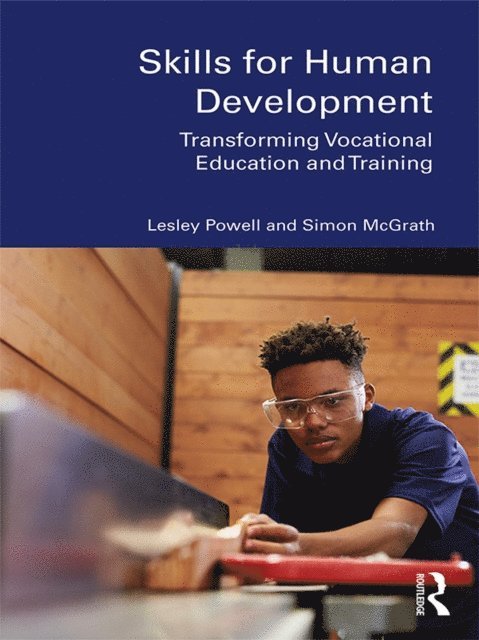
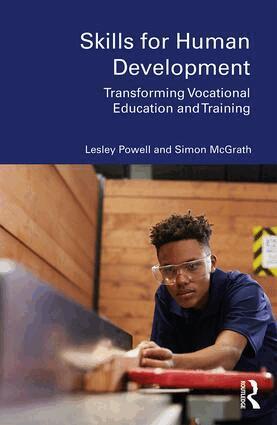
Focusing on reimagining the purpose of vocational education and training (VET) and grounded in the reality of a small cohort of young South Africans and an institution seeking to serve them, Skills for Human Development moves beyond the inadequacies of the dominant human capital orthodoxy to present a rich theoretical and practical alternative for VET. Offering a human development and capability approach, it brings social justice to the forefront of the discussion of VET’s purpose at the national, institutional and individual levels. In doing so, this book insists that VET should be about enlarging peoples’ opportunities to live a flourishing life, rather than simply being about narrow employability and productivity. It argues that human development approaches, while acknowledging the importance of work in its broadest sense, offer a better way of bringing together VET and development than the current human capital-inspired orthodoxy. Offering a transformative vision for skills development, this book: Considers the potential contribution skills development could make to broader human development, as well as to economic development Points to an alternative approach to the current and flawed deficit assumptions of VET learners Presents for the first time an alternative evaluative frame for judging VET purpose and quality Presents a timely account of current vocational and education training that is high on the agenda of international policymakersTaking a broad perspective, Skills for Human Development presents a comprehensive and unique framework which bridges theory, policy and practice to give VET institutions a new way of thinking about their practice, and VET policymakers a new way of engaging with global messages of sustainable human development. It is a vital resource for those working on the human development and skills approach in multiple disciplines and offers a grounding framework for international policymakers interested in this growing area.
3 095 kr
Skickas inom 10-15 vardagar
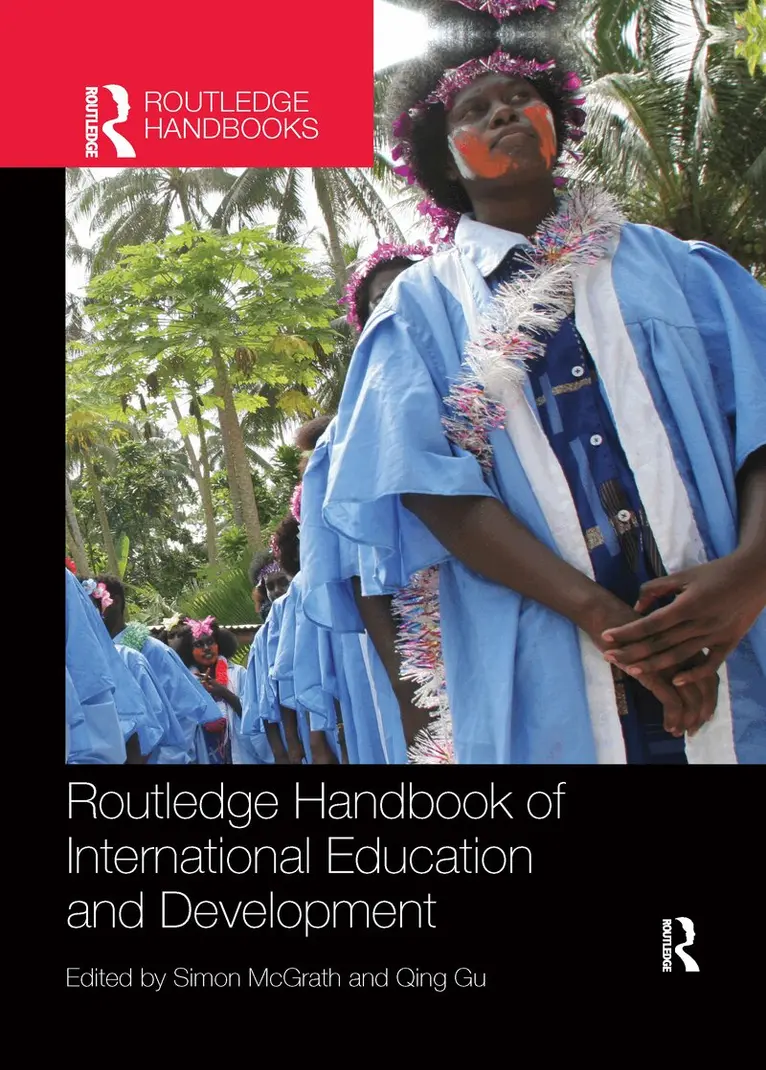
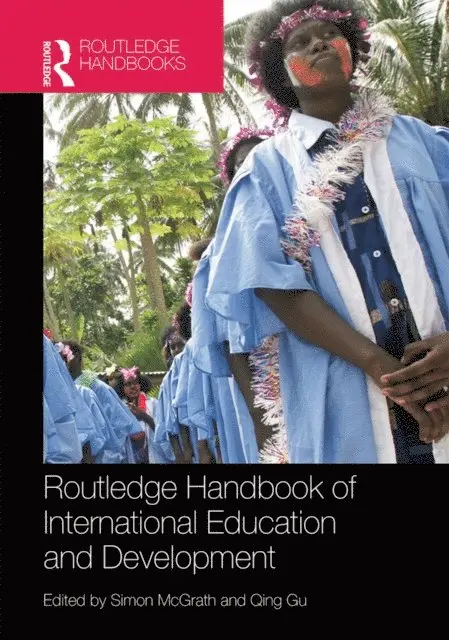
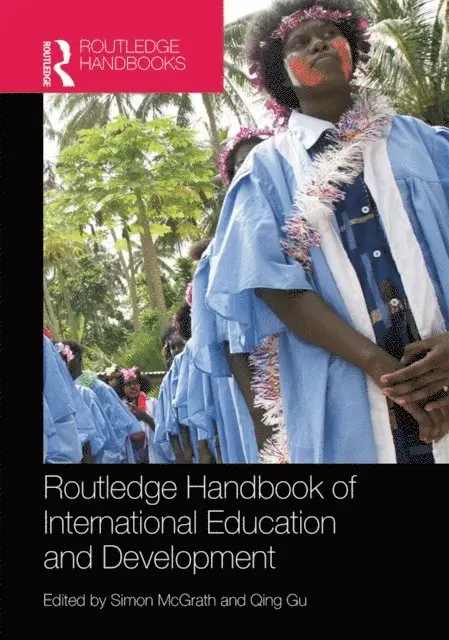
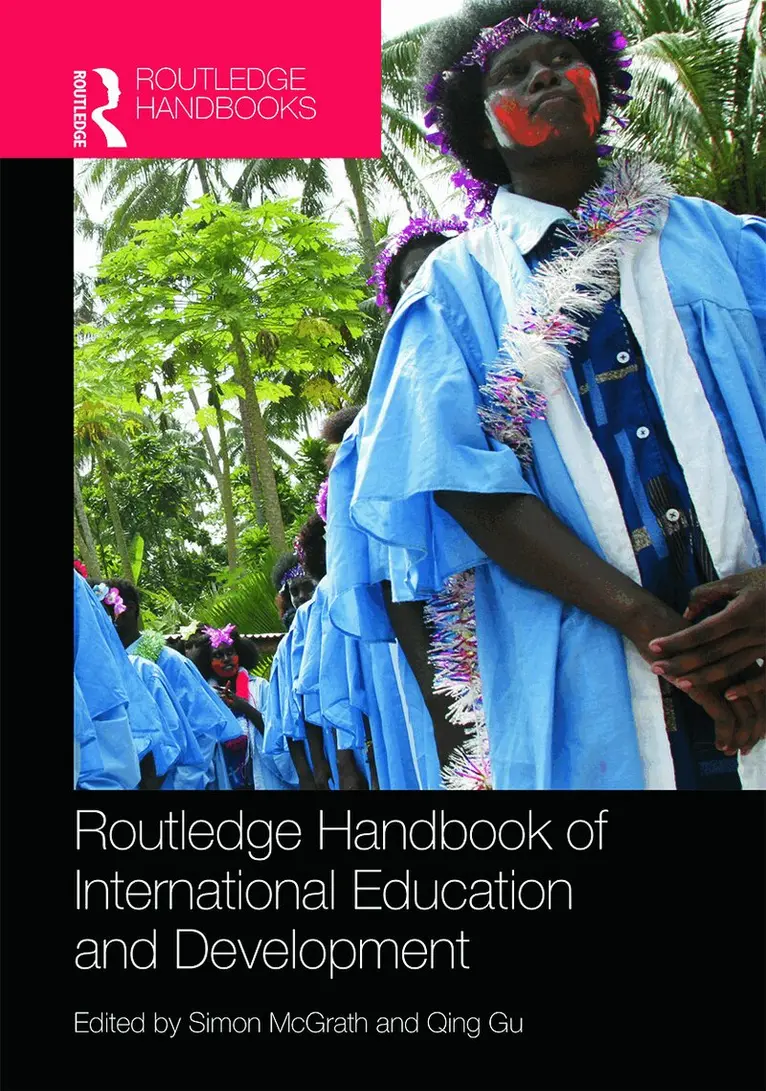
This timely Handbook takes stock of the range of debates that characterise the field of international education and development, and suggests key aspects of a research agenda for the next period. It is deliberately divergent in its approach, recognising the major ideological and epistemological divides that characterise a field that draws on many traditions. Leading and emergent voices from different paradigms and contexts are afforded a space to be heard and each section puts current debates in larger historical contexts. The Handbook is divided in four parts and book-ended by an introduction and a conclusion, the latter oriented towards the implications that the volume has for future research agendas. The first part explores major strands of debates about education’s place in development theory. The second acknowledges the disciplining of the field by the education for all movement and examines the place that learning and teaching, and schools play in development. Part three looks beyond schools to consider early years, adult and vocational education but focuses particularly on the return to thinking about higher education's role in development. The final part considers the changing, but still important, role that international cooperation plays in shaping education in developing countries. Featuring over thirty chapters written by leading international and interdisciplinary scholars, the Routledge Handbook of International Education and Development offers the first comprehensive and forward-looking resource for students and scholars.
Learning for Livelihoods in the Global South
Theoretical and Methodological Lenses on Skills and the Informal Sector
Inbunden, Engelska, 2024
1 899 kr
Skickas inom 10-15 vardagar
This edited volume explores how youth and informal sector workers in the Global South are pioneering learning and livelihoods that exist at the intersections of, and beyond, the boundaries of the state, market, and other formal institutions.Underpinned by research undertaken in the Global South, this book discusses how we might better theorise, conceptualise, and critique what skills and vocational education and training mean for young people with diverse livelihoods - people who rely substantially on the informal and social economy. Rather than envisioning education and skills as oriented towards profit-making or increased productivity, chapters offer fresh perspectives that move beyond the dominant neoliberal and human capital orthodoxies. This book features chapters that are global in approach, uses case studies from contexts as diverse as India, South Africa, West Africa, and Colombia, and focuses on how education can be used to empower people, strengthen livelihoods, and expand human agency, skills, personal growth, and the capability for voice.Issuing a clarion call, it appeals for recognition of the ways in which learning, working, and living take place in the informal sector in the Global South, arguing that this matters for the vast majority of the world’s population. This book will be of relevance to scholars, academics, and postgraduate students in vocational education and training, skills development, the informal sector, international and comparative education, international development, and adult education.
Learning for Livelihoods in the Global South
Theoretical and Methodological Lenses on Skills and the Informal Sector
Häftad, Engelska, 2026
642 kr
Kommande
This edited volume explores how youth and informal sector workers in the Global South are pioneering learning and livelihoods that exist at the intersections of, and beyond, the boundaries of the state, market, and other formal institutions.Underpinned by research undertaken in the Global South, this book discusses how we might better theorise, conceptualise, and critique what skills and vocational education and training mean for young people with diverse livelihoods - people who rely substantially on the informal and social economy. Rather than envisioning education and skills as oriented towards profit-making or increased productivity, chapters offer fresh perspectives that move beyond the dominant neoliberal and human capital orthodoxies. This book features chapters that are global in approach, uses case studies from contexts as diverse as India, South Africa, West Africa, and Colombia, and focuses on how education can be used to empower people, strengthen livelihoods, and expand human agency, skills, personal growth, and the capability for voice.Issuing a clarion call, it appeals for recognition of the ways in which learning, working, and living take place in the informal sector in the Global South, arguing that this matters for the vast majority of the world’s population. This book will be of relevance to scholars, academics, and postgraduate students in vocational education and training, skills development, the informal sector, international and comparative education, international development, and adult education.
736 kr
Skickas inom 10-15 vardagar
This timely Handbook takes stock of the range of debates that characterise the field of international education and development, and suggests key aspects of a research agenda for the next period. It is deliberately divergent in its approach, recognising the major ideological and epistemological divides that characterise a field that draws on many traditions. Leading and emergent voices from different paradigms and contexts are afforded a space to be heard and each section puts current debates in larger historical contexts. The Handbook is divided in four parts and book-ended by an introduction and a conclusion, the latter oriented towards the implications that the volume has for future research agendas. The first part explores major strands of debates about education’s place in development theory. The second acknowledges the disciplining of the field by the education for all movement and examines the place that learning and teaching, and schools play in development. Part three looks beyond schools to consider early years, adult and vocational education but focuses particularly on the return to thinking about higher education's role in development. The final part considers the changing, but still important, role that international cooperation plays in shaping education in developing countries. Featuring over thirty chapters written by leading international and interdisciplinary scholars, the Routledge Handbook of International Education and Development offers the first comprehensive and forward-looking resource for students and scholars.
2 044 kr
Skickas inom 10-15 vardagar
Focusing on reimagining the purpose of vocational education and training (VET) and grounded in the reality of a small cohort of young South Africans and an institution seeking to serve them, Skills for Human Development moves beyond the inadequacies of the dominant human capital orthodoxy to present a rich theoretical and practical alternative for VET. Offering a human development and capability approach, it brings social justice to the forefront of the discussion of VET’s purpose at the national, institutional and individual levels. In doing so, this book insists that VET should be about enlarging peoples’ opportunities to live a flourishing life, rather than simply being about narrow employability and productivity. It argues that human development approaches, while acknowledging the importance of work in its broadest sense, offer a better way of bringing together VET and development than the current human capital-inspired orthodoxy. Offering a transformative vision for skills development, this book: Considers the potential contribution skills development could make to broader human development, as well as to economic development Points to an alternative approach to the current and flawed deficit assumptions of VET learners Presents for the first time an alternative evaluative frame for judging VET purpose and quality Presents a timely account of current vocational and education training that is high on the agenda of international policymakersTaking a broad perspective, Skills for Human Development presents a comprehensive and unique framework which bridges theory, policy and practice to give VET institutions a new way of thinking about their practice, and VET policymakers a new way of engaging with global messages of sustainable human development. It is a vital resource for those working on the human development and skills approach in multiple disciplines and offers a grounding framework for international policymakers interested in this growing area.
2 635 kr
Skickas inom 10-15 vardagar
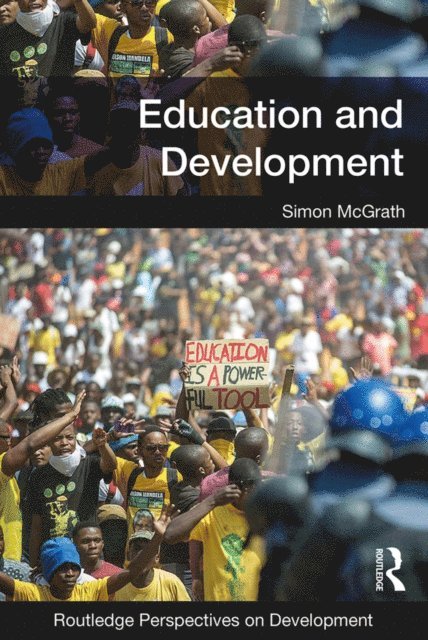
This title explores the place of education in development debates and provides a systematic as well as a theoretical overview of the main approaches to education and development. It emphasises the fact that education is profoundly shaped by national and local cultures even if many issues are shared across institutions in different locations.Education and Development discusses different theoretical accounts from different disciplinary traditions to help students understand the complexity of the overall debate. The text does not shy away from discussions of education’s negative impacts, and insists that an account of education must include consideration of early childhood development, adult, vocational and higher education, as well as the growing range of informal and distance forms. It includes chapters on human capital, human rights and human development, and on education, gender and development, and draws on examples from a wide range of countries and regions such as India, Hong Kong, Kenya and South Africa. The book has a well-developed pedagogy including text boxes, chapter summaries, key questions, links to websites and videos, and annotated further reading sections. Particular attention is paid to ensuring that a plurality of voices, contexts and educational sub-sectors are represented in the boxes, weblinks and references.Education and Development provides an introductory overview to the field, aimed at the undergraduate level, while critically engaging with key themes and questions. The book will also be of interest to development practitioners, policymakers, entrepreneurs and corporate employees engaged in aspects of education and development work.
537 kr
Skickas inom 10-15 vardagar
This title explores the place of education in development debates and provides a systematic as well as a theoretical overview of the main approaches to education and development. It emphasises the fact that education is profoundly shaped by national and local cultures even if many issues are shared across institutions in different locations.Education and Development discusses different theoretical accounts from different disciplinary traditions to help students understand the complexity of the overall debate. The text does not shy away from discussions of education’s negative impacts, and insists that an account of education must include consideration of early childhood development, adult, vocational and higher education, as well as the growing range of informal and distance forms. It includes chapters on human capital, human rights and human development, and on education, gender and development, and draws on examples from a wide range of countries and regions such as India, Hong Kong, Kenya and South Africa. The book has a well-developed pedagogy including text boxes, chapter summaries, key questions, links to websites and videos, and annotated further reading sections. Particular attention is paid to ensuring that a plurality of voices, contexts and educational sub-sectors are represented in the boxes, weblinks and references.Education and Development provides an introductory overview to the field, aimed at the undergraduate level, while critically engaging with key themes and questions. The book will also be of interest to development practitioners, policymakers, entrepreneurs and corporate employees engaged in aspects of education and development work.
Transitioning Vocational Education and Training in Africa
A Social Skills Ecosystem Perspective
Häftad, Engelska, 2023
365 kr
Skickas inom 7-10 vardagar
EPDF and EPUB available Open Access under CC-BY-NC-ND licence.The transition to more just and sustainable development requires radical change across a wide range of areas and particularly within the nexus between learning and work. This book takes an expansive view of vocational education and training that goes beyond the narrow focus of much of the current literature and policy debate. Drawing on case studies across rural and urban settings in Uganda and South Africa, the book offers a new way of seeing this issue through an exploration of the multiple ways in which people learn to have better livelihoods. Crucially, it explores learning that takes place informally online, within farmers’ groups, and in public and private educational institutions.Offering new insights and ways of thinking about this field, the book draws out clear implications for theory, policy and practice in Africa and beyond.
645 kr
Kommande
Available open access digitally under CC-BY-NC-ND licence.This book examines how education can drive change for marginalized communities across the Global South. Drawing on evidence from 67 projects in India, Rwanda, Somaliland/Somalia and South Africa, the book shows how education can expand youth livelihoods, strengthen sustainable cities and advance climate action. Yet for education to fulfil this role, it must be reimagined—tackling entrenched inequalities of class, caste, clan, gender, race, rurality and indigeneity. Arguing for more democratic, public and inclusive forms of education, the book calls for research that prioritises collaboration and equity over top-down models, offering a bold new agenda for transformative practice.
Knowledge for Development?
Comparing British, Japanese, Swedish and World Bank Aid
Häftad, Engelska, 2004
488 kr
Skickas inom 10-15 vardagar
In 1996, the World Bank President, James Wolfensohn, declared that his organization would henceforth be 'the knowledge bank'. This marked the beginning of a new discourse of knowledge-based aid, which has spread rapidly across the development field. This book is the first detailed attempt to analyse this new discourse.Through an examination of four agencies -- the World Bank, the British Department for International Development, the Japan International Cooperation Agency and the Swedish International Development Cooperation Agency -- the book explores what this new approach to aid means in both theory and practice. It concludes that too much emphasis has been on developing capacity within agencies rather than addressing the expressed needs of Southern 'partners'. It also questions whether knowledge-based aid leads to greater agency certainty about what constitutes good development.
8 638 kr
Skickas inom 10-15 vardagar
Editors: Margarita Pavlova and Salim AkoojeeSkills for Sustainable Human Development | Editors: Michael Gessler, Larissa Freund and Susanne PetersVocational Learning | Editor: Kirby BarrickMeasuring Learning and Instructional Performance | Editor: Esther WintherSupporting Learners |