Siniša Vukovic - Böcker
Visar alla böcker från författaren Siniša Vukovic. Handla med fri frakt och snabb leverans.
9 produkter
9 produkter
725 kr
Kommande
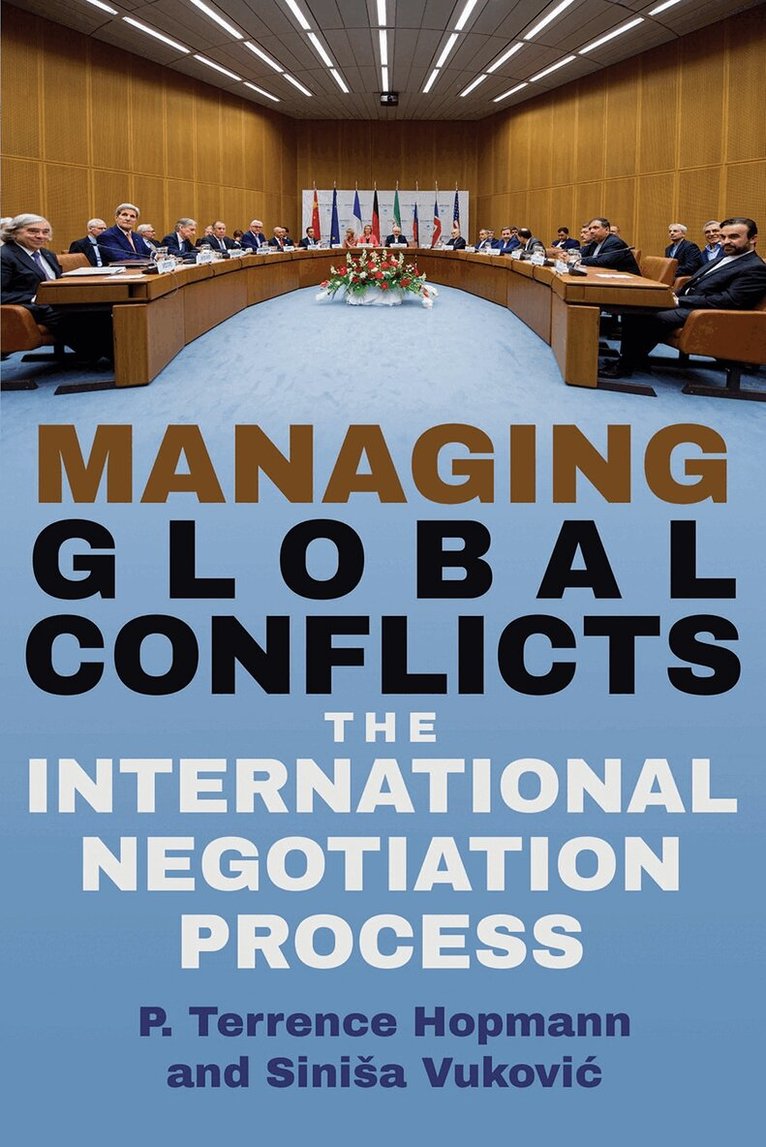
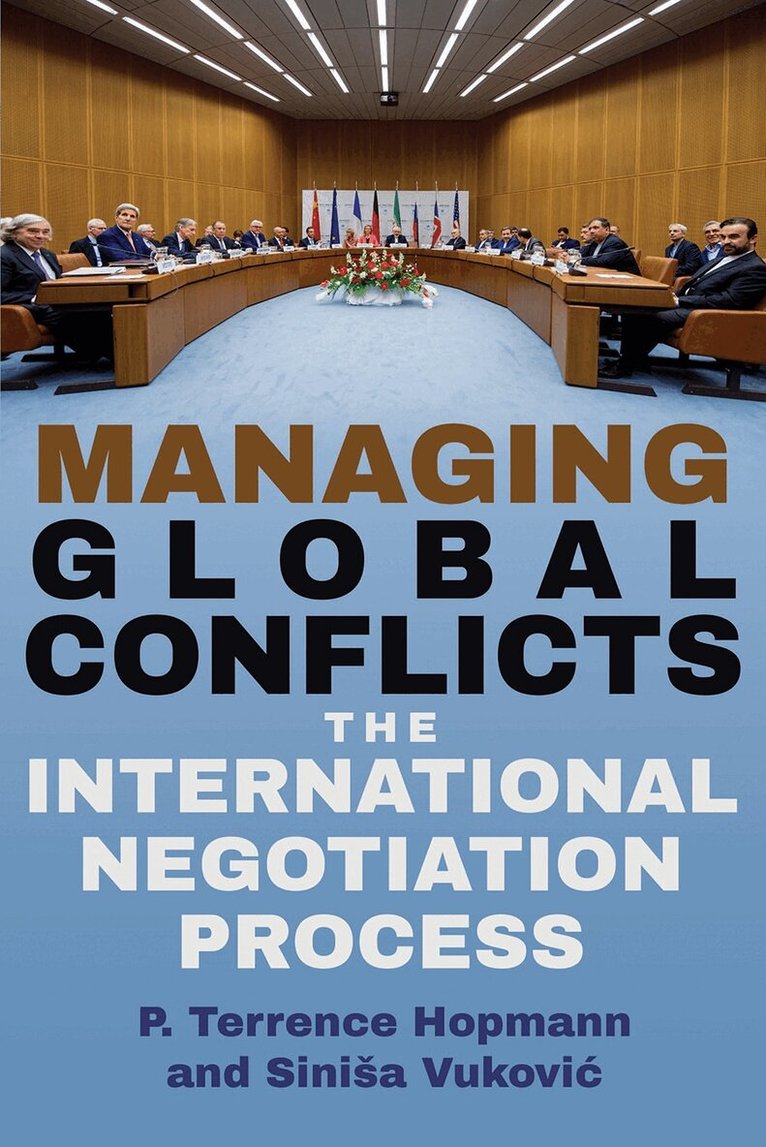
Managing Global Conflicts presents an overview of major alternative approaches to the analysis of international negotiations developed in the literature of the past sixty years. By combining empirical verification of hypotheses and a broad interest in what can be learned from existing research, P. Terrence Hopmann and Sinisa Vukovic suggest prescriptions for improving the negotiation process to produce better, mutually beneficial outcomes. The authors examine the extensive tradition of theory and research on international negotiation processes at both the intra-state and inter-state levels. They analyze alternative theoretical approaches and the conditions under which these theories may prove most relevant. By introducing elements of complexity at multiple levels, they explore the factors under which different outcomes may emerge from negotiations in conflict scenarios, including relative power, decision-making structures, the roles of individual cognitive frames, images, and cultural practices. Hopmann and Vukovic present a menu of options for evaluating the relationships between the initial conditions of conflict, the negotiation process, and the outcomes of that process in determining the extent to which conflicts are resolved. Featuring case studies and a thorough analysis of the field, Managing Global Conflicts is an essential resource for students, scholars, and practitioners of negotiation at many levels.
1 200 kr
Kommande
Managing Global Conflicts presents an overview of major alternative approaches to the analysis of international negotiations developed in the literature of the past sixty years. By combining empirical verification of hypotheses and a broad interest in what can be learned from existing research, P. Terrence Hopmann and Sinisa Vukovic suggest prescriptions for improving the negotiation process to produce better, mutually beneficial outcomes. The authors examine the extensive tradition of theory and research on international negotiation processes at both the intra-state and inter-state levels. They analyze alternative theoretical approaches and the conditions under which these theories may prove most relevant. By introducing elements of complexity at multiple levels, they explore the factors under which different outcomes may emerge from negotiations in conflict scenarios, including relative power, decision-making structures, the roles of individual cognitive frames, images, and cultural practices. Hopmann and Vukovic present a menu of options for evaluating the relationships between the initial conditions of conflict, the negotiation process, and the outcomes of that process in determining the extent to which conflicts are resolved. Featuring case studies and a thorough analysis of the field, Managing Global Conflicts is an essential resource for students, scholars, and practitioners of negotiation at many levels.
2 088 kr
Skickas inom 10-15 vardagar
This book takes stock of the accumulated body of literature on ripeness theory, inspired by the seminal work of I. William Zartman. The book posits the continued relevance of the ripeness theory, well into the 21st century, and sheds new light on the potential for further development.The timing of efforts for resolution, either negotiation or mediation, is always a central concern for policy makers and scholars alike in the field of international conflict resolution. The work of I. William Zartman on ripeness was a groundbreaker in the long-standing inquiry into this key question, and over more than three decades, the notion of a ripe moment and its adjuncts, such as a mutually hurting stalemate and a mutually enticing opportunity, has not only served as an essential policy guidance but also inspired wide-ranging research programs. The chapters in this edited volume feature studies intended to advance ripeness theory conceptually, test it empirically through case studies for possible implications to the theory itself, or examine relations with related concepts and theories.This volume is divided into two parts. The Foreword and the chapters included in Part I were originally published as a special issue of the journal Ethnopolitics. Part II features, first and foremost, Zartman’s own seminal article published in the inaugural issue of the same journal. It also includes other recently published articles in journals such as Security Studies, Civil Wars, and Studies in Conflict & Terrorism that are considered to have made important contributions to the debate on the subject.
576 kr
Skickas inom 10-15 vardagar
This book takes stock of the accumulated body of literature on ripeness theory, inspired by the seminal work of I. William Zartman. The book posits the continued relevance of the ripeness theory, well into the 21st century, and sheds new light on the potential for further development.The timing of efforts for resolution, either negotiation or mediation, is always a central concern for policy makers and scholars alike in the field of international conflict resolution. The work of I. William Zartman on ripeness was a groundbreaker in the long-standing inquiry into this key question, and over more than three decades, the notion of a ripe moment and its adjuncts, such as a mutually hurting stalemate and a mutually enticing opportunity, has not only served as an essential policy guidance but also inspired wide-ranging research programs. The chapters in this edited volume feature studies intended to advance ripeness theory conceptually, test it empirically through case studies for possible implications to the theory itself, or examine relations with related concepts and theories.This volume is divided into two parts. The Foreword and the chapters included in Part I were originally published as a special issue of the journal Ethnopolitics. Part II features, first and foremost, Zartman’s own seminal article published in the inaugural issue of the same journal. It also includes other recently published articles in journals such as Security Studies, Civil Wars, and Studies in Conflict & Terrorism that are considered to have made important contributions to the debate on the subject.
417 kr
Skickas inom 7-10 vardagar
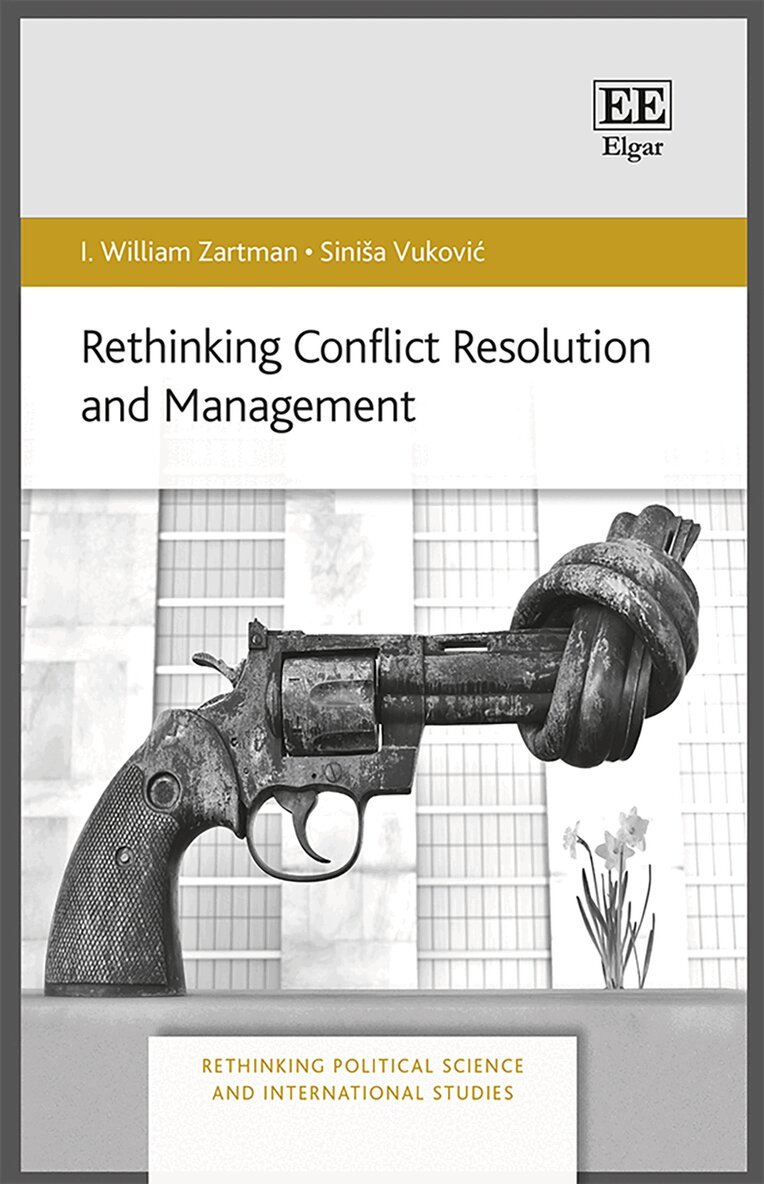
Rethinking and revising the established knowledge and practice of conflict resolution and management, this innovative book brings together complementary perspectives to consider novel approaches to resolving conflict after the collapse of the World Order.Examining the current system of world disorder, the authors identify ways of operating constructively and navigating conflict in order to better manage and resolve it. Analysing conventional and hybrid conflict at both international and internal state level, they look to transform current scholarship on conflict resolution and management in international relations. Chapters rethink mediation; power in peace-making; prevention of escalation; governance, protest and revolt; inclusion and representation; and the individual as subject and object in conflict resolution and management. Paving the way for future research in the field, the book outlines the need to learn how to operate within the present world disorder in order to prevent the descent into entropy. By awakening realistic creativity and examining present characteristics and future possibilities, the book develops a more positive evolution which can reinstitute an effective new system of World Order.Both prescriptive and analytical in approach, this insightful book will prove vital to students and scholars of international relations, political science and public policy, alongside policy makers looking to rethink their conflict resolution and management methods.
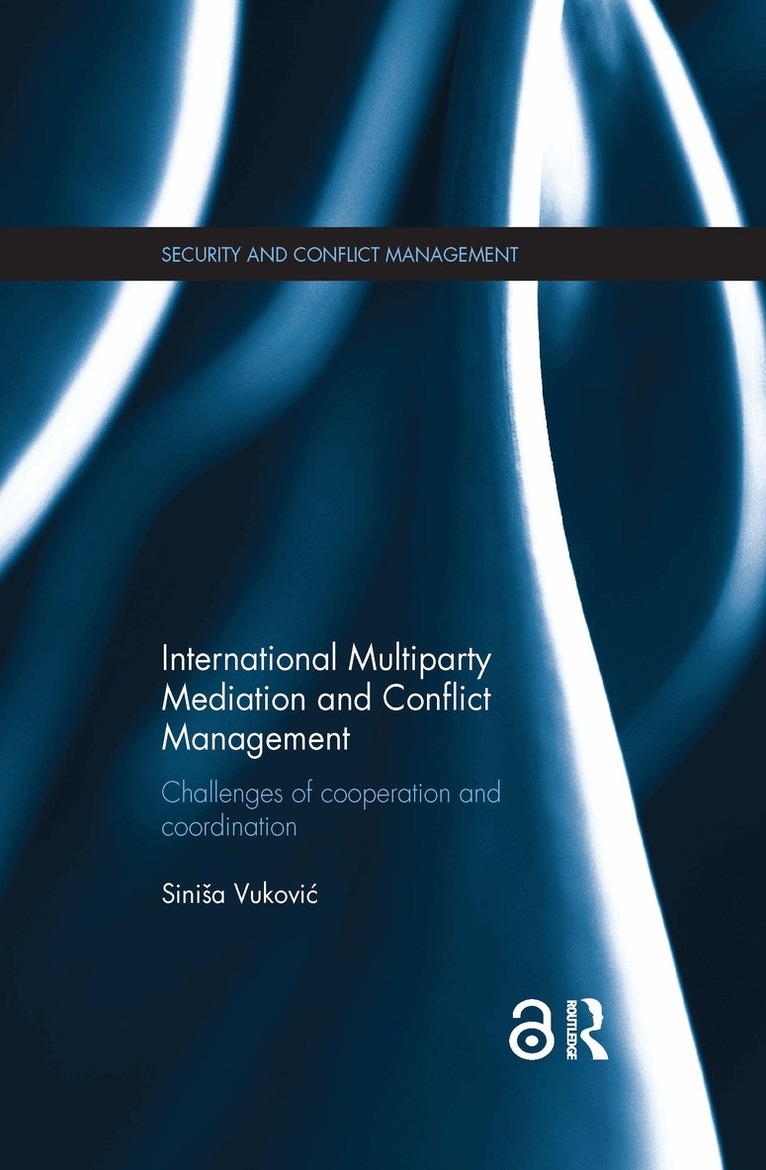
International Multiparty Mediation and Conflict Management
Challenges of Cooperation and Coordination
Häftad, Engelska, 2017
481 kr
Skickas inom 10-15 vardagar
This volume aims to provide a detailed explanation of the effects of cooperation and coordination on international multiparty mediation in conflicts. Contemporary scholarship stresses that the crucial ingredients for a successful multiparty mediation are ‘consistency in interests’ and ‘cooperation and coordination’ between mediators. This book seeks to supplement that understanding by investigating how much the ‘consistency of interests’ and ‘cooperation and coordination’ affect the overall process, and what happens to the mediation process when mediating parties do not share the same idea and interest in finding a common solution. At the same time, it explores the obstacles in achieving coordination and coherence between various mediators in such an environment and how to surmount the problems that multiple mediators face when operating without a ‘common script’ in attempting to mediate a negotiated settlement. The study investigates three distinct mechanisms (both on the systemic and contextual level) that have the potential to deter defection from a (potential) member of the multiparty mediation coalition: geo-political shifts, changes in the conflict dynamics, and mediators’ ability to bargain for a cooperative relationship. As the number of states and international actors that are involved in mediation increases, a careful assessment is necessary not only of their relative institutional strengths and weaknesses, but also of how to promote complementary efforts and how to synchronize the whole process when one actor is transferring the responsibilities for mediation to others. This book will be of much interest to students of mediation, conflict management, war and conflict studies, security studies and IR.
International Multiparty Mediation and Conflict Management
Challenges of Cooperation and Coordination
Inbunden, Engelska, 2015
1 431 kr
Skickas inom 10-15 vardagar
This volume aims to provide a detailed explanation of the effects of cooperation and coordination on international multiparty mediation in conflicts. Contemporary scholarship stresses that the crucial ingredients for a successful multiparty mediation are ‘consistency in interests’ and ‘cooperation and coordination’ between mediators. This book seeks to supplement that understanding by investigating how much the ‘consistency of interests’ and ‘cooperation and coordination’ affect the overall process, and what happens to the mediation process when mediating parties do not share the same idea and interest in finding a common solution. At the same time, it explores the obstacles in achieving coordination and coherence between various mediators in such an environment and how to surmount the problems that multiple mediators face when operating without a ‘common script’ in attempting to mediate a negotiated settlement. The study investigates three distinct mechanisms (both on the systemic and contextual level) that have the potential to deter defection from a (potential) member of the multiparty mediation coalition: geo-political shifts, changes in the conflict dynamics, and mediators’ ability to bargain for a cooperative relationship. As the number of states and international actors that are involved in mediation increases, a careful assessment is necessary not only of their relative institutional strengths and weaknesses, but also of how to promote complementary efforts and how to synchronize the whole process when one actor is transferring the responsibilities for mediation to others. This book will be of much interest to students of mediation, conflict management, war and conflict studies, security studies and IR.The Open Access version of this book, available at https://www.routledge.com/International-Multiparty-Mediation-and-Conflict-Management-Challenges-of/Vukovic/p/book/9781138087897, has been made available under a Creative Commons Attribution-Non Commercial-No Derivatives 4.0 license
1 432 kr
Skickas inom 7-10 vardagar
Rethinking and revising the established knowledge and practice of conflict resolution and management, this innovative book brings together complementary perspectives to consider novel approaches to resolving conflict after the collapse of the World Order.Examining the current system of world disorder, the authors identify ways of operating constructively and navigating conflict in order to better manage and resolve it. Analysing conventional and hybrid conflict at both international and internal state level, they look to transform current scholarship on conflict resolution and management in international relations. Chapters rethink mediation; power in peace-making; prevention of escalation; governance, protest and revolt; inclusion and representation; and the individual as subject and object in conflict resolution and management. Paving the way for future research in the field, the book outlines the need to learn how to operate within the present world disorder in order to prevent the descent into entropy. By awakening realistic creativity and examining present characteristics and future possibilities, the book develops a more positive evolution which can reinstitute an effective new system of World Order.Both prescriptive and analytical in approach, this insightful book will prove vital to students and scholars of international relations, political science and public policy, alongside policy makers looking to rethink their conflict resolution and management methods.
Good Governance in East Asia and Latin America
Emerging Trends and New Approaches
Inbunden, Engelska, 2025
958 kr
Skickas inom 7-10 vardagar
Drawing on fieldwork conducted in both countries between late 2023 and 2024, the chapters, written by a diverse group of contributors from the private sector, government, civil society, and academia, offer fresh insights into emerging trends in good governance.