Sousan Arafeh – författare
Visar alla böcker från författaren Sousan Arafeh. Handla med fri frakt och snabb leverans.
6 produkter
Educational Leadership
Perspectives on Preparation and Practice
Av Norris M. Haynes, Sousan Arafeh m. fl.
Inbunden, 2014
1181 kr
Lägg i varukorg
Educational Leadership: Perspectives on Preparation and Practice identifies core knowledge and skills that educational leaders should be exposed to during pre-service preparation and throughout in-service professional development. The contributors discuss established pedagogical and experiential …
Educational Leadership
Perspectives on Preparation and Practice
Av Norris M. Haynes, Sousan Arafeh m. fl.
E-bok, 2014
1288 kr
Lägg i varukorg
Educational Leadership: Perspectives on Preparation and Practice identifies core knowledge and skills that educational leaders should be exposed to during pre-service preparation and throughout in-service professional development. The contributors discuss established pedagogical and experiential …
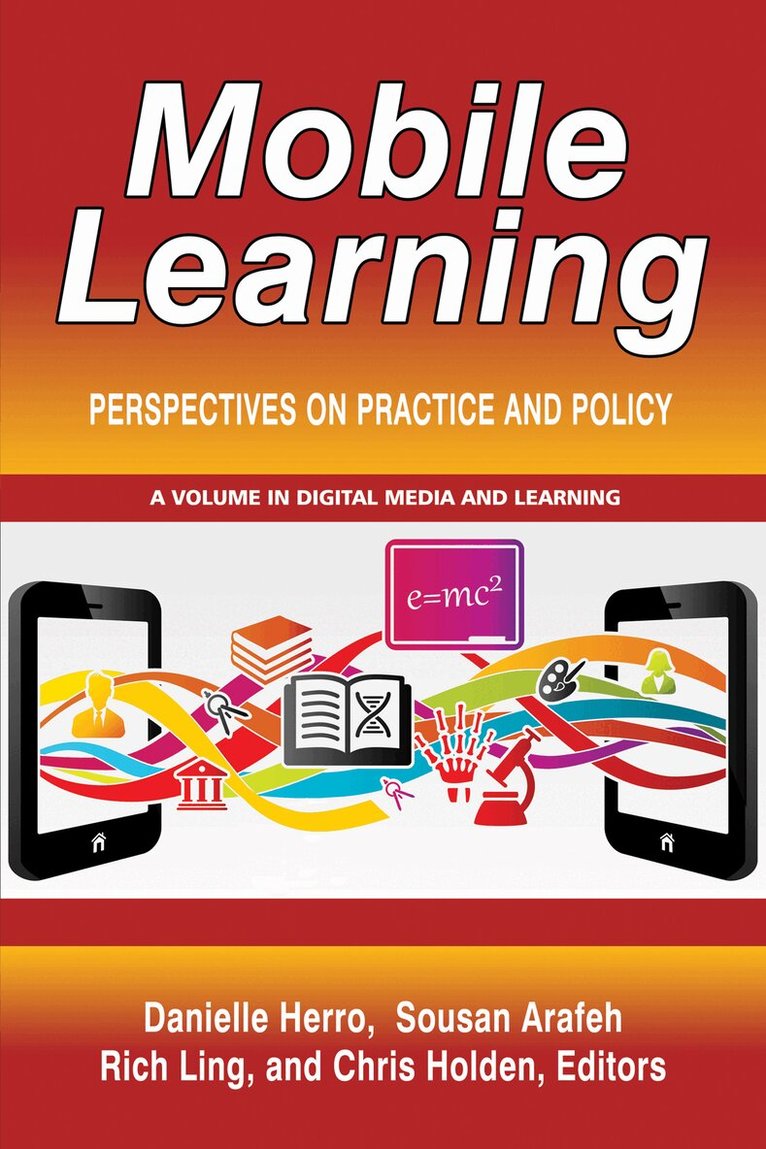
Mobile Learning
Perspectives on Practice and Policy
Av Danielle Herro, Sousan Arafeh m. fl.
Häftad, 2018
639 kr
Lägg i varukorg
There can be no doubt that mobile technologies are here to stay. Global mobile traffic grew 74 percent in 2015 alone, with 563 million devices and connections added -- most of them tablets and Smartphones. This growth has been 4000-fold in the past 10 years and 400 million-fold in the past 15 years …
Mobile Learning
Perspectives on Practice and Policy
Av Danielle Herro, Sousan Arafeh m. fl.
Inbunden, 2018
1131 kr
Lägg i varukorg
There can be no doubt that mobile technologies are here to stay. Global mobile traffic grew 74 percent in 2015 alone, with 563 million devices and connections added -- most of them tablets and Smartphones. This growth has been 4000-fold in the past 10 years and 400 million-fold in the past 15 years …
Mobile Learning
Perspectives on Practice and Policy
Av Chris Holden, Rich Ling m. fl.
E-bok, 2018
459 kr
Lägg i varukorg
There can be no doubt that mobile technologies are here to stay. Global mobile traffic grew 74 percent in 2015 alone, with 563 million devices and connections added -- most of them tablets and Smartphones. This growth has been 4000-fold in the past 10 years and 400 million-fold in the past 15 years …
Mobile Learning
Perspectives on Practice and Policy
Av Chris Holden, Rich Ling m. fl.
E-bok, 2018
688 kr
Lägg i varukorg
There can be no doubt that mobile technologies are here to stay. Global mobile traffic grew 74 percent in 2015 alone, with 563 million devices and connections added -- most of them tablets and Smartphones. This growth has been 4000-fold in the past 10 years and 400 million-fold in the past 15 years …