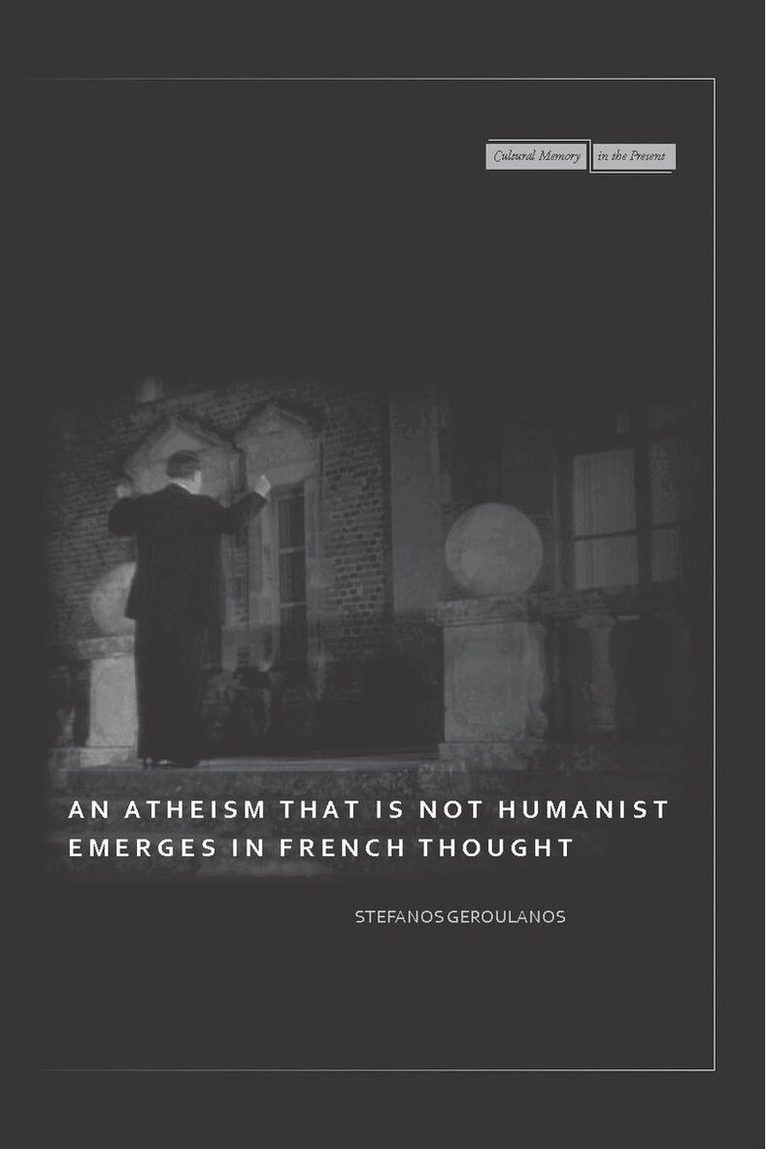
Stefanos Geroulanos – författare
380 kr
Skickas inom 5-8 vardagar
212 kr
1 067 kr
Skickas inom 5-8 vardagar
329 kr
Skickas inom 5-8 vardagar
620 kr
Läs direkt efter köp
783 kr
Läs direkt efter köp
838 kr
Skickas inom 5-8 vardagar
428 kr
Läs direkt efter köp
248 kr
Skickas inom 5-8 vardagar
433 kr
Skickas inom 5-8 vardagar
1 489 kr
Skickas inom 5-8 vardagar
664 kr
Skickas inom 10-15 vardagar
3 508 kr
Skickas inom 10-15 vardagar
736 kr
Skickas inom 10-15 vardagar
2 222 kr
Skickas inom 10-15 vardagar
1 413 kr
Skickas inom 10-15 vardagar
327 kr
390 kr
Läs direkt efter köp
1 545 kr
Skickas inom 5-8 vardagar
519 kr
Skickas inom 5-8 vardagar
769 kr
Läs direkt efter köp
A widely celebrated intellectual historian of twentieth-century Europe, Anson Rabinbach is one of the most important scholars of National Socialism working over the last forty years. This volume collects, for the first time, his pathbreaking work on Nazi culture, antifascism, and the after-effects of Nazism on postwar German and European culture. Historically detailed and theoretically sophisticated, his essays span the aesthetics of production, messianic and popular claims, the ethos that Nazism demanded of its adherents, the brilliant and sometimes successful efforts of antifascist intellectuals to counter Hitler’s rise, the most significant concepts to emerge out of the 1930s and 1940s for understanding European authoritarianism, the major controversies around Nazism that took place after the regime’s demise, the philosophical claims of postwar philosophers, sociologists and psychoanalysts—from Theodor Adorno to Hannah Arendt and from Alexander Kluge to Klaus Theweleit—and the role of Auschwitz in European history.
769 kr
Läs direkt efter köp
A widely celebrated intellectual historian of twentieth-century Europe, Anson Rabinbach is one of the most important scholars of National Socialism working over the last forty years. This volume collects, for the first time, his pathbreaking work on Nazi culture, antifascism, and the after-effects of Nazism on postwar German and European culture. Historically detailed and theoretically sophisticated, his essays span the aesthetics of production, messianic and popular claims, the ethos that Nazism demanded of its adherents, the brilliant and sometimes successful efforts of antifascist intellectuals to counter Hitler’s rise, the most significant concepts to emerge out of the 1930s and 1940s for understanding European authoritarianism, the major controversies around Nazism that took place after the regime’s demise, the philosophical claims of postwar philosophers, sociologists and psychoanalysts—from Theodor Adorno to Hannah Arendt and from Alexander Kluge to Klaus Theweleit—and the role of Auschwitz in European history.
835 kr
Läs direkt efter köp
The Routledge Handbook of the History and Sociology of Ideas establishes a new and comprehensive way of working in the history and sociology of ideas, in order to obviate several longstanding gaps that have prevented a fruitful interdisciplinary and international dialogues. Pushing global intellectual history forward, it uses methodological innovations in the history of concepts, gender history, imperial history, and history of normativity, many of which have emerged out of intellectual history in recent years, and it especially foregrounds the role of field theory for delimiting objects of study but also in studying transnational history and migration of persons and ideas.
The chapters also explore how intellectual history crosses the study of particular domains: law, politics, economy, science, life sciences, social and human sciences, book history, literature, and emotions.
835 kr
Läs direkt efter köp
The Routledge Handbook of the History and Sociology of Ideas establishes a new and comprehensive way of working in the history and sociology of ideas, in order to obviate several longstanding gaps that have prevented a fruitful interdisciplinary and international dialogues. Pushing global intellectual history forward, it uses methodological innovations in the history of concepts, gender history, imperial history, and history of normativity, many of which have emerged out of intellectual history in recent years, and it especially foregrounds the role of field theory for delimiting objects of study but also in studying transnational history and migration of persons and ideas.
The chapters also explore how intellectual history crosses the study of particular domains: law, politics, economy, science, life sciences, social and human sciences, book history, literature, and emotions.
276 kr
Skickas inom 5-8 vardagar
1 047 kr
Skickas inom 5-8 vardagar
1 128 kr
Läs direkt efter köp
1 128 kr
Läs direkt efter köp
442 kr
Kommande
422 kr
Läs direkt efter köp