Sven-Oliver Proksch – författare
Visar alla böcker från författaren Sven-Oliver Proksch. Handla med fri frakt och snabb leverans.
5 produkter
5 produkter
571 kr
Skickas inom 5-8 vardagar
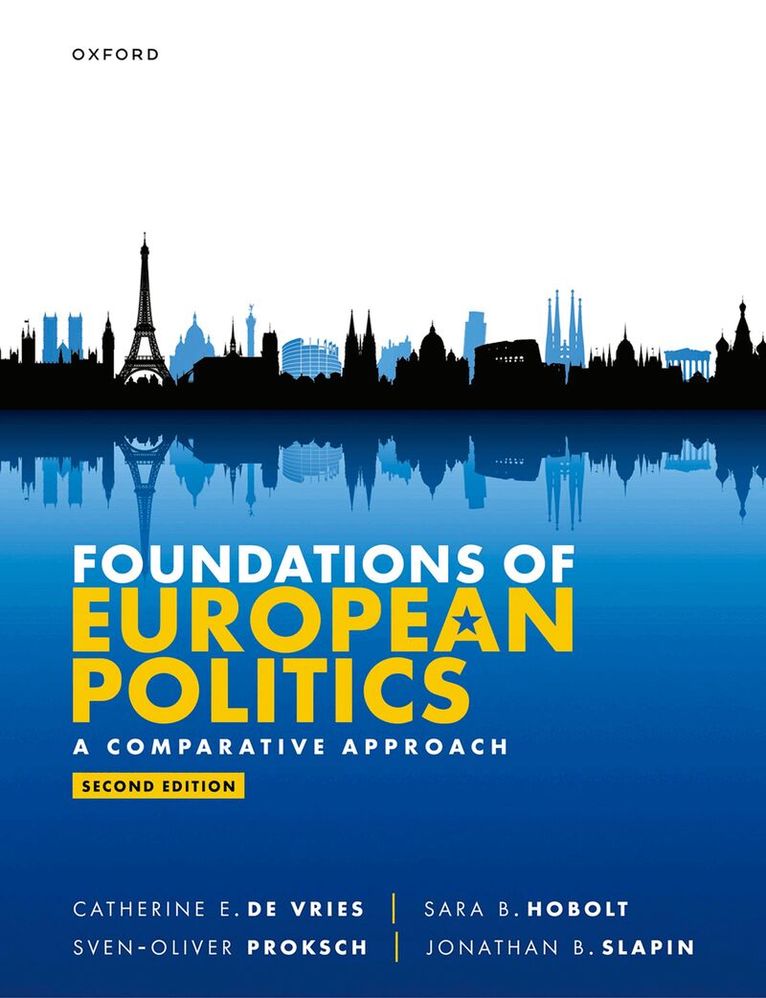
With its coherent analytical framework and accessible style, Foundations of European Politics: A Comparative Approach introduces students to important tools of social science and comparative analysis.Key Features- Adopts a social scientific approach, introducing students to the important theoretical and empirical tools necessary to compare and analyse democratic politics in Europe.- Provides comprehensive coverage of political institutions, political behaviour and voters, and selected important policy outcomes.- Breakout boxes are included in each chapter to go deeper into aspects of European politics, and how to study it. Boxes includes debates about methods and measurement of important concepts, case studies, and academic controversies and debates.New to this Edition- Three new chapters cover topics around how to study European politics using the scientific method, how people receive and process political information and the role social media and political elites play in informing citizens about politics, and how organizations and social movements influence policy-making in Europe. - New and updated, full colour, graphs and figures help to clarify complex data and theoretical topics.- Existing chapters have been restructured and expanded to provide deeper insights and more comprehensive coverage of European politics.Digital Formats and ResourcesFoundations of European Politics is available for students and institutions to purchase in a variety of formats, and it is supported by online resources. Additional data set exercises can be found at www.foundationsofeuropeanpolitics.com.
931 kr
Skickas inom 5-8 vardagar
For decades the European Union tried changing its institutions, but achieved only unsatisfying political compromises and modest, incremental treaty revisions. In late 2009, however, the EU was successfully reformed through the Treaty of Lisbon. Reforming the European Union examines how political leaders ratified this treaty against all odds and shows how this victory involved all stages of treaty reform negotiations--from the initial proposal to referendums in several European countries. The authors emphasize the strategic role of political leadership and domestic politics, and they use state-of-the-art methodology, applying a comprehensive data set for actors' reform preferences. They look at how political leaders reacted to apparent failures of the process by recreating or changing the rules of the game. While domestic actors played a significant role in the process, their influence over the outcome was limited as leaders ignored negative referendums and plowed ahead with intended reforms.The book's empirical analyses shed light on critical episodes: strategic agenda setting during the European Convention, the choice of ratification instrument, intergovernmental bargaining dynamics, and the reaction of the German Council presidency to the negative referendums in France, the Netherlands, and Ireland.
385 kr
Skickas inom 5-8 vardagar
For decades the European Union tried changing its institutions, but achieved only unsatisfying political compromises and modest, incremental treaty revisions. In late 2009, however, the EU was successfully reformed through the Treaty of Lisbon. Reforming the European Union examines how political leaders ratified this treaty against all odds and shows how this victory involved all stages of treaty reform negotiations--from the initial proposal to referendums in several European countries. The authors emphasize the strategic role of political leadership and domestic politics, and they use state-of-the-art methodology, applying a comprehensive data set for actors' reform preferences. They look at how political leaders reacted to apparent failures of the process by recreating or changing the rules of the game. While domestic actors played a significant role in the process, their influence over the outcome was limited as leaders ignored negative referendums and plowed ahead with intended reforms.The book's empirical analyses shed light on critical episodes: strategic agenda setting during the European Convention, the choice of ratification instrument, intergovernmental bargaining dynamics, and the reaction of the German Council presidency to the negative referendums in France, the Netherlands, and Ireland.
1 303 kr
Skickas inom 7-10 vardagar
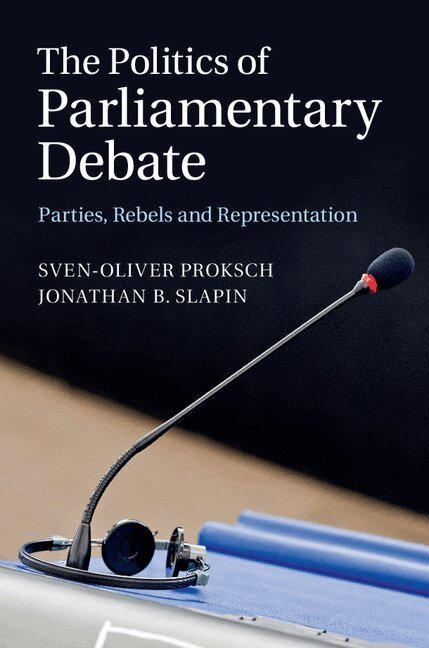
Parliamentary debate is a fundamental aspect of democratic law-making. While law makers everywhere seek to express their views in parliament, there are large discrepancies in who has access to the floor across political systems. This book explains how parties and their members of parliament (MPs) structure parliamentary debate. Parties may actively seek to prevent some members from taking the floor while promoting opportunities for others. In doing so, they attempt to control the message that their partisans convey in parliament. The authors provide a theoretical model to explain the design of procedural rules in parliament, how the party leadership interacts with rebel backbenchers, and how MPs represent voters. The book explores political institutions, intra-party politics, electoral politics and legislative behavior. It develops and tests a new theory of parliamentary debate, using data from the UK, Germany, New Zealand and the European Parliament.
452 kr
Skickas inom 7-10 vardagar
Parliamentary debate is a fundamental aspect of democratic law-making. While law makers everywhere seek to express their views in parliament, there are large discrepancies in who has access to the floor across political systems. This book explains how parties and their members of parliament (MPs) structure parliamentary debate. Parties may actively seek to prevent some members from taking the floor while promoting opportunities for others. In doing so, they attempt to control the message that their partisans convey in parliament. The authors provide a theoretical model to explain the design of procedural rules in parliament, how the party leadership interacts with rebel backbenchers, and how MPs represent voters. The book explores political institutions, intra-party politics, electoral politics and legislative behavior. It develops and tests a new theory of parliamentary debate, using data from the UK, Germany, New Zealand and the European Parliament.