Tanya Zack – författare
Visar alla böcker från författaren Tanya Zack. Handla med fri frakt och snabb leverans.
8 produkter
8 produkter
Häftad, Engelska, 2025
224 kr
Kommande
The Chaos Precinct takes readers to a corner of Johannesburg that defies the maps and rewrites the story of the city. In the heart of the inner city – where Jeppe Street thrums with life – lies a vibrant, chaotic marketplace powered by Ethiopian migrant traders and informal entrepreneurs from across the continent. Here, amid narrow alleyways and makeshift stalls, commodities flow across sub-Saharan Africa, fortunes are made and an unplanned but fiercely alive urban economy pulses with ambition.Drawing on fifteen years of immersion, Tanya Zack offers an unforgettable narrative that blends personal encounters, rich storytelling and rigorous research. She walks with traders, negotiates space with city officials and listens with humility to those often unheard – weaving a portrait of Jeppe that is both intimate and expansive.The Chaos Precinct challenges the idea of Johannesburg’s decay, instead revealing a thriving, transnational entrepôt that echoes the energy of global port cities. With lyrical prose and a clear-eyed gaze, Zack reframes how we understand migration, trade and urban life on the continent.Urgent, insightful and profoundly human, The Chaos Precinct is essential reading for anyone curious about the real engines of African cities.
Inbunden, Engelska, 2023
1 191 kr
Skickas inom 5-8 vardagar
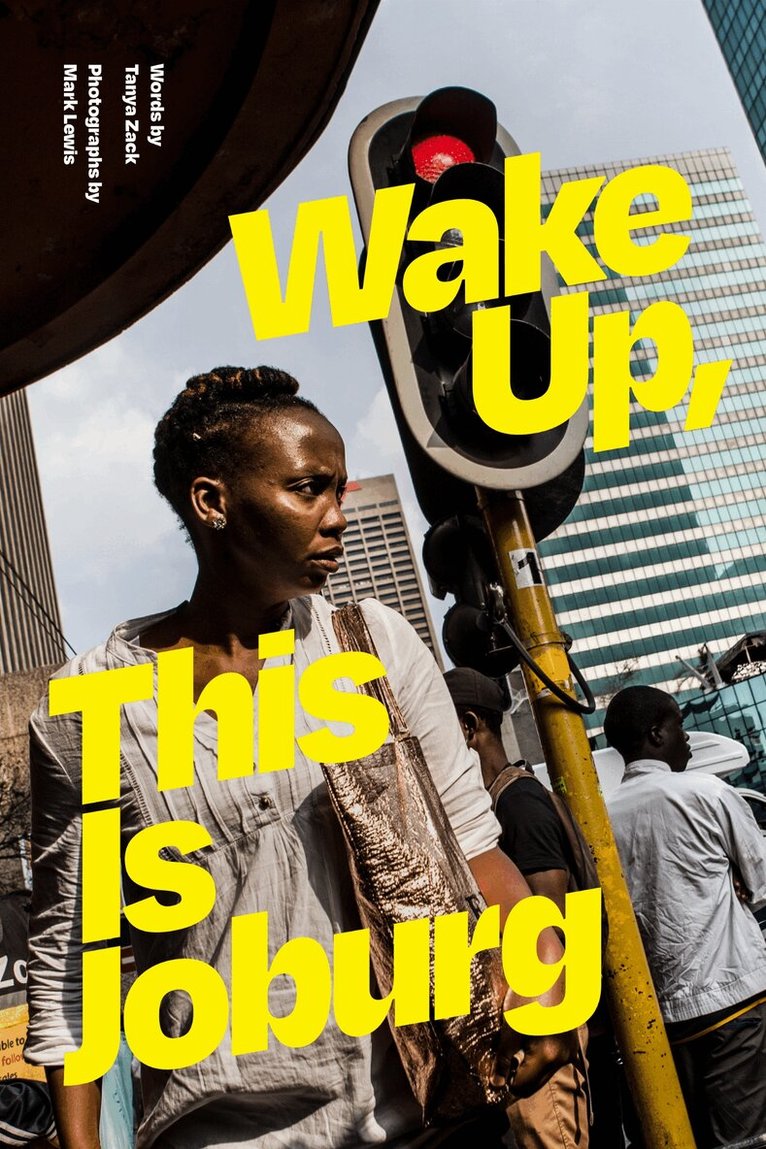
A single image taken from a high-rise building in inner-city Johannesburg uncovers layers of history-from its premise and promise of gold to its current improvisations. It reveals the city as carcass and as crucible, where informal agents and processes spearhead its rapid reshaping and transformation. In Wake Up, This Is Joburg, writer Tanya Zack and photographer Mark Lewis offer a stunning portrait of Johannesburg and personal stories of some of the city’s ordinary, odd, and outrageous residents. Their photos and essays take readers into meat markets where butchers chop cow heads; the eclectic home of an outsider artist that features turrets and full of manikins; long-abandoned gold pits beneath the city, where people continue to mine informally; and lively markets, taxi depots, and residential high-rises. Sharing people’s private and work lives and the extraordinary spaces of the metropolis, Zack and Lewis show that Johannesburg’s urban transformation occurs not in a series of dramatic, wide-scale changes but in the everyday lives, actions, and dreams of individuals.
Häftad, Engelska, 2023
317 kr
Skickas inom 5-8 vardagar
A single image taken from a high-rise building in inner-city Johannesburg uncovers layers of history-from its premise and promise of gold to its current improvisations. It reveals the city as carcass and as crucible, where informal agents and processes spearhead its rapid reshaping and transformation. In Wake Up, This Is Joburg, writer Tanya Zack and photographer Mark Lewis offer a stunning portrait of Johannesburg and personal stories of some of the city’s ordinary, odd, and outrageous residents. Their photos and essays take readers into meat markets where butchers chop cow heads; the eclectic home of an outsider artist that features turrets and full of manikins; long-abandoned gold pits beneath the city, where people continue to mine informally; and lively markets, taxi depots, and residential high-rises. Sharing people’s private and work lives and the extraordinary spaces of the metropolis, Zack and Lewis show that Johannesburg’s urban transformation occurs not in a series of dramatic, wide-scale changes but in the everyday lives, actions, and dreams of individuals.
E-bok
PDF, Engelska, 2022472 kr
Läs direkt efter köp
A single image taken from a high-rise building in inner-city Johannesburg uncovers layers of history—from its premise and promise of gold to its current improvisations. It reveals the city as carcass and as crucible, where informal agents and processes spearhead its rapid reshaping and transformation. In Wake Up, This Is Joburg, writer Tanya Zack and photographer Mark Lewis offer a stunning portrait of Johannesburg and personal stories of some of the city’s ordinary, odd, and outrageous residents. Their photos and essays take readers into meat markets where butchers chop cow heads; the eclectic home of an outsider artist that features turrets and full of manikins; long-abandoned gold pits beneath the city, where people continue to mine informally; and lively markets, taxi depots, and residential high-rises. Sharing people’s private and work lives and the extraordinary spaces of the metropolis, Zack and Lewis show that Johannesburg’s urban transformation occurs not in a series of dramatic, wide-scale changes but in the everyday lives, actions, and dreams of individuals.
E-bok
PDF, Engelska, 2018373 kr
Läs direkt efter köp
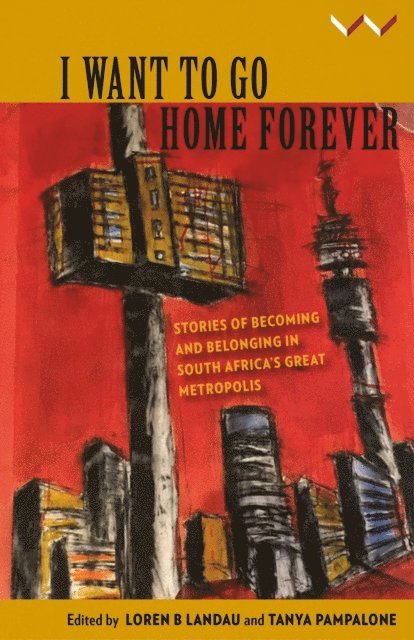
Generations of people from across Africa, Europe and Asia have turned metal from the depths of the earth into Africa’s wealthiest, most dynamic and most diverse urban centre, a mega-city where post-apartheid South Africa is being made. Yet for newcomers as well as locals, the golden possibilities of Gauteng are tinged with dangers and difficulties. Chichi is a hairdresser from Nigeria who left for South Africa after a love affair went bad. Azam arrived from Pakistan with a modest wad of cash and a dream. Estiphanos trekked the continent escaping political persecution in Ethiopia, only to become the target of the May 2008 xenophobic attacks. Nombuyiselo is the mother of 14-year-old Simphiwe Mahori, shot dead in 2015 by a Somalian shopkeeper in Snake Park, sparking a further wave of anti-foreigner violence. After fighting white oppression for decades, Ntombi has turned her anger towards African foreigners, who, she says are taking jobs away from South Africans and fuelling crime. Papi, a freedom fighter and activist in Katlehong, now dedicates his life to teaching the youth in his community that tolerance is the only way forward. These are some of the 13 stories that make up this collection. They are the stories of South Africans, some Gauteng-born, others from neighbouring provinces, striving to realise the promises of democracy. They are also the stories of newcomers, from neighbouring countries and from as far afield as Pakistan and Rwanda, seeking a secure future in those very promises. The narratives, collected by researchers, journalists and writers, reflect the many facets of South Africa’s post-apartheid decades. Taken together they give voice to the emotions and relations emanating from a paradoxical place of outrage and hope, violence and solidarity. They speak of intersections between people and their pasts, and of how, in the making of selves and the other, they are also shaping South Africa. Underlying these accounts is a nostalgia for an imagined future that can never be realised. These are stories of forever seeking a place called ‘home’.
E-bok
Engelska, 2018386 kr
Läs direkt efter köp
Generations of people from across Africa, Europe and Asia have turned metal from the depths of the earth into Africa’s wealthiest, most dynamic and most diverse urban centre, a mega-city where post-apartheid South Africa is being made. Yet for newcomers as well as locals, the golden possibilities of Gauteng are tinged with dangers and difficulties. Chichi is a hairdresser from Nigeria who left for South Africa after a love affair went bad. Azam arrived from Pakistan with a modest wad of cash and a dream. Estiphanos trekked the continent escaping political persecution in Ethiopia, only to become the target of the May 2008 xenophobic attacks. Nombuyiselo is the mother of 14-year-old Simphiwe Mahori, shot dead in 2015 by a Somalian shopkeeper in Snake Park, sparking a further wave of anti-foreigner violence. After fighting white oppression for decades, Ntombi has turned her anger towards African foreigners, who, she says are taking jobs away from South Africans and fuelling crime. Papi, a freedom fighter and activist in Katlehong, now dedicates his life to teaching the youth in his community that tolerance is the only way forward. These are some of the 13 stories that make up this collection. They are the stories of South Africans, some Gauteng-born, others from neighbouring provinces, striving to realise the promises of democracy. They are also the stories of newcomers, from neighbouring countries and from as far afield as Pakistan and Rwanda, seeking a secure future in those very promises. The narratives, collected by researchers, journalists and writers, reflect the many facets of South Africa’s post-apartheid decades. Taken together they give voice to the emotions and relations emanating from a paradoxical place of outrage and hope, violence and solidarity. They speak of intersections between people and their pasts, and of how, in the making of selves and the other, they are also shaping South Africa. Underlying these accounts is a nostalgia for an imagined future that can never be realised. These are stories of forever seeking a place called ‘home’.
E-bok
Engelska, 2008386 kr
Läs direkt efter köp
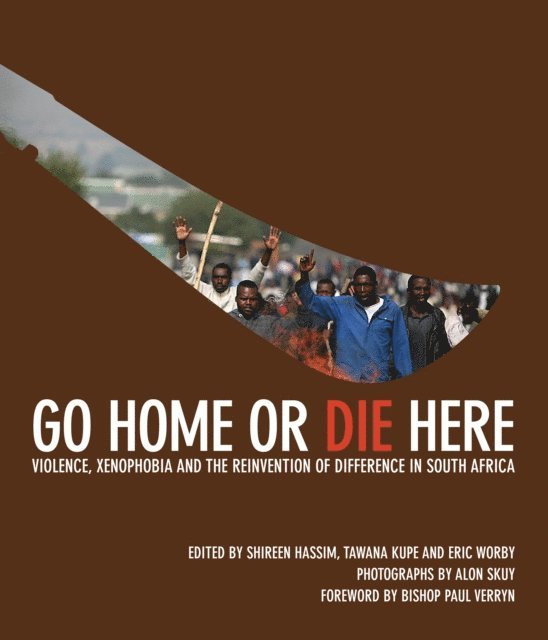
The xenophobic attacks that started in Alexandra, Johannesburg in May 2008 before quickly spreading around the country caused an outcry across the world and raised many fundamental questions: Of what profound social malaise is xenophobia – and the violence that it inspires – a symptom? Have our economic and political choices created new forms of exclusion that fuel anger and distrust? What consequences does the emergence of xenophobia hold for the idea of an equal, non-racial society as symbolised by a democratic South Africa?On 28 May 2008 the Faculty of Humanities in the University of the Witwatersrand, Johannesburg convened an urgent colloquium that focused on searching for short and long-term solutions. Nearly twenty individuals – mostly Wits academics from a variety of disciplines, but also two student leaders, a journalist and a bishop – addressed the unfolding violence in ways that were conversant with the moment, yet rooted in scholarship and ongoing research.Go Home or Die Here emanates directly from the colloquium. It hopes to make sense of the nuances and trajectories of building a democratic society out of a deeply divided and conflictual past, in the conditions of global recession, heightening inequalities and future uncertainty. The authors hoped to pose questions that would lead both to research and to more informed, reflective forms of public action. With extensive photographs by award-winning photographer Alon Skuy, who covered the violence for The Times newspaper, the volume is passionate and engaged, and aims to stimulate reflection, debate and activism among concerned members of a broad public.
E-bok
PDF, Engelska, 2008373 kr
Läs direkt efter köp
The xenophobic attacks that started in Alexandra, Johannesburg in May 2008 before quickly spreading around the country caused an outcry across the world and raised many fundamental questions: Of what profound social malaise is xenophobia – and the violence that it inspires – a symptom? Have our economic and political choices created new forms of exclusion that fuel anger and distrust? What consequences does the emergence of xenophobia hold for the idea of an equal, non-racial society as symbolised by a democratic South Africa?On 28 May 2008 the Faculty of Humanities in the University of the Witwatersrand, Johannesburg convened an urgent colloquium that focused on searching for short and long-term solutions. Nearly twenty individuals – mostly Wits academics from a variety of disciplines, but also two student leaders, a journalist and a bishop – addressed the unfolding violence in ways that were conversant with the moment, yet rooted in scholarship and ongoing research.Go Home or Die Here emanates directly from the colloquium. It hopes to make sense of the nuances and trajectories of building a democratic society out of a deeply divided and conflictual past, in the conditions of global recession, heightening inequalities and future uncertainty. The authors hoped to pose questions that would lead both to research and to more informed, reflective forms of public action. With extensive photographs by award-winning photographer Alon Skuy, who covered the violence for The Times newspaper, the volume is passionate and engaged, and aims to stimulate reflection, debate and activism among concerned members of a broad public.