Terry Wood – författare
672 kr
Läs direkt efter köp
433 kr
Skickas inom 5-8 vardagar
721 kr
Skickas inom 10-15 vardagar
2 569 kr
Skickas inom 10-15 vardagar
568 kr
Skickas inom 10-15 vardagar
351 kr
Skickas inom 10-15 vardagar
2 077 kr
Skickas inom 10-15 vardagar
701 kr
Skickas inom 10-15 vardagar
773 kr
Läs direkt efter köp
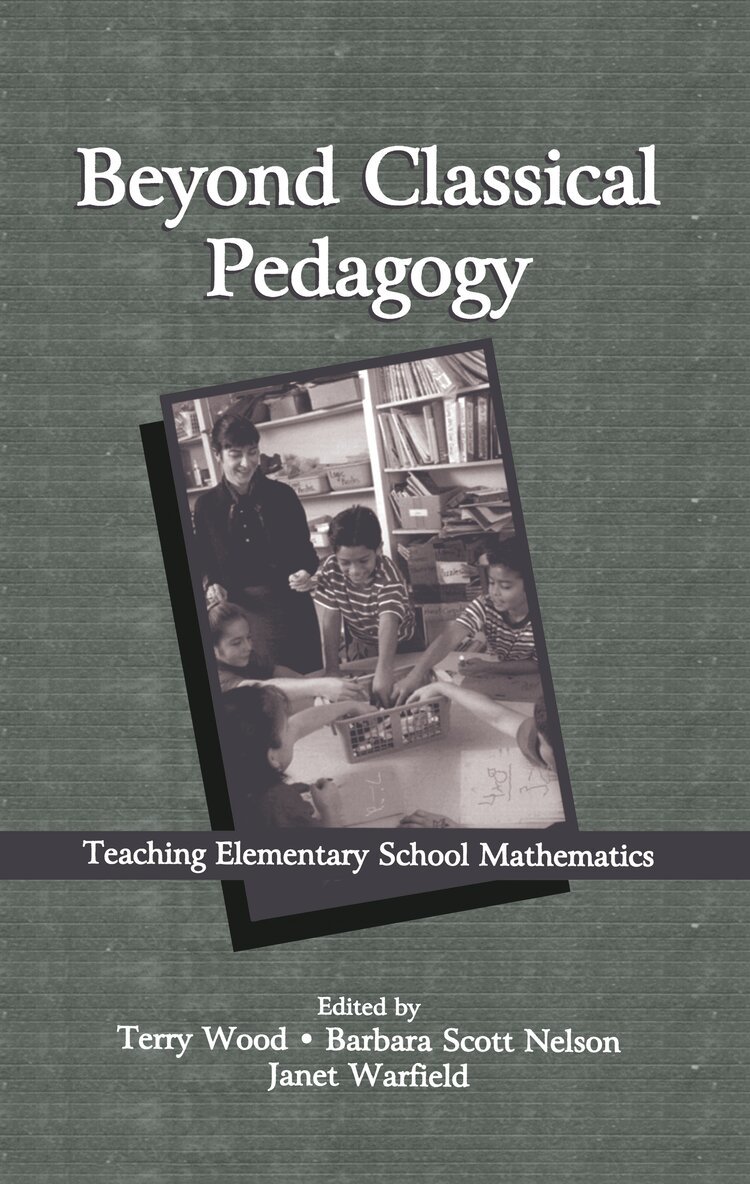
The emergence of the National Council of Teachers of Mathematics Standards in 1989 sparked a sea change in thinking about the nature and quality of mathematics instruction in U.S. schools. Much is known about transmission forms of mathematics teaching and the influence of this teaching on students'' learning, but there is still little knowledge about the alternative forms of instruction that have evolved from the recent widespread efforts to reform mathematics education.Beyond Classical Pedagogy: Teaching Elementary School Mathematics reports on the current state of knowledge about these new instructional practices, which differ in significant ways from the traditional pedagogy that has permeated mathematics education in the past. This book provides a research-based view of the nature of facilitative teaching in its relatively mature form, along with opposing views and critique of this form of pedagogy. The focus is on elementary school mathematics classrooms, where the majority of the reform-based efforts have occurred, and on the micro level of teaching (classroom interaction) as a source for revealing the complexity involved in teaching, teachers'' learning, and the impact of both on children''s learning. The work in elementary mathematics teaching is situated in the larger context of research on teaching. Research and insights from three disciplinary perspectives are presented: the psychological perspective centers on facilitative teaching as a process of teachers'' learning; the mathematical perspective focuses on the nature of the mathematical knowledge teachers need in order to engage in this form of teaching; the sociological perspective attends to the interactive process of meaning construction as teachers and students create intellectual communities in their classrooms. The multidisciplinary perspectives presented provide the editors with the necessary triangulation to provide confirming evidence and rich detail about the nature of facilitative teaching. Audiences for this book include scholars in mathematics education and teacher education, teacher educators, staff developers, and classroom teachers. It is also appropriate as a text for graduate courses in mathematics education, teacher education, elementary mathematics teaching methods, and methods of research in mathematics education.
780 kr
Läs direkt efter köp
The emergence of the National Council of Teachers of Mathematics Standards in 1989 sparked a sea change in thinking about the nature and quality of mathematics instruction in U.S. schools. Much is known about transmission forms of mathematics teaching and the influence of this teaching on students'' learning, but there is still little knowledge about the alternative forms of instruction that have evolved from the recent widespread efforts to reform mathematics education.Beyond Classical Pedagogy: Teaching Elementary School Mathematics reports on the current state of knowledge about these new instructional practices, which differ in significant ways from the traditional pedagogy that has permeated mathematics education in the past. This book provides a research-based view of the nature of facilitative teaching in its relatively mature form, along with opposing views and critique of this form of pedagogy. The focus is on elementary school mathematics classrooms, where the majority of the reform-based efforts have occurred, and on the micro level of teaching (classroom interaction) as a source for revealing the complexity involved in teaching, teachers'' learning, and the impact of both on children''s learning. The work in elementary mathematics teaching is situated in the larger context of research on teaching. Research and insights from three disciplinary perspectives are presented: the psychological perspective centers on facilitative teaching as a process of teachers'' learning; the mathematical perspective focuses on the nature of the mathematical knowledge teachers need in order to engage in this form of teaching; the sociological perspective attends to the interactive process of meaning construction as teachers and students create intellectual communities in their classrooms. The multidisciplinary perspectives presented provide the editors with the necessary triangulation to provide confirming evidence and rich detail about the nature of facilitative teaching. Audiences for this book include scholars in mathematics education and teacher education, teacher educators, staff developers, and classroom teachers. It is also appropriate as a text for graduate courses in mathematics education, teacher education, elementary mathematics teaching methods, and methods of research in mathematics education.
836 kr
Läs direkt efter köp
836 kr
Läs direkt efter köp
394 kr
Läs direkt efter köp
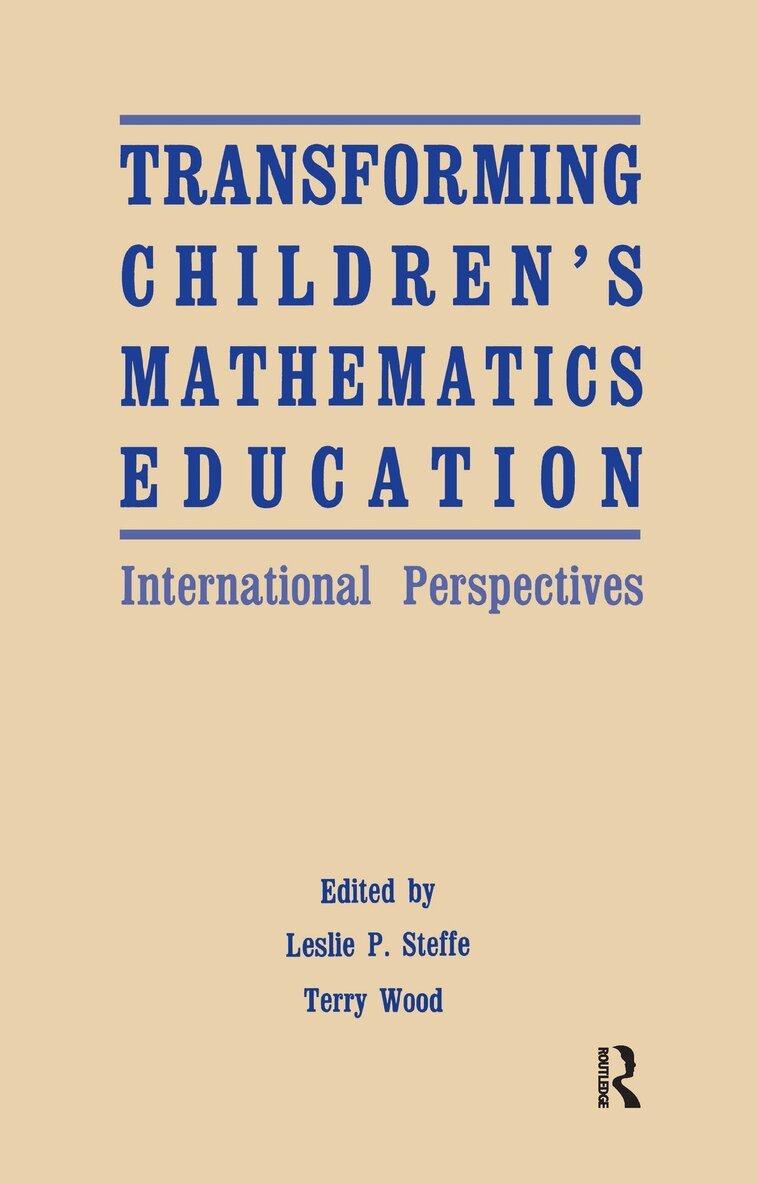
Eminent scholars from around the globe gathered to discuss how educational systems would change if the prevailing principles of constructivism were applied to three major aspects of those systems -- knowledge and learning, communication, and environment. This volume provides documentation of the proceedings of this important meeting - - the Early Childhood Action Group of the Sixth International Congress on Mathematics Education. This international assembly, representing such diverse disciplines as mathematics and math education, epistemology, philosophy, cognitive science, psycholinguistics, and science education, is the first to examine early childhood mathematics education from constructivist and international perspectives in addition to formulating recommendations for future work in the field.
394 kr
Läs direkt efter köp
Eminent scholars from around the globe gathered to discuss how educational systems would change if the prevailing principles of constructivism were applied to three major aspects of those systems -- knowledge and learning, communication, and environment. This volume provides documentation of the proceedings of this important meeting - - the Early Childhood Action Group of the Sixth International Congress on Mathematics Education. This international assembly, representing such diverse disciplines as mathematics and math education, epistemology, philosophy, cognitive science, psycholinguistics, and science education, is the first to examine early childhood mathematics education from constructivist and international perspectives in addition to formulating recommendations for future work in the field.
2 305 kr
Läs direkt efter köp
2 305 kr
Läs direkt efter köp