Tim Campbell - Böcker
Visar alla böcker från författaren Tim Campbell. Handla med fri frakt och snabb leverans.
10 produkter
10 produkter
2 858 kr
Skickas inom 3-6 vardagar
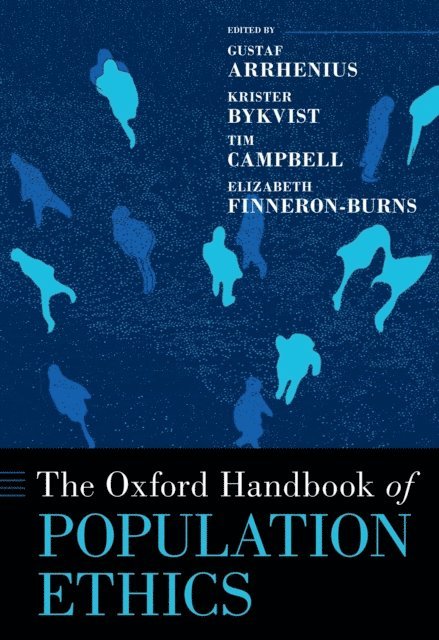
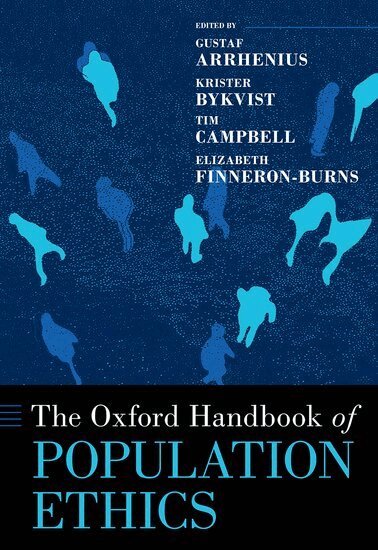
The Oxford Handbook of Population Ethics presents up-to-date theoretical analyses of various problems associated with the moral standing of future people and animals in current decision-making. Future people pose an especially hard problem for our current decision-making, since their number and their identities are not fixed but depend on the choices the present generation makes. Do we make the world better by creating more people with good lives? What do we owe future generations in terms of justice? How should burdens and benefits be shared across generations so that justice prevails? These questions are philosophically difficult and important, but also directly relevant to many practical decisions and policies. Climate change policy provides an example, as the increasing global temperature will kill some people and prevent many others from ever existing. Many other policies also influence the size and make-up of future populations both directly and indirectly, for example those concerning family planning, child support, and prioritization in health-care. If we are to adequately assess these policies, we must be able to determine the value of differently sized populations. The essays in this handbook shed light on the value of population change and the nature of our obligations to future generations. It brings together world-leading philosophers to introduce readers to some of the paradoxes of population ethics, challenge some fundamental assumptions that may be taken for granted in the debate about the value of population change, and apply these problems and assumptions to real-world decisions.
807 kr
Skickas inom 7-10 vardagar
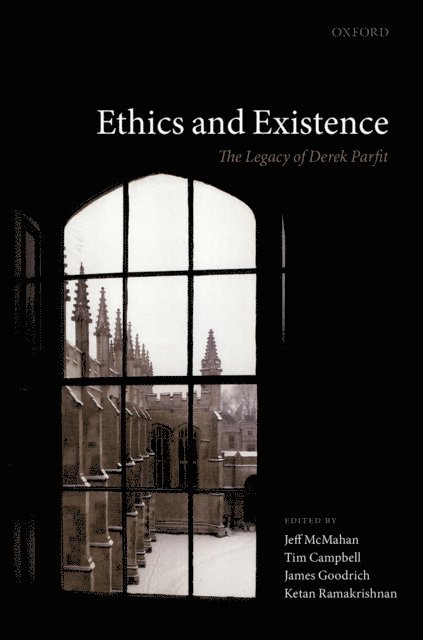
Derek Parfit, who died in 2017, is widely believed to have been the most significant moral philosopher in well over a century. The twenty-one new essays in this book have all been inspired by his work. They address issues with which he was concerned in his writing, particularly in his seminal contribution to moral philosophy, Reasons and Persons (OUP, 1984). Rather than simply commenting on his work, these essays attempt to make further progress with issues, both moral and prudential, that Parfit believed matter to our lives: issues concerned with how we ought to live, and what we have most reason to do. Topics covered in the book include the nature of personal identity, the basis of self-interested concern about the future, the rationality of our attitudes toward time, what it is for a life to go well or badly, how to evaluate moral theories, the nature of reasons for action, the aggregation of value, how benefits and harms should be distributed among people, and what degree of sacrifice morality requires us to make for the sake of others. These include some of the most important questions of normative ethical theory, as well as fundamental questions about the metaphysics of personhood and personal identity, and the ways in which the answers to these questions bear on what it is rational and moral for us to do.
1 186 kr
Skickas inom 5-8 vardagar
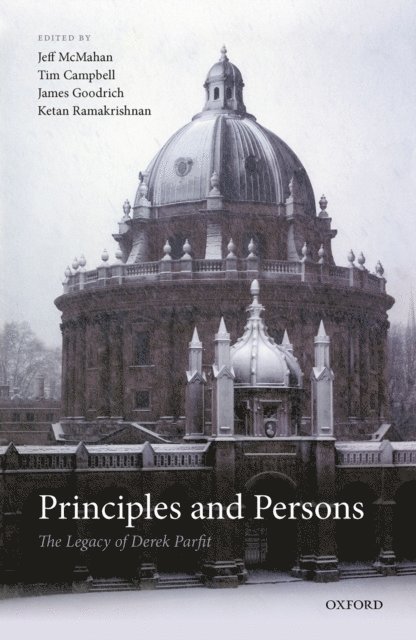
Derek Parfit, who died in 2017, is widely believed to have been the best moral philosopher in well over a century. The twenty new essays in this book were written in his honour and have all been inspired by his work--in particular, his work in an area of moral philosophy known as 'population ethics', which is concerned with moral issues raised by causing people to exist. Until Parfit began writing about these issues in the 1970s, there was almost no discussion of them in the entire history of philosophy. But his monumental book Reasons and Persons (OUP, 1984) revealed that population ethics abounds in deep and intractable problems and paradoxes that not only challenge all the major moral theories but also threaten to undermine many important common-sense moral beliefs. It is no exaggeration to say that there is a broad range of practical moral issues that cannot be adequately understood until fundamental problems in population ethics are resolved. These issues include abortion, prenatal injury, preconception and prenatal screening for disability, genetic enhancement and eugenics generally, meat eating, climate change, reparations for historical injustice, the threat of human extinction, and even proportionality in war. Although the essays in this book address foundational problems in population ethics that were discovered and first discussed by Parfit, they are not, for the most part, commentaries on his work but instead build on that work in advancing our understanding of the problems themselves. The contributors include many of the most important and influential writers in this burgeoning area of philosophy.
195 kr
Skickas inom 5-8 vardagar
284 kr
Skickas inom 5-8 vardagar
162 kr
Skickas inom 7-10 vardagar
Trusted, expert advice on the initial steps in setting up a sound, well-organized business. That's where WHAT'S YOUR BRIGHT IDEA? comes in. Both authors have considerable experience of new business ventures. They offer an honest, waffle-free assessment of what's required to set up a business, and give you plenty of sound advice along the way. Going into business involves a lot of hard work, but it should also be fun. WHAT'S YOUR BRIGHT IDEA? will help stimulate the vital sense of adventure required to make a success of possibly the most significant journey of your life.
1 855 kr
Tillfälligt slut
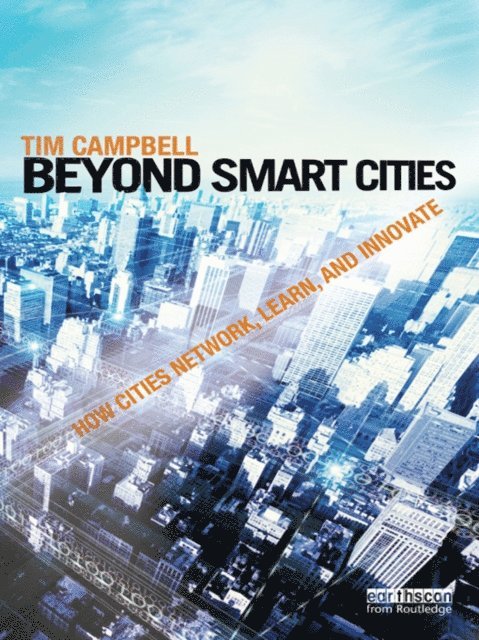
The promise of competitiveness and economic growth in so-called smart cities is widely advertised in Europe and the US. The promise is focussed on global talent and knowledge economies and not on learning and innovation. But to really achieve smart cities – that is to create the conditions of continuous learning and innovation – this book argues that there is a need to understand what is below the surface and to examine the mechanisms which affect the way cities learn and then connect together. This book draws on quantitative and qualitative data with concrete case studies to show how networks already operating in cities are used to foster and strengthen connections in order to achieve breakthroughs in learning and innovation. Going beyond smart cities means understanding how cities construct, convert and manipulate relationships that grow in urban environments. Cities discussed in this book – Amman, Barcelona, Bilbao, Charlotte,Curitiba, Juarez, Portland, Seattle and Turin – illuminate a blind spot in the literature. Each of these cities has achieved important transformations, and learning has played a key role, one that has been largely ignored in academic circles and practice concerning competitiveness and innovation.
816 kr
Skickas inom 10-15 vardagar
The promise of competitiveness and economic growth in so-called smart cities is widely advertised in Europe and the US. The promise is focussed on global talent and knowledge economies and not on learning and innovation. But to really achieve smart cities – that is to create the conditions of continuous learning and innovation – this book argues that there is a need to understand what is below the surface and to examine the mechanisms which affect the way cities learn and then connect together. This book draws on quantitative and qualitative data with concrete case studies to show how networks already operating in cities are used to foster and strengthen connections in order to achieve breakthroughs in learning and innovation. Going beyond smart cities means understanding how cities construct, convert and manipulate relationships that grow in urban environments. Cities discussed in this book – Amman, Barcelona, Bilbao, Charlotte,Curitiba, Juarez, Portland, Seattle and Turin – illuminate a blind spot in the literature. Each of these cities has achieved important transformations, and learning has played a key role, one that has been largely ignored in academic circles and practice concerning competitiveness and innovation.
261 kr
Skickas inom 5-8 vardagar
191 kr
Skickas inom 5-8 vardagar