Toyoaki Nishida – författare
Visar alla böcker från författaren Toyoaki Nishida. Handla med fri frakt och snabb leverans.
24 produkter
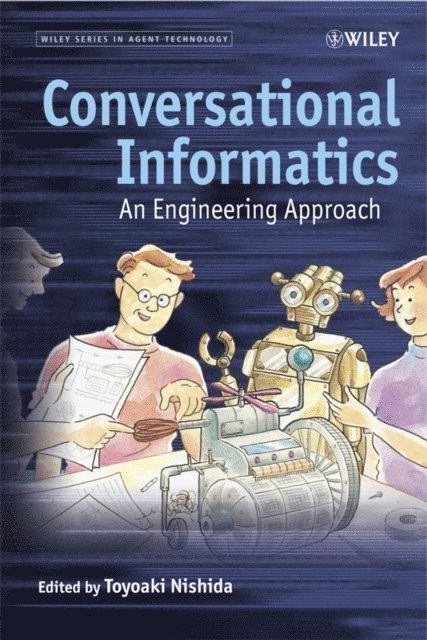
Conversational Informatics
An Engineering Approach
Inbunden, 2007
1461 kr
Lägg i varukorg
Conversational informatics investigates human behaviour with a view to designing conversational artifacts capable of interacting with humans in a conversational fashion. It spans a broad array of topics including linguistics, psychology and human-computer interaction. Until recently research in …
Conversational Informatics
An Engineering Approach
E-bok, 2008
1711 kr
Lägg i varukorg
Conversational informatics investigates human behaviour with a view to designing conversational artifacts capable of interacting with humans in a conversational fashion. It spans a broad array of topics including linguistics, psychology and human-computer interaction. Until recently research in …
Dynamic Knowledge Interaction
E-bok, 2000
3177 kr
Lägg i varukorg
Internet, intranets, the Web, chat rooms, E-mail, and E-business. With the advent of this widespread networking, it is clear that the nature of human interactions is changing. As communities develop based on common knowledge, connections through traditional social routes are de-emphasized. Dynamic …
Dynamic Knowledge Interaction
E-bok, 2000
3145 kr
Lägg i varukorg
Internet, intranets, the Web, chat rooms, E-mail, and E-business. With the advent of this widespread networking, it is clear that the nature of human interactions is changing. As communities develop based on common knowledge, connections through traditional social routes are de-emphasized. Dynamic …
Data Mining for Social Robotics
Toward Autonomously Social Robots
Av Yasser Mohammad, Toyoaki Nishida
Inbunden, 2016
1128 kr
Lägg i varukorg
This book explores an approach to social robotics based solely on autonomous unsupervised techniques and positions it within a structured exposition of related research in psychology, neuroscience, HRI, and data mining. The authors present an autonomous and developmental approach that allows the …
Data Mining for Social Robotics
Toward Autonomously Social Robots
Av Toyoaki Nishida, Yasser Mohammad
E-bok, 2016
1470 kr
Lägg i varukorg
This book explores an approach to social robotics based solely on autonomous unsupervised techniques and positions it within a structured exposition of related research in psychology, neuroscience, HRI, and data mining. The authors present an autonomous and developmental approach that allows the …
Data Mining for Social Robotics
Toward Autonomously Social Robots
Av Yasser Mohammad, Toyoaki Nishida
Häftad, 2018
1128 kr
Lägg i varukorg
This book explores an approach to social robotics based solely on autonomous unsupervised techniques and positions it within a structured exposition of related research in psychology, neuroscience, HRI, and data mining. The authors present an autonomous and developmental approach that allows the …
Intelligent Media Technology for Communicative Intelligence
Second International Workshop, IMTCI 2004, Warsaw, Poland, September 13-14, 2004. Revised Selected Papers
Av Leonard Bolc, Zbigniew Michalewicz m. fl.
Häftad, 2005
567 kr
Lägg i varukorg
The 2nd Workshop on Intelligent Media Technology for Communicative Intelligence commemorating the 10th anniversary of the Polish-Japanese Institute of Information Technology in Warsaw aimed to explore the current research topics in the ?eld of int- ligent media technologies for communicative …
Intelligent Media Technology for Communicative Intelligence
Second International Workshop, IMTCI 2004, Warsaw, Poland, September 13-14, 2004. Revised Selected Papers
Av Toyoaki Nishida, Zbigniew Michalewicz m. fl.
E-bok, 2005
732 kr
Lägg i varukorg
The 2nd Workshop on Intelligent Media Technology for Communicative Intelligence commemorating the 10th anniversary of the Polish-Japanese Institute of Information Technology in Warsaw aimed to explore the current research topics in the ?eld of int- ligent media technologies for communicative …
New Frontiers in Artificial Intelligence
Joint JSAI 2001 Workshop Post-Proceedings
Av Takao Terano, Toyoaki Nishida m. fl.
Häftad, 2001
551 kr
Lägg i varukorg
The Japanese Society for Arti?cial Intelligence (JSAI) was established in July 1986.Sincethen,wehaveheldconferenceseveryyear.AlthoughJSAIisthe second largest community in the world focusing on the area of Arti?cial - telligence and we have over 3,000 members, the importance of the research …
New Frontiers in Artificial Intelligence
Joint JSAI 2001 Workshop Post-Proceedings
Av Takashi Washio, Yukio Ohsawa m. fl.
E-bok, 2003
712 kr
Lägg i varukorg
Active Media Technology
5th International Conference, AMT 2009, Beijing, China, October 22-24, 2009, Proceedings
Av Jiming Liu, Jinglong Wu m. fl.
Häftad, 2009
1128 kr
Lägg i varukorg
This book constitutes the refereed proceedings of the 5th International Conference on Active Media Technology, AMT 2009, held in Beijing, China, in October 2009. The 47 revised full papers and the 6 keynote talks were carefully reviewed and selected.The papers reflect the shared forum for …
Active Media Technology
5th International Conference, AMT 2009, Beijing, China, October 22-24, 2009, Proceedings
Av Toyoaki Nishida, Yiyu Y. Yao m. fl.
E-bok, 2009
1502 kr
Lägg i varukorg
This book constitutes the refereed proceedings of the 5th International Conference on Active Media Technology, AMT 2009, held in Beijing, China, in October 2009. The 47 revised full papers and the 6 keynote talks were carefully reviewed and selected.The papers reflect the shared forum for …
Modelling Machine Emotions for Realizing Intelligence
Foundations and Applications
Av Toyoaki Nishida, Colette Faucher
Inbunden, 2010
1639 kr
Lägg i varukorg
Emotion connects the thought to the body, which is a magnificent biological - vice for sensing and affecting the world. The thought controls the body through emotions. The body affects the thought through emotions. Through this mec- nism, the thought allows the agent to behave intelligently in the …
Modelling Machine Emotions for Realizing Intelligence
Foundations and Applications
Av Colette Faucher, Toyoaki Nishida
E-bok, 2010
2044 kr
Lägg i varukorg
Emotion connects the thought to the body, which is a magnificent biological - vice for sensing and affecting the world. The thought controls the body through emotions. The body affects the thought through emotions. Through this mec- nism, the thought allows the agent to behave intelligently in the …
Modelling Machine Emotions for Realizing Intelligence
Foundations and Applications
Av Toyoaki Nishida, Colette Faucher
Häftad, 2012
1639 kr
Lägg i varukorg
Emotion connects the thought to the body, which is a magnificent biological - vice for sensing and affecting the world. The thought controls the body through emotions. The body affects the thought through emotions. Through this mec- nism, the thought allows the agent to behave intelligently in the …
Conversational Informatics
A Data-Intensive Approach with Emphasis on Nonverbal Communication
Av Toyoaki Nishida, Atsushi Nakazawa m. fl.
Inbunden, 2014
1130 kr
Lägg i varukorg
This book covers an approach to conversational informatics which encompasses science and technology for understanding and augmenting conversation in the network age. A major challenge in engineering is to develop a technology for conveying not just messages but also underlying wisdom. Relevant …
Conversational Informatics
A Data-Intensive Approach with Emphasis on Nonverbal Communication
Av Yasser Mohammad, Yoshimasa Ohmoto m. fl.
E-bok, 2014
1459 kr
Lägg i varukorg
This book covers an approach to conversational informatics which encompasses science and technology for understanding and augmenting conversation in the network age. A major challenge in engineering is to develop a technology for conveying not just messages but also underlying wisdom. Relevant …
Human-Harmonized Information Technology, Volume 1
Vertical Impact
Inbunden, 2016
1128 kr
Lägg i varukorg
Going from the philosophy and concepts to the implementation and user study, this book presents an excellent overview of Japan's contemporary technical challenges in the field of human–computer interaction. The next information era will be one in which information is used to cultivate human and …
Human-Harmonized Information Technology, Volume 1
Vertical Impact
E-bok, 2016
1502 kr
Lägg i varukorg
Going from the philosophy and concepts to the implementation and user study, this book presents an excellent overview of Japan''s contemporary technical challenges in the field of human–computer interaction. The next information era will be one in which information is used to cultivate human and …
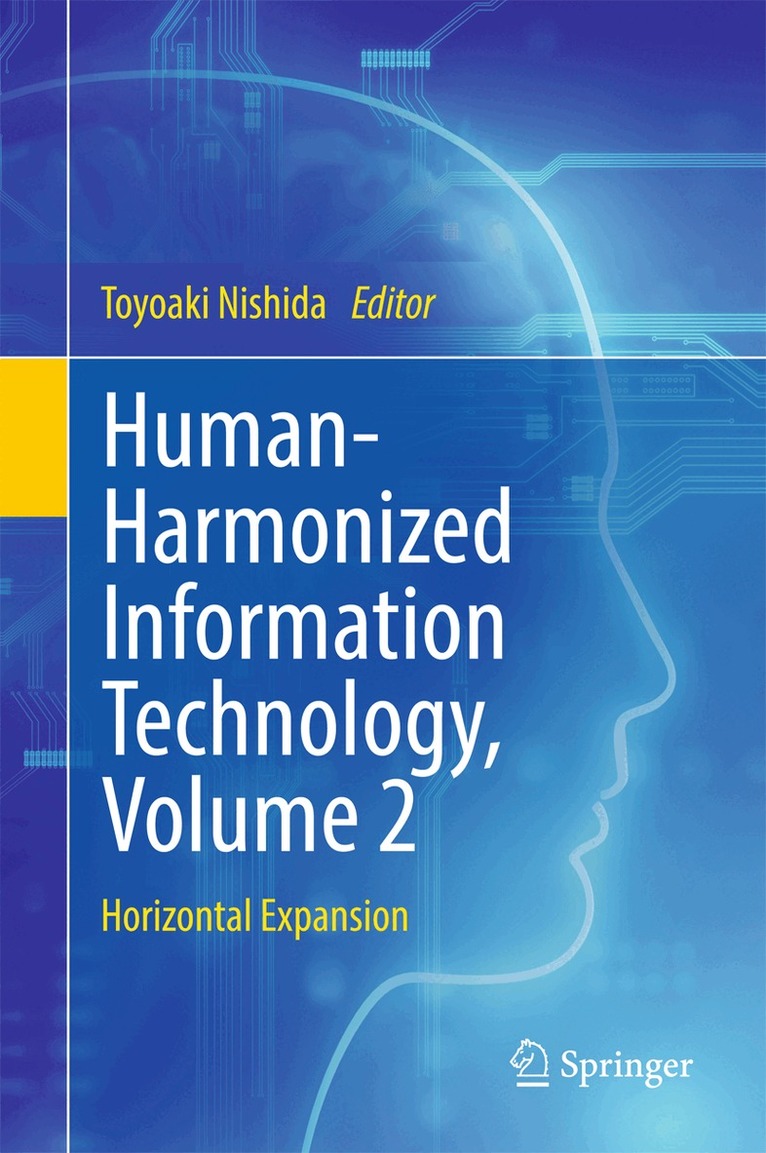
Human-Harmonized Information Technology, Volume 2
Horizontal Expansion
Inbunden, 2017
1128 kr
Lägg i varukorg
Going from the philosophy and concepts to the implementation and user study, this book presents an excellent overview of Japan's contemporary technical challenges in the field of human–computer interaction. The next information era will be one in which information is used to cultivate human and …
Human-Harmonized Information Technology, Volume 2
Horizontal Expansion
E-bok, 2017
1502 kr
Lägg i varukorg
Going from the philosophy and concepts to the implementation and user study, this book presents an excellent overview of Japan''s contemporary technical challenges in the field of human–computer interaction. The next information era will be one in which information is used to cultivate human and …
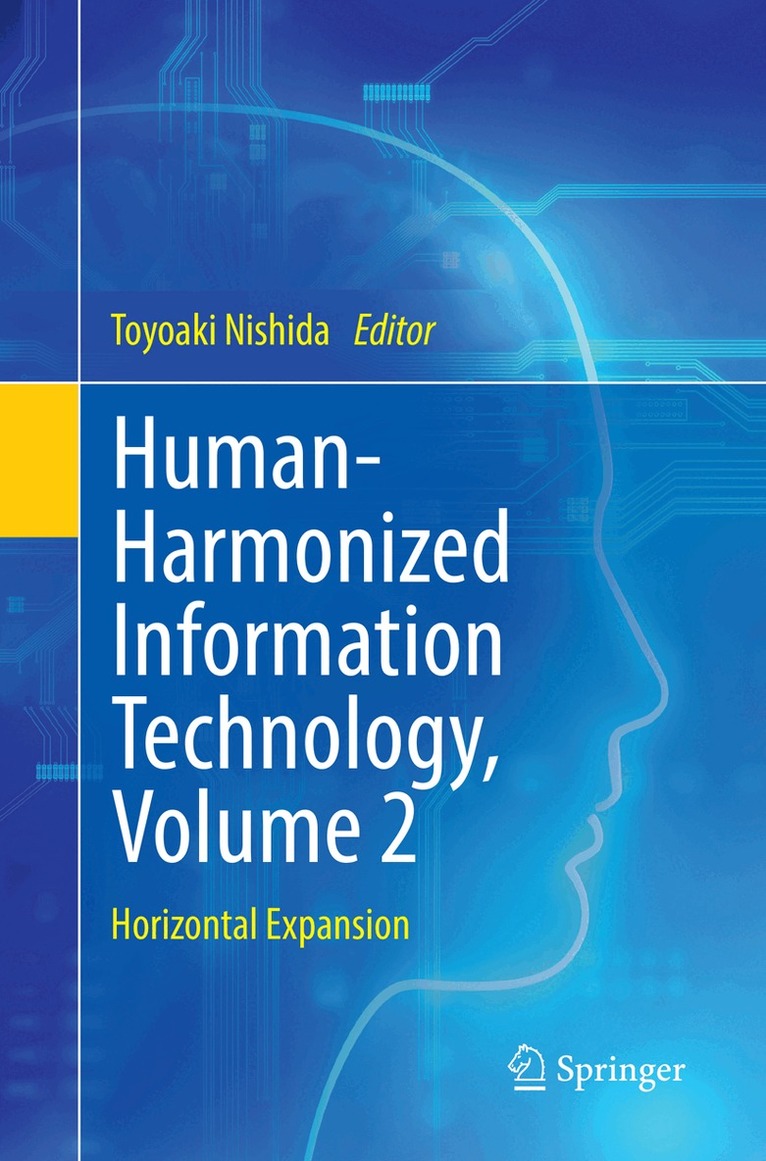
Human-Harmonized Information Technology, Volume 2
Horizontal Expansion
Häftad, 2018
1352 kr
Lägg i varukorg
Going from the philosophy and concepts to the implementation and user study, this book presents an excellent overview of Japan's contemporary technical challenges in the field of human–computer interaction. The next information era will be one in which information is used to cultivate human and …
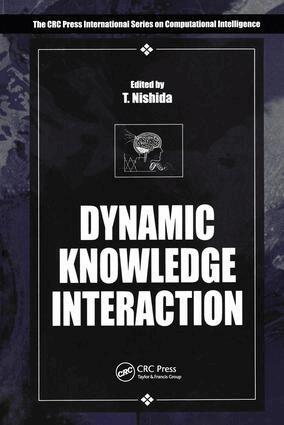
Dynamic Knowledge Interaction
Inbunden, 2000
1910 kr
Tillfälligt slut
Internet, intranets, the Web, chat rooms, E-mail, and E-business. With the advent of this widespread networking, it is clear that the nature of human interactions is changing. As communities develop based on common knowledge, connections through traditional social routes are de-emphasized. Dynamic …