• Fri frakt över 249 kr
  • •
  • Snabba leveranser
  • •
  • Billiga böcker
Kundservice

Du är på sajten för privatpersoner.

Företag, bibliotek eller offentlig verksamhet?

Du handlar på classic.bokus.com, där alla dina funktioner finns intakta.
Till classic.bokus.com
Bokus logotyp. Gå till startsidan.
  • Erbjudanden
  • Student
  • Topplistor
  • Barn & ungdom
  • Bokus Play
  • E-böcker
  • Ljudböcker
  • Pocketböcker
  • Spel & pussel

Upp till 25% på utvalda nyheter →

Sidfot

Mina sidor

    Hjälp

    • Kundservice
    • Vanliga frågor och svar
    • Frakt och leverans
    • Retur vid ångerrätt
    • Reklamera vara
    • Betalning
    • Köpvillkor
    • Allmänna villkor
    • Information om webbplatsens tillgänglighet

    Om Bokus

    • Om oss
    • Pressrum
    • För studenter
    • För företag
    • För bibliotek och offentlig verksamhet
    • För leverantörer
    • Hållbarhet

    Populärt

    • Aktuella erbjudanden
    • Presentkort
    • Studentlitteratur
    • Nya böcker
    • Topplistor
    • Signerade böcker
    • Engelska böcker

    Inspiration

    • Boktips
    • BookTok
    • Populära bokserier
    • Barnbokskaraktärer
    • Populära författare
    Logotyp för Bokus
    Följ oss på Facebook (extern länk)Följ oss på Instagram (extern länk)Följ oss på YouTube (extern länk)Följ oss på TikTok (extern länk)
    bokus @ CookiesAnpassa cookiesIntegritetspolicyKöpvillkor
    Till Citymail hemsida (extern länk)Till Budbee hemsida (extern länk)Till Postnord hemsida (extern länk)Till Schenker hemsida (extern länk)Till Early Bird hemsida (extern länk)Till Walleys hemsida (extern länk)
    1. Naturvetenskap och teknik
    2. Teknik och industri
    3. Teknik: allmänt

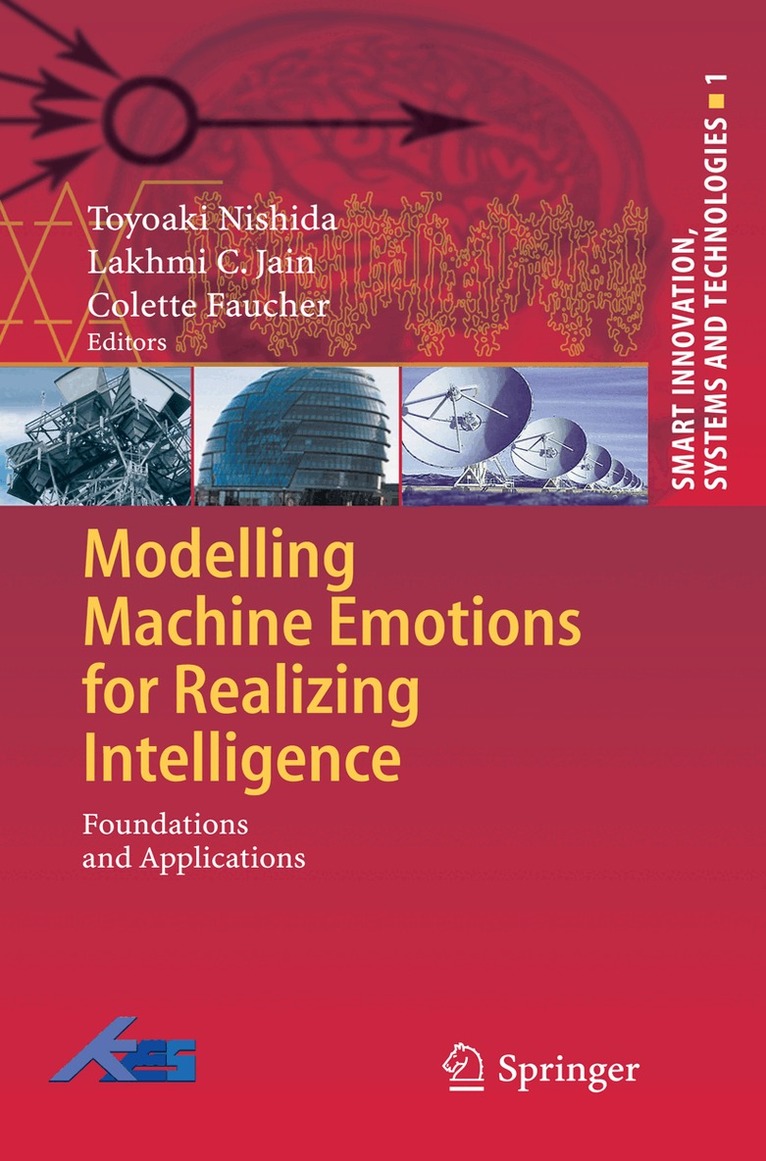
    Modelling Machine Emotions for Realizing Intelligence

    Foundations and Applications

    AvToyoaki Nishida,Colette Faucher

    Häftad, Engelska, 2012

    Del 1 i serien Smart Innovation, Systems and Technologies

    1 626 kr

    Beställningsvara. Skickas inom 10-15 vardagar. Fri frakt över 249 kr.

    Beskrivning

    Emotion connects the thought to the body, which is a magnificent biological - vice for sensing and affecting the world. The thought controls the body through emotions. The body affects the thought through emotions. Through this mec- nism, the thought allows the agent to behave intelligently in the complex world filled with a huge amount of dynamic information. The emotion maps a flux of information into a space which the agent is familiar with, enabling her/him to associate ongoing events with past experiences which help to reduce complexity by providing with a nominal solution. Recent findings in brain science suggest that mirror neurons map visual signals into motor signals for the body. This mechanism might permit one to experience the emotion of the other agent just by feeling the motor signals caused by mirror neurons as a result of visual stimuli caused by the other agent’s emotional beh- iors. In particular, it might play a significant role in invoking empathy in a social situation. It may not be hard to think about what might happen to emotion-less machines. The emotion-less machines may not be able to accumulate experiences to avoid serious failures. They may not be able to communicate with the humans in an empathetic way.

    Produktinformation

    • Utgivningsdatum:2012-06-28
    • Mått:155 x 235 x 14 mm
    • Vikt:371 g
    • Format:Häftad
    • Språk:Engelska
    • Serie:Smart Innovation, Systems and Technologies
    • Antal sidor:228
    • Upplaga:2010
    • Förlag:Springer-Verlag Berlin and Heidelberg GmbH & Co. KG
    • ISBN:9783642263262

    Utforska kategorier

    • Teknik: allmänt inom Naturvetenskap och teknik
    • Artificiell intelligens inom Data och IT
    • Kognitiv psykologi inom Psykologi och pedagogik

    Innehållsförteckning

    • Modeling Machine Emotions for Realizing Intelligence – An Introduction –.- Automatic Affective Dynamics: An Activation–Habituation Model of Affective Assimilation and Contrast.- Judgement as to Whether or Not People Are “Involved, Enjoying and Excited,” Based on the Visual and Physiological Information.- Modelling Interaction Dynamics during Face-to-Face Interactions.- Emotional Model Based on Computational Intelligence for Partner Robots.- Facial Expression Synthesis Based on Emotion Dimensions for Affective Talking Avatar.- Attentive Conversational Agent with Internal State Transition for Multiple Users.- Integrating the Emotional Intelligence into the Virtual Technical Support Engineer.- Recognition of Fine-Grained Emotions from Text: An Approach Based on the Compositionality Principle.- Interacting with Emotion and Memory Enabled Virtual Characters and Social Robots.