Volkan Altay – författare
Visar alla böcker från författaren Volkan Altay. Handla med fri frakt och snabb leverans.
16 produkter
16 produkter
Inbunden, Engelska, 2023
2 101 kr
Skickas inom 10-15 vardagar
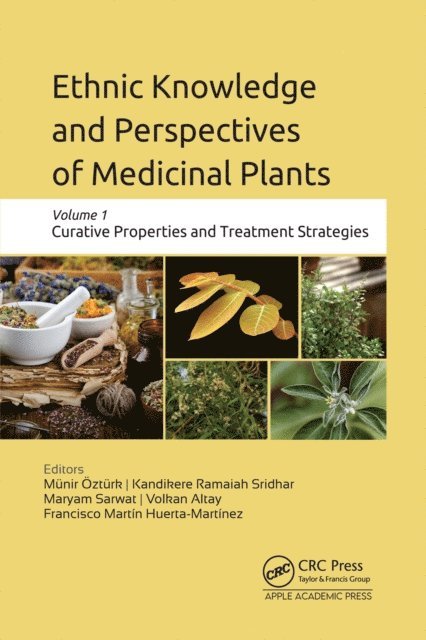
This new 2-volume set aims to share and preserve ethnic and traditional knowledge of herbal medicine and treatments, while also emphasizing the link between biodiversity, human nutrition, and food security. Ethnic Knowledge and Perspectives of Medicinal Plants is divided into two volumes, with volume 1 focusing on the traditional use of curative properties and treatment strategies of medicinal plants, and volume 2 addressing the varied nutritional and dietary benefits of medicinal plants and the practice of Ayurveda. Both volumes stress the importance of bioresources for human nutrition and nutraceuticals based on ethnic knowledge and the need for efforts to protect biodiversity in many regions rich with medicinal plants.Exploring the benefits of medicinal plants in disease prevention, treatment, and management, Volume 1 discusses the traditional use of medicinal plants as promising therapeutics for cancer, liver conditions, COVID-19, and other human ailments. It examines the efficacy of Ayurvedic and Chinese herbal medicine, Indian traditional medicine, and other ethnic herbal practices used by indigenous peoples of Azerbaijan, South America, Turkey, India, etc. A variety of plants are discussed, and the ethnomedicinal applications of over 100 wild mushrooms for their medicinal and healthcare purposes are elaborated on.While volume 1 focuses primarily on natural plant resources for addressing specific health issues, volume 2 looks at traditional medicinal plant use for their nutritional and dietary benefits, while also encouraging the preservation of biodiversity for healthy and sustainable diets. The volume presents information on over 2200 vascular plant taxa from 127 families as well as many taxa from leaf parts, fruits, underground parts, floral parts, seeds, and more that have potential use as edible food plants. Ethnic knowledge on the wild edible mushrooms is an emerging area, which is unique and is dependent on the folk knowledge of tribals; this volume discusses the unique nutritional attributes of wild edible mushrooms (206 species belonging to 73 genera) in Southern India. The authors look at various lichens as nutritional aids and medicine and as flavoring agents and spices. Fucoidans derived from the seaweeds (and spirulina) are described for their antioxidant activity, nutritional and anti-aging properties, antiviral activities, anti-cancer properties, anti-diabetic properties, and more. The authors also examine how ethnicity affects healthcare/nutritive systems at different levels through various dynamics such as lower income, inability for services uptake, disputes among different ethnic groups, cultural attitudes (some ethnic group are vegetarian), lack of socio-economic resources, and disease prevalence.Together, these two important volumes aim to preserve and disseminate the valuable ethnic knowledge of medicinal plants gained over thousands of years and to promote the value of integrating and safeguarding biodiversity.
Inbunden, Engelska, 2023
2 040 kr
Skickas inom 10-15 vardagar
This new 2-volume set aims to share and preserve ethnic and traditional knowledge of herbal medicine and treatments, while also emphasizing the link between biodiversity, human nutrition, and food security. Ethnic Knowledge and Perspectives of Medicinal Plants is divided into two volumes, with volume 1 focusing on the traditional use of curative properties and treatment strategies of medicinal plants, and volume 2 addressing the varied nutritional and dietary benefits of medicinal plants and the practice of Ayurveda. Both volumes stress the importance of bioresources for human nutrition and nutraceuticals based on ethnic knowledge and the need for efforts to protect biodiversity in many regions rich with medicinal plants.Exploring the benefits of medicinal plants in disease prevention, treatment, and management, Volume 1 discusses the traditional use of medicinal plants as promising therapeutics for cancer, liver conditions, COVID-19, and other human ailments. It examines the efficacy of Ayurvedic and Chinese herbal medicine, Indian traditional medicine, and other ethnic herbal practices used by indigenous peoples of Azerbaijan, South America, Turkey, India, etc. A variety of plants are discussed, and the ethnomedicinal applications of over 100 wild mushrooms for their medicinal and healthcare purposes are elaborated on.While volume 1 focuses primarily on natural plant resources for addressing specific health issues, volume 2 looks at traditional medicinal plant use for their nutritional and dietary benefits, while also encouraging the preservation of biodiversity for healthy and sustainable diets. The volume presents information on over 2200 vascular plant taxa from 127 families as well as many taxa from leaf parts, fruits, underground parts, floral parts, seeds, and more that have potential use as edible food plants. Ethnic knowledge on the wild edible mushrooms is an emerging area, which is unique and is dependent on the folk knowledge of tribals; this volume discusses the unique nutritional attributes of wild edible mushrooms (206 species belonging to 73 genera) in Southern India. The authors look at various lichens as nutritional aids and medicine and as flavoring agents and spices. Fucoidans derived from the seaweeds (and spirulina) are described for their antioxidant activity, nutritional and anti-aging properties, antiviral activities, anti-cancer properties, anti-diabetic properties, and more. The authors also examine how ethnicity affects healthcare/nutritive systems at different levels through various dynamics such as lower income, inability for services uptake, disputes among different ethnic groups, cultural attitudes (some ethnic group are vegetarian), lack of socio-economic resources, and disease prevalence.Together, these two important volumes aim to preserve and disseminate the valuable ethnic knowledge of medicinal plants gained over thousands of years and to promote the value of integrating and safeguarding biodiversity.
4 787 kr
Skickas inom 10-15 vardagar
This new 2-volume set aims to share and preserve ethnic and traditional knowledge of herbal medicine and treatments, while also emphasizing the link between biodiversity, human nutrition, and food security. Ethnic Knowledge and Perspectives of Medicinal Plants is divided into two volumes, with volume 1 focusing on the traditional use of curative properties and treatment strategies of medicinal plants, and volume 2 addressing the varied nutritional and dietary benefits of medicinal plants and the practice of Ayurveda. Both volumes stress the importance of bioresources for human nutrition and nutraceuticals based on ethnic knowledge and the need for efforts to protect biodiversity in many regions rich with medicinal plants.Exploring the benefits of medicinal plants in disease prevention, treatment, and management, Volume 1 discusses the traditional use of medicinal plants as promising therapeutics for cancer, liver conditions, COVID-19, and other human ailments. It examines the efficacy of Ayurvedic and Chinese herbal medicine, Indian traditional medicine, and other ethnic herbal practices used by indigenous peoples of Azerbaijan, South America, Turkey, India, etc. A variety of plants are discussed, and the ethnomedicinal applications of over 100 wild mushrooms for their medicinal and healthcare purposes are elaborated on.While volume 1 focuses primarily on natural plant resources for addressing specific health issues, volume 2 looks at traditional medicinal plant use for their nutritional and dietary benefits, while also encouraging the preservation of biodiversity for healthy and sustainable diets. The volume presents information on over 2200 vascular plant taxa from 127 families as well as many taxa from leaf parts, fruits, underground parts, floral parts, seeds, and more that have potential use as edible food plants. Ethnic knowledge on the wild edible mushrooms is an emerging area, which is unique and is dependent on the folk knowledge of tribals; this volume discusses the unique nutritional attributes of wild edible mushrooms (206 species belonging to 73 genera) in Southern India. The authors look at various lichens as nutritional aids and medicine and as flavoring agents and spices. Fucoidans derived from the seaweeds (and spirulina) are described for their antioxidant activity, nutritional and anti-aging properties, antiviral activities, anti-cancer properties, anti-diabetic properties, and more. The authors also examine how ethnicity affects healthcare/nutritive systems at different levels through various dynamics such as lower income, inability for services uptake, disputes among different ethnic groups, cultural attitudes (some ethnic group are vegetarian), lack of socio-economic resources, and disease prevalence.Together, these two important volumes aim to preserve and disseminate the valuable ethnic knowledge of medicinal plants gained over thousands of years and to promote the value of integrating and safeguarding biodiversity.
Inbunden, Engelska, 2021
1 834 kr
Skickas inom 10-15 vardagar
Of the world’s seven continents, Asia is the largest. Its physical landscapes, political units, and ethnic groups are both wide-ranging and many. Southwest, South and Middle Asia are highly populated regions which, as a whole, cover an extremely large area of varied geography. In total, this domain is unique in its plant diversity and large vegetation zones with different communities and biomes. It is rich in endemics, with specific and intraspecific diversity of fruit trees and medicinal plants, including a number of rare, high value, species. At the same time, much of the land in the region is too dry or too rugged, with many geographical extremes. Overgrazing, oil and mineral extraction, and poaching are the major threats in the area.This two-volume project focuses on the dynamic biodiversity of the region with in-depth analysis on phytosociology, plants, animals and agroecology. There are also chapters that explore new applications as well as approaches to overcome problems associated with climate change. Much of the research and analysis are presented here for the first time. We believe this work is a valuable resource for professionals and researchers working in the fields of plant diversity and vegetation, animal diversity and animal populations, and geo-diversity and sustainable land use, among others.The first volume guides our readers to West Asia and the Caucasus region, while volume two focuses on issues unique to South and Middle Asia.
Häftad, Engelska, 2022
1 834 kr
Skickas inom 10-15 vardagar
Of the world’s seven continents, Asia is the largest. Its physical landscapes, political units, and ethnic groups are both wide-ranging and many. Southwest, South and Middle Asia are highly populated regions which, as a whole, cover an extremely large area of varied geography. In total, this domain is unique in its plant diversity and large vegetation zones with different communities and biomes. It is rich in endemics, with specific and intraspecific diversity of fruit trees and medicinal plants, including a number of rare, high value, species. At the same time, much of the land in the region is too dry or too rugged, with many geographical extremes. Overgrazing, oil and mineral extraction, and poaching are the major threats in the area.This two-volume project focuses on the dynamic biodiversity of the region with in-depth analysis on phytosociology, plants, animals and agroecology. There are also chapters that explore new applications as well as approaches to overcome problems associated with climate change. Much of the research and analysis are presented here for the first time. We believe this work is a valuable resource for professionals and researchers working in the fields of plant diversity and vegetation, animal diversity and animal populations, and geo-diversity and sustainable land use, among others.The first volume guides our readers to West Asia and the Caucasus region, while volume two focuses on issues unique to South and Middle Asia.
Inbunden, Engelska, 2022
2 479 kr
Skickas inom 10-15 vardagar
Of the world’s seven continents, Asia is the largest. Its physical landscapes, political units, and ethnic groups are both wide-ranging and many. Southwest, South and Middle Asia are highly populated regions which, as a whole, cover an extremely large area of varied geography. In total, this domain is unique in its plant diversity and large vegetation zones with different communities and biomes. It is rich in endemics, with specific and intraspecific diversity of fruit trees and medicinal plants, including a number of rare, high value, species. At the same time, much of the land in the region is too dry or too rugged, with many geographical extremes. Overgrazing, oil and mineral extraction, and poaching are the major threats in the area.This two-volume project focuses on the dynamic biodiversity of the region with in-depth analysis on phytosociology, plants, animals and agroecology. There are also chapters that explore new applications as well as approachesto overcome problems associated with climate change. Much of the research and analysis are presented here for the first time. We believe this work is a valuable resource for professionals and researchers working in the fields of plant diversity and vegetation, animal diversity and animal populations, and geo-diversity and sustainable land use, among others.The first volume guides our readers to West Asia and the Caucasus region, while volume two focuses on issues unique to South and Middle Asia.
Häftad, Engelska, 2023
2 479 kr
Skickas inom 10-15 vardagar
Of the world’s seven continents, Asia is the largest. Its physical landscapes, political units, and ethnic groups are both wide-ranging and many. Southwest, South and Middle Asia are highly populated regions which, as a whole, cover an extremely large area of varied geography. In total, this domain is unique in its plant diversity and large vegetation zones with different communities and biomes. It is rich in endemics, with specific and intraspecific diversity of fruit trees and medicinal plants, including a number of rare, high value, species. At the same time, much of the land in the region is too dry or too rugged, with many geographical extremes. Overgrazing, oil and mineral extraction, and poaching are the major threats in the area.This two-volume project focuses on the dynamic biodiversity of the region with in-depth analysis on phytosociology, plants, animals and agroecology. There are also chapters that explore new applications as well as approachesto overcome problems associated with climate change. Much of the research and analysis are presented here for the first time. We believe this work is a valuable resource for professionals and researchers working in the fields of plant diversity and vegetation, animal diversity and animal populations, and geo-diversity and sustainable land use, among others.The first volume guides our readers to West Asia and the Caucasus region, while volume two focuses on issues unique to South and Middle Asia.
Inbunden, Engelska, 2021
1 778 kr
Skickas inom 10-15 vardagar
This book also provides comprehensive and useful information about traditional uses of medicinal plants by the local communities for the treatment of various prevalent diseases.
Häftad, Engelska, 2022
1 778 kr
Skickas inom 10-15 vardagar
This book also provides comprehensive and useful information about traditional uses of medicinal plants by the local communities for the treatment of various prevalent diseases.
Inbunden, Engelska, 2023
1 999 kr
Skickas inom 10-15 vardagar
This book provides a comprehensive account on the distribution of halophytes, their ethnobotanical and medicinal aspects, economic importance, and chemical constituents along with scientific description.
Engelska, 2023
650 kr
Skickas inom 5-8 vardagar
Häftad, Engelska, 2024
1 999 kr
Skickas inom 10-15 vardagar
This book provides a comprehensive account on the distribution of halophytes, their ethnobotanical and medicinal aspects, economic importance, and chemical constituents along with scientific description.
Inbunden, Engelska, 2023
1 397 kr
Skickas inom 5-8 vardagar
Mulberry (Morus spp.) is widely distributed tree taxon found almost in every continent across the globe. Habitat of this plant species is very much diversified, as it is found across all climatic zones ranging from tropical, sub-tropical, temperate, tundra, semi-arid to desert (arid) conditions. It flourishes on all types of landforms; mountains, valleys, plateaus, forests, grasslands, hills, plains and arid lands. Successful utilization of mulberry leaf for silkworm rearing and production of quality cocoons has been studied at length. Now, mulberry is being recognized as a multipurpose plant by most of the countries across the globe. As mulberry is eco-friendly in nature, the propagation of mulberry needs to be done at large scale to address the ecological issues like conversion of arid lands to cultivable lands, eco-restoration of degraded lands, bioremediation of polluted land sites, conservation of water and soil, cleaning the air pollution in urban areas, utilization of mulberry in producing renewable energy in the form of biodiesel. Similarly, there is the need to produce the identified and highly commercially valued pharmaceutical compounds of mulberry under laboratory conditions through in vitro culture based secondary metabolite production through enhanced expression under the stress conditions or in presence of elicitors.Lately protocols have been developed for genetic transformation of mulberry through agrobacterium mediated and particle bombardment mediated gene transfer techniques. Biotechnology based molecular breeding techniques could also be utilized in raising the improved lines through marker assisted selection, soma clonal variations, mutational breeding, somatic hybridization, genome editing and other genetic engineering approaches. Apart from sericulture; mulberry should also be utilized and exploited in other sectors across the globe for additional revenue generation, for livestock maintenance, for environmental safety and in promoting human health.These diversified aspects of mulberry coupled with its economic importance in revenue generation through sericulture, animal husbandry and industrial products has prompted us to prepare this book. It will present a comprehensive account of mulberry plant under 9 chapter headings: introduction, botanical features, ecological features, ecophysiological aspects, interactions and development, molecular aspects, propagation and production, economic importance, and global perspectives as well as future approaches.
Häftad, Engelska, 2024
1 404 kr
Skickas inom 10-15 vardagar
Mulberry (Morus spp.) is widely distributed tree taxon found almost in every continent across the globe. Habitat of this plant species is very much diversified, as it is found across all climatic zones ranging from tropical, sub-tropical, temperate, tundra, semi-arid to desert (arid) conditions. It flourishes on all types of landforms; mountains, valleys, plateaus, forests, grasslands, hills, plains and arid lands. Successful utilization of mulberry leaf for silkworm rearing and production of quality cocoons has been studied at length. Now, mulberry is being recognized as a multipurpose plant by most of the countries across the globe. As mulberry is eco-friendly in nature, the propagation of mulberry needs to be done at large scale to address the ecological issues like conversion of arid lands to cultivable lands, eco-restoration of degraded lands, bioremediation of polluted land sites, conservation of water and soil, cleaning the air pollution in urban areas, utilization of mulberry in producing renewable energy in the form of biodiesel. Similarly, there is the need to produce the identified and highly commercially valued pharmaceutical compounds of mulberry under laboratory conditions through in vitro culture based secondary metabolite production through enhanced expression under the stress conditions or in presence of elicitors.Lately protocols have been developed for genetic transformation of mulberry through agrobacterium mediated and particle bombardment mediated gene transfer techniques. Biotechnology based molecular breeding techniques could also be utilized in raising the improved lines through marker assisted selection, soma clonal variations, mutational breeding, somatic hybridization, genome editing and other genetic engineering approaches. Apart from sericulture; mulberry should also be utilized and exploited in other sectors across the globe for additional revenue generation, for livestock maintenance, for environmental safety and in promoting human health.These diversified aspects of mulberry coupled with its economic importance in revenue generation through sericulture, animal husbandry and industrial products has prompted us to prepare this book. It will present a comprehensive account of mulberry plant under 9 chapter headings: introduction, botanical features, ecological features, ecophysiological aspects, interactions and development, molecular aspects, propagation and production, economic importance, and global perspectives as well as future approaches.
Inbunden, Engelska, 2026
1 611 kr
Skickas inom 5-8 vardagar
Plant Biology is reaching an extraordinary degree of complexity, especially due to late technological advances. Integration from the molecular to the whole plant level of the mechanisms governing growth and developmental processes provides a better and an increasingly diverse vision of the functioning of plants in different habitats and under changing environmental conditions. This covers various levels of plant research: cellular, biochemical, molecular, physiological, ecological and evolutionary, allowing us to more precisely understand the physiological/molecular mechanisms, to see the richness of phenotypic responses of plants to the diverse environments, search the molecular basis of variation, consider the diversity and specificities of plant functionalism, progress made in the fundamental knowledge of reception of external signals and internal signaling pathways, the integration of metabolic functions, and the differentiation and development of plants exposed to stress.Brassicaceae is a large plant family with 338 genera, approximately globally distributed 4000 species, with major agro-economic and scientific importance. Several members are metal hyperaccumulators among 0.2 percent of all angiosperms, playing a role in phytoremediation technology. The oilseed Brassicas grow fast, yield high biomass and are well adapted with a potential for selecting superior genotypes for different purposes; well suited to genetic manipulation, in vitro culture techniques and attractive candidates for the introduction of genes. The genus "Brassica" include oilseeds and vegetables of global economic importance. This book reviews advances in various areas of "Brassicas", covering the botanical aspects as well as use of rapid-cycle brassicas, their ecophysiology, tissue culture and gene transfer, molecular genetics, biotic and abiotic stress resilience, and molecular/speed breeding farming. It targets a potentially broad spectrum of audience ranging from the researchers in this field to undergraduate and graduate students who want an overview of current knowledge referred to the Brassica’s as food.
Häftad, Engelska, 2018
706 kr
Skickas inom 10-15 vardagar
In traditional medicine licorice roots have been used against treating many ailments including lung diseases, arthritis, kidney diseases, eczema, heart diseases, gastric ulcer, low blood pressure, allergies, liver toxicity, and certain microbial infections.