Dilfuza Egamberdieva – författare
1 426 kr
Skickas inom 10-15 vardagar
Biodiversity and Biomedicine: Our Future provides a new outlook on Earth's animal, plant, and fungi species as vital sources for human health treatments. While there are over 10 million various species on the planet, only 2 million have been discovered and named. This book identifies modern ways to incorporate Earth's species into biomedical practices and emphasizes the need for biodiversity conservation.
Written by leading biodiversity and biomedical experts, the book begins with new insights on the benefits of biologically active compounds found in fungi and plants, including a chapter on the use of wild fruits as a treatment option. The book goes on to discuss the roles of animals, such as amphibians and reptiles, and how the threatened presence of these species must be reversed to conserve biodiversity. It also discusses marine organisms, including plants, animals, and microbes, as essential in contributing to human health.
Biodiversity and Biomedicine: Our Future is a vital source for researchers and practitioners specializing in biodiversity and conservation studies. Students in natural medicine and biological conservation will also find this useful to learn of the world's most bio-rich communities and the molecular diversity of various species.
Presents new developments in documenting and identifying species for biodiversity conservation and ethical considerations for biodiversity research Examines biodiversity as an irreplaceable resource for biomedical breakthroughs using available species for medical research Discusses challenges and opportunities for biodiversity protection and research in biosphere reserves1 975 kr
Läs direkt efter köp
1 967 kr
Skickas inom 10-15 vardagar
2 800 kr
Läs direkt efter köp
1 991 kr
Skickas inom 10-15 vardagar
Rhizosphere: Ecology, Management and Application highlights the use of the rhizosphere microbiome to improve plant and soil health, including strengthening stress resistance and remediating negatively impacted soils. The book focuses on current developments and applications of related low input management strategies in high-value crops as well as non-food plants. Further sections provide insights into the ecology and functions of these interactions, including evidence that plant microbiota is vital for plant growth and stress resilience and health. It highlights fundamental microbiome research to help readers better understand the dynamics within microbial communities and their interactions with various plant hosts and the environment.
Microbial-root associations are essential to assist plants under abiotic and biotic stresses and are necessary and beneficial to enhancing agricultural crop production. Numerous studies have enhanced our vision of the complex interactions between the plant, the associated microbial communities, and the environment. Further, microbe - microbe interactions allow the simulation microbial community interactions naturally, and is one of the many modern methods for the development of novel and effective metabolites.
Includes insights on the sustainable use of valuable soil rhizobiome Explores the latest biotechnological developments in the harnessing of rhizosphere potential Proposes potential applications and microbial communities in modern agricultural systems, soil bioremediation and environmental restoration Assesses the role of the rhizosphere microbial communities in increasing the growth of crop plants2 834 kr
Läs direkt efter köp
1 871 kr
Skickas inom 10-15 vardagar
2 662 kr
Läs direkt efter köp
1 666 kr
Skickas inom 10-15 vardagar
2 107 kr
Läs direkt efter köp
1 906 kr
Kommande
2 501 kr
Skickas inom 10-15 vardagar
3 073 kr
Läs direkt efter köp
Of the world’s seven continents, Asia is the largest. Its physical landscapes, political units, and ethnic groups are both wide-ranging and many. Southwest, South and Middle Asia are highly populated regions which, as a whole, cover an extremely large area of varied geography. In total, this domain is unique in its plant diversity and large vegetation zones with different communities and biomes. It is rich in endemics, with specific and intraspecific diversity of fruit trees and medicinal plants, including a number of rare, high value, species. At the same time, much of the land in the region is too dry or too rugged, with many geographical extremes. Overgrazing, oil and mineral extraction, and poaching are the major threats in the area.
This two-volume project focuses on the dynamic biodiversity of the region with in-depth analysis on phytosociology, plants, animals and agroecology. There are also chapters that explore new applications as well as approachesto overcome problems associated with climate change. Much of the research and analysis are presented here for the first time. We believe this work is a valuable resource for professionals and researchers working in the fields of plant diversity and vegetation, animal diversity and animal populations, and geo-diversity and sustainable land use, among others.
The first volume guides our readers to West Asia and the Caucasus region, while volume two focuses on issues unique to South and Middle Asia.
2 501 kr
Skickas inom 10-15 vardagar
1 634 kr
Skickas inom 10-15 vardagar
1 977 kr
Läs direkt efter köp
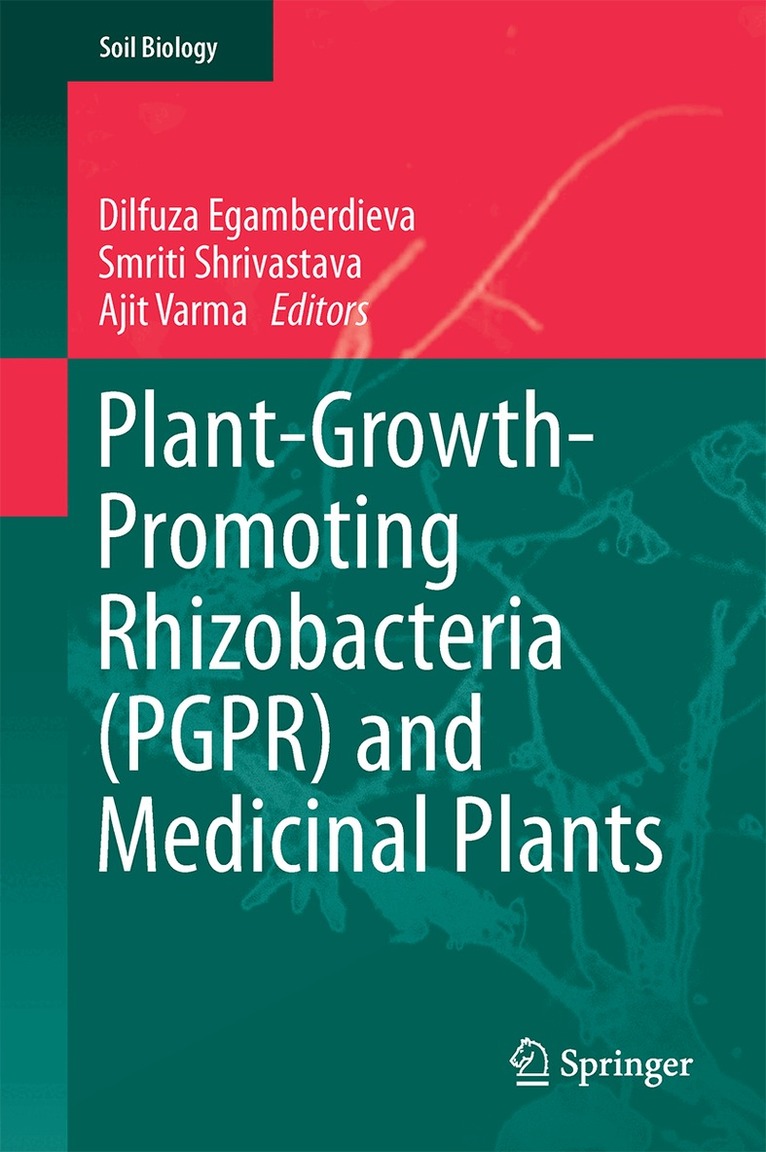
This book describes the various applications of microorganisms in improving plant growth, health and the efficiency of phytochemical production.
The chapters trace topics such as the role of PGPRs in improving salt stress and heavy metal tolerance in plants; the prevention and control of plant diseases; boosting soil fertility and agriculture productivity; the induction of secondary metabolite biosynthesis in medicinal and aromatic plants; the enhancement of phytochemical levels, and the action mechanisms, diversity and characterization of PGPRs. The reviews will be of interest for scientists in the fields of agriculture, microbiology, soil biology, plant breeding and herbal medicinal products.
Plant-Growth-Promoting Rhizobacteria (PGPR) and Medicinal Plants
1 634 kr
Skickas inom 10-15 vardagar
1 634 kr
Skickas inom 10-15 vardagar
1 977 kr
Läs direkt efter köp
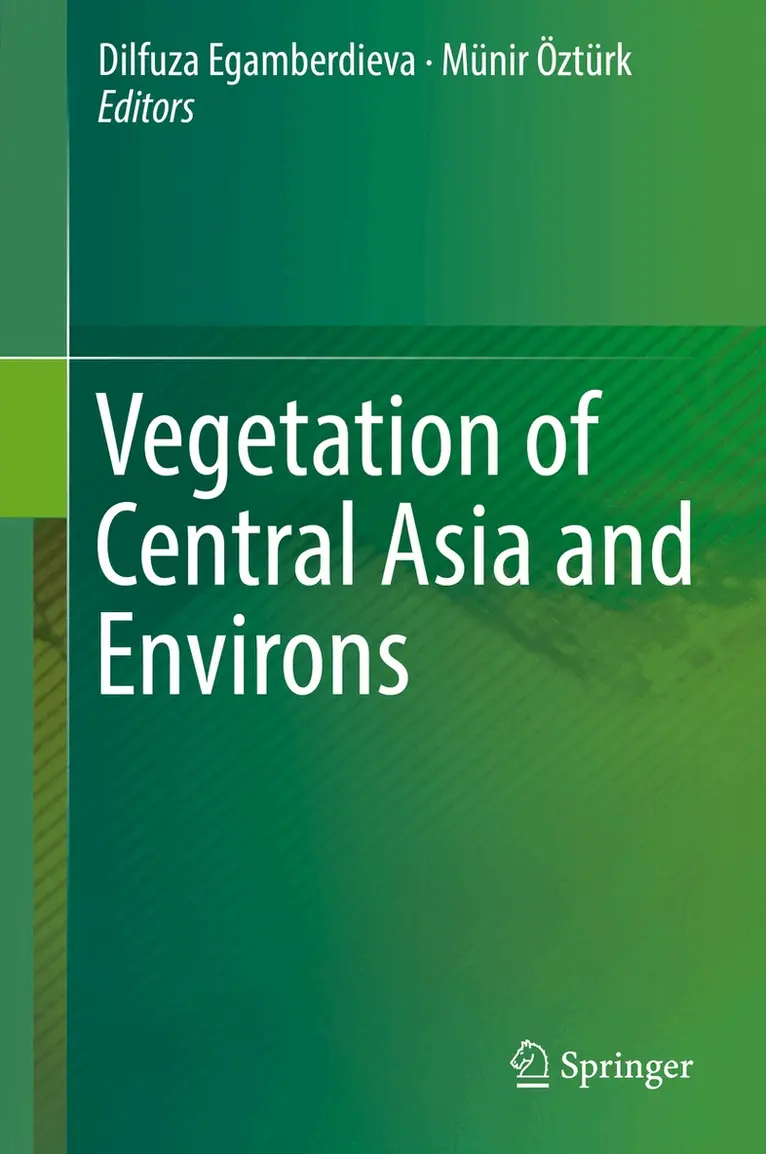
Central Asia is a large and understudied region of varied geography, ranging from the high passes and mountains of Tian Shan, to the vast deserts of Kyzyl Kum, Taklamakan to the grassy treeles steppes.
This region is faced with adverse conditions, as much of the land is too dry or rugged for farming. Additionally, the rich specific and intraspecific diversity of fruit trees and medicinal plants is threatened by overgrazing, oil and mineral extraction, and poaching. Countless species from the approximately 20 ecosystems and 6000 plant taxa are now rare and endangered.
Traditional vegetation studies in this region are far from adequate to handle complex issues such as soil mass movement, soil sodicity and salinity, biodiversity conservation, and grazing management. However, data analysis using a Geographical Information System (GIS) tool provides new insights into the vegetation of this region and opens up new opportunities for long-term sustainable management. While vegetation planning can occur at a property scale, it is often necessary for certain factors, such as salinity, to be dealt with on a regional scale to ensure their effective management. GIS increases the effectiveness and accuracy of vegetation planning in a region. Such regional planning will also greatly increases biodiversity values.This book systematically explores these issues and discuses new applications and approaches for overcoming these issues, including the application of GIS techniques for sustainable management and planning. Professional researchers as well as students and teachers of agriculture and ecology will find this volume to be an integral resource for studying the vegetation of Central Asia.
2 393 kr
Skickas inom 10-15 vardagar
2 149 kr
Läs direkt efter köp
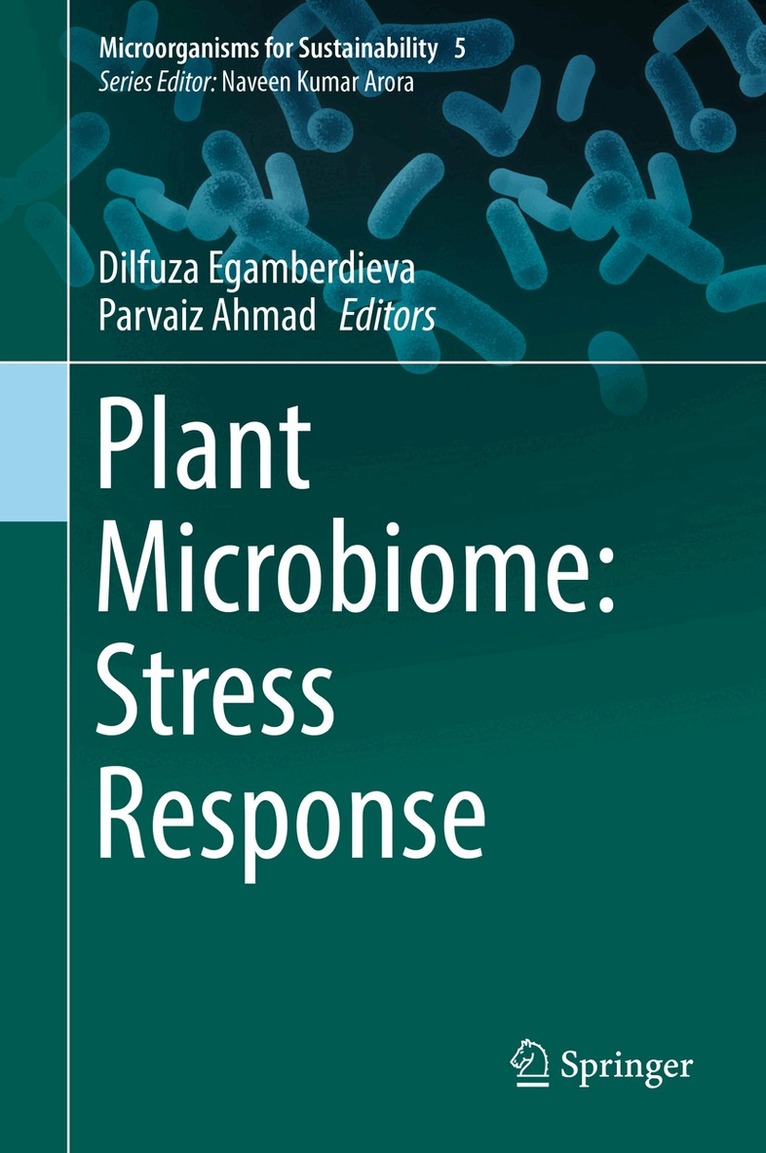
This book presents state-of-the-art research on the many facets of the plant microbiome, including diversity, ecology, physiology and genomics, as well as molecular mechanisms of plant-microbe interactions. Topics considered include the importance of microbial secondary metabolites in stimulating plant growth, induced systemic resistance, tolerance to abiotic stress, and biological control of plant pathogens.
The respective contributions show how microbes help plants to cope with abiotic stresses, and represent significant progress toward understanding the complex regulatory networks critical to host-microbe interaction and plant adaptation in extreme environments. New insights into the mechanisms of microbial actions in inducing plant stress tolerance open new doors for improving the efficacy of microbial strategies, and could produce new ways of economically increasing crop yields without harming the environment. As such, this book offers an essential resource for students and researchers with an interest in plant-microbe interaction, as well as several possibilities for employing the plant microbiome in the enhancement of crop productivity under future climate change scenarios.
1 634 kr
Skickas inom 10-15 vardagar
1 937 kr
Läs direkt efter köp
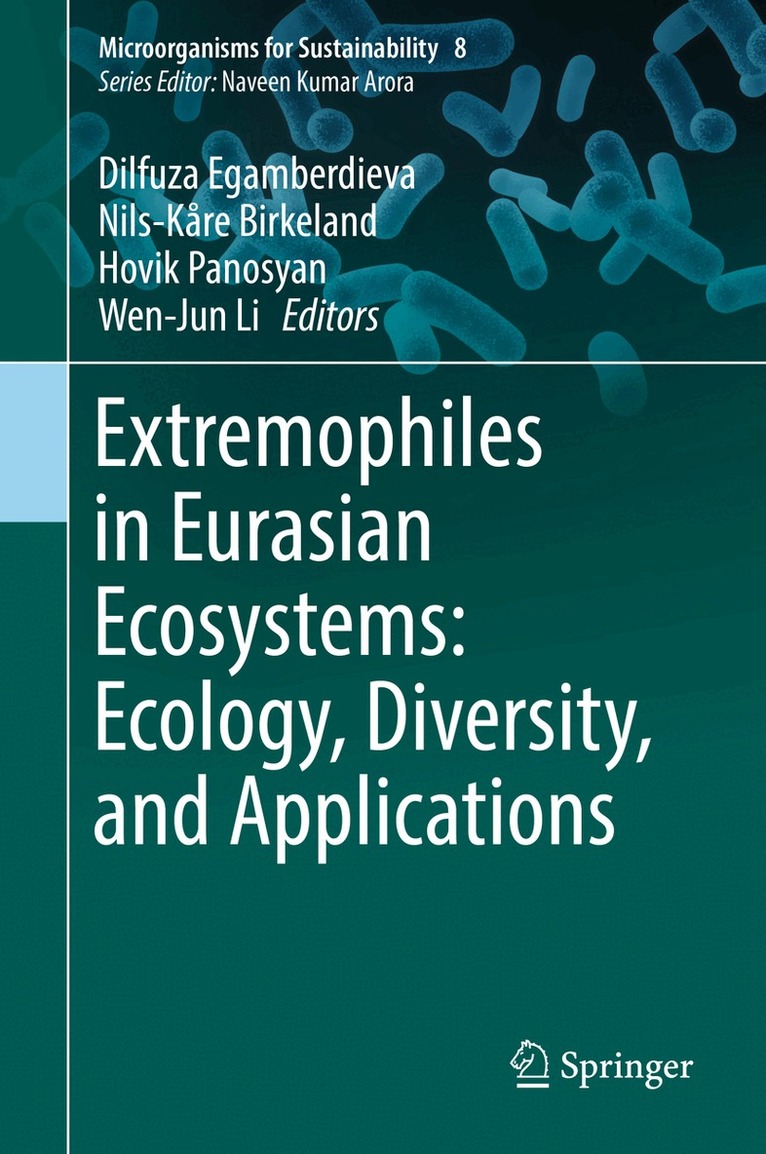
This book explores various aspects of thermophilic and halophilic microbes from Eurasian ecosystems, which have proved to offer a unique reservoir of genetic diversity and biological source of extremophiles. It also covers the biotechnological uses of extremophiles, and their potential use in agricultural and industrial applications. The topics addressed include but are not limited to: diversity and microbial ecology, microbe-environment interactions, adaptation and evolution, element cycling and biotechnological applications of thermophiles and halophiles in Eurasian ecosystems.
In order to review the progress made in biology and biotechnological applications of thermophiles and halophiles, the book combines review papers and results of original research from various specialists and authorities in the field. It includes several chapters describing the microbial diversity and ecology of geothermal springs distributed among the territory of various Eurasian countries, such as Armenia, Bulgaria, China, Georgia, India, Italy, Pakistan and Turkey. A dedicated chapter discusses selected aspects of thermophilic chemolithotrophic bacteria isolated from mining sites (sulfide ores); detailed descriptions of various thermophile microbes isolated from high-temperature environments and their biotechnological potential are also provided. Subsequent chapters describe the diversity and ecology of halophilic microbes harbored in saline and hypersaline lakes in Iran, Turkey and China; soil and plant microbiomes in saline arid lands of Uzbekistan; microbial diversity in Asian deserts; and the potential applications of thermophilic and halophilic microbes as exopolysaccharide (EPS) producers, focusing on the chemistry and applications of the EPS they produce.
We hope that this book will prove valuable as an up-to-date overview of the current state of research on Eurasian extremophiles in general and thermophiles and halophiles in particular. Many questions remain unanswered, and we hope that it will stimulate further studies in this intriguing and promising field.
1 634 kr
Skickas inom 10-15 vardagar
1 688 kr
Skickas inom 10-15 vardagar
1 634 kr
Skickas inom 10-15 vardagar
1 937 kr
Läs direkt efter köp
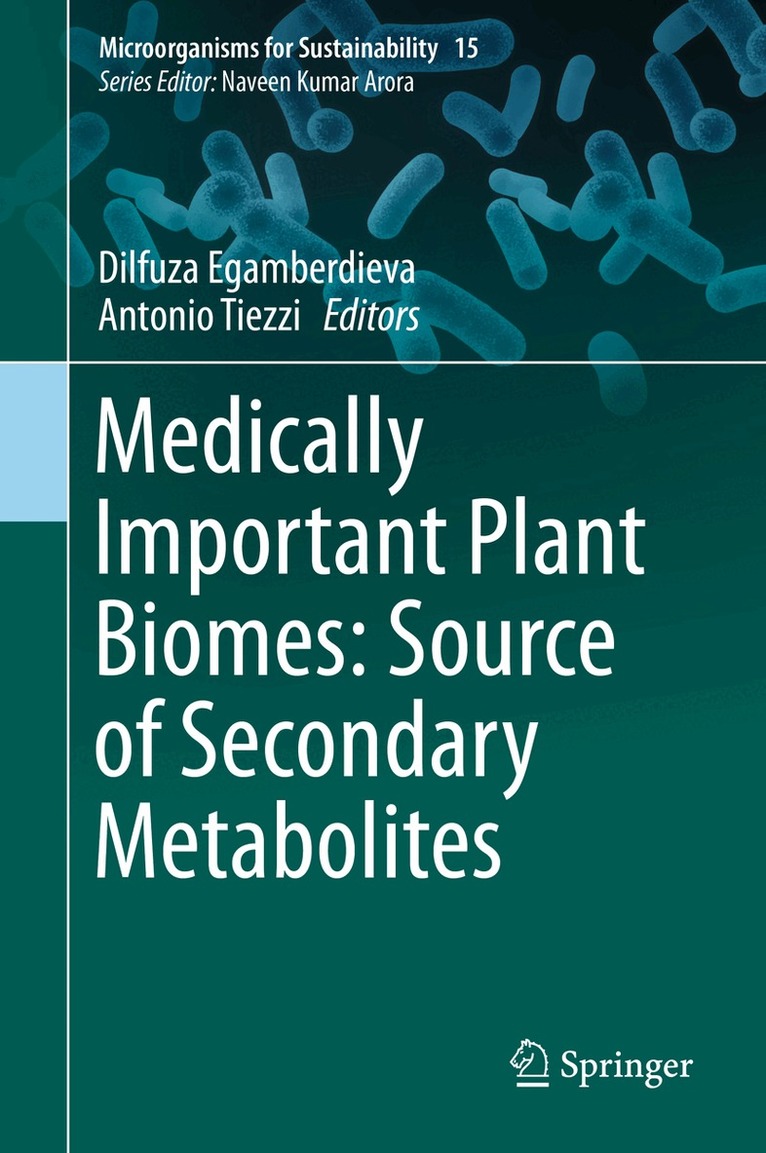
This book provides insights into various aspects of medicinal plant-associated microbes, known to be a unique source of biological active compounds, including their biotechnological uses and their potential in pharmaceutical, agricultural and industrial applications. Featuring review papers and original research by leading experts in the field, it discusses medicinal plants and their interactions with the environment; medicinal plants as a source of biologically active compounds; medicinal plant-associated microbes (diversity and metabolites); their pharmaceutical, agricultural and industrial applications as well as their potential applications as plant growth stimulators and biocontrol agents.
As such the book offers a valuable, up-to-date overview of the current research on medicinal plants, their ecology, biochemistry and associated biomes.1 634 kr
Skickas inom 10-15 vardagar
1 959 kr
Skickas inom 10-15 vardagar
2 435 kr
Läs direkt efter köp
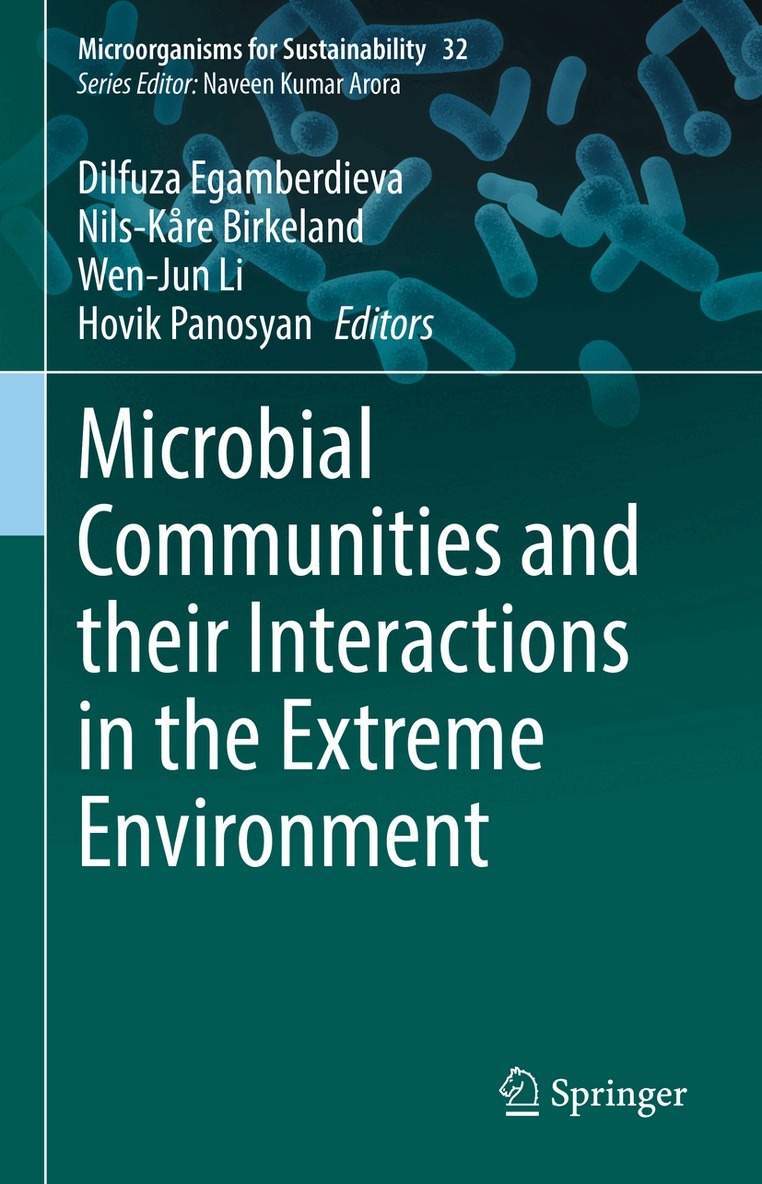
This second edition of the book entitled “Microbial Communities and Interactions in extreme environments” focus on thermophilic and halophilic extremophiles from various ecosystems, their biodiversity, interactions with other organisms and functions within their hostile environment. Biotechnology of extremophiles and their potential agricultural and industrial applications is the focus of this edition. However, extremophiles may cope with their challenging environments. Information on biodiversity of extremophiles and their interactions with the surrounding biomes helps in understanding their ecology and functions within their respective extreme environments. This book is of interest to teachers, researchers, microbiologists, capacity builders and policymakers. Also, the book serves as additional reading material for undergraduate and graduate students of agriculture, forestry, ecology, soil science, microbiology and environmental sciences.