Yde Venema – författare
Visar alla böcker från författaren Yde Venema. Handla med fri frakt och snabb leverans.
10 produkter
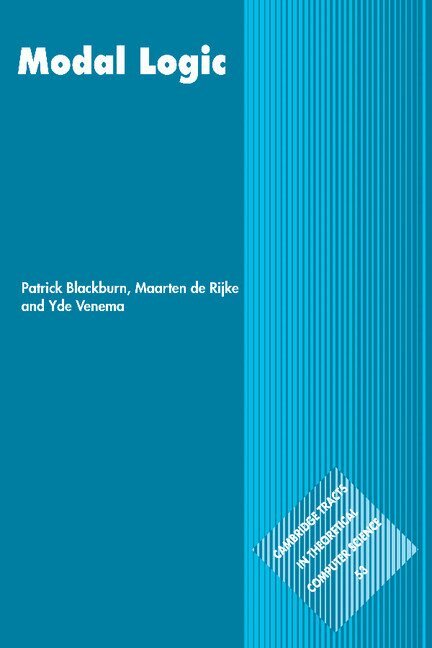
Modal Logic
Av Patrick Blackburn, Maarten de Rijke m. fl.
Häftad, 2002
1610 kr
Lägg i varukorg
This is an advanced 2001 textbook on modal logic, a field which caught the attention of computer scientists in the late 1970s. Researchers in areas ranging from economics to computational linguistics have since realised its worth. The book is for novices and for more experienced readers, with two …
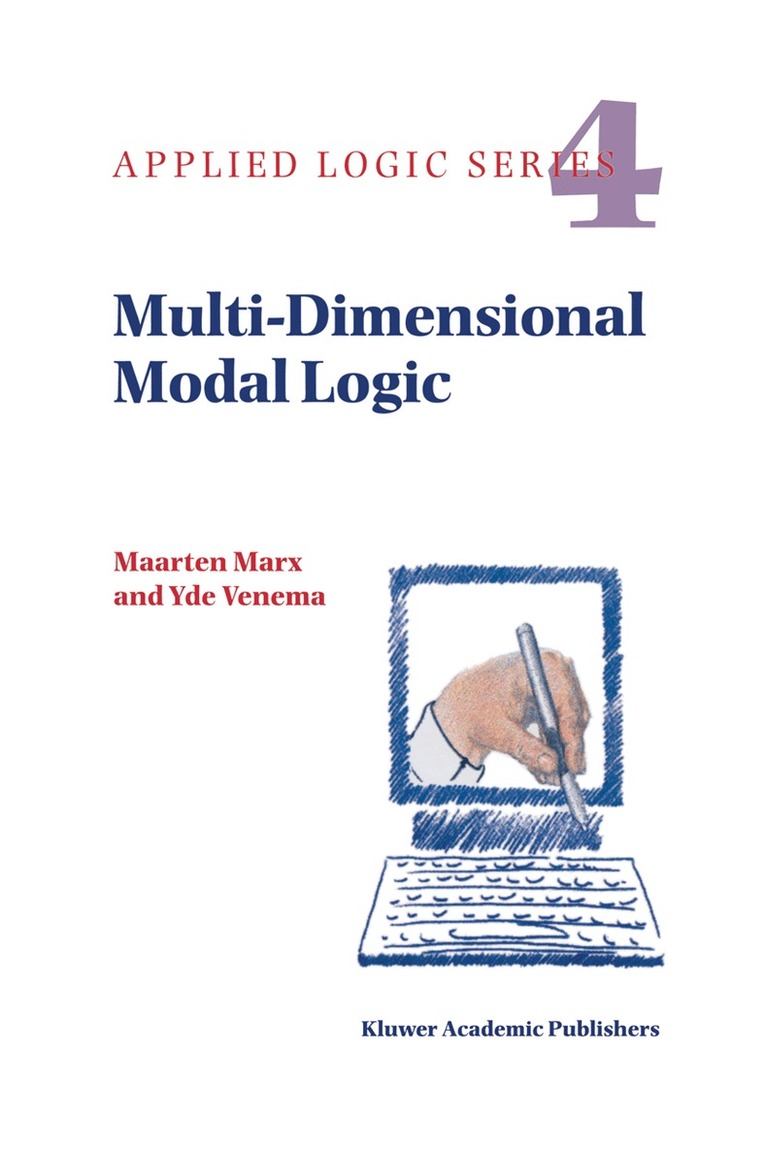
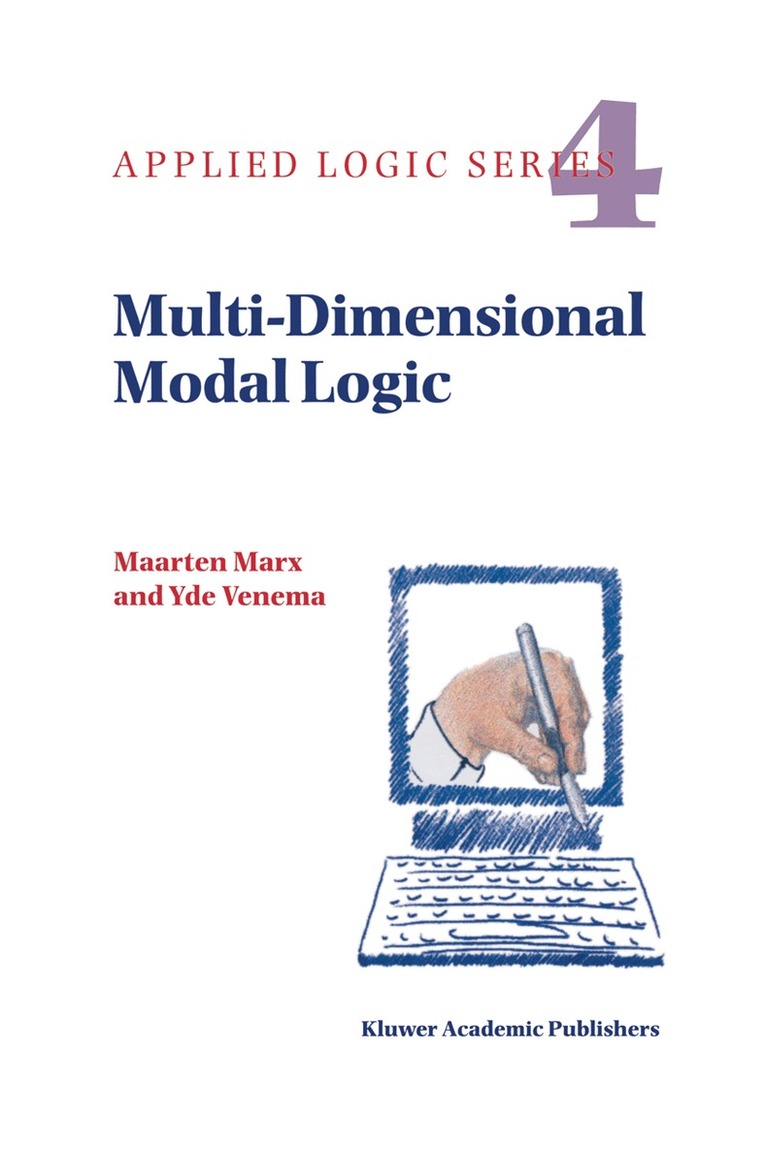
Multi-Dimensional Modal Logic
Inbunden, 1996
1096 kr
Lägg i varukorg
Modal Logic is a branch of logic with applications in many related disciplines such as computer science, philosophy, linguistics and artificial intelligence. Over the last twenty years, in all of these neighbouring fields, modal systems have been developed that we call multi-dimensional. (Our …
Modal Logic
Av Yde Venema, Maarten de Rijke m. fl.
E-bok, 2002
1548 kr
Lägg i varukorg
This is an advanced 2001 textbook on modal logic, a field which caught the attention of computer scientists in the late 1970s. Researchers in areas ranging from economics to computational linguistics have since realised its worth. The book is for novices and for more experienced readers, with two …
Modal Logic
Av Yde Venema, Maarten de Rijke m. fl.
E-bok, 2002
1560 kr
Lägg i varukorg
This is an advanced 2001 textbook on modal logic, a field which caught the attention of computer scientists in the late 1970s. Researchers in areas ranging from economics to computational linguistics have since realised its worth. The book is for novices and for more experienced readers, with two …
Advances in Modal Logic, Volume 6
Av Guido Governatori, Ian Hodkinson m. fl.
Häftad, 2006
291 kr
Lägg i varukorg
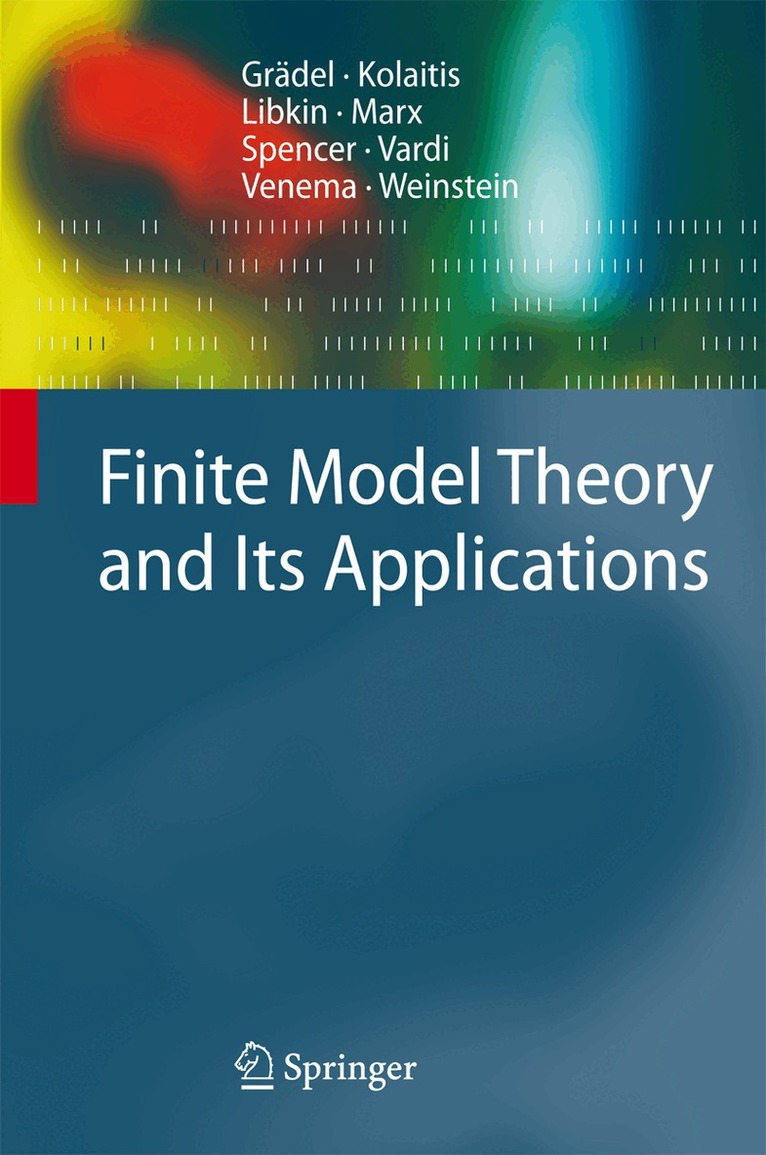
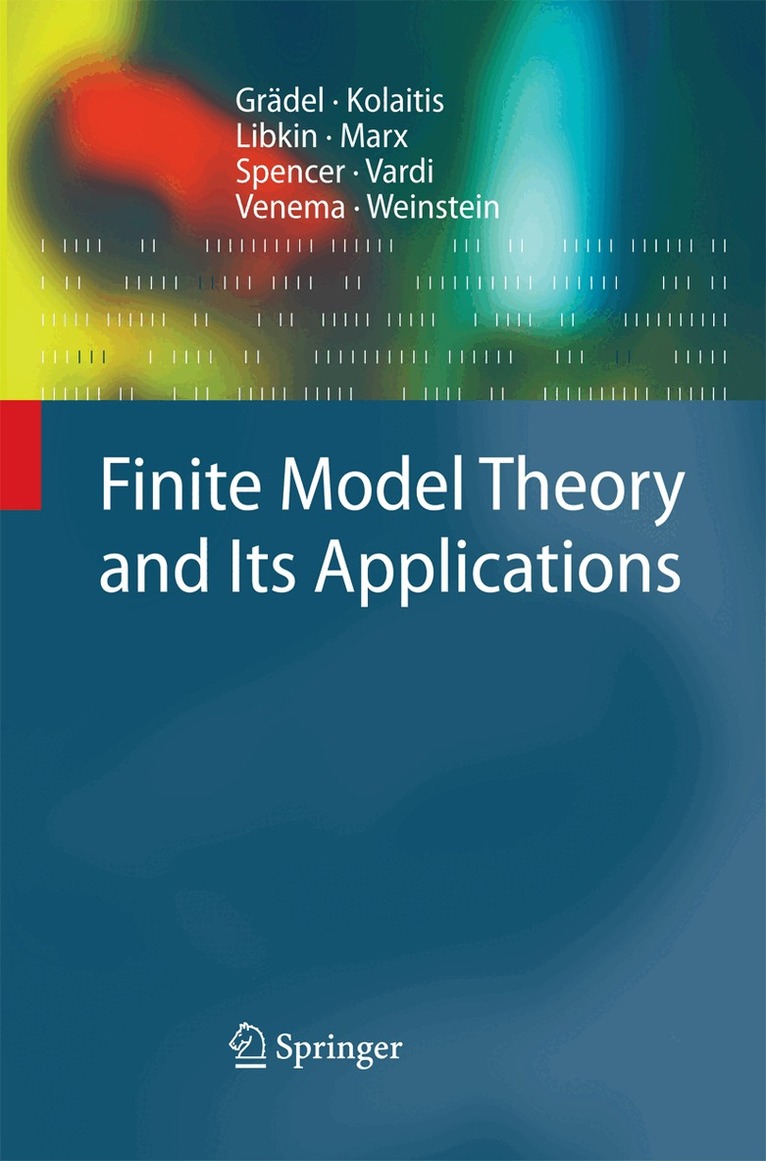
Finite Model Theory and Its Applications
Av Erich Grädel, Phokion G. Kolaitis m. fl.
Inbunden, 2007
1017 kr
Lägg i varukorg
Finite model theory,as understoodhere, is an areaof mathematicallogic that has developed in close connection with applications to computer science, in particular the theory of computational complexity and database theory. One of the fundamental insights of mathematical logic is that our …
Finite Model Theory and Its Applications
Av Scott Weinstein, Yde Venema m. fl.
E-bok, 2007
1141 kr
Lägg i varukorg
Finite model theory,as understoodhere, is an areaof mathematicallogic that has developed in close connection with applications to computer science, in particular the theory of computational complexity and database theory. One of the fundamental insights of mathematical logic is that our …
Finite Model Theory and Its Applications
Av Erich Grädel, Phokion G. Kolaitis m. fl.
Häftad, 2014
848 kr
Lägg i varukorg
Finite model theory,as understoodhere, is an areaof mathematicallogic that has developed in close connection with applications to computer science, in particular the theory of computational complexity and database theory. One of the fundamental insights of mathematical logic is that our …
Multi-Dimensional Modal Logic
Häftad, 2012
1096 kr
Lägg i varukorg
Modal Logic is a branch of logic with applications in many related disciplines such as computer science, philosophy, linguistics and artificial intelligence. Over the last twenty years, in all of these neighbouring fields, modal systems have been developed that we call multi-dimensional. (Our …
Multi-Dimensional Modal Logic
E-bok, 2012
1459 kr
Lägg i varukorg
Modal Logic is a branch of logic with applications in many related disciplines such as computer science, philosophy, linguistics and artificial intelligence. Over the last twenty years, in all of these neighbouring fields, modal systems have been developed that we call multi-dimensional. (Our …