
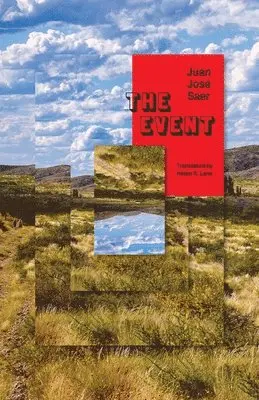
Häftad, Engelska, 2025
266 kr
Skickas inom 3-6 vardagar
266 kr
Skickas inom 3-6 vardagar
252 kr
Skickas inom 3-6 vardagar

286 kr
Kommande

190 kr
Skickas inom 5-8 vardagar

256 kr
Skickas inom 3-6 vardagar
256 kr
Skickas inom 3-6 vardagar
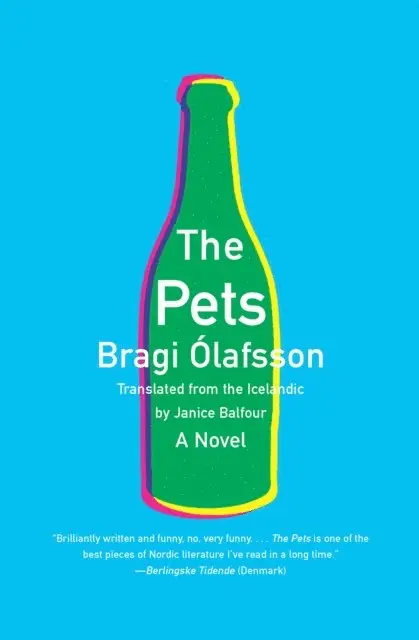
115 kr
Läs direkt efter köp
"Dark, scary, and unbelievably funny."—Los Angeles Times
"The best short novel I''ve read this year. . . .Small, dark, and hard to put down, The Pets may be a classic in the literature of small enclosed spaces."—Barnes & Noble Review
Back in Reykjavik after a vacation in London, Emil Halldorsson is waiting for a call from a beautiful girl, Greta, that he met on the plane ride home, and he''s just put on a pot of coffee when an unexpected visitor knocks on the door. Peeking through a window, Emil spies an erstwhile friend—Havard Knutsson, his one-time roommate and current resident of a Swedish mental institution—on his doorstep, and he panics, taking refuge under his bed and hoping the frightful nuisance will simply go away.
Havard won''t be so easily put off, however, and he breaks into Emil''s apartment and decides to wait for his return—Emil couldn''t have gone far; the pot of coffee is still warming on the stove. While Emil hides under his bed, increasingly unable to show himself with each passing moment, Havard discovers the booze, and he ends up hosting a bizarre party for Emil''s friends, and Greta.
An alternately dark and hilarious story of cowardice, comeuppance, and assumed identity, the breezy and straightforward style of The Pets belies its narrative depth, and disguises a complexity that grows with every page.
Bragi Ólafsson is the author of several books of poetry and short stories, and four novels, including Time Off, which was nominated for the Icelandic Literature Prize in 1999 (as was The Pets), and Party Games, for which Bragi received the DV Cultural Prize in 2004. The Ambassador, available from Open Letter, was a finalist for the 2008 Nordic Literature Prize and received the Icelandic Bookseller''s Award as best novel of the year. Bragi is one of the founders of the publishing company Smekkleysa (Bad Taste), and has translated Paul Auster''s City of Glass into Icelandic. He is also a former bass player with The Sugarcubes, the internationally successful pop group that featured Bjürk as the lead vocalist.
Janice Balfour studied literature and Italian at the University of Iceland. In addition to Bragi Ólafsson, she has translated two collections of short stories by Gydir Elíasson.
115 kr
Läs direkt efter köp
Considered by many to be the grand achievement of her later period, Death in Spring is one of Mercè Rodoreda''s most complex and beautifully constructed works. The novel tells the story of the bizarre and destructive customs of a nameless town—burying the dead in trees after filling their mouths with cement to prevent their soul from escaping, or sending a man to swim in the river that courses underneath the town to discover if they will be washed away by a flood—through the eyes of a fourteen-year-old boy who must come to terms with the rhyme and reason of this ritual violence, and with his wild, child-like, and teenage stepmother, who becomes his playmate. It is through these rituals, and the developing relationships between the boy and the townspeople, that Rodoreda portrays a fully-articulated, though quite disturbing, society.
The horrific rituals, however, stand in stark contrast to the novel''s stunningly poetic language and lush descriptions. Written over a period of twenty years—after Rodoreda was forced into exile following the Spanish Civil War—Death in Spring is musical and rhythmic, and truly the work of a writer at the height of her powers.Mercè Rodoreda is widely regarded as the most important Catalan writer of the twentieth century. Exiled to France during the Spanish Civil War, and only able to return to Catalonia in the mid-1960s, she wrote a number of highly praised works, including The Time of the Doves and Death in Spring.
Martha Tennent was born in the U.S, but has lived most of her life in Barcelona where she served as founding dean of the School of Translation and Interpreting at the University of Vic. She translates from Spanish and Catalan, and received an NEA Translation Fellowship for her work on Rodoreda.
115 kr
Läs direkt efter köp
Then there''s Sturla''s new overcoat, the first expensive item of clothing he has ever purchased, which causes him no end of trouble. And the article he wrote for a literary journal, which points out the stupidity of literary festivals and declares the end of his career as a poet. Sturla has a lot to deal with, and that''s not counting his estranged wife and their five children, nor the increasingly bizarre experiences and characters he''s forced to confront at the festival in Vilnius . . .
Bragi Ólafsson''s The Ambassador is a quirky novel that''s filled with insightful and wry observations about aging, family, love, and the mysteries of the hazelnut.
Bragi Ólafsson is most well known for playing in The Sugarcubes. He is the author of several books of poetry, a number of plays, and five novels. His works have been finalists for the Icelandic Literature Prize and Nordic Literature Prize, and he has received the Icelandic Bookseller''s Award.
Lytton Smith is a poet and translator, and a founding member of Blind Tiger Poetry. His book, The All-Purpose Magical Tent was published by Nightboat. His poems and reviews have appeared in such publications as The Atlantic, The Believer, and Boston Review.
115 kr
Läs direkt efter köp
"Pilch''s prose is masterful, and the bulk of The Mighty Angel evokes the same numb, floating sensation as a bottle of Zloldkowa Gorzka."—L Magazine
The Mighty Angel concerns the alcoholic misadventures of a writer named Jerzy. Eighteen times he''s woken up in rehab. Eighteen times he''s been released—a sober and, more or less, healthy man—after treatment at the hands of the stern therapist Moses Alias I Alcohol. And eighteen times he''s stopped off at the liquor store on the way home, to pick up the supplies that are necessary to help him face his return to a ruined apartment.
While he''s in rehab, Jerzy collects the stories of his fellow alcoholics—Don Juan the Rib, The Most Wanted Terrorist in the World, the Sugar King, the Queen of Kent, the Hero of Socialist Labor—in an effort to tell the universal, and particular, story of the alcoholic, and to discover the motivations and drives that underlie the alcoholic''s behavior.
A simultaneously tragic, comic, and touching novel, The Mighty Angel displays Pilch''s caustic humor, ferocious intelligence, and unparalleled mastery of storytelling.
Jerzy Pilch is one of Poland''s most important contemporary writers and journalists. In addition to his long-running satirical newspaper column, Pilch has published several novels, and has been nominated for Poland''s prestigious NIKE Literary Award four times; he finally won the Award in 2001 for The Mighty Angel. His novels have been translated into numerous languages.
Bill Johnston is Director of the Polish Studies Center at Indiana University and has translated works by Witold Gombrowicz, Magdalena Tulli, Wieslaw Mysliwski, and others. He won the Best Translated Book Award in 2012 and the inaugural Found in Translation Award in 2008.
115 kr
Läs direkt efter köp
"If laughter actually is the best medicine, fortunate readers of this wonderful novel will surely enjoy perfect health for the rest of their days."—Kirkus Reviews
A comic gem, Jerzy Pilch''s A Thousand Peaceful Cities takes place in 1963, in the latter days of the Polish post-Stalinist "thaw." The narrator, Jerzyk ("little Jerzy"), is a teenager who is keenly interested in his father, a retired postal administrator, and his father''s closest friend, Mr. Traba, a failed Lutheran clergyman, alcoholic, and would-be Polish insurrectionist. One drunken afternoon, Mr. Traba and the narrator''s father decide to take charge of their lives and do one final good turn for humanity: travel to distant Warsaw and assassinate the de facto Polish head of state, First Secretary of the Polish United Workers'' Party, Wladyslaw Gomulka—assassinating Mao Tse-tung, after all, would be impractical. And they decide to involve Jerzyk in their scheme...
Jerzy Pilch is one of Poland''s most important contemporary writers and journalists. In addition to his long-running satirical newspaper column, Pilch has published several novels, and has been nominated for Poland''s prestigious NIKE Literary Award four times; he finally won the Award in 2001 for The Mighty Angel. His novels have been translated into numerous languages.
David Frick is a professor in the Department of Slavic Languages and Literatures at the University of California, Berkeley.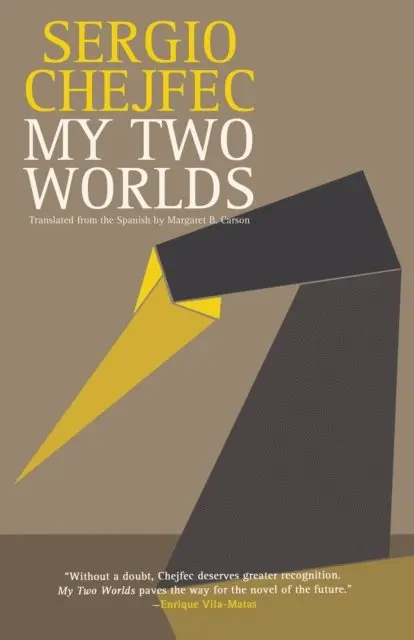
115 kr
Läs direkt efter köp
Approaching his fiftieth birthday, the narrator in My Two Worlds is wandering in an unfamiliar Brazilian city, in search of a park. A walker by inclination and habit, he has decided to explore the city after attending a literary conference—he was invited following the publication of his most recent novel, although, as he has been informed via anonymous e-mail, the novel is not receiving good reviews. Initially thwarted by his inability to transpose the two-dimensional information of the map onto the impassable roads and dead-ends of the three-dimensional city, once he finds the park the narrator begins to see his own thoughts, reflections, and memories mirrored in the landscape of the park and its inhabitants.
Chejfec''s My Two Worlds, an extraordinary meditation on experience, writing, and space, is at once descriptively inventive and preternaturally familiar, a novel that challenges the limitations of the genre.
Sergio Chejfec, originally from Argentina, has published numerous works of fiction, poetry, and essays. Among his grants and prizes, he has received fellowships from the Civitella Ranieri Foundation in 2007 and the John Simon Guggenheim Foundation in 2000. He teaches at NYU.
Margaret Carson translates contemporary poetry, fiction, and drama from Latin America. She also teaches in the Modern Languages Department at Borough of Manhattan Community College.
115 kr
Läs direkt efter köp
"A gifted writer, he draws well on the rich tradition of Spanish surrealism . . . to sustain the lyrical, visionary quality of his imagination."—New York Times
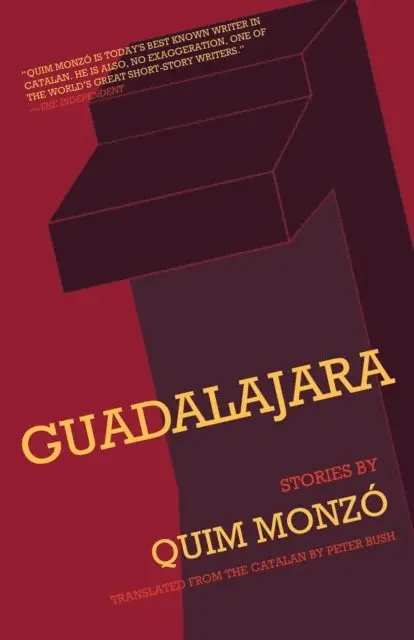
All the heroes of this story collection—the boy who refuses to follow the family tradition of having his ring finger cut off; the man who cannot escape his house, no matter what he tries; Robin Hood stealing so much from the rich that he ruins the rich and makes the poor wealthy; Gregor the cockroach, who wakes one day to discover he has become a human teenager; the prophet who can''t remember any of the prophecies that have been revealed to him; Ulysses and his minions trapped in the Trojan horse—are faced with a world that is always changing, where time and space move in circles, where language has become meaningless. Their stories are mazes from which they can''t escape.
The simultaneously dark, grotesque, and funny Guadalajara reveals Quim Monzó at his acerbic and witty best.
Quim Monzó was born in Barcelona in 1952. He has been awarded the National Award, the City of Barcelona Award, the Prudenci Bertrana Award, the El Temps Award, the Lletra d''Or Prize for the best book of the year, and the Catalan Writers'' Award; he has been awarded Serra d''Ormagazine''s prestigious Critics'' Award four times. He has also translated numerous authors into Catalan, including Truman Capote, J.D. Salinger, and Ernest Hemingway.
Peter Bush is a renowned translator from Catalan, French, Spanish, and Portuguese. He was awarded the Valle-Inclán Literary Translation Prize for his translation of Juan Goytisolo''s The Marx Family Saga.
115 kr
Läs direkt efter köp
"There''s a new world master among us, and her name is Can Xue."—Robert Coover
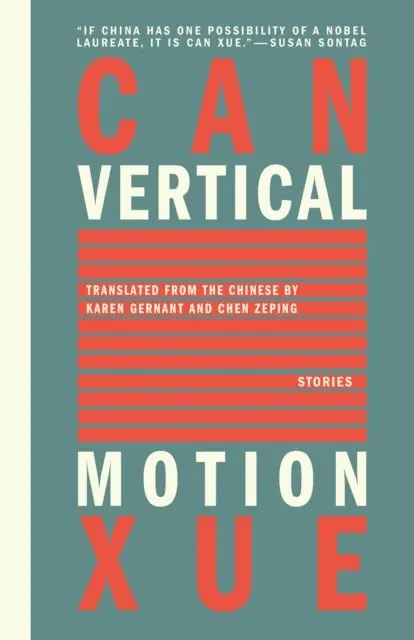
Two young girls sneak onto the grounds of a hospital, where they find a disturbing moment of silence in a rose garden. A couple grows a plant that blooms underground, invisibly, to their long-time neighbor''s consternation. A cat worries about its sleepwalking owner, who receives a mysterious visitor while he''s asleep. After a ten-year absence, a young man visits his uncle, on the twenty-fourth floor of a high-rise that is floating in the air, while his ugly cousin hesitates on the stairs . . .
Can Xue is a master of the dreamscape, crafting stories that inhabit the space where fantasy and reality, time and timelessness, the quotidian and the extraordinary, meet. The stories in this striking and lyrical new collection—populated by old married couples, children, cats, and nosy neighbors, the entire menagerie of the everyday—reaffirm Can Xue''s reputation as one of the most innovative Chinese writers in a generation.
Can Xue is a pseudonym meaning "dirty snow, leftover snow." She learned English on her own and has written books on Borges, Shakespeare, and Dante. Her publications in English include, The Embroidered Shoes, Five Spice Street, and Blue Light in the Sky, among others.
Karen Gernant is a professor emerita of Chinese history at Southern Oregon University. She translates in collaboration with Chen Zeping.
Chen Zeping is a professor of Chinese linguistics at Fujian Teachers'' University, and has collaborated with Karen Gernant on more than ten translations.
115 kr
Läs direkt efter köp
"A remarkably funny book written by a remarkable pair of collaborators."—New York Times
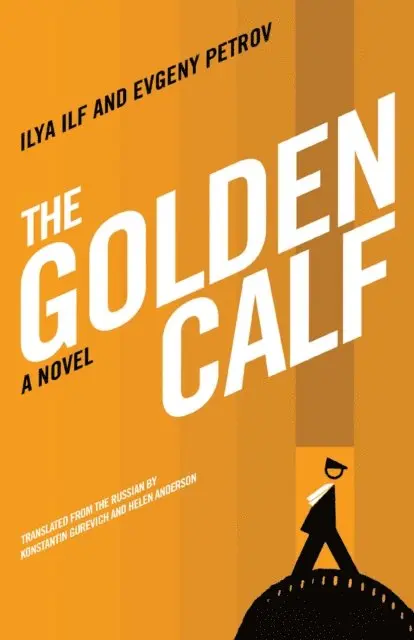
Ostap Bender, the "grand strategist," is a con man on the make in the Soviet Union during the New Economic Policy (NEP) period. He''s obsessed with getting one last big score—a few hundred thousand will do—and heading for Rio de Janeiro, where there are "a million and a half people, all of them wearing white pants, without exception."
When Bender hears the story of Alexandr Koreiko, an "undercover millionaire"—no Soviet citizen was allowed to openly hoard so much capital—the chase is on. Koreiko has made his millions by taking advantage of the wide-spread corruption and utter chaos of the NEP, all while serving quietly as an accountant at a government office and living on 46 rubles a month. He''s just waiting for the Soviet regime to collapse so he can make use of his stash, which he keeps hidden away in a suitcase.
Ilya Ilf (1897–1937) and Evgeny Petrov (1903–1942) were the pseudonyms of Ilya Arnoldovich Faynzilberg and Evgeny Petrovich Katayev, a pair of Soviet writers who met in Moscow in the 1920s while working on the staff of a newspaper that was distributed to railway workers. The foremost comic novelists of the early Soviet Union (invariably referred to as Ilf & Petrov), the pair collaborated together for a dozen years, writing two of the most revered and loved Russian novels, The Twelve Chairs and The Golden Calf, as well as various humorous pieces for Pravda and other magazines. Their collaboration came to an end following the death of Ilya Ilf in 1937—he had contracted tuberculosis while the pair was traveling the United States researching the book that eventually became Little Golden America.
Konstantin Gurevich is a graduate of Moscow State University and the University of Texas at Austin. He translates with his wife, Helen Anderson. Both are librarians at the University of Rochester.
Helen Anderson studied Russian language and literature at McGill University in Montréal. She translates with her husband, Konstantin Gurevich.
115 kr
Läs direkt efter köp
"The humor in the stories, as well as their thrill of realism, comes from a Nabokovian precision of observation and transformation of plain experience into enchanting prose."—Los Angeles Times
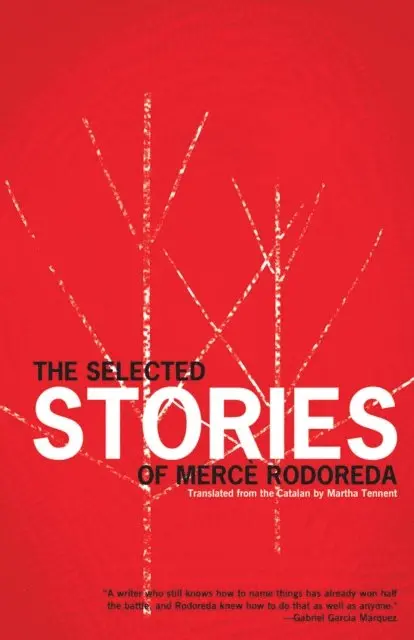
Collected here are thirty-one of Mercè Rodoreda''s most moving and challenging stories, presented in chronological order of their publication from three of Rodoreda''s most beloved short story collections: Twenty-Two Stories, It Seemed Like Silk and Other Stories, and My Christina and Other Stories. These stories capture Rodoreda''s full range of expression, from quiet literary realism to fragmentary impressionism to dark symbolism. Few writers have captured so clearly, or explored so deeply, the lives of women who are stuck somewhere between senseless modernity and suffocating tradition—Rodoreda''s "women are notable for their almost pathological lack of volition, but also for their acute sensitivity, a nearly painful awareness of beauty" (Natasha Wimmer).
Mercè Rodoreda is widely regarded as the most important Catalan writer of the twentieth century. Exiled to France during the Spanish Civil War, and only able to return to Catalonia in the mid-1960s, she wrote a number of highly praised works, including The Time of the Doves and Death in Spring.
Martha Tennent was born in the U.S, but has lived most of her life in Barcelona where she served as founding dean of the School of Translation and Interpreting at the University of Vic. She translates from Spanish and Catalan, and received an NEA Translation Fellowship for her work on Rodoreda.
106 kr
Läs direkt efter köp
Finalist for the NBCC award for Criticism.
"Ugresic is sharp, funny and unafraid. . . . Orwell would approve."—Times Literary Supplement
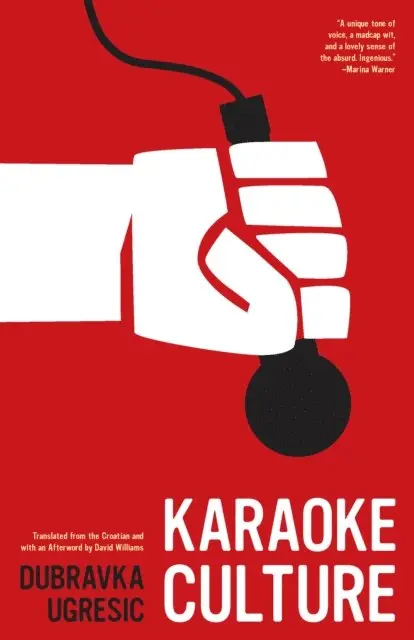
Over the past three decades, Dubravka Ugresic has established herself as one of Europe"s greatest—and most entertaining—thinkers and creators, and it''s in her essays that Ugresic is at her sharpest. With laser focus, she pierces our pop culture, dissecting the absurdity of daily life with a wit and style that''s all her own.
Whether it''s commentary on jaded youth, the ways technology has made us soft in the head, or how wrestling a hotel minibar into a bathtub is the best way to stick it to The Man, Ugresic writes with unmatched honesty and panache. Karaoke Culture is full of candid, personal, and opinionated accounts of topics ranging from the baffling worldwide-pop-culture phenomena to the detriments of conformist nationalism. Sarcastic, biting, and, at times, even heartbreaking, this new collection of essays fully captures the outspoken brilliance of Ugresic''s insights into our modern world''s culture and conformism, the many ways in which it is ridiculous, and how (deep, deep down) we are all true suckers for it.
Dubravka Ugresic is the author of several works of fiction and several essay collections, including the NBCC award finalist, Karaoke Culture. She went into exile from Croatia after being label a "witch" for her anti-nationalistic stance during the Yugoslav war. She now resides in the Netherlands.
David Williams did his doctoral research on the post-Yugoslav writings of Dubravka Ugresic and the idea of a "literature of the Eastern European ruins." He is the author of Writing Postcommunism.
115 kr
Läs direkt efter köp
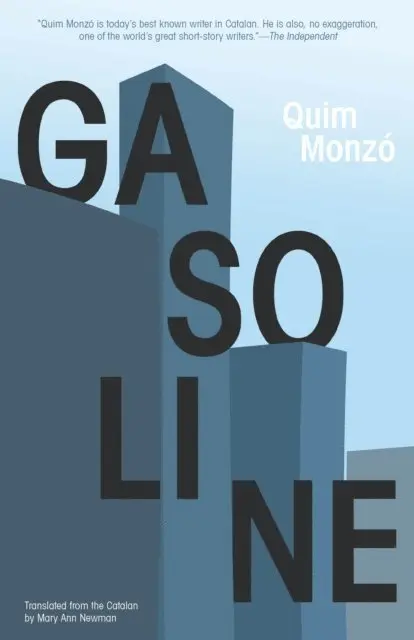
For the first time in his life, Heribert Juliá is unable to paint. On the eve of an important gallery exhibition, for which he''s created nothing, he''s bored with life: he falls asleep while making love with his mistress, wanders from bar to bar, drinking whatever comes to his attention first, and meets the evidence of his wife Helena''s infidelity with complete indifference. Humbert Herrera, an up-and-coming artist who can''t stop creating, picks up the threads of Heribert''s life, taking his wife, replacing him at the gallery, and pursuing his former mistress. Heribert is finally undone by a massive sculpture, while Humbert is planning the sculpture to end sculpture, the poem to end poetry, and the film to end film, all while mounting three simultaneous shows.
A fun-house mirror through which he examines the creative process, the life and loves of artists, and the New York art scene, Gasoline confirms Quim Monzó as the foremost Catalan writer of his generation.
Quim Monzó was born in Barcelona in 1952. He has been awarded the National Award, the City of Barcelona Award, the Prudenci Bertrana Award, the El Temps Award, the Lletra d''Or Prize for the best book of the year, and the Catalan Writers'' Award; he has been awarded Serra d''Or magazine''s prestigious Critics'' Award four times. He has also translated numerous authors into Catalan, including Truman Capote, J.D. Salinger, and Ernest Hemingway.
Mary Ann Newman is the Director of the Catalan Center at New York University''s Center for European and Mediterranean Studies. She is a translator, editor, and occasional writer on Catalan culture.
38 kr
Läs direkt efter köp
115 kr
Läs direkt efter köp
A 2013 Best Translated Book Award Finalist
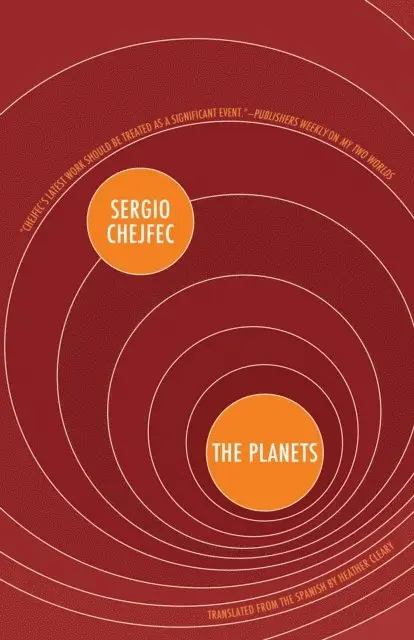
When he reads about a mysterious explosion in the distant countryside, the narrator''s thoughts turn to his disappeared childhood friend, M, who was abducted from his home years ago, during a spasm of political violence in Buenos Aires in the early 1970s. He convinces himself that M must have died in this explosion, and he begins to tell the story of their friendship through a series interconnected vignettes, hoping in this way to reanimate his friend and relive the time they spent together wandering the streets of Buenos Aires.
Sergio Chejfec''s The Planets is an affecting and innovative exploration of mourning, remembrance, and friendship by one of Argentina''s modern masters.
Sergio Chejfec, originally from Argentina, has published numerous works of fiction, poetry, and essays. Among his grants and prizes, he has received fellowships from the Civitella Ranieri Foundation in 2007 and the John Simon Guggenheim Foundation in 2000. He teaches at NYU.
Heather Cleary is a translator of fiction, criticism, and poetry. In 2005, she was awarded a Translation Fund grant from the PEN American Center for her work on Oliverio Girondo.
115 kr
Läs direkt efter köp
"Pilch''s antic sensibility confirms that he is the compatriot of Witold Gombrowicz, the Polish maestro of absurdist pranks. But readers with a taste for the fermented Irish blarney of Flann O’Brien, Samuel Beckett, and John Kennedy Toole might also savor Pilch."—Barnes & Noble Review
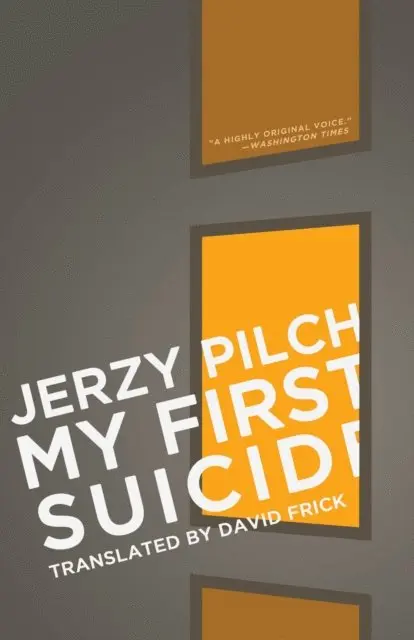
Neither strictly a collection of stories nor a novel, the ten pieces that comprise My First Suicide straddles the line between intimate revelation and drunken confession. These stories reveal a nostalgic and poetic Pilch, one who can pen a character''s lyrical ode to the fate of his father''s perfect chess table in one story, examine a teacher''s desperate and dangerous infatuation with a student in the next, and then, always true to his obsessions, tell a remarkably touching story that begins by describing his narrator''s excitement at the possibility of a three-way with the seductive soccer-fan, Anka Chow Chow.
The stories of My First Suicide combine irony and humor, anecdote and gossip, love and desire with an irresistibly readable style that is vintage Pilch.
Jerzy Pilch is one of Poland''s most important contemporary writers and journalists. In addition to his long-running satirical newspaper column, Pilch has published several novels, and has been nominated for Poland''s prestigious NIKE Literary Award four times; he finally won the Award in 2001 for The Mighty Angel. His novels have been translated into numerous languages.
David Frick is a professor in the Department of Slavic Languages and Literatures at the University of California, Berkeley.
115 kr
Läs direkt efter köp
CO-WINNER OF THE 2012 CONTEMPORARY BULGARIAN WRITERS CONTEST
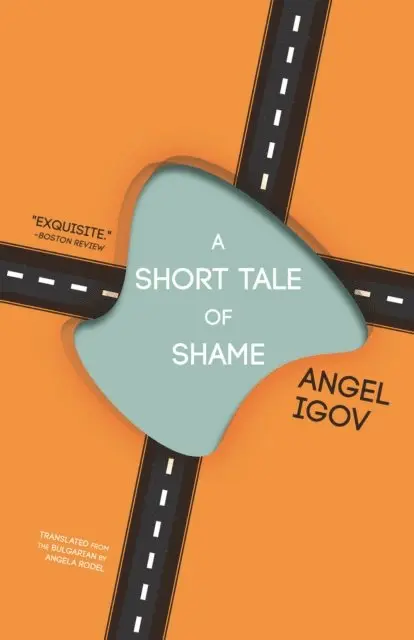
After deciding to take a semester off their studies to think about future plans, long-time friends Maya, Sirma, and Spartacus decide to hitchhike to the sea. Boril Krustev, former rock star and middle-aged widower who is driving aimlessly to outrun his grief, picks them up and accompanies them on their journey. It doesn''t take them long to figure out they''re connected to each other by more than their need to travel—specifically through Boril''s daughter, whose actions damaged each of the characters in this novel.
Co-winner of the Contemporary Bulgarian Writers Contest, A Short Tale of Shame marks the arrival of a new talent in Bulgarian literature with a novel about the need to come to terms with the shame and guilt we all harbor.
Angel Igov is a Bulgarian writer, literary critic, and translator. He has published two collections of short stories, the first of which won the Southern Spring award for debut fiction. Igov has also translated books by Paul Auster, Martin Amis, Angela Carter, and Ian McEwan into Bulgarian.
Angela Rodel earned an M.A. in linguistics from UCLA and received a Fulbright Fellowship to study and learn Bulgarian. In 2010 she won a PEN Translation Fund Grant for Georgi Tenev''s short story collection. She is one of the most prolific translators of Bulgarian literature working today.
115 kr
Läs direkt efter köp
Winner of the 2015 AATSEEL Book Award for Best Translation into English
"A sharp realist."—Aleksandar Hemon
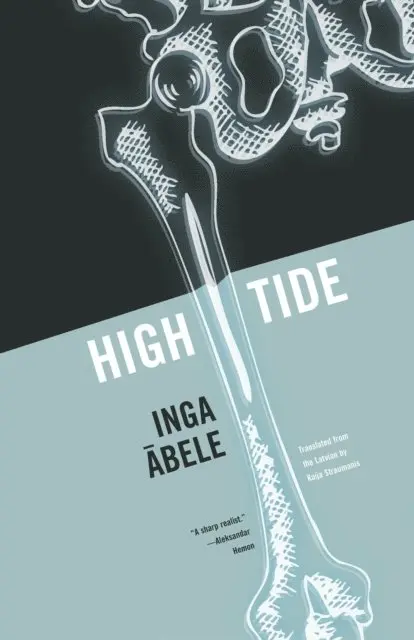
Told more or less in reverse chronological order, High Tide is the story of Ieva, her dead lover, her imprisoned husband, and the way their youthful decisions dramatically impacted the rest of their lives. Taking place over three decades, High Tide functions as a sort of psychological mystery, with the full scope of Ieva''s personal situation—and the relationship between the three main characters—only becoming clear at the end of the novel.
One of Latvia''s most notable young writers, Abele is a fresh voice in European fiction—her prose is direct, evocative, and exceptionally beautiful. The combination of strikingly lush descriptive writing with the precision with which she depicts the minds of her characters elevates this novel from a simple story of a love triangle into a fascinating, philosophical, haunting book.
Inga Abele is a novelist, poet, and playwright. Her novel High Tide received the 2008 Latvian Literature Award, and the 2009 Baltic Assembly Award in Literature. Her work has appeared in such anthologies as New European Poets and Best European Fiction 2010.
Kaija Straumanis is a graduate of the MA program in Literary Translation at the University of Rochester, and is the editorial director of Open Letter Books. She translates from both German and Latvian.

115 kr
Läs direkt efter köp
WINNER OF THE 2013 CONTEMPORARY BULGARIAN WRITERS CONTEST
Albena Stambolova''s idiosyncratic debut novel, Everything Happens as It Does, builds from the idea that, as the title suggests, everything happens exactly the way it must. In this case, the seven characters of the novel—from Boris, a young boy who is only at peace when he''s around bees, to Philip and Maria and their twins—each play a specific role in the lives of the others, binding them all together into a strange, yet logical, knot. As characters are picked up, explored, and then swept aside, the novel''s beguiling structure becomes apparent, forcing the reader to pay attention to the patterns created by this accumulation of events and relationships. This is not a novel of reaching moral high ground; this is not a book about resolving relationships; this is a story whose mysteries are mysteries for a reason.
Written with a precise, succinct tone that calls to mind Camus''s The Stranger, Everything Happens as It Does is a captivating and detail-driven novel that explores how depth will never be as immediately accessible as superficiality, and how everything will run its course in the precise manner it was always meant to.
Albena Stambolova is the author of three novels. She has also published a collection of short stories and a psychoanalytical study on Marguerite Duras. She currently lives in Bulgaria, where she works as a psychological and organizational consultant, and is working on a book about fairy tales.
Olga Nikolova completed her PhD at Harvard University, with a dissertation on modern poetry, graphic design, and academic writing. She''s been translating the works of Ezra Pound and Gertrude Stein in to Bulgarian.
115 kr
Läs direkt efter köp
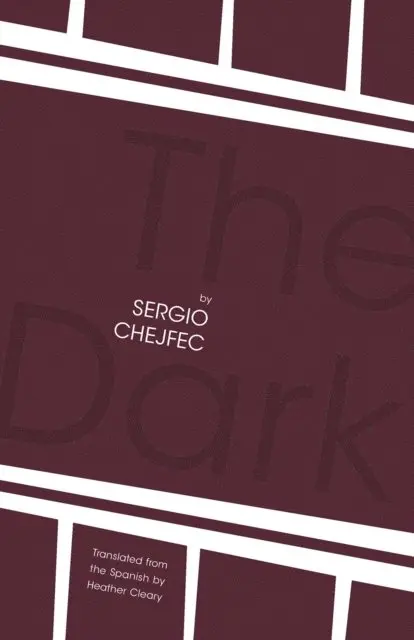
"Early in Sergio Chejfec''s The Dark, the nameless narrator describes his disorientation when looking over a landscape as ''the vertigo of simple things.'' This phrase describes the experience of reading Chejfec''s novel. . . . These moments, when Chejfec combines exquisite prose with the human yearning for truth and beauty, keep us reading, weighing the novel''s contradictions, sifting through the narrator''s abstract reflections in search of his life’s meaning."—Rain Taxi
Opening with the presently shut-in narrator reminiscing about a past relationship with Delia, a young factory worker, The Dark employs Chejfec''s signature style with an emphasis on the geography and motion of the mind, to recount the time the narrator spent with this multifaceted, yet somewhat absent, woman. On their daily walks he becomes privy to the ways in which the working class functions; he studies and analyzes its structure and mindset, finding it incredibly organized, self-explanatory, and even beautiful. He repeatedly attempts to apply his ''book'' knowledge to explain what he sees and wants to understand of Delia''s existence, and though the difference between their social classes is initially a source of great intrigue—if not obsession—he must eventually learn that there comes a point where the boundary between observer and participant can dissolve with disarming speed.
In a voice that favors erudite distance, yet simultaneously demands intimate attention, The Dark is the most captivating example of Sergio Chejfec''s unique narrative approach, and a resonant novel that calls into question the necessity, risks, and fallout behind the desire and attempt to know another person.
Sergio Chejfec, originally from Argentina, has published numerous works of fiction, poetry, and essays. Among his grants and prizes, he has received fellowships from the Civitella Ranieri Foundation in 2007 and the John Simon Guggenheim Foundation in 2000. He teaches at NYU.
Heather Cleary is a translator of fiction, criticism, and poetry. In 2005, she was awarded a Translation Fund grant from the PEN American Center for her work on Oliverio Girondo.
115 kr
Läs direkt efter köp
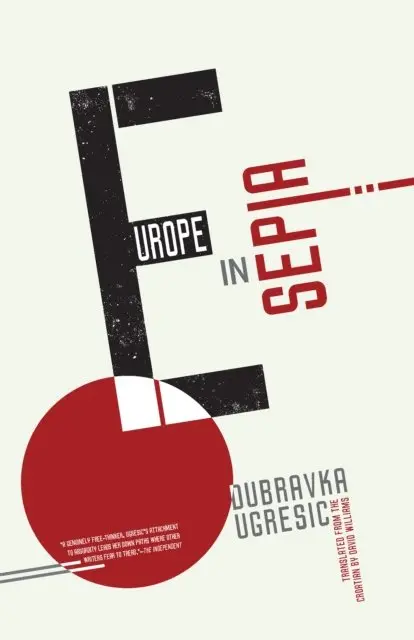
"Ugresic is sharp, funny and unafraid. . . . Orwell would approve."—Times Literary Supplement
Hurtling between Weltschmerz and wit, drollness and diatribe, entropy and enchantment, it''s the juxtaposition at the heart of Dubravka Ugresic''s writings that saw Ruth Franklin dub her "the fantasy cultural studies professor you never had." In Europe in Sepia, Ugresic, ever the flâneur, wanders from the Midwest to Zuccotti Park, the Irish Aran Islands to Jerusalem''s Mea Shearim, from the tristesse of Dutch housing estates to the riots of south London, charting everything from the listlessness of Central Europe to the ennui of the Low Countries. One finger on the pulse of an exhausted Europe, another in the wounds of postindustrial America, Ugresic trawls the fallout of political failure and the detritus of popular culture, mining each for revelation.
Infused with compassion and melancholic doubt, Europe in Sepia centers on the disappearance of the future, the anxiety that no new utopian visions have emerged from the ruins of communism; that ours is a time of irreducible nostalgia, our surrender to pastism complete. Punctuated by the levity of Ugresic''s raucous instinct for the absurd, despair has seldom been so beguiling.
Dubravka Ugresic is the author of several works of fiction and several essay collections, including the NBCC award finalist, Karaoke Culture. She went into exile from Croatia after being label a "witch" for her anti-nationalistic stance during the Yugoslav war. She now resides in the Netherlands.
David Williams did his doctoral research on the post-Yugoslav writings of Dubravka Ugresic and the idea of a "literature of the Eastern European ruins." He is the author of Writing Postcommunism.
115 kr
Läs direkt efter köp
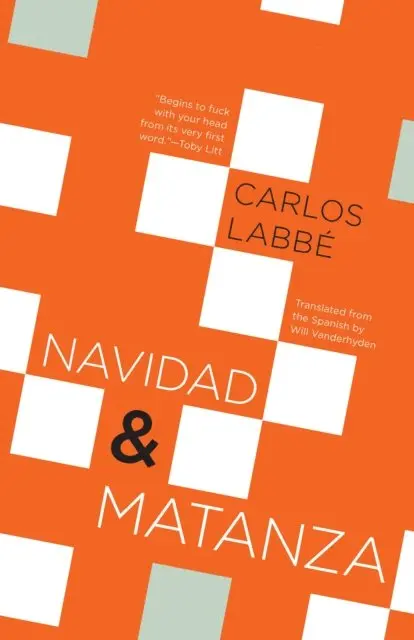
"Carlos Labbé''s [Navidad & Matanza] begins to fuck with your head from its very first word—moving through journalese, financial reporting, whodunit, Joseph Conrad, Raymond Chandler, Nabokov to David Lynch."—Toby Litt
It''s the summer of 1999 when the two children of wealthy video game executive Jose Francisco Vivar, Alicia and Bruno, go missing in the beach town of Matanza. Long after their disappearance, the people of Matanza and the adjacent town of Navidad consistently report sightings of Bruno—on the beach, in bars, gambling—while reports on Alicia, however, are next to none. And every clue keeps circling back to a man named Boris Real . . .
At least that''s how the story—or one of many stories, rather—goes. All of them are told by a journalist narrator, who recounts the mysterious case of the Vivar family from an underground laboratory where he and six other "subjects" have taken up a novel-game, writing and exchanging chapters over email, all while waiting for the fear-inducing drug hadón to take its effect, and their uncertain fates.
A literary descendant of Roberto Bolaño and Andrés Neuman, Carlos Labbé''s Navidad & Matanza is a work of metafiction that not only challenges our perceptions of facts and observations, and of identity and reality, but also of basic human trust.
Carlos Labbé, one of Granta''s "Best Young Spanish-Language Novelists," was born in Chile and is the author of six novels, including Navidad & Matanza and Locuela, and a collection of short stories. In addition to his writings he is a musician, and has released three albums. He is a co-editor at Sangria, a publishing house based in Santiago and Brooklyn, where he translates and runs workshops. He also writes literary essays, the most notable ones on Juan Carlos Onetti, Diamela Eltit and Roberto Bolaño—three writers whose influence can be seen in Navidad & Matanza.
Will Vanderhyden received an MA in Literary Translation from the University of Rochester. He has translated fiction by Carlos Labbé, Edgardo Cozarinsky, Alfredo Bryce Echenique, Juan Marsé, Rafael Sanchez Ferlosio, and Elvio Gandolfo.
115 kr
Läs direkt efter köp
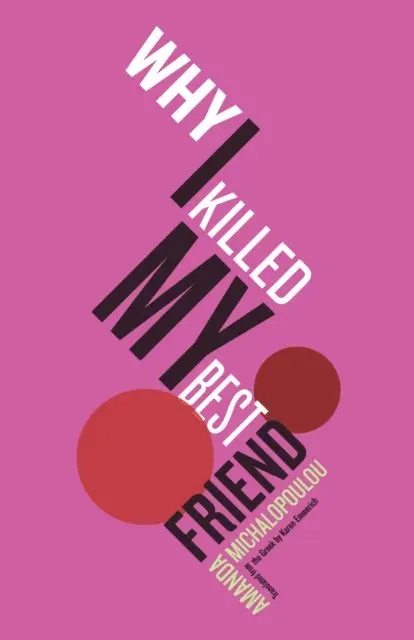
"Flawlessly translated, Amanda Michalopolou''s WIKMBF uses the backdrop of Greek politics, radical protests, and the art world to explore the dangers and joys that come with BFFs. Or, as the narrator puts it, ''odiodsamato,'' which translates roughly as ''frienemies.''"—Gary Shteyngart
In Amanda Michalopoulou''s Why I Killed My Best Friend, a young girl named Maria is lifted from her beloved Africa and relocated to her native Greece. She struggles with the transition, hating everything about Athens: the food, the air, the school, her classmates, the language. Just as she resigns herself to misery, Anna arrives. Though Anna''s refined, Parisian upbringing is the exact opposite of Maria''s, the two girls instantly bond over their common foreignness, becoming inseparable in their relationship as each other''s best friend, but also as each other''s fiercest competition—be it in relation to boys, talents, future aspirations, or political beliefs.
From Maria and Anna''s grade school days in ''70s, post-dictatorship Greece, to their adult lives in the present, Michalopoulou charts the ups, downs, and fallings-out of the powerful self-destructive bond only true best friends can have. Simply and beautifully written, Why I Killed My Best Friend is a novel that ultimately compares and explores friendship as a political system of totalitarianism and democracy.
Amanda Michalopoulou is the author of five novels, two short story collections, and a successful series of children''s books. One of Greece''s leading contemporary writers, Michalopoulou has won that country''s highest literary awards, including the Revmata Prize and the Diavazo Award. Her story collection, I''d Like, was longlisted for the Best Translated Book Award.
Karen Emmerich is a translator of Modern Greek poetry and prose. Her recent translations include volumes by Yannis Ritsos, Margarita Karapanou, Ersi Sotiropoulos, and Miltos Sachtouris. She has a Ph.D. in Comparative Literature from Columbia University and is on the faculty of the University of Oregon.
115 kr
Läs direkt efter köp
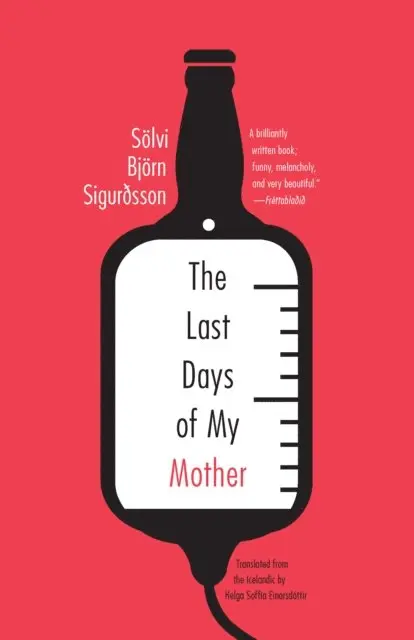
"A darkly humorous work, but also very sad—a mortal struggle, where the joy of life grapples with the fear of death, and often there is no way of knowing which of the two is on top. The final chapter is, in one word, thrilling. Sölvi has established himself among the most noteworthy of Icelandic writers. Conclusion: Five Stars. A brilliantly written book; funny, melancholy, and very beautiful."—Fréttabladid
Thirty-seven years old, freshly broken up with his girlfriend, unemployed and vaguely depressed, Hermann has problems of his own. Now, his mother, who is rambunctious, rapier-tongued, frequently intoxicated and, until now impervious to change, has cancer. The doctor''s prognosis sounds pretty final, but after a bit of online research, Hermann decides to accompany his mother to an unconventional treatment center in the Netherlands.
Mother and son set out on their trip to Amsterdam, embarking on a schnapps-and-pint-fuelled picaresque that is by turns wickedly funny, tragic, and profound. Although the mother''s final destination is never really in doubt, the trip presents the duo with a chance to reevaluate life—beginning, middle, and end. Although the trip is lively and entertaining, it will also put severe strain on the bond between mother and son, not to mention their mutual capacity for alcohol.
Sölvi Björn Sigurdsson is the author of three books of poetry and the novels Radio Selfoss, The Murakami Girlfriend, and The Last Days of My Mother. His most recent book, The Icelandic Water Book, was published in the fall of 2013. A translator of classical poetry, he has also received distinguished nominations for his translation of Rimbaud''s A Season In Hell. His Diabolical Comedy, a modern take on The Divine Comedy, has been translated into Finnish, Swedish and Danish.
Helga Soffía Einarsdóttir grew up in Tanzania, and has since lived in Copenhagen, Barcelona, and Edinburgh. She has an MA in Translation Studies from the University of Iceland and has worked as a freelance translator and proofreader. Her translations (into Icelandic), include works by Zadie Smith, Alexander McCall Smith, and Lemony Snicket.
115 kr
Läs direkt efter köp
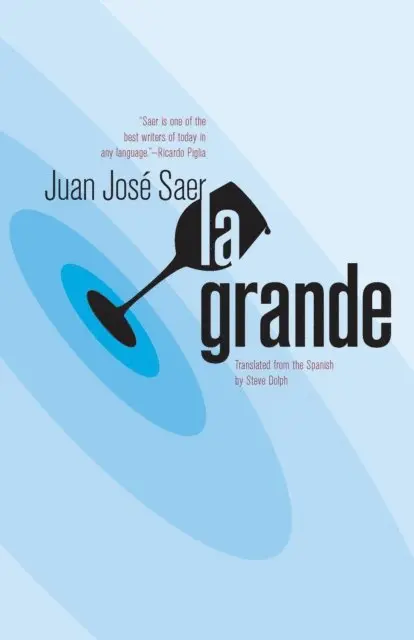
"A cerebral explorer of the problems of narrative in the wake of Joyce and Woolf, of Borges, of Rulfo and Arlt, Saer is also a stunning poet of place."—The Nation
Saer''s final novel, La Grande, is the grand culmination of his life''s work, bringing together themes and characters explored throughout his career, yet presenting them in a way that is beautifully unique, and a wonderful entry-point to his literary world.
Moving between past and present, La Grande centers around two related stories: that of Gutiérrez, his sudden departure from Argentina 30 years before, and his equally mysterious return; and that of "precisionism," a literary movement founded by a rather dangerous fraud. Dozens of characters populate these storylines, including Nula, the wine salesman, ladies'' man, and part-time philosopher; Lucía, the woman he''s lusted after for years; and Tomatis, a journalist whom Saer fans have encountered many times before.
Written in Saer''s trademark style, this lyrically gorgeous book—which touches on politics, artistic beliefs, illicit love affairs, and everything else that makes up life—ends with one of the greatest lines in all of literature: "With the rain came the fall, and with the fall, the time of the wine."
Juan José Saer (1937–2005), born in Santa Fé, Argentina, was the leading Argentinian writer of the post-Borges generation. In 1968, he moved to Paris and taught literature at the University of Rennes. The author of numerous novels and short-story collections (including Sixty-Five Years of Washington, Scars, The One Before, The Clouds, all being published by Open Letter), Saer was awarded Spain''s prestigious Nadal Prize in 1987 for The Event.
Steve Dolph is the founding editor of Calque, a journal of literature in translation. His translation of Saer''s Scars was a finalist for the 2012 Best Translated Book Award. He lives in Philadelphia where he spends his summers rooting for the Phillies.