
Häftad, Engelska, 2012
223 kr
Skickas inom 3-6 vardagar
223 kr
Skickas inom 3-6 vardagar

183 kr
Läs direkt efter köp
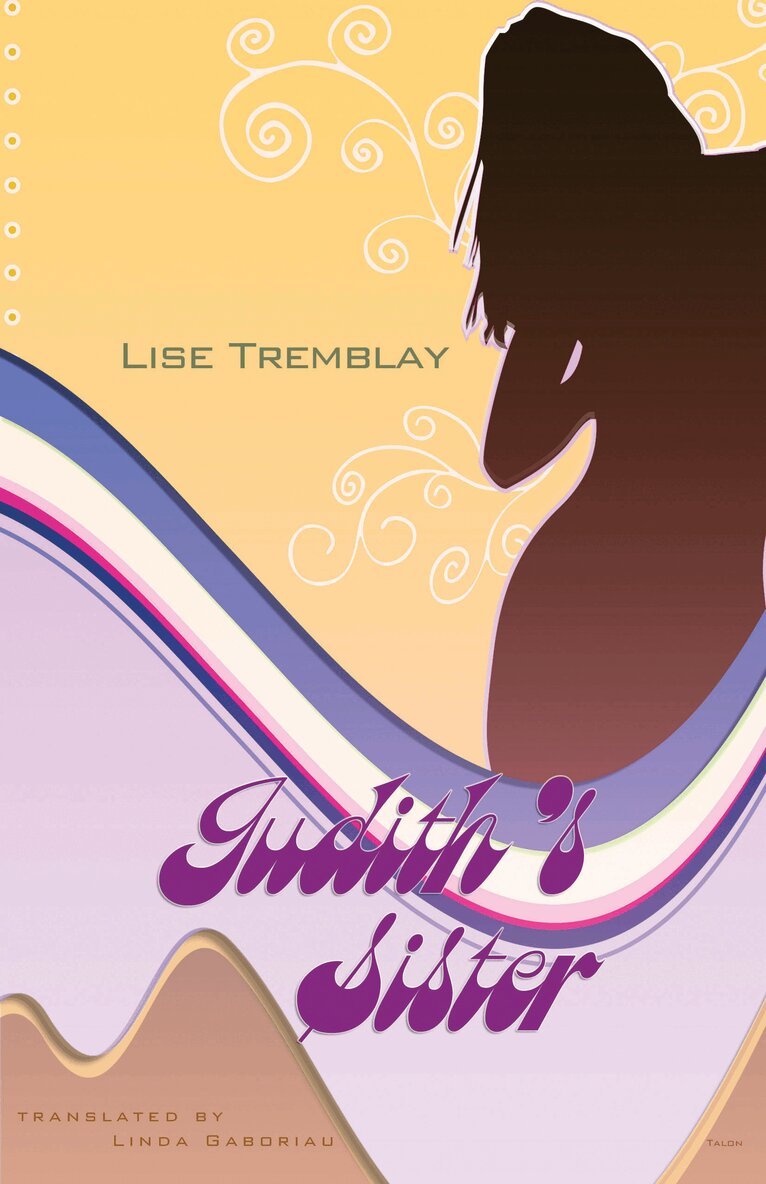
In the seemingly endless small-town summer of 1968, a twelve-year-old girl contemplates with dread the social prospects of her fast-approaching enrollment in a class for gifted students at the local high school, arranged by her mother who “blows up” at the drop of a hat—she doesn’t intend to let her daughter marry “the first man to come along,” and she is prepared to do anything to make sure her children don’t grow up “ignorant,” like Judith’s sister, Claire. To escape her mother’s unpredictable and interminable rants, the young girl locks herself in her room with her books, escaping into a life of imagination and dreams, mostly of older guys like Marius, as beautiful as a god when he dons his softball uniform every Wednesday to play in the community park, and to whom she writes anonymous love letters.
Fortunately, there’s the prettiest girl in town to look up to. Recruited by the pop music band Bruce and the Sultans as their go-go dancer, if her audition in the big city of Montreal goes well, Claire is to accompany the band on their upcoming provincial tour. Idolized by the story’s unnamed narrator, Claire is the “big sister” she never had, but whom she shares by proxy with her best friend, Judith.
In this, her fifth book, Lise Tremblay paints a picture of rural Quebec in the years following the Quiet Revolution in her signature style so refreshingly free of artifice and literary hyperbole. Society is changing fast, new values are making inroads, but old traditions remain deeply rooted. Judith’s Sister is a coming-of-age novel that focuses on the timeless themes that preoccupy all adolescent girls: solitude, alienation, obesity, lies, sexuality, shame, madness and fear of strangers; and our inevitable first encounters with the grown-up betrayals of friends, family and community.
153 kr
Läs direkt efter köp
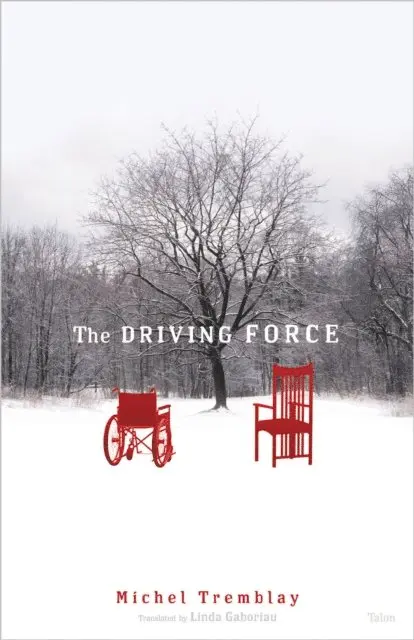
In Act 1, Claude, 55, visits his father Alex, 77, in an Alzheimer’s ward, intimately tending to his bodily functions and needs while hopelessly trying to reach his silent, vacant father with a series of monologues—to settle old scores and misunderstandings between them.In an astonishing and eerie reversal of roles, in Act 2 it is Alex who visits his son Claude in the same Alzheimer’s ward and it is Alex’s turn to rant and rail at what he perceives to be his mute son’s contempt for his own working class life.With a cruel and disconsolate irony, we come to see that his father’s lifelong attempt to mock and censure Claude’s work as consisting of nothing but mediocre, misrepresentative lies, has been the very driving force behind Claude’s compulsion to continue to reveal the “truth” of human relationships as he so desperately wants his father to understand it.
179 kr
Läs direkt efter köp
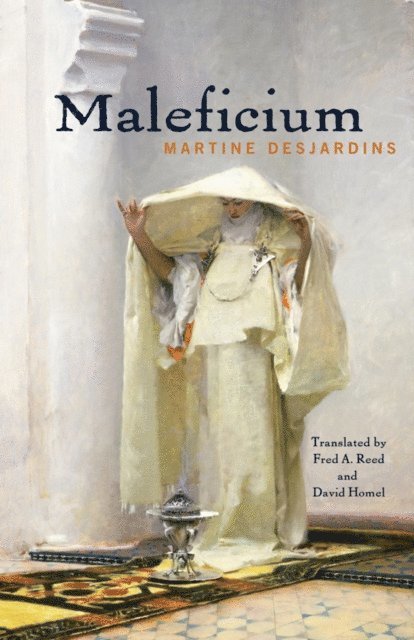
Martine Desjardins delivers to readers of Maleficium the unexpurgated revelations of Vicar Jerome Savoie, a heretic priest in nineteenth-century Montreal. Braving threats from the Catholic Church, Savoie violates the sanctity of the confessional in a confession-within-a-confession, in which seven penitents, each afficted with a debilitating malady or struck with a crippling deformity, relates his encounter with an enigmatic young woman whose lips bear a striking scar.As these men penetrate deep into the exotic Orient, each falls victim to his own secret vice. One treks through Ethiopia in search of wingless locusts. Another hunts for fly-whisks among the clove plantations of Zanzibar. Yet others bargain for saffron in a Srinagar bazaar, search for the rarest frankincense, and pursue the coveted hawksbill turtle in the Sea of Oman. Two more seek the formula for sabon Nablus in Palestine or haggle over Persian carpets in the royal gardens of Shiraz. The men’s individual forms of punishment, revealed through the agency of the young woman, are wrought upon their bodies.
210 kr
Läs direkt efter köp
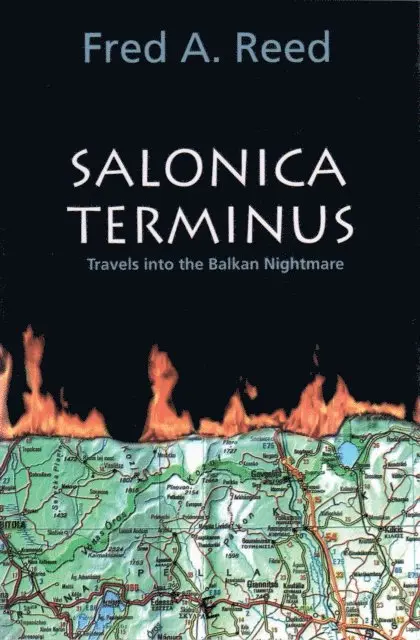
A vivid, contemporary travelogue, Salonica Terminus explores a current landscape thronged with figures bent beneath the weight of history. It peers beneath the rotting logs of ideology, and prods the decomposing hulks of historical corpses that litter this region of dark mountains and misty valleys. Through its pages lurch extremists, confidence men and would-be national saviors in the vivid, disarticulated manner of shadow puppets. Injustice and blood, it suggests, breed revenge and further injustice in a land where memories are long and knives are sharp.From Bosnian actuality to Macedonian potentiality, Fred A. Reed’s recent travels in this region lead him to encounter a landscape inscribed with a shocking testimony: ethno-racialist aspirations remain the only coin in which peoples feel they can express their belonging, their social solidarity—the only credible alternative to the blight of free-market globalism.
229 kr
Läs direkt efter köp
Winner of the Prix des libraires, the Indigenous Voices award, the Prix littéraire des enseignant.e.s de Français, and the Coup de Cœur Renaud-Bray, and finalist for the Prix Alain-Grandbois
Dual-language edition
The poems in Uiesh / Somewhere are rooted in Innu Elder Joséphine Bacon’s experiences of moving between the nomadic ways of her Ancestors in the northern wilderness of Nitassinan and the clamour of the city. Wherever she is, Bacon is attentive to the smallest details of her environment, from the moon and the stars, the Northern Lights, and the falling snow, to the sirens of fire engines and the noise of a busy bar night. From her quiet centre, she listens to the voices of the Old Ones, whose stories are alive within her, and reflects on the beauty and the pain of her long life.
347 kr
Skickas inom 3-6 vardagar

143 kr
Skickas inom 5-8 vardagar
The third volume in Marchessault’s autobiographically based trilogy. White Pebbles in the Dark Forests traces a reconciliation between men and women, children and parents, animals and humans, and the past and future as it looks at the connections between the visible and the invisible. Following Like a Child of the Earth and Mother of the Grass, this volume introduces Noria, an aviatrix who, like a shaman, flies across the night sky of North America to deliver the world a message of hope and recovery, and Jeanne, the writer who practices the magic art of healing; the art of literature.
219 kr
Skickas
When Jane Rule’s first novel, Desert of the Heart, was published in 1964, it was an auspicious beginning for a writer who would build a reputation on her unflinching views about sexuality, relationships and the painful constrictions of societal convention. Even more astonishing is the way in which the novel has retained its cool quiet beauty and power of expression decades later.
Evelyn Hall is a literature professor who travels to Reno, Nevada in the summer of 1958 in order to obtain a divorce and thus put an end to her disastrous sixteen-year marriage. She is divorcing her husband on the advice of his psychiatrist because, this being the ’50s, he believes that Evelyn’s success is causing her husband’s depression. During her six-week stay at a boarding house (a residency requirement) Evelyn meets Ann Childs.
At once, the narrative enters an aesthetic space that calls to mind the mythical preoccupations of Thomas Mann, the philosophical speculations of Frederich Nietzsche, the artistic theories of Camille Paglia, and the wry ironic humour of Iris Murdoch. They rapidly become aware of an increasing tension, arising in part from the generational gap between Evelyn and this young woman who bears a striking physical resemblance to her.
As for Ann, she is most alluring in her representation of freedom to Evelyn, from her innate artistic prowess to her unconventional liaisons amid the smoky nocturnal backdrop of casino life. And once these women have found the promise of a significant relationship, Rule’s rather open-ended question is whether or not it can survive the toxic atmosphere, not simply of an unruly gambling town, but of the past sorrows and hardships each of the characters is attempting to put behind them.
The title derives from W.H. Auden’s elegy for Yeats—“In the desert of the heart / Let the healing fountain start.”
276 kr
Skickas inom 3-6 vardagar

399 kr
Skickas inom 3-6 vardagar
276 kr
Skickas inom 3-6 vardagar

143 kr
Skickas inom 5-8 vardagar
Mom’s the Word was created out of a Saturday morning writers’ support group. Getting together to share their experiences, six women performers struck upon the idea to write about what they were going through as mothers trying to maintain their careers, their individual identities and their relationships with their partners. The result is an evening of hilarious stories, bittersweet monologues, poetic reflections and revelatory anecdotes. Touching tales of giving birth to a premature baby are balanced against comic, ribald rants on diaper soup; whispered, hesitant conversations about sex after children; and the desperate confessionals of the over-stressed.All six moms have two children, display the keenly-honed emotional edge of the sleep-deprived and share among themselves (and with the audience) some of the most outrageous stories ever heard on the agony and ecstasy of motherhood—all of them true. In her introduction, Barbara Crook allows us to meet the participants in this extraordinary collaboration and chronicles the evolution of the play from life to art. Mom’s the Word offers its audiences an emotional nakedness that is instantly recognizable as elemental. An evening with these Moms is one of those rare occasions where life, stripped to its essentials, does not imitate art, but lifts itself on its diaper-pins to become art.The result is one of the most popular shows ever to come out of the Vancouver theatre community. Originally presented at the 1994 Women in View Festival, Mom’s the Word moved rapidly from smaller stages to a tour of Western Canada in 1996-1997; to Melbourne, Adelaide and Perth in 1998; to London in 1999; and is scheduled for performances in the USA, Israel and Spain in 2000.
331 kr
Skickas inom 3-6 vardagar

159 kr
Skickas inom 5-8 vardagar
David French’s award-winning and ongoing dramatic cycle about the Mercer family, both in their native Newfoundland and later, as participants in the great outport clearances, relocated in Toronto, has become a defining part of Canada’s theatrical history.Set in Toronto, the first play, Leaving Home (1972), introduced the family saga’s key figure, Jacob Mercer, who appears in all of the plays. Also in this series are Of the Fields, Lately (1973); Salt-Water Moon (1984); and 1949 (1988), which deals with this expatriate family’s reaction to Newfoundland’s entry into confederation.With Soldier’s Heart, French looks back in time at the thoroughly alienated 16-year-old Jacob, standing on a railway platform, his suitcase and one-way ticket away from home in hand. His father Esau, a veteran of the First World War, rushes to the station in a last-ditch effort to persuade his son not to leave. Unable to speak of what had happened in the Great War since his return, Esau begins, in halting and tentative language to tell of his comrades and his brother, their training in Scotland, the agony of Gallipoli, and finally the formative events at the battle of the Somme at Beaumont Hamel. At first defensive in response to his son’s probing and impatient questioning, Esau’s answers evolve into stories of pride, foolishness, anger, desperation and finally mindless terror, leaving only the image of a man driven by the blind animal instinct to survive. It is this devastating and unsparing account of all that is in a soldier’s heart, that finally brings father and son back together.
268 kr
Skickas inom 3-6 vardagar
149 kr
Skickas inom 5-8 vardagar
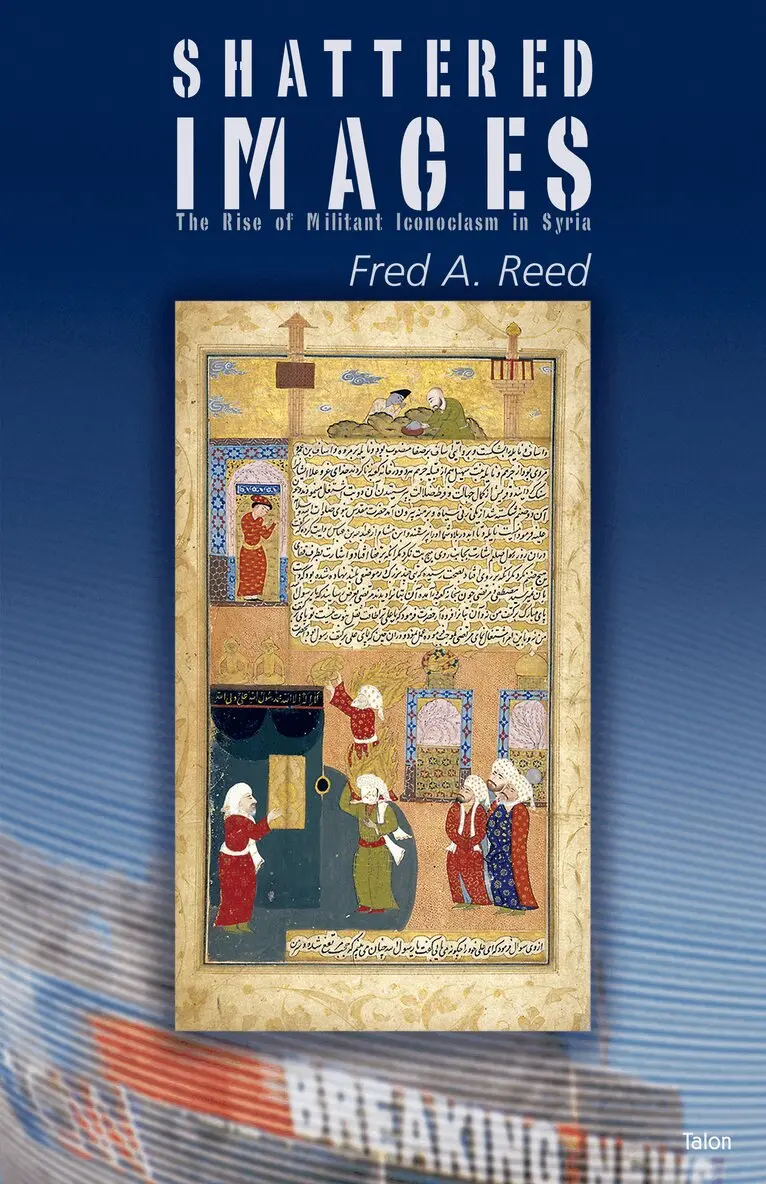
Fred A. Reed’s fifth book on the Middle East and “the wars of the Ottoman succession” traces the roots of Islamic fundamentalism, as currently enacted by Hezbollah and other Islamic fundamentalist organizations, to the iconoclasts of sixth- and seventh-century Damascus.The emergence of Iconoclasm, as sudden and overwhelming as it was catalytic, was at once the product of the forces released by the new social, political and religious teachings of the Prophet, and of their encounter with the Christian world at its far periphery.They are forces that are quite alive and at large in today’s world, as the Western crusade against this latest prophetic dispensation of the Abrahamic tradition assumes a form both aggressive and invasive.Shattered Images covers all of the major Islamic faiths in its search for the origins of contemporary fundamentalist movements: the Shi’a, Sunni, Ismaili (and their connection with the Assassins) and many of the minor tributaries of Islam, including the “secular” (and related) Syrian Ba’as and Iraqi Bath parties.As American tank turrets turn from Iraq and take threatening aim at Syria, current events increasingly confirm Reed as an astute expert on Middle-Eastern politics.
197 kr
Skickas inom 5-8 vardagar
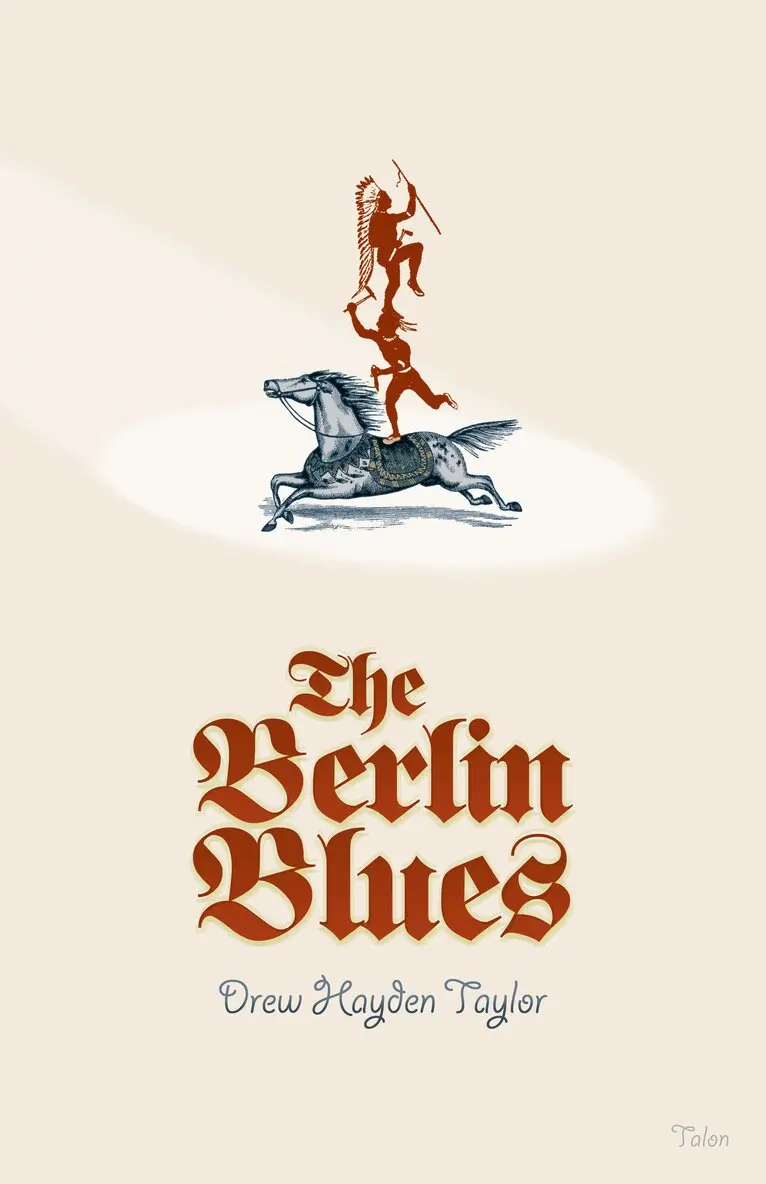
A consortium of German developers shows up on the fictional Otter Lake Reserve with a seemingly irresistible offer to improve the local economy: the creation of “Ojibway World,” a Native theme park designed to attract European tourists, causing hilarious personal and political divisions within the local community.The Berlin Blues concludes Drew Hayden Taylor’s Blues quartet, showcasing contemporary stereotypes of First Nations people, including a fair number that originate from Indigenous communities themselves, to the often outraged delight of his international audiences.Yet Europeans and other ethnic groups are not exempt from Taylor’s incisive but good-humoured caricatures. Central to the motivation of these German developers are the hugely successful and best-selling adventure novels of the German author Karl May, whose work Adolf Hitler recommended as “good wholesome reading for all ages.” Written in the early twentieth century, they popularized Rousseau’s image of Indigenous peoples as “Noble Savages” among European, and especially German youth, and have led to the creation of Karl May theme parks all over central Europe, where adult tourists can shed their inhibitions and play Cowboys and Indians with a seriousness as ridiculous as it is abandoned. This is identity politics stripped of its politically correct hyper-seriousness and dramatized to its absurd and ultimately hilarious conclusion.The Berlin Blues premiered in Los Angeles at Native Voices in February 2007, touring to New York (at the Museum of the American Indian), and then to the museum in Washington D.C. the following May, followed by a reading tour in Germany. In Canada it was produced at Magnus Theatre in Thunder Bay in January 2008, and then by Persephone Theatre in Saskatoon.

205 kr
Skickas
The eponymous first part of mclennan’s new book consists of fifty “gifts” each centred around words, phrases, or “glyphs” of language that initiate and replicate their own fractal transformations: some remain simply found fragments about which other words and phrases unfold, some lose themselves into pieces that we forget were once found, some mirror themselves in other forms, others become simply something other in language as it moves both with and away from them, each creating a syntax of meaning that is specific to its own occasion. All are addressed to the poet’s intimates—two dozen are, significantly, valentines—the rest admonitions, remembrances, messages and homages made public by the readers’ acts of witness.In part two, “incomplete,” we are invited to watch the poet robbed of his intent as unexpected words interrupt his texts, turning declaratives into interrogatives, questions into requests: “would you leave (accidental) behind”—each poem an apparent loop of closure, but one that signifies its “failure” or incompletion by ending, or starting over again, with its first [title] word. In part three, “weightless,” the poet frees the signifier from the weight of the signified. He brackets and strikes through what we think of as “known” in the “real world” that is always outside language, because it is [named].What unifies or makes these four parts into a book are the personae the poet assigns to the lover: in the first as an intimate; in the second as an interruption of the determinative self—the other that brings us back to the self; in the third as an undefinable and thereby unattainable weightlessness; and finally as the gravitational pull of the landscape itself—all of them “unfinished” at the speaker’s age, as the title of part four implies: “[sex at thirty-eight] unfinished shield notes: letters to g.”

266 kr
Skickas inom 3-6 vardagar
403 kr
Skickas inom 5-8 vardagar
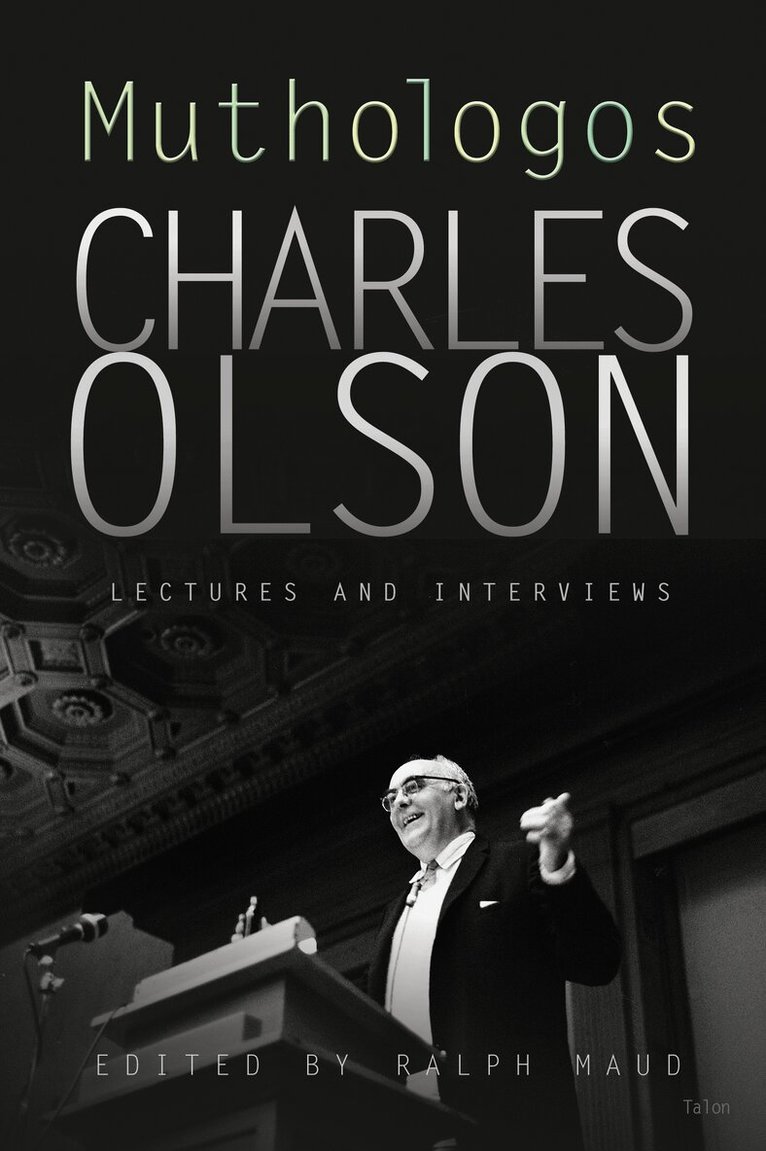
Charles Olson’s insistence that the public value of any articulation is inseparable from the particulars of the time and place of its origins resulted in the proprioceptive methodology of his composition—in his speech and his writing, in both poetry and prose. Olson did not “lecture”—he “talked.” His encyclopedic knowledge of the subjects that interested him engaged in a manner always as surprising to himself as to his listeners. This element of discovery was to him a true measure of what is authentic in language, and it exhibits itself most in the impromptu exchanges of which Muthologos is mainly composed. Olson once de?ned “Muthologos” as “what is said about what is said,” which encompasses a breadth of discourse that would de?ne the near and far range of where the poet’s mind went in a lifetime’s intent to go places. In this new compilation of Charles Olson’s transcribed lectures and interviews, we ?nally get all of what is preserved of a life of talk, allowing Muthologos to stand, along with The Maximus Poems, Collected Poems, Collected Prose and Selected Letters as one of the “standard texts” of this great poet’s oeuvre.Ralph Maud’s second edition of Muthologos, some thirty years after George Butterick’s ?rst, adds several new items: “At Goddard College, April 1962”; a second Vancouver 1963 discussion, “Duende, Muse, and Angel”; a short addition to the “BBC Interview”; a second “On Black Mountain”; and a further hour of Olson’s conversation with Herb Kenny. In addition, all the available tapes of these talks and interviews have been listened to again, and many of their previous transcription errors have been corrected. Textual notes to each piece identify these corrections, and also reveal the provenance of the tapes and the particular way in which each transcription was created.
193 kr
Skickas inom 5-8 vardagar
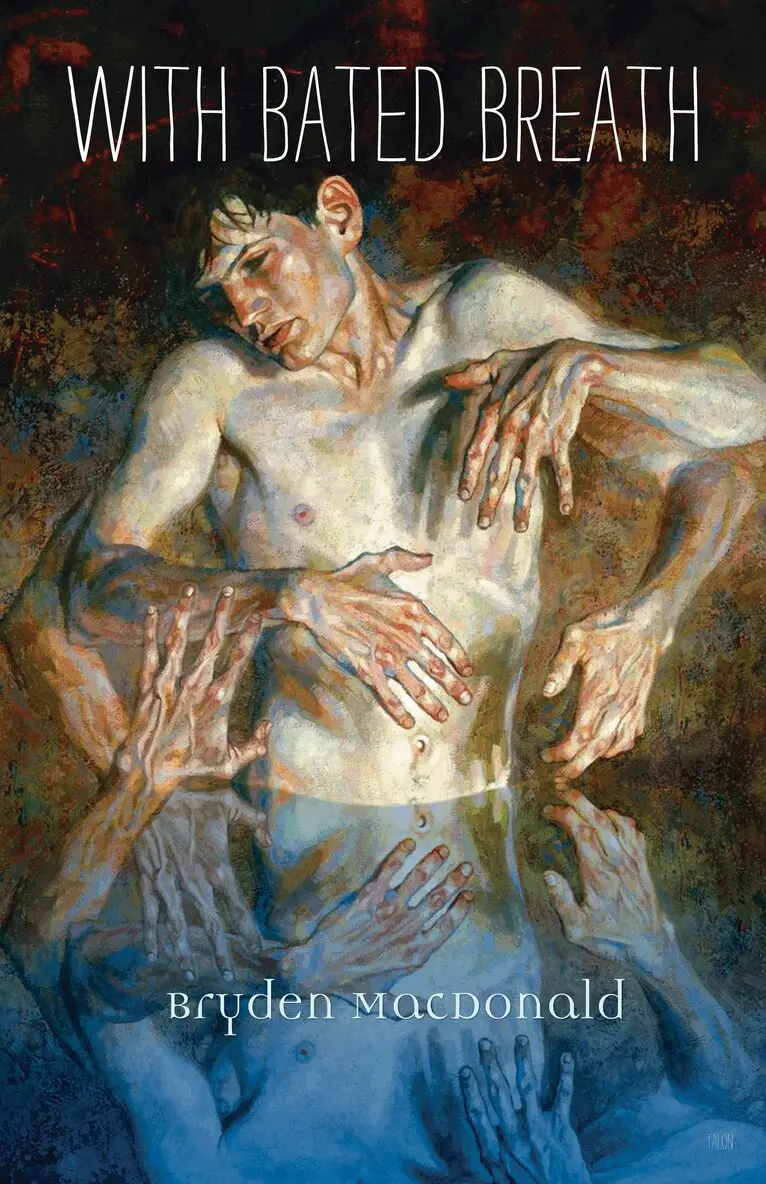
With Bated Breath asks questions about memory—how and why it plays such a prominent role in our lives: how time affects it, how it fractures, how we often reinvent it depending on the situation—and why it is that certain things stay with us with a blistering clarity, while the shadows of other people and events simply slip away, only to reveal themselves again later in our lives when we least expect them.This is the provocative tale of Willy, a troubled but charismatic gay kid who flees Cape Breton Island for Montreal with hopes of forgetting a newly broken heart by starting a new life in the big city. There, hopelessly awkward and naïve, caught up in the cynical and brutalizing cash-economy of the city’s red light district, he retreats ever further into a world of fantasy and anonymity, and soon goes missing without a trace. Willy, in one way or another, has had a profound effect on the lives of the people he has touched. As rumours fly, secrets explode and reality blurs with fantasy, he is both remembered and reinvented by each of the play’s characters in their own way.Though Willy’s self-appointed, newfound and worldly wise mentor had cautioned him, “There’s nothing safe. We’re never safe. If you ever thought you were, you were in denial,” it’s too late for this dreamer who ignored the best advice he ever got from those who cared for him: “You just don’t find a soul mate—you have to invent them. Cuz love at first sight sure don’t last.” What lasts at the end of the day is memory—the necessary tale we tell ourselves to both make sense of our past and to give ourselves hope for a future without having to lose those we have loved.

269 kr
Skickas inom 3-6 vardagar
276 kr
Skickas inom 3-6 vardagar
276 kr
Skickas inom 3-6 vardagar

276 kr
Skickas inom 3-6 vardagar
198 kr
Läs direkt efter köp
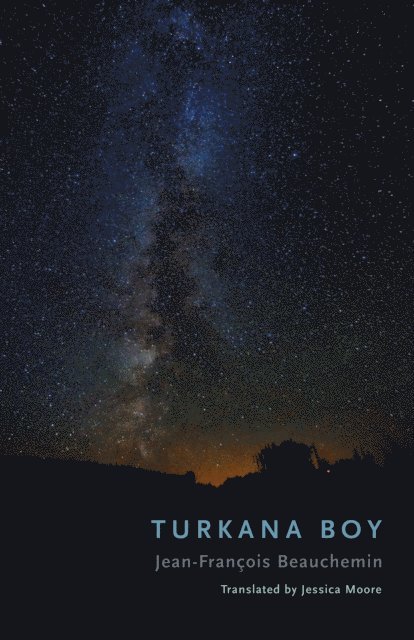
In this contemplative novel-poem, Jean-François Beauchemin invites us to share in the inner world of the grieving Mr. Bartolomé, who, following the mysterious disappearance of his young son, wanders and wonders, seeking to transcend his pain by encountering something larger than himself. Continuously occupied by the memory of his lost son, Bartolomé’s quest leads him from the city to the countryside and then to the edge of the ocean, where he marvels at the beauty of nature but cannot penetrate its mysteries. Through reference to the two-million-year-old “Turkana Boy,” the fossilized remains of a boy found in 1984 near Lake Turkana, Kenya, Beauchemin addresses processes of memory and the long history of human evolution. Beauchemin’s character Bartolomé sees in the lives of the boys—separated by nearly two million years—a kind of twin destiny. Has the passage of millennia changed the intensity of human feeling at the loss of blood relations? “Who knows what they had felt? Had the same emotions, those associated with incommensurable loss, broken their bodies, as they had his? Over and above morphological differences sculpted by the passage of millennia, was there something resembling a permanence of feeling, a sort of eternity for the murmuring of the heart, transmitted through the ages by the bonds of blood?” Turkana Boy offers a poignant examination of grieving and one man’s search for understanding. This surrealist narrative is punctuated with magnificent musings on the world and startling questions about what it means to be alive.
198 kr
Läs direkt efter köp
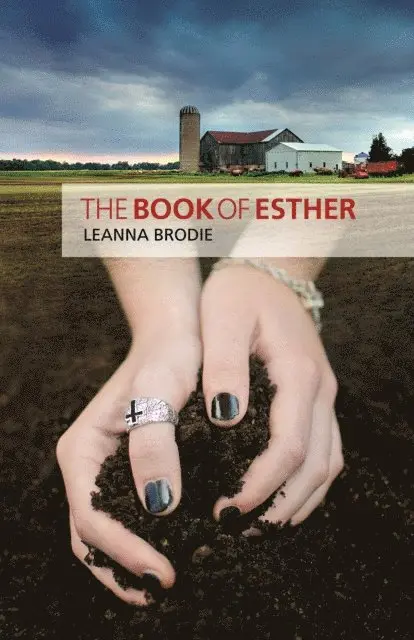
It is June 1981: the farm debt crisis. Pride Toronto’s first parade. Everything is changing, including fifteen-year-old Esther, who runs away to the city to escape the family farm. With the help of a brash young hustler and a gay activist who shelters street kids, she confronts her conservative Christian parents—farmers on the brink of financial ruin—and begins to find her way home. Acclaimed playwright Leanna Brodie excels with this heart-warming coming-of-age—and coming-out—drama. Cast of two women and three men.

211 kr
Läs direkt efter köp
When his father died, award-winning poet and curator Gil McElroy was given a box of photographs that documented his father’s military career. Beginning in the Second World War and continuing right through to the end of the Cold War, the senior McElroy staffed Canada’s network of electronic defence, including the Distant Early Warning Line – a network of radar stations stretching along the Arctic coast from Alaska to Baffin Island.
Established in the early 1950s, the DEW Line provided advance warning of an aircraft or missile attack. There, servicemen lived in isolated radar stations, watching surveillance screens for the telltale blips that threatened nuclear annihilation.
McElroy reflects on the sacrifices these men made, living away from their families for great lengths of time – for the “greater good” of protecting North American airspace andWestern values.
At the same time, Cold Comfort follows McElroy’s experience of growing up as an itinerant military brat, who moved from one posting to another, and the military family’s attempts to hold together in the face of the father’s absence. Cold Comfort also explores the utter enigma that was the author’s father. Examining the contents of the box of photographs, image by image, McElroy attempts to come to terms with the mysterious photographer, a man better understood by his military compatriots than by his own family.

192 kr
Läs direkt efter köp
Three Young Native American sisters and their mother board a bus bound for Los Angeles, leaving home as part of a 1950s government mandate to relocate reserve Indians to urban centres. This assimilationist policy was one focus of Métis playwright Marie Clements’s research when she was commissioned to create a new play for the tenth anniversary of the Native Voices series at the Autry National Center, Los Angeles. Clements dramatizes the emotional, psychological and social repercussions of this, and subsequent, bureaucratic incursions into the girls’ lives. Their arrival in California takes a tragic turn when their mother is suddenly killed and the girls are arbitrarily placed in different foster homes, never to see each other again. We follow Janey, Miranda and Jessie as they lead very disparate adult lives: Janey, a troubled vagrant; Miranda, a burgeoning actress fighting typecasting in Hollywood; Jessie, an idealist physician who’s married to a medical colleague. As it was bureaucratic policy that had dismantled their secure family unit and sent each girl into the unknown, so too did a government paper ultimately bring them together, if only symbolically. Clements casts the sisters’ narrative against the backdrop of another historical injustice: the forced sterilization of thousands of Native women in the 1970s, a practice that was only abolished in 1981.Clements’s play is a compelling, and poetic, investigation of the coldly bureaucratic machinations that have, throughout history, attempted to facilitate the disappearance of Native people. Though Tombs of the Vanishing Indian focuses on specific policies and locations, it speaks eloquently to broader themes of Aboriginal displacement. There are, indeed, echoes of Canadian policy aimed at the dissolution of First Nations families and culture: the potlatch ban, residential schools and the ban on Native language, whose profoundly damaging ramifications are our shared legacy. Cast of 4 women and 3 men.