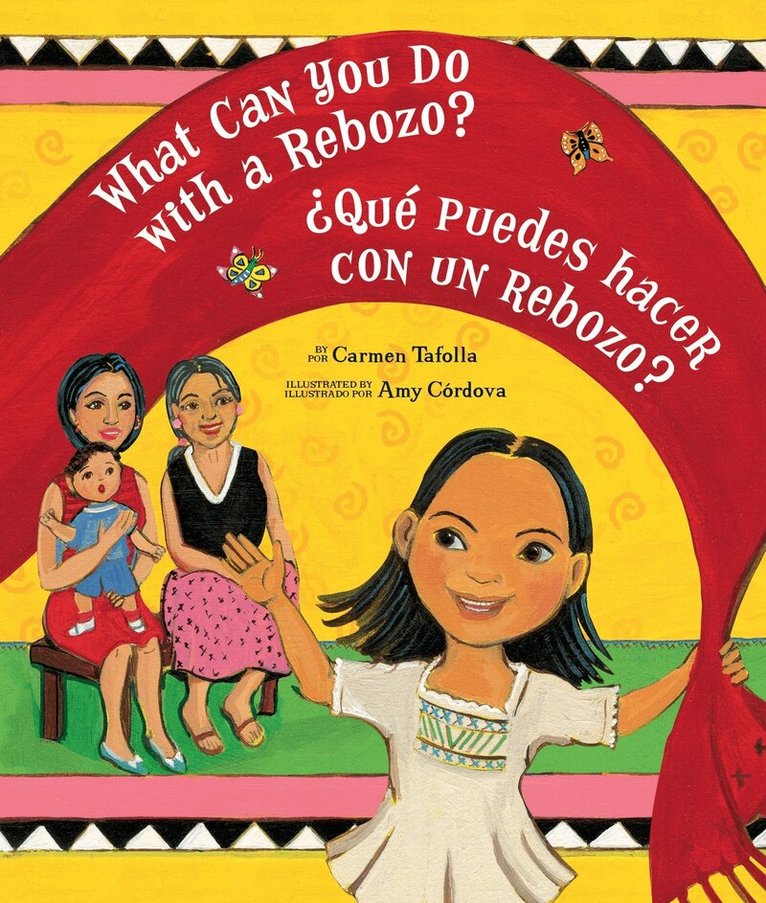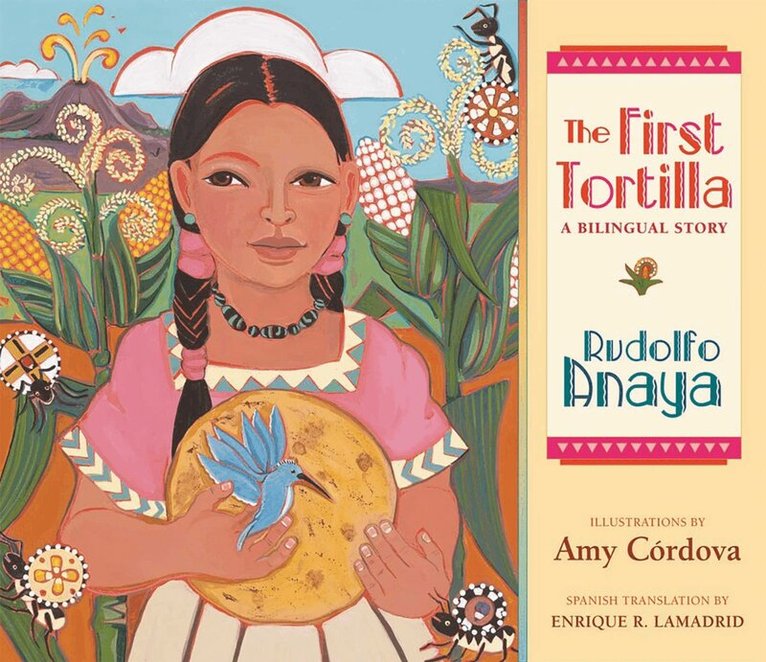
Jade is a young girl who lives in a village next to a towering volcano. On its peak lives a Mountain Spirit who makes his presence known by rumbling the earth, filling the sky with smoke, and pouring lava down the mountainside. Angered by those who forget to honor him for providing their harvest, the Mountain Spirit has stopped sending rain to Jade’s village and the people are faced with the possibility of having to abandon their homes and land. As Jade collects water from the near-dry lake, a blue hummingbird—a messenger from the Mountain Spirit—tells Jade she must take a gift to the Mountain Spirit and ask for rain. Guided by the hummingbird, Jade presents her food offering to the Mountain Spirit. Pleased, the spirit offers the brave girl corn kernels that she takes back to her village and uses to create the first tortilla.
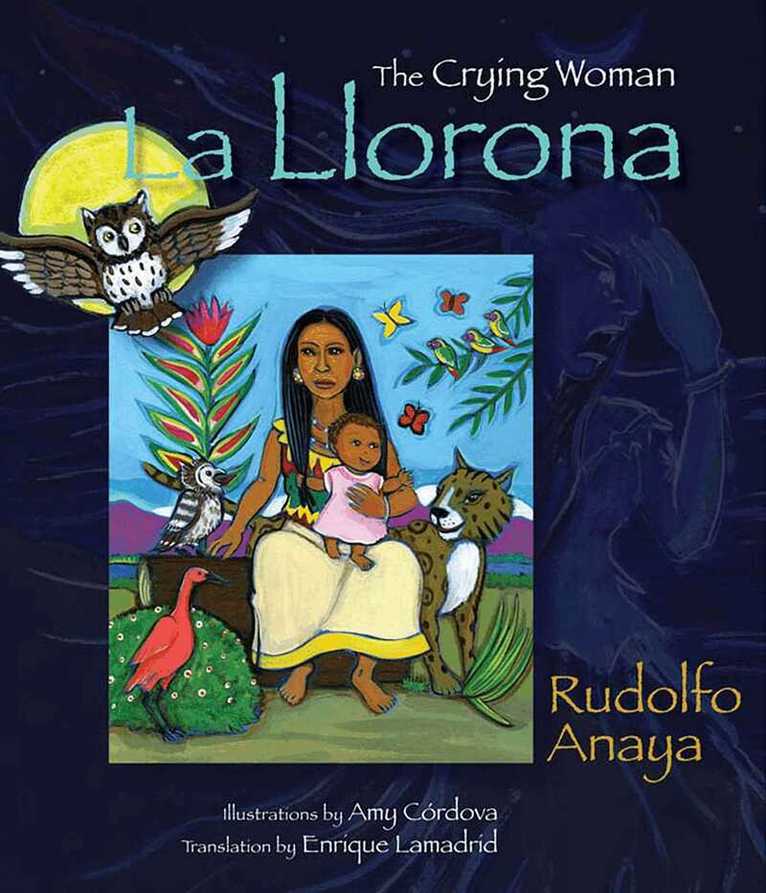
La Llorona, the Crying Woman, is the legendary creature who haunts rivers, lakes, and lonely roads. Said to seek out children who disobey their parents, she has become a ""boogeyman,"" terrorizing the imaginations of New Mexican children and inspiring them to behave. But there are other lessons her tragic history can demonstrate for children. In Rudolfo Anaya's version Maya, a young woman in ancient Mexico, loses her children to Father Time's cunning. This tragic and informative story serves as an accessible message of mortality for children. La Llorona, deftly translated by Enrique Lamadrid, is familiar and newly informative, while Amy Córdova's rich illustrations illuminate the story. The legend as retold by Anaya, a man as integral to southwest tradition as La Llorona herself, is storytelling anchored in a very human experience. His book helps parents explain to children the reality of death and the loss of loved ones.
THIS BOOK IS AVAILABLE IN BOTH B&W AND COLOR Welcome to the great wisdom oriented guidance of our 2 ever more full of Life, Liberty and true found Happiness Characters, Quantum Katie & Cosmic Charlie. Whom we the authors have designed, to help carry every One of Us ever more deeply into what we all already know, within the very Heart Core of Us.
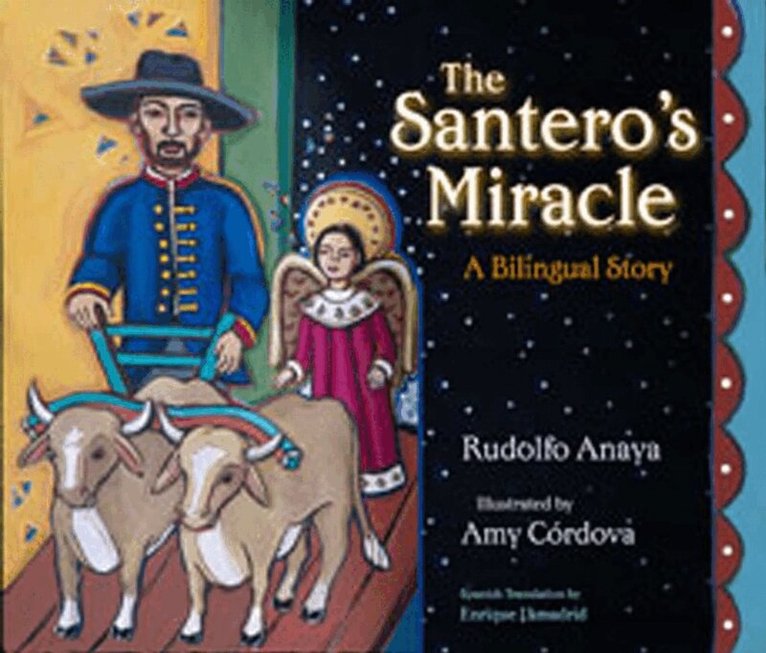
For ages 4-8. In this bilingual story of faith, Don Jacobo has a dream that, in the end, is a reminder that miracles do happen. Jacobo is teaching his visiting grandson Andres how to become a santero. Christmas is coming, snow is falling in the village, and the two are working on a carving of San Isidro, the patron saint of farmers. The half-finished carving stands in the living room beside the two oxen and the angel that don Jacobo carved earlier in the month. The snow-covered mountains are beautiful, but the road to the village is impassable. Andres's parents will not be able to get to the house for the holiday, and Jacobo's neighbor Leopoldo is desperately ill but cannot get to the hospital. Then comes Jacobo's dream; San Isidro is plowing with the two oxen and the angel is helping. ""But we don't plow 'til April,"" don Jacobo muses upon awakening. ""What does it mean?"" The night had been bitterly cold and don Jacobo must bundle up to go to the barn to feed his cows and chickens. As he steps outside, he can hardly believe his eyes. The snow-packed road is clear. Rudolfo Anaya's story of the power of faith, hope, and love will be enjoyed by readers of all ages.
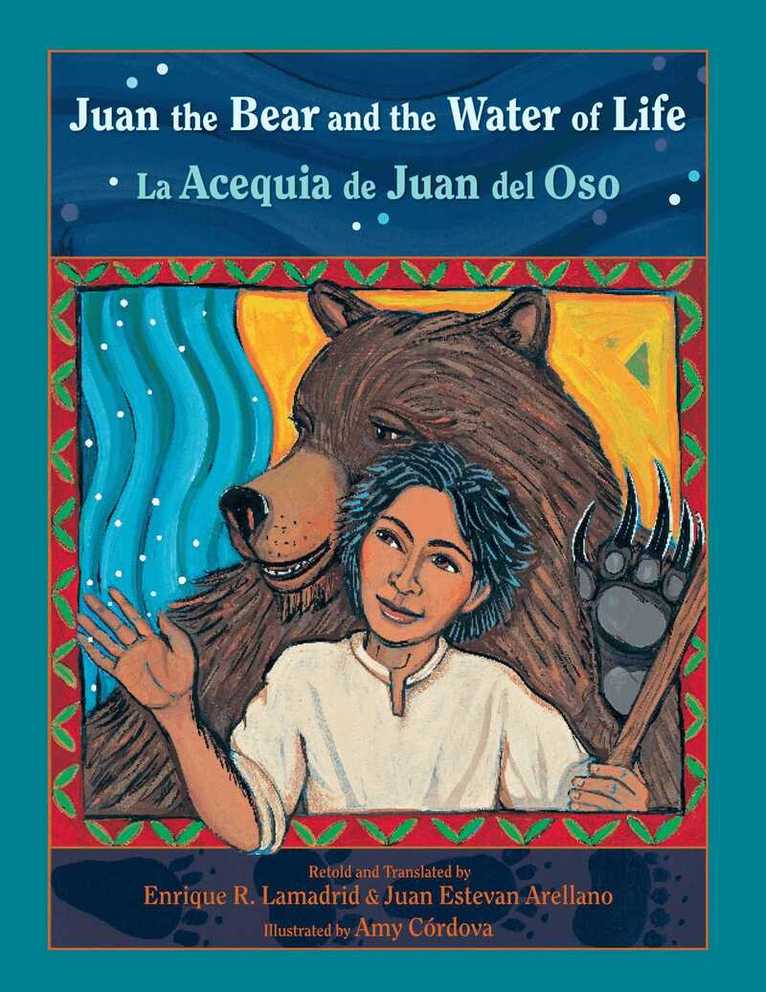
La Acequia del Rito y la Sierra in the Mora Valley is the highest and most famous traditional irrigation system in New Mexico. It carries water up and over a mountain ridge and across a sub-continental divide, from the tributaries of the Río Grande to the immense watershed of the Mora, Canadian, Arkansas, and Mississippi Rivers. The names and stories of those who created this acequia to sustain their communities have mostly been lost and replaced by myths and legends. Now, when children ask, some parents attribute the task of moving mountains and changing the course of rivers to Juan del Oso, the stouthearted man whose father was a bear. From the mountains of northern Spain to the Andes in South America, Spanish-speaking people have told ancient legends of Juan del Oso and his friends. In this children's tale, agriculturalist Juan Estevan Arellano and folklorist Enrique Lamadrid share a unique version of a celebrated story that has been told in northern New Mexico for centuries.
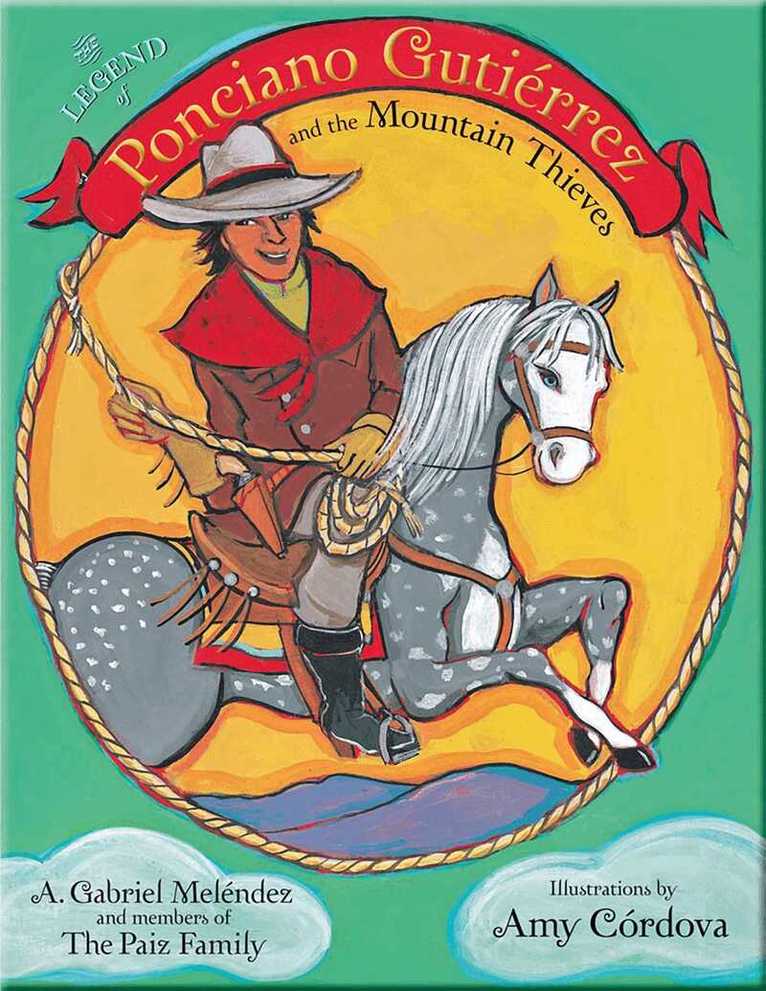
Once upon a time in the Mora Valley of northern New Mexico there lived a farmer named Ponciano Gutiérrez. On a trip through the mountains he was taken captive by Vicente Silva and his gang of bank robbers. This tale of Ponciano’s quick-witted escape has been a bedtime story for generations in the Paiz family. New Mexico authors at the turn of the last century published many accounts of the crimes of Vicente Silva. This book is the first to present a Silva legend that has been kept alive by families in Mora since the 1890s. The Paiz family version is presented in English with a Spanish translation by A. Gabriel Meléndez.
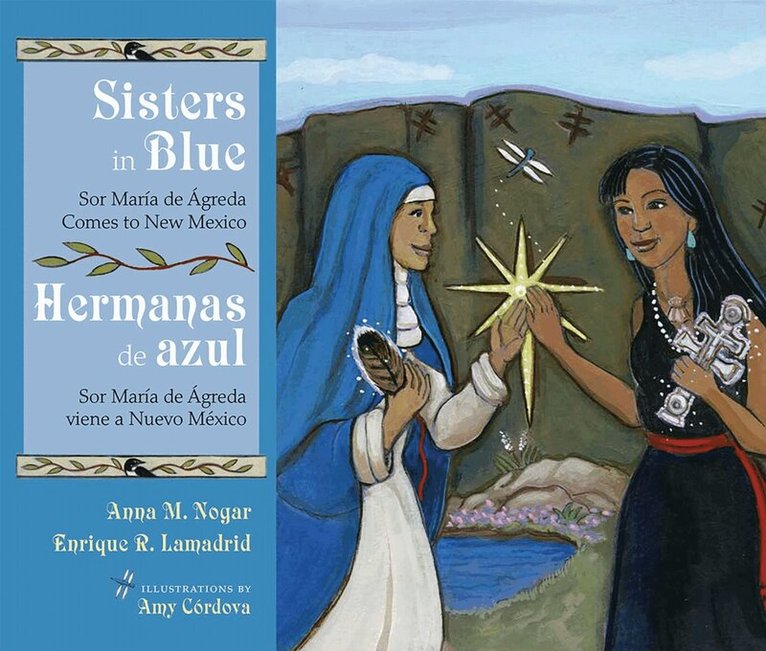
Sisters in Blue tells the story of two young women—one Spanish, one Puebloan—meeting across space and time. Sor María de Jesús de Ágreda, New Mexico’s famous Lady in Blue, is said to have traveled to New Mexico in the seventeenth century. Here Anna M. Nogar and Enrique R. Lamadrid bring her to life, imagining an encounter between a Pueblo woman and Sor María during the nun’s mystical spiritual journeys. Tales of Sor María, who described traveling across the earth and the heavens, have traditionally presented her as an evangelist who helped bring Catholicism to the Pueblos. Instead this book, which includes an essay providing historical context, shows a connection between Sor María and her friend Paf Sheuri. The two women find more similarities than differences in their shared experiences, and what they learn from each other has an impact for centuries to come.